Master email marketing for aerospace and defense. Learn compliance, segmentation, and strategies to reach decision-makers and boost B2B pipeline growth.
Master email marketing for aerospace and defense. Learn compliance, segmentation, and strategies to reach decision-makers and boost B2B pipeline growth.
Aerospace and defense industry email marketing is one of the highest-stakes applications of B2B email, and it rewards precision over volume. The US aerospace and defense market is estimated at $525 billion in 2025 and is projected to reach $695 billion by 2030. That market is served by a comparatively small pool of buyers. In aerospace and defense, you might be targeting a dozen airlines, a handful of prime contractors, or a few government programs, and each deal could be worth millions. Email is the channel that keeps you visible across every phase of a buying process that can take years.
This guide covers how to build, execute, and measure an email marketing strategy built specifically for the aerospace and defense sector.
Key Takeaways
Automotive and aerospace email campaigns average an open rate of around 12.60% and a CTR of 1.20%, making segmentation and content quality the primary levers for improvement.
Contracts in aerospace and defense can take years to finalize due to complex procurement processes, so your email strategy must be built for long-cycle nurturing, not quick conversions.
Compliance regulations like ITAR and DFARS make careful segmentation essential; it is not just good practice but often a legal requirement.
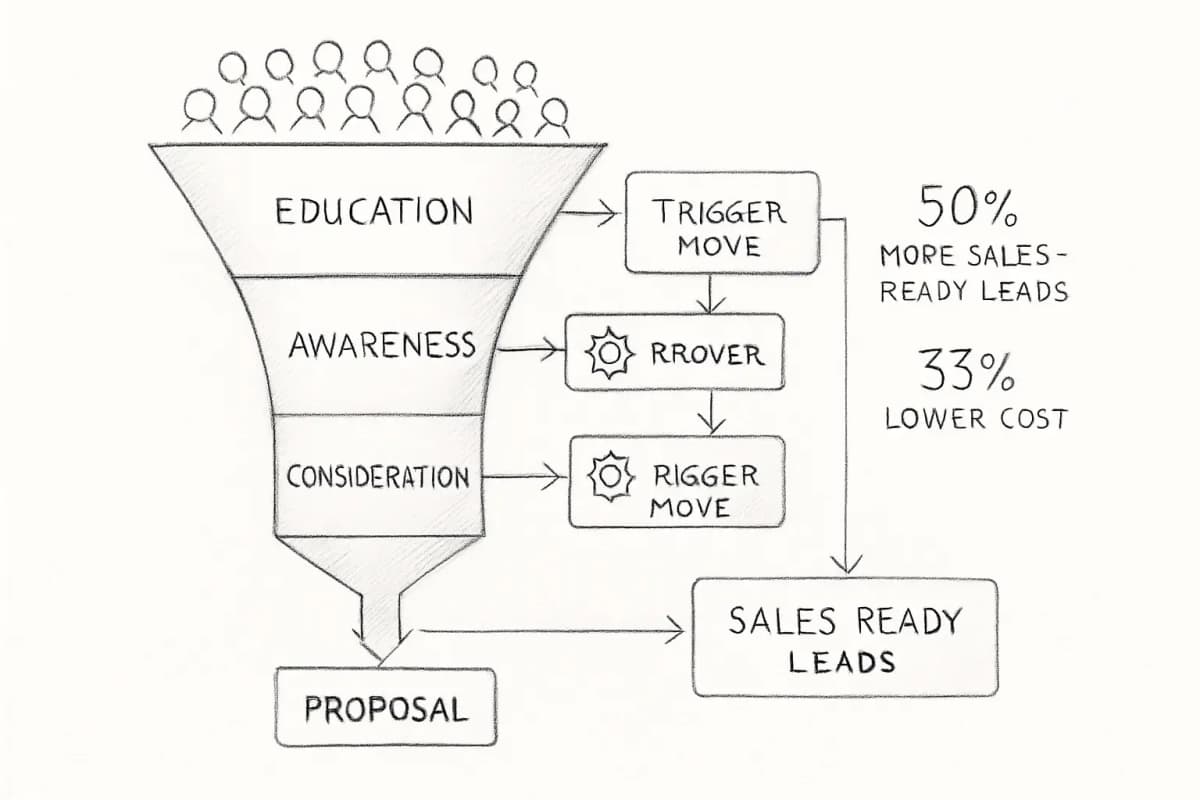
Companies that excel at lead nurturing generate 50% more sales-ready leads at 33% lower cost, and nurtured leads tend to make purchases that are 47% higher in value than non-nurtured leads.
Email marketing ROI averages $36 to $42 for every $1 spent, making it the most cost-efficient channel for sustaining long-term account relationships in this sector.
Why Email Marketing Matters in Aerospace and Defense
Between 73% and 77% of B2B buyers say email is their preferred channel for communication from vendors, more than double any other channel. In aerospace and defense, that preference is reinforced by the nature of the work itself: procurement teams cannot always take calls, and decision-making involves multiple stakeholders reviewing information privately before acting.
B2B buying cycles average 6 to 12 months and involve multiple stakeholders. According to Gartner, B2B buyers spend only 17% of their purchase journey talking to sales reps, with the other 83% as independent research. Email is what keeps your firm in a buyer's orbit during that 83%.
Aerospace and defense industry email marketing is one of the highest-stakes applications of B2B email, and it rewards precision over volume. The US aerospace and defense market is estimated at $525 billion in 2025 and is projected to reach $695 billion by 2030. That market is served by a comparatively small pool of buyers. In aerospace and defense, you might be targeting a dozen airlines, a handful of prime contractors, or a few government programs, and each deal could be worth millions. Email is the channel that keeps you visible across every phase of a buying process that can take years.
This guide covers how to build, execute, and measure an email marketing strategy built specifically for the aerospace and defense sector.
Key Takeaways
Automotive and aerospace email campaigns average an open rate of around 12.60% and a CTR of 1.20%, making segmentation and content quality the primary levers for improvement.
Contracts in aerospace and defense can take years to finalize due to complex procurement processes, so your email strategy must be built for long-cycle nurturing, not quick conversions.
Compliance regulations like ITAR and DFARS make careful segmentation essential; it is not just good practice but often a legal requirement.
Companies that excel at lead nurturing generate 50% more sales-ready leads at 33% lower cost, and nurtured leads tend to make purchases that are 47% higher in value than non-nurtured leads.
Email marketing ROI averages $36 to $42 for every $1 spent, making it the most cost-efficient channel for sustaining long-term account relationships in this sector.
Why Email Marketing Matters in Aerospace and Defense
Between 73% and 77% of B2B buyers say email is their preferred channel for communication from vendors, more than double any other channel. In aerospace and defense, that preference is reinforced by the nature of the work itself: procurement teams cannot always take calls, and decision-making involves multiple stakeholders reviewing information privately before acting.
B2B buying cycles average 6 to 12 months and involve multiple stakeholders. According to Gartner, B2B buyers spend only 17% of their purchase journey talking to sales reps, with the other 83% as independent research. Email is what keeps your firm in a buyer's orbit during that 83%.
Global defense spending surpassed $2 trillion in 2024, while aerospace innovation continues to accelerate with sustainable aviation fuels and commercial spaceflight. The spending is there. The challenge is consistently reaching the right people inside heavily regulated, security-conscious organizations.
Defense contractors and large manufacturers often deploy aggressive email filtering systems, so monitoring hard bounces closely and maintaining clean lists through regular verification is critical.
Understanding Your Audience: Who Reads These Emails
Before writing a single subject line, you need a clear picture of who receives your emails and what they actually care about.
A verified aerospace email database typically includes decision-makers such as CEOs, procurement managers, engineers, and suppliers. Each of these roles has fundamentally different priorities:
Procurement teams prioritize costs, lead times, and compliance. Executives prioritize risk management and return on investment. Government buyers need solutions that meet strict defense standards.
Buyers in this sector prioritize evidence, case studies, and technical validation over marketing language.
Buyers in the defense industry are concerned with counterfeit parts, inaccurate data, and incomplete quotes.
Desktop dominates aerospace marketing at 68.5% of traffic, with engineers and procurement officers researching complex specifications on large screens. Design your emails for desktop-first consumption, with clear formatting that makes technical content easy to scan.
This is why email list segmentation is not optional in aerospace and defense. It is the foundation of the entire strategy.
Segmentation Strategies for Aerospace and Defense
Generic blasts do not work in this sector. Strict compliance regulations like ITAR and DFARS make careful segmentation essential; it is not just good practice but often a legal requirement.
A well-built segmentation framework for aerospace and defense email marketing should account for:
By buyer role:
Engineers and technical evaluators (need specs, certifications, test data)
Procurement and supply chain managers (need pricing, compliance documentation, lead times)
C-suite and program directors (need ROI framing, risk reduction, strategic alignment)
Government and DoD contacts (need ITAR compliance proof, DFARS alignment, past performance evidence)
By funnel stage:
Global defense spending surpassed $2 trillion in 2024, while aerospace innovation continues to accelerate with sustainable aviation fuels and commercial spaceflight. The spending is there. The challenge is consistently reaching the right people inside heavily regulated, security-conscious organizations.
Defense contractors and large manufacturers often deploy aggressive email filtering systems, so monitoring hard bounces closely and maintaining clean lists through regular verification is critical.
Understanding Your Audience: Who Reads These Emails
Before writing a single subject line, you need a clear picture of who receives your emails and what they actually care about.
A verified aerospace email database typically includes decision-makers such as CEOs, procurement managers, engineers, and suppliers. Each of these roles has fundamentally different priorities:
Procurement teams prioritize costs, lead times, and compliance. Executives prioritize risk management and return on investment. Government buyers need solutions that meet strict defense standards.
Buyers in this sector prioritize evidence, case studies, and technical validation over marketing language.
Buyers in the defense industry are concerned with counterfeit parts, inaccurate data, and incomplete quotes.
Desktop dominates aerospace marketing at 68.5% of traffic, with engineers and procurement officers researching complex specifications on large screens. Design your emails for desktop-first consumption, with clear formatting that makes technical content easy to scan.
This is why email list segmentation is not optional in aerospace and defense. It is the foundation of the entire strategy.
Segmentation Strategies for Aerospace and Defense
Generic blasts do not work in this sector. Strict compliance regulations like ITAR and DFARS make careful segmentation essential; it is not just good practice but often a legal requirement.
A well-built segmentation framework for aerospace and defense email marketing should account for:
By buyer role:
Engineers and technical evaluators (need specs, certifications, test data)
Procurement and supply chain managers (need pricing, compliance documentation, lead times)
C-suite and program directors (need ROI framing, risk reduction, strategic alignment)
Government and DoD contacts (need ITAR compliance proof, DFARS alignment, past performance evidence)
By funnel stage:
Leads at different stages need different content. New contacts benefit from educational whitepapers. Warm leads want case studies and demos. Existing clients appreciate updates on new features or exclusive offers.
By geography and jurisdiction:
U.S. buyers need ITAR compliance details and "Buy American" specifics. European contacts need GDPR-compliant consent and may have different export control requirements.
By company type:
Tier 1 prime contractors have different needs than Tier 2 and Tier 3 suppliers. Space companies require components to different standards than commercial aviation MRO providers.
Content That Converts in a Technical, Regulated Industry
Aerospace and defense professionals prioritize substance over sales language. To engage these buyers, focus on delivering practical, technical content that supports their decision-making process.
The content formats that perform best in aerospace and defense email marketing:
Technical whitepapers: Technical whitepapers provide the depth that engineers and procurement teams require for proper evaluation.
Case studies: Case studies with verifiable results prove capabilities better than any sales claim. Keep them non-classified but specific, with measurable outcomes.
Compliance updates: ITAR and FAA updates are essential, not optional. Positioning your firm as a reliable source of regulatory intelligence builds trust at every stage of the funnel.
Defense spending and market reports: Original research and budget analysis give decision-makers tools they actually use, which keeps them subscribed and engaged.
In this world, past success is your strongest differentiator. Brands that showcase a proven track record, articulate results-driven case studies, and highlight innovative solutions relevant to current industry challenges are more likely to win over skeptical evaluators.
One practical framework: lead every email with one concrete data point or finding, follow with brief context, then link to the full resource. This respects the reader's time and earns the click.
For guidance on structuring subject lines that drive open rates in technical B2B contexts, see Email Subject Line Best Practices That Boost Open Rates by 27%.
Building Long-Cycle Nurture Sequences
Standard broadcast emails cannot sustain a 12-to-18-month aerospace sales cycle. You need behavior-triggered sequences that stay relevant as the buyer moves through evaluation.
Automated emails deliver 52% higher open rates, 332% higher click-through rates, and significantly higher conversion rates compared to manual sends.
Long B2B buying cycles often last 6 to 12 or more months, meaning buyers rely on email to research in private before speaking to sales. Your nurture architecture needs to match that timeline.
A practical nurture structure for aerospace and defense:
Leads at different stages need different content. New contacts benefit from educational whitepapers. Warm leads want case studies and demos. Existing clients appreciate updates on new features or exclusive offers.
By geography and jurisdiction:
U.S. buyers need ITAR compliance details and "Buy American" specifics. European contacts need GDPR-compliant consent and may have different export control requirements.
By company type:
Tier 1 prime contractors have different needs than Tier 2 and Tier 3 suppliers. Space companies require components to different standards than commercial aviation MRO providers.
Content That Converts in a Technical, Regulated Industry
Aerospace and defense professionals prioritize substance over sales language. To engage these buyers, focus on delivering practical, technical content that supports their decision-making process.
The content formats that perform best in aerospace and defense email marketing:
Technical whitepapers: Technical whitepapers provide the depth that engineers and procurement teams require for proper evaluation.
Case studies: Case studies with verifiable results prove capabilities better than any sales claim. Keep them non-classified but specific, with measurable outcomes.
Compliance updates: ITAR and FAA updates are essential, not optional. Positioning your firm as a reliable source of regulatory intelligence builds trust at every stage of the funnel.
Defense spending and market reports: Original research and budget analysis give decision-makers tools they actually use, which keeps them subscribed and engaged.
In this world, past success is your strongest differentiator. Brands that showcase a proven track record, articulate results-driven case studies, and highlight innovative solutions relevant to current industry challenges are more likely to win over skeptical evaluators.
One practical framework: lead every email with one concrete data point or finding, follow with brief context, then link to the full resource. This respects the reader's time and earns the click.
For guidance on structuring subject lines that drive open rates in technical B2B contexts, see Email Subject Line Best Practices That Boost Open Rates by 27%.
Building Long-Cycle Nurture Sequences
Standard broadcast emails cannot sustain a 12-to-18-month aerospace sales cycle. You need behavior-triggered sequences that stay relevant as the buyer moves through evaluation.
Automated emails deliver 52% higher open rates, 332% higher click-through rates, and significantly higher conversion rates compared to manual sends.
Long B2B buying cycles often last 6 to 12 or more months, meaning buyers rely on email to research in private before speaking to sales. Your nurture architecture needs to match that timeline.
A practical nurture structure for aerospace and defense:
Entry email: Deliver the content they requested (whitepaper, spec sheet, compliance guide). No pitch.
Day 5 to 7: Send a related case study focused on a comparable buyer role or application area.
Day 14: Share a regulatory or market update relevant to their segment.
Day 21 to 30: Offer a technical webinar or briefing based on the content they clicked in earlier emails.
Day 45+: Move highly engaged contacts to a sales-ready track. Re-engage low-engagement contacts with a different content angle.
Each module might include 4 to 6 touchpoints over 3 to 4 weeks, with behavior-based triggers moving contacts between modules. This approach keeps content relevant regardless of how long the total sales cycle lasts.
Companies that excel at lead nurturing generate 50% more sales-ready leads at 33% lower cost, and 80% of new leads never translate into sales due to lack of nurturing.
Compliance, Security, and Deliverability
Compliance in aerospace and defense email marketing operates on two levels: the standard B2B regulations that apply to all email programs, and the sector-specific requirements unique to this industry.
GDPR (European contacts): documented consent, right to erasure, data minimization
Law compliance in B2B email marketing is essential for maintaining legal integrity, protecting brand reputation, and safeguarding customer data. Adhering to relevant rules and regulations also builds trust with your B2B audience and helps achieve long-term success in email campaigns.
Aerospace and defense-specific requirements:
Entry email: Deliver the content they requested (whitepaper, spec sheet, compliance guide). No pitch.
Day 5 to 7: Send a related case study focused on a comparable buyer role or application area.
Day 14: Share a regulatory or market update relevant to their segment.
Day 21 to 30: Offer a technical webinar or briefing based on the content they clicked in earlier emails.
Day 45+: Move highly engaged contacts to a sales-ready track. Re-engage low-engagement contacts with a different content angle.
Each module might include 4 to 6 touchpoints over 3 to 4 weeks, with behavior-based triggers moving contacts between modules. This approach keeps content relevant regardless of how long the total sales cycle lasts.
Companies that excel at lead nurturing generate 50% more sales-ready leads at 33% lower cost, and 80% of new leads never translate into sales due to lack of nurturing.
Compliance, Security, and Deliverability
Compliance in aerospace and defense email marketing operates on two levels: the standard B2B regulations that apply to all email programs, and the sector-specific requirements unique to this industry.
GDPR (European contacts): documented consent, right to erasure, data minimization
Law compliance in B2B email marketing is essential for maintaining legal integrity, protecting brand reputation, and safeguarding customer data. Adhering to relevant rules and regulations also builds trust with your B2B audience and helps achieve long-term success in email campaigns.
Aerospace and defense-specific requirements:
In aerospace and defense, security requirements are mandatory, not optional. These include ITAR for handling export-controlled technical data and CMMC certification where applicable. All technical documents must follow strict security protocols.
Encrypt PDFs with AES-256 to prevent unauthorized access. For highly sensitive files, use two-factor authentication to verify recipients before sharing.
Savvy teams turn compliance constraints into trust signals, showcasing adherence through certification badges and audit-ready documentation. When five suppliers meet technical specs, buyers lean toward those demonstrating regulatory mastery.
On deliverability:
Corporate firewalls can inflate aerospace bounce rates. Defense contractors and large manufacturers often deploy aggressive email filtering systems. To maintain strong inbox placement:
Authenticate all sending domains with SPF, DKIM, and DMARC
Verify lists before every major send (only 23.6% of B2B senders verify lists before every major campaign, giving you a clear competitive advantage)
Monitor bounce rates: best-practice deliverability targets maintain bounce rates at or below 2 to 2.5%
Suppress unengaged contacts rather than continuing to blast them
Metrics That Matter in Aerospace Email Marketing
Tracking open rates alone tells you very little in a sector where Apple Mail Privacy Protection inflates opens and corporate firewalls suppress them. Use metrics tied to actual buyer behavior.
Primary metrics:
Click-to-Open Rate (CTOR): The most reliable engagement signal. Strong programs exceed a CTOR of 7 to 10%.
Reply rate: In tightly segmented aerospace lists, a reply often signals RFP-readiness.
Pipeline metrics:
Key metrics include average time in each deal stage, email engagement rates by stakeholder, number of contacts per deal, content downloads by deal stage, and overall deal velocity from creation to close.
What to watch:
Average unsubscribe rates have risen from about 0.08% to 0.22% in recent studies, reflecting list fatigue. Rising unsubscribes in a specific segment often indicate a messaging mismatch, not irrelevance of the channel.
Track engagement by company, not just by contact. In a procurement committee of 6 to 10 people, knowing that three people from the same firm opened the same email is a meaningful buying signal.
Given the small, high-value nature of aerospace and defense buyer pools, Account-Based Marketing (ABM) combined with email is the most effective structure available.
An ITSMA study found companies using ABM saw an 81% increase in ROI versus broader marketing. In aerospace and defense, you might have roughly 300 humans who drive most buying decisions in your segment.
In aerospace and defense, security requirements are mandatory, not optional. These include ITAR for handling export-controlled technical data and CMMC certification where applicable. All technical documents must follow strict security protocols.
Encrypt PDFs with AES-256 to prevent unauthorized access. For highly sensitive files, use two-factor authentication to verify recipients before sharing.
Savvy teams turn compliance constraints into trust signals, showcasing adherence through certification badges and audit-ready documentation. When five suppliers meet technical specs, buyers lean toward those demonstrating regulatory mastery.
On deliverability:
Corporate firewalls can inflate aerospace bounce rates. Defense contractors and large manufacturers often deploy aggressive email filtering systems. To maintain strong inbox placement:
Authenticate all sending domains with SPF, DKIM, and DMARC
Verify lists before every major send (only 23.6% of B2B senders verify lists before every major campaign, giving you a clear competitive advantage)
Monitor bounce rates: best-practice deliverability targets maintain bounce rates at or below 2 to 2.5%
Suppress unengaged contacts rather than continuing to blast them
Metrics That Matter in Aerospace Email Marketing
Tracking open rates alone tells you very little in a sector where Apple Mail Privacy Protection inflates opens and corporate firewalls suppress them. Use metrics tied to actual buyer behavior.
Primary metrics:
Click-to-Open Rate (CTOR): The most reliable engagement signal. Strong programs exceed a CTOR of 7 to 10%.
Reply rate: In tightly segmented aerospace lists, a reply often signals RFP-readiness.
Pipeline metrics:
Key metrics include average time in each deal stage, email engagement rates by stakeholder, number of contacts per deal, content downloads by deal stage, and overall deal velocity from creation to close.
What to watch:
Average unsubscribe rates have risen from about 0.08% to 0.22% in recent studies, reflecting list fatigue. Rising unsubscribes in a specific segment often indicate a messaging mismatch, not irrelevance of the channel.
Track engagement by company, not just by contact. In a procurement committee of 6 to 10 people, knowing that three people from the same firm opened the same email is a meaningful buying signal.
Given the small, high-value nature of aerospace and defense buyer pools, Account-Based Marketing (ABM) combined with email is the most effective structure available.
An ITSMA study found companies using ABM saw an 81% increase in ROI versus broader marketing. In aerospace and defense, you might have roughly 300 humans who drive most buying decisions in your segment.
An effective ABM strategy employs a multi-channel approach to reach target accounts through various touchpoints. In the aerospace and defense sector, this might include email marketing, targeted ads on industry-specific websites, personalized direct mail, and social media engagement on platforms like LinkedIn. A multi-channel strategy ensures that your message reaches decision-makers wherever they are.
For email within an ABM structure, the key differences are:
Personalize at the account level, not just the contact level. Reference their specific programs, certifications, or public contract activity.
Align email sends with sales outreach. If a rep is sending a proposal, trigger a supporting email from marketing with a relevant case study the same week.
Strategic marketing services go far beyond visuals and messaging. They work in lockstep with sales, capture, and proposal teams to reinforce your readiness, compliance, and ability to deliver. This alignment ensures that when the RFP drops, your brand is already top-of-mind.
What open rates should aerospace and defense email marketers expect?
Industry benchmarks for automotive and aerospace email campaigns show an average open rate of around 12.60% and a CTR of approximately 1.20%. These figures are lower than many other B2B sectors because of aggressive corporate firewall filtering, Apple Mail Privacy Protection, and the highly specialized nature of the audience. A segmented, permission-based list targeting verified decision-makers will consistently outperform these averages.
How do ITAR regulations affect what I can include in marketing emails?
ITAR requires compliance-forward copy, proper documentation, and marketing communications that respect the boundaries of classified work and ITAR/EAR regulations. In practical terms, this means you should not include technical specifications, performance data, or imagery of controlled items in emails sent to recipients outside of ITAR-compliant environments without proper authorization. When in doubt, gate sensitive content behind a registration form that captures the recipient's nationality and employer, and have your compliance team review content before distribution to international contacts.
How long should an aerospace and defense email nurture sequence run?
Sales cycles in aerospace and defense stretch 6 to 18 months, so nurture sequences need to match. A practical approach is to build modular tracks of 4 to 6 emails, each covering a distinct topic, and use behavioral triggers to advance contacts through tracks rather than running a single long sequence. On average, around 8 touches are needed for a conversion in B2B, and in aerospace, that number is often higher given the number of stakeholders involved.
What content types drive the highest engagement in aerospace and defense email campaigns?
An effective ABM strategy employs a multi-channel approach to reach target accounts through various touchpoints. In the aerospace and defense sector, this might include email marketing, targeted ads on industry-specific websites, personalized direct mail, and social media engagement on platforms like LinkedIn. A multi-channel strategy ensures that your message reaches decision-makers wherever they are.
For email within an ABM structure, the key differences are:
Personalize at the account level, not just the contact level. Reference their specific programs, certifications, or public contract activity.
Align email sends with sales outreach. If a rep is sending a proposal, trigger a supporting email from marketing with a relevant case study the same week.
Strategic marketing services go far beyond visuals and messaging. They work in lockstep with sales, capture, and proposal teams to reinforce your readiness, compliance, and ability to deliver. This alignment ensures that when the RFP drops, your brand is already top-of-mind.
What open rates should aerospace and defense email marketers expect?
Industry benchmarks for automotive and aerospace email campaigns show an average open rate of around 12.60% and a CTR of approximately 1.20%. These figures are lower than many other B2B sectors because of aggressive corporate firewall filtering, Apple Mail Privacy Protection, and the highly specialized nature of the audience. A segmented, permission-based list targeting verified decision-makers will consistently outperform these averages.
How do ITAR regulations affect what I can include in marketing emails?
ITAR requires compliance-forward copy, proper documentation, and marketing communications that respect the boundaries of classified work and ITAR/EAR regulations. In practical terms, this means you should not include technical specifications, performance data, or imagery of controlled items in emails sent to recipients outside of ITAR-compliant environments without proper authorization. When in doubt, gate sensitive content behind a registration form that captures the recipient's nationality and employer, and have your compliance team review content before distribution to international contacts.
How long should an aerospace and defense email nurture sequence run?
Sales cycles in aerospace and defense stretch 6 to 18 months, so nurture sequences need to match. A practical approach is to build modular tracks of 4 to 6 emails, each covering a distinct topic, and use behavioral triggers to advance contacts through tracks rather than running a single long sequence. On average, around 8 touches are needed for a conversion in B2B, and in aerospace, that number is often higher given the number of stakeholders involved.
What content types drive the highest engagement in aerospace and defense email campaigns?
Case studies, benchmarking reports, and ROI calculators rank among the highest-performing content types for late-stage B2B email nurtures. For earlier funnel stages, technical whitepapers and regulatory updates consistently outperform promotional content. This content approach establishes credibility by addressing actual needs rather than pushing products. When you provide genuinely useful information, you position your solutions as the natural choice without resorting to hard sales tactics. The most effective aerospace and defense marketing educates first and sells second.
No comments yet. Be the first!
Case studies, benchmarking reports, and ROI calculators rank among the highest-performing content types for late-stage B2B email nurtures. For earlier funnel stages, technical whitepapers and regulatory updates consistently outperform promotional content. This content approach establishes credibility by addressing actual needs rather than pushing products. When you provide genuinely useful information, you position your solutions as the natural choice without resorting to hard sales tactics. The most effective aerospace and defense marketing educates first and sells second.