AI is no longer a nice-to-have in email marketing. It is the infrastructure that separates high-performing programs from campaigns that get ignored. In 2025, 63% of marketers use AI for campaigns, generating 13% higher click-through rates and 41% more revenue. If your team is still sending the same message to every subscriber and hoping engagement follows, the gap between you and AI-powered competitors is widening fast.
This guide covers the most important AI email marketing best practices for 2025 and beyond, with actionable tactics you can apply immediately regardless of your list size or team structure.
Key Takeaways
AI-driven email marketing leads to a 41% rise in revenue, proving the transformative effect of AI on campaign performance.
In 2025, there was a 340% increase in marketers using generative AI for tasks like copy and image generation, personalization, analyzing campaign performance, and A/B testing.
Despite making up just 2% of sends, automated messages drove 37% of sales.
70% of email marketers say that up to half of their email marketing operations will be AI-driven by the end of 2026.
According to Validity's 2025 Deliverability Benchmark Report, using AI on inbox placement has downstream consequences, partly because AI has made it easier for spammers to send emails, eroding trust and causing ISPs to tighten protections. Human oversight still matters.
1. Start with Clean Data and Clear Goals
AI is only as accurate as the data you feed it. Before you automate anything, audit your subscriber list and your tracking setup.
Best practices include starting with clear goals, ensuring data quality, iterating based on AI-driven insights, and maintaining human oversight to ensure brand consistency and compliance.
Practically, this means:
Remove inactive contacts that have not engaged in 90 to 180 days.
Confirm your SPF, DKIM, and DMARC records are properly configured.
Set up revenue and conversion tracking before you run any AI-powered test. Without clean attribution, you cannot tell which AI improvement actually moved the needle.
AI is no longer a nice-to-have in email marketing. It is the infrastructure that separates high-performing programs from campaigns that get ignored. In 2025, 63% of marketers use AI for campaigns, generating 13% higher click-through rates and 41% more revenue. If your team is still sending the same message to every subscriber and hoping engagement follows, the gap between you and AI-powered competitors is widening fast.
This guide covers the most important AI email marketing best practices for 2025 and beyond, with actionable tactics you can apply immediately regardless of your list size or team structure.
Key Takeaways
AI-driven email marketing leads to a 41% rise in revenue, proving the transformative effect of AI on campaign performance.
In 2025, there was a 340% increase in marketers using generative AI for tasks like copy and image generation, personalization, analyzing campaign performance, and A/B testing.
Despite making up just 2% of sends, automated messages drove 37% of sales.
70% of email marketers say that up to half of their email marketing operations will be AI-driven by the end of 2026.
According to Validity's 2025 Deliverability Benchmark Report, using AI on inbox placement has downstream consequences, partly because AI has made it easier for spammers to send emails, eroding trust and causing ISPs to tighten protections. Human oversight still matters.
1. Start with Clean Data and Clear Goals
AI is only as accurate as the data you feed it. Before you automate anything, audit your subscriber list and your tracking setup.
Best practices include starting with clear goals, ensuring data quality, iterating based on AI-driven insights, and maintaining human oversight to ensure brand consistency and compliance.
Practically, this means:
Remove inactive contacts that have not engaged in 90 to 180 days.
Confirm your SPF, DKIM, and DMARC records are properly configured.
Set up revenue and conversion tracking before you run any AI-powered test. Without clean attribution, you cannot tell which AI improvement actually moved the needle.
Using AI in email marketing means handling sensitive customer data, which is a major risk if GDPR, CCPA, or CAN-SPAM compliance is not in place. Brands using AI email marketing tools must ensure data is secured, user consent is clear, and privacy is respected at every level.
2. Use AI Personalization Beyond First-Name Fields
Basic personalization, dropping a subscriber's first name into a subject line, is no longer a differentiator. AI makes it possible to move beyond basic personalization. Instead of just using a subscriber's name, AI tools analyze behavior, preferences, and engagement history to tailor emails to each individual.
AI-optimized campaigns currently average a 13.44% click-through rate compared to 3% for non-AI campaigns. That is not a marginal improvement. It is a structural advantage that compounds with every send.
The four layers of AI personalization that drive the most revenue impact:
Dynamic content blocks that adapt based on purchase history, browsing behavior, and lifecycle stage.
AI-generated product recommendations served at the individual level.
Predictive subject lines trained on your own audience's response patterns.
Behavioral triggers that fire based on real-time actions, not just static segment rules.
A dynamic content block is part of your email that changes with subscriber data, such as location, purchase history, browsing behavior, or preferences. AI takes this further by automatically generating and optimizing these blocks in real time.
For a deeper look at specific techniques, see our guide on email personalization techniques that boost conversions.
3. Apply AI to Subject Line and Copy Generation
AI-driven email marketing results in a 13% boost in click-through rates. Using AI for subject line optimization can boost open rates by up to 10%.
That said, generative AI output is a starting point, not a finished product. 65% of marketers advocate using AI as an assistive tool but oppose fully hands-off deployment. Use AI to draft emails, then refine. Do not send anything without a human voice check. Keep tone, clarity, and brand voice consistent.
A practical workflow for AI-assisted copy:
Feed your AI tool a clear brief: audience segment, goal, offer, desired tone, and any constraints (discount limits, legal disclaimers, etc.).
Generate three to five subject line variants.
Use your platform's A/B testing to let engagement data decide the winner.
Feed the results back into your next prompt as context.
AI email subject line optimization tools analyze historical performance across variables such as phrasing, length, emojis, personalization, and timing. Some tools generate multiple subject line variations, while others score drafts based on predicted engagement. The strongest results usually come from combining AI recommendations with brand voice guidelines, not replacing human judgment.
Using AI in email marketing means handling sensitive customer data, which is a major risk if GDPR, CCPA, or CAN-SPAM compliance is not in place. Brands using AI email marketing tools must ensure data is secured, user consent is clear, and privacy is respected at every level.
2. Use AI Personalization Beyond First-Name Fields
Basic personalization, dropping a subscriber's first name into a subject line, is no longer a differentiator. AI makes it possible to move beyond basic personalization. Instead of just using a subscriber's name, AI tools analyze behavior, preferences, and engagement history to tailor emails to each individual.
AI-optimized campaigns currently average a 13.44% click-through rate compared to 3% for non-AI campaigns. That is not a marginal improvement. It is a structural advantage that compounds with every send.
The four layers of AI personalization that drive the most revenue impact:
Dynamic content blocks that adapt based on purchase history, browsing behavior, and lifecycle stage.
AI-generated product recommendations served at the individual level.
Predictive subject lines trained on your own audience's response patterns.
Behavioral triggers that fire based on real-time actions, not just static segment rules.
A dynamic content block is part of your email that changes with subscriber data, such as location, purchase history, browsing behavior, or preferences. AI takes this further by automatically generating and optimizing these blocks in real time.
For a deeper look at specific techniques, see our guide on email personalization techniques that boost conversions.
3. Apply AI to Subject Line and Copy Generation
AI-driven email marketing results in a 13% boost in click-through rates. Using AI for subject line optimization can boost open rates by up to 10%.
That said, generative AI output is a starting point, not a finished product. 65% of marketers advocate using AI as an assistive tool but oppose fully hands-off deployment. Use AI to draft emails, then refine. Do not send anything without a human voice check. Keep tone, clarity, and brand voice consistent.
A practical workflow for AI-assisted copy:
Feed your AI tool a clear brief: audience segment, goal, offer, desired tone, and any constraints (discount limits, legal disclaimers, etc.).
Generate three to five subject line variants.
Use your platform's A/B testing to let engagement data decide the winner.
Feed the results back into your next prompt as context.
AI email subject line optimization tools analyze historical performance across variables such as phrasing, length, emojis, personalization, and timing. Some tools generate multiple subject line variations, while others score drafts based on predicted engagement. The strongest results usually come from combining AI recommendations with brand voice guidelines, not replacing human judgment.
Check out email subject line best practices that boost open rates by 27% for data-backed tactics you can pair with AI generation.
4. Implement AI-Powered Segmentation
Segmentation is where AI creates the most consistent, measurable lift. Segmented email campaigns generate 30% more opens and 50% more click-throughs, and 78% of marketers say segmentation is their most effective tactic.
AI handles email segmentation by automatically identifying granular customer segments based on complex data patterns, allowing marketers to target specific groups with highly relevant messages.
Where AI-powered segmentation outperforms manual approaches:
Predictive behavioral targeting. Predictive behavioral targeting applies AI to analyze how subscribers interact with your emails and website to predict what they will do next. Marketing emails triggered by behaviors drive 10 times more revenue than other marketing email types. Brands using predictive behavioral targeting to anticipate customer intent are improving CTRs by as much as 40%.
Churn prediction. AI can identify subtle cues that a customer might be losing interest before they even think about unsubscribing. It looks at engagement patterns, purchase history, and other behavioral data to forecast potential upcoming churn.
Dynamic list updates. AI segments update automatically as subscriber behavior changes, so your audience targeting stays current without manual intervention.
Send time optimization is an AI-powered email marketing approach that analyzes each recipient's behavior to determine the ideal moment to deliver your message. Instead of relying on generic rules, like "Tuesdays at 10 a.m. work best," it uses real engagement patterns to personalize send times at the individual level. That means your emails land when each subscriber is most likely to open and act on them.
Send time optimization typically shows initial improvements within 2 to 4 weeks as the AI learns subscriber patterns. Full optimization usually develops over 2 to 3 months of consistent email sending and data collection.
For the system to work accurately, you need:
At least 3 to 6 months of engagement history per subscriber.
Consistent sending frequency so the AI can identify reliable patterns.
Clean open and click tracking (accounting for Apple Mail Privacy Protection's impact on open data).
Check out email subject line best practices that boost open rates by 27% for data-backed tactics you can pair with AI generation.
4. Implement AI-Powered Segmentation
Segmentation is where AI creates the most consistent, measurable lift. Segmented email campaigns generate 30% more opens and 50% more click-throughs, and 78% of marketers say segmentation is their most effective tactic.
AI handles email segmentation by automatically identifying granular customer segments based on complex data patterns, allowing marketers to target specific groups with highly relevant messages.
Where AI-powered segmentation outperforms manual approaches:
Predictive behavioral targeting. Predictive behavioral targeting applies AI to analyze how subscribers interact with your emails and website to predict what they will do next. Marketing emails triggered by behaviors drive 10 times more revenue than other marketing email types. Brands using predictive behavioral targeting to anticipate customer intent are improving CTRs by as much as 40%.
Churn prediction. AI can identify subtle cues that a customer might be losing interest before they even think about unsubscribing. It looks at engagement patterns, purchase history, and other behavioral data to forecast potential upcoming churn.
Dynamic list updates. AI segments update automatically as subscriber behavior changes, so your audience targeting stays current without manual intervention.
Send time optimization is an AI-powered email marketing approach that analyzes each recipient's behavior to determine the ideal moment to deliver your message. Instead of relying on generic rules, like "Tuesdays at 10 a.m. work best," it uses real engagement patterns to personalize send times at the individual level. That means your emails land when each subscriber is most likely to open and act on them.
Send time optimization typically shows initial improvements within 2 to 4 weeks as the AI learns subscriber patterns. Full optimization usually develops over 2 to 3 months of consistent email sending and data collection.
For the system to work accurately, you need:
At least 3 to 6 months of engagement history per subscriber.
Consistent sending frequency so the AI can identify reliable patterns.
Clean open and click tracking (accounting for Apple Mail Privacy Protection's impact on open data).
According to HubSpot's 2025 survey, 27% of US marketers report Tuesday as their highest engagement day, followed by 19% citing Monday and 17% citing Thursday. Brevo's analysis recommends Tuesday and Thursday as optimal sending days, with the best engagement occurring between 10:00 AM and 3:00 PM. Use these benchmarks as a fallback for new subscribers without enough history to personalize.
6. Automate Behavioral Trigger Sequences
Despite automated messages making up just 2% of email send volume, they drove 37% of all sales. That ratio makes automation the highest-leverage area in any email program.
AI improves trigger-based automation in two ways: it decides when to fire a sequence based on real behavioral signals, and it adapts the content of each message based on what the subscriber has done since the last send.
High-priority sequences to build or improve with AI:
Welcome series. The first 72 hours after a subscriber joins sets the tone for the entire relationship.
Abandoned cart and browse abandonment. Abandoned cart flows generate up to 47% of email revenue for some brands.
Post-purchase sequences. AI can recommend complementary products based on what was just bought, timed to when the subscriber is most likely to repurchase.
Re-engagement campaigns. AI identifies the right moment to attempt re-engagement before a subscriber fully disengages.
AI-powered email campaigns continue to improve themselves by consuming data and making changes. If an automated email does not perform well, AI will adjust future campaigns to improve the content, timing, or promotion.
7. Protect Deliverability in an AI-Saturated Inbox
AI has created a deliverability challenge that most marketers have not fully addressed yet. According to Validity's 2025 Deliverability Benchmark Report, the downstream impact of using AI on inbox placement is real, partly because mailbox providers have added their own AI features like summaries or annotations, and partly because AI has made it easier for spammers to send emails, eroding trust in legitimate senders and making ISPs tighten up their protections.
At the same time, in 2025, deliverability is not about beating the spam filter. It is about earning a prime spot in both the human eye and the AI's "highlight reel."
Practical steps to protect inbox placement:
Stricter inbox rules from Google, Yahoo, and other major providers have pushed email authentication from best practice to bare minimum. SPF, DKIM, and DMARC now form the essential identity layer that proves a sender is legitimate and that messages have not been altered.
Google's guidelines recommend keeping spam complaints under 0.1% and prohibit sustained rates above 0.3%.
AI tracks sender reputation signals continuously and surfaces early shifts, such as rising complaints within a specific segment. Use platforms with this capability so you can act before reputation damage compounds.
Write subject lines that stand alone without relying on preview text. In this new age, your brand-crafted preview text is often not going to show up. That means you need to craft subject lines that do not rely on preview text to be compelling.
Leaner, more engaged email lists consistently outperform overcrowded ones in deliverability, conversion rates, and long-term customer value.
According to HubSpot's 2025 survey, 27% of US marketers report Tuesday as their highest engagement day, followed by 19% citing Monday and 17% citing Thursday. Brevo's analysis recommends Tuesday and Thursday as optimal sending days, with the best engagement occurring between 10:00 AM and 3:00 PM. Use these benchmarks as a fallback for new subscribers without enough history to personalize.
6. Automate Behavioral Trigger Sequences
Despite automated messages making up just 2% of email send volume, they drove 37% of all sales. That ratio makes automation the highest-leverage area in any email program.
AI improves trigger-based automation in two ways: it decides when to fire a sequence based on real behavioral signals, and it adapts the content of each message based on what the subscriber has done since the last send.
High-priority sequences to build or improve with AI:
Welcome series. The first 72 hours after a subscriber joins sets the tone for the entire relationship.
Abandoned cart and browse abandonment. Abandoned cart flows generate up to 47% of email revenue for some brands.
Post-purchase sequences. AI can recommend complementary products based on what was just bought, timed to when the subscriber is most likely to repurchase.
Re-engagement campaigns. AI identifies the right moment to attempt re-engagement before a subscriber fully disengages.
AI-powered email campaigns continue to improve themselves by consuming data and making changes. If an automated email does not perform well, AI will adjust future campaigns to improve the content, timing, or promotion.
7. Protect Deliverability in an AI-Saturated Inbox
AI has created a deliverability challenge that most marketers have not fully addressed yet. According to Validity's 2025 Deliverability Benchmark Report, the downstream impact of using AI on inbox placement is real, partly because mailbox providers have added their own AI features like summaries or annotations, and partly because AI has made it easier for spammers to send emails, eroding trust in legitimate senders and making ISPs tighten up their protections.
At the same time, in 2025, deliverability is not about beating the spam filter. It is about earning a prime spot in both the human eye and the AI's "highlight reel."
Practical steps to protect inbox placement:
Stricter inbox rules from Google, Yahoo, and other major providers have pushed email authentication from best practice to bare minimum. SPF, DKIM, and DMARC now form the essential identity layer that proves a sender is legitimate and that messages have not been altered.
Google's guidelines recommend keeping spam complaints under 0.1% and prohibit sustained rates above 0.3%.
AI tracks sender reputation signals continuously and surfaces early shifts, such as rising complaints within a specific segment. Use platforms with this capability so you can act before reputation damage compounds.
Write subject lines that stand alone without relying on preview text. In this new age, your brand-crafted preview text is often not going to show up. That means you need to craft subject lines that do not rely on preview text to be compelling.
Leaner, more engaged email lists consistently outperform overcrowded ones in deliverability, conversion rates, and long-term customer value.
8. Track the Right Metrics for AI-Driven Campaigns
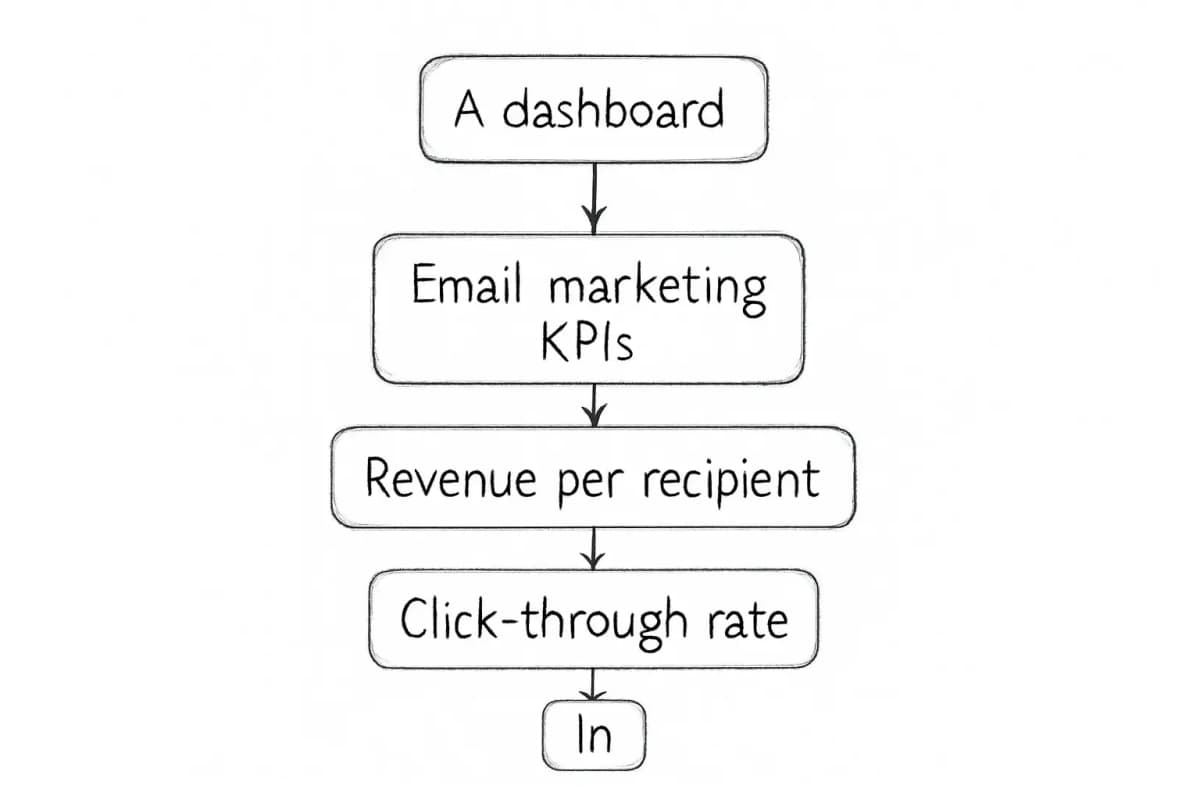
Open rates have become an unreliable primary metric. With Apple Mail Privacy Protection affecting roughly 50% of email recipients, open rates are increasingly unreliable. Revenue per recipient, click-through rate, and conversion rate per send are the metrics that actually correlate with business outcomes.
Shift your reporting to these signals:
Revenue per recipient (RPR). The clearest measure of campaign-level performance.
Click-to-conversion rate. Shows whether the content and offer are working, not just whether the subject line did.
Inbox placement rate. Use Google Postmaster Tools, Yahoo Sender Hub, and third-party inbox placement tools to monitor where your emails are landing.
Unsubscribe rate by segment. A rising unsubscribe rate in a specific segment is an early warning that your AI personalization or sending frequency needs adjustment.
Even the best AI-driven campaigns will fail if messages do not reach your audience's inbox. Monitoring inbox placement, bounce rates, and spam signals helps ensure optimization efforts are not undermined.
AI in email marketing uses machine learning algorithms to personalize content, optimize send times, and segment audiences. While predictive AI provides insights based on historical data, generative AI can use this information to create new, relevant content tailored to specific user needs at speed and scale. They work together to automate, optimize, and personalize the email marketing process.
How much does AI improve email marketing ROI?
According to McKinsey, companies that invest in AI are seeing a revenue uplift of 3 to 15% and a sales ROI uplift of 10 to 20%. More specifically, AI-powered email programs generate 41% more revenue than manual campaigns according to Salesforce benchmarks, and teams implementing the full AI stack see 3.2x higher revenue per recipient. Results vary significantly based on data quality, list size, and how many AI layers are implemented.
Does AI hurt email deliverability?
8. Track the Right Metrics for AI-Driven Campaigns
Open rates have become an unreliable primary metric. With Apple Mail Privacy Protection affecting roughly 50% of email recipients, open rates are increasingly unreliable. Revenue per recipient, click-through rate, and conversion rate per send are the metrics that actually correlate with business outcomes.
Shift your reporting to these signals:
Revenue per recipient (RPR). The clearest measure of campaign-level performance.
Click-to-conversion rate. Shows whether the content and offer are working, not just whether the subject line did.
Inbox placement rate. Use Google Postmaster Tools, Yahoo Sender Hub, and third-party inbox placement tools to monitor where your emails are landing.
Unsubscribe rate by segment. A rising unsubscribe rate in a specific segment is an early warning that your AI personalization or sending frequency needs adjustment.
Even the best AI-driven campaigns will fail if messages do not reach your audience's inbox. Monitoring inbox placement, bounce rates, and spam signals helps ensure optimization efforts are not undermined.
AI in email marketing uses machine learning algorithms to personalize content, optimize send times, and segment audiences. While predictive AI provides insights based on historical data, generative AI can use this information to create new, relevant content tailored to specific user needs at speed and scale. They work together to automate, optimize, and personalize the email marketing process.
How much does AI improve email marketing ROI?
According to McKinsey, companies that invest in AI are seeing a revenue uplift of 3 to 15% and a sales ROI uplift of 10 to 20%. More specifically, AI-powered email programs generate 41% more revenue than manual campaigns according to Salesforce benchmarks, and teams implementing the full AI stack see 3.2x higher revenue per recipient. Results vary significantly based on data quality, list size, and how many AI layers are implemented.
Does AI hurt email deliverability?
It can if used carelessly. AI-powered deliverability optimization focuses on four signal categories that mailbox providers weigh heavily: AI evaluates an email's structure before sending, including subject line patterns, link density, promotional tone, and rendering stability. Mailbox providers respond to recipient behavior, not isolated spam words. By flagging content patterns that correlate with lower engagement or higher complaints, AI helps teams adjust messaging before performance declines. The risk comes from over-sending, poor segmentation, or using AI output without human review, not from using AI itself.
What should teams do before implementing AI in email?
Start by building an ethical, strategic, and technological foundation. This means implementing transparent data practices, ensuring data privacy compliance, and fostering a culture of ethical AI usage internally. It also means establishing clear goals and plans for how you want to apply new AI advances. Having a roadmap for what you wish to accomplish should always be the first part of the plan. Start with one high-impact area, such as subject line testing or send-time optimization, measure results, then expand.
No comments yet. Be the first!
It can if used carelessly. AI-powered deliverability optimization focuses on four signal categories that mailbox providers weigh heavily: AI evaluates an email's structure before sending, including subject line patterns, link density, promotional tone, and rendering stability. Mailbox providers respond to recipient behavior, not isolated spam words. By flagging content patterns that correlate with lower engagement or higher complaints, AI helps teams adjust messaging before performance declines. The risk comes from over-sending, poor segmentation, or using AI output without human review, not from using AI itself.
What should teams do before implementing AI in email?
Start by building an ethical, strategic, and technological foundation. This means implementing transparent data practices, ensuring data privacy compliance, and fostering a culture of ethical AI usage internally. It also means establishing clear goals and plans for how you want to apply new AI advances. Having a roadmap for what you wish to accomplish should always be the first part of the plan. Start with one high-impact area, such as subject line testing or send-time optimization, measure results, then expand.