Black Friday is the highest-stakes week in email marketing. In 2024 alone, over 365 million emails were sent on Black Friday, averaging more than 250,000 per minute. Yet most of those emails were ignored. Open rates dropped 4.9% last year, not because email is dying, but because inbox fatigue is real and escalating. The brands that win are not the ones who send the most; they are the ones who plan early, segment sharply, and earn attention before it becomes scarce.
These eight Black Friday email marketing tips cover what actually moves the needle, from list hygiene to post-sale retention, all backed by real data.
Key Takeaways
Start early. By the Monday before Thanksgiving, over 40% of email campaigns already contained Black Friday discounts, helping those brands lock in sales before the holiday weekend rush.
Segmentation is your biggest lever. Johnny Cupcakes reported a 42% increase in click-through rates and a 141% increase in revenue after segmenting by interests and gender.
Deliverability protects ROI. More than 39% of email senders rarely or never practice email list hygiene, a gap that can cost you inbox placement when it matters most.
Subject lines and send timing are measurable. During Black Friday 2024, Klaviyo saw the most active email hour between 9 a.m. and 10 a.m. ET, with order volume peaking shortly after.
Post-sale emails build lasting ROI. Retaining a Black Friday buyer costs far less than acquiring a new one. Follow-up sequences that deliver value turn one-time purchasers into repeat customers.
1. Start Your Campaign at Least Two Weeks Before Black Friday
Most brands still treat Black Friday as a single-day event. That is a losing strategy.
Black Friday campaigns no longer begin on Friday; they start weeks ahead. Consumers expect early access, exclusive previews, and personalized offers. Launching campaigns early allows brands to gradually prepare their audience, optimize email performance, and maintain consistent visibility before inbox competition peaks.
Starting early also protects your deliverability. Gradual email activity helps warm up domains and establish sender credibility, ensuring mailbox providers recognize your messages as trusted and improving inbox placement when it matters most.
Black Friday is the highest-stakes week in email marketing. In 2024 alone, over 365 million emails were sent on Black Friday, averaging more than 250,000 per minute. Yet most of those emails were ignored. Open rates dropped 4.9% last year, not because email is dying, but because inbox fatigue is real and escalating. The brands that win are not the ones who send the most; they are the ones who plan early, segment sharply, and earn attention before it becomes scarce.
These eight Black Friday email marketing tips cover what actually moves the needle, from list hygiene to post-sale retention, all backed by real data.
Key Takeaways
Start early. By the Monday before Thanksgiving, over 40% of email campaigns already contained Black Friday discounts, helping those brands lock in sales before the holiday weekend rush.
Segmentation is your biggest lever. Johnny Cupcakes reported a 42% increase in click-through rates and a 141% increase in revenue after segmenting by interests and gender.
Deliverability protects ROI. More than 39% of email senders rarely or never practice email list hygiene, a gap that can cost you inbox placement when it matters most.
Subject lines and send timing are measurable. During Black Friday 2024, Klaviyo saw the most active email hour between 9 a.m. and 10 a.m. ET, with order volume peaking shortly after.
Post-sale emails build lasting ROI. Retaining a Black Friday buyer costs far less than acquiring a new one. Follow-up sequences that deliver value turn one-time purchasers into repeat customers.
1. Start Your Campaign at Least Two Weeks Before Black Friday
Most brands still treat Black Friday as a single-day event. That is a losing strategy.
Black Friday campaigns no longer begin on Friday; they start weeks ahead. Consumers expect early access, exclusive previews, and personalized offers. Launching campaigns early allows brands to gradually prepare their audience, optimize email performance, and maintain consistent visibility before inbox competition peaks.
Starting early also protects your deliverability. Gradual email activity helps warm up domains and establish sender credibility, ensuring mailbox providers recognize your messages as trusted and improving inbox placement when it matters most.
A practical three-phase structure works well:
Pre-sale (2 to 4 weeks out): Teaser emails, VIP early access opt-ins, and gift guides.
Sale period (Black Friday through Cyber Monday): Main offer emails, mid-campaign reminders, and last-chance sends.
Post-sale: Thank-you emails, upsell sequences, and re-engagement for non-openers.
Research by Sinch found that almost 57% of consumers expect to hear from brands about Black Friday at least one month before a promotion launches. If you wait until the week of, you have already missed the window for many buyers.
2. Segment Your List Before You Write a Single Email
Generic Black Friday emails get ignored. Your audience's inboxes are already overflowing with "20% off everything" messages. Sending those same generic offers will not help you stand out. By segmenting your email list, you can hyper-customize each Black Friday email: reward your most loyal customers, nudge fence-sitters toward a purchase, and feature the most relevant products based on previous browsing sessions or purchases.
The data on segmentation is hard to ignore. 90% of email marketing professionals report that using subscriber segmentation to deliver targeted messages increases performance.
Key segments to build before Black Friday:
Loyal customers: People who have purchased two or more times. Reward them with early access or an exclusive discount.
High-value browsers: Subscribers who have clicked product links but not purchased. Send specific product offers tied to what they viewed.
Lapsed customers: People who bought last Black Friday but have gone quiet. A win-back email with a compelling offer can re-activate them.
New subscribers: People who joined your list in the past 60 days. They need trust-building content alongside the offer.
Non-openers from recent campaigns: Suppress them from your main sends to protect deliverability, or send a separate re-engagement email with a different subject line.
Pre-sale (2 to 4 weeks out): Teaser emails, VIP early access opt-ins, and gift guides.
Sale period (Black Friday through Cyber Monday): Main offer emails, mid-campaign reminders, and last-chance sends.
Post-sale: Thank-you emails, upsell sequences, and re-engagement for non-openers.
Research by Sinch found that almost 57% of consumers expect to hear from brands about Black Friday at least one month before a promotion launches. If you wait until the week of, you have already missed the window for many buyers.
2. Segment Your List Before You Write a Single Email
Generic Black Friday emails get ignored. Your audience's inboxes are already overflowing with "20% off everything" messages. Sending those same generic offers will not help you stand out. By segmenting your email list, you can hyper-customize each Black Friday email: reward your most loyal customers, nudge fence-sitters toward a purchase, and feature the most relevant products based on previous browsing sessions or purchases.
The data on segmentation is hard to ignore. 90% of email marketing professionals report that using subscriber segmentation to deliver targeted messages increases performance.
Key segments to build before Black Friday:
Loyal customers: People who have purchased two or more times. Reward them with early access or an exclusive discount.
High-value browsers: Subscribers who have clicked product links but not purchased. Send specific product offers tied to what they viewed.
Lapsed customers: People who bought last Black Friday but have gone quiet. A win-back email with a compelling offer can re-activate them.
New subscribers: People who joined your list in the past 60 days. They need trust-building content alongside the offer.
Non-openers from recent campaigns: Suppress them from your main sends to protect deliverability, or send a separate re-engagement email with a different subject line.
You can write the best Black Friday email of the year and still lose if it lands in spam. Establishing proper authentication, maintaining a clean and engaged list, scaling volume thoughtfully, and adhering to best practice standards all contribute to a strong sender reputation. Sender reputation is the most valuable indicator of high email performance during BFCM rush hours, and protecting it ensures your revenue-driving emails reach the inbox.
The core deliverability checklist before Black Friday:
Authenticate your domain. Deliverability starts with authentication. Without it, email service providers like Gmail or Outlook will not trust your messages. SPF tells receiving servers which IPs or platforms can send on your behalf. Missing or broken SPF records often lead to messages being flagged or rejected. DKIM adds a digital signature to your email, confirming it has not been changed in transit, which builds trust and proves the email came from your domain.
Clean your list. Email lists degrade by 20 to 25% annually, and inbox providers like Gmail prioritize sender reputation. Remove hard bounces, role-based addresses, and long-dormant contacts. "Start this process at least 3 months before BFCM to improve sender reputation ahead of peak sending," says Bill Biggers, deliverability strategist at Klaviyo.
Warm up your sending volume gradually. Sending a large volume of emails suddenly can raise red flags with inbox providers, potentially leading to your domain or IP being flagged or even blocklisted.
4. Write Subject Lines That Earn the Open
Email inboxes are a crowded place to be at the best of times, never mind on Black Friday, when every retailer wants to capitalize on consumers' willingness to buy. Email marketing platform Omnisend processed 1.13 billion emails in the week surrounding BFCM. Klaviyo reported similar figures: at its peak, merchants sent 420 million messages in a single hour on Black Friday.
Against that volume, a weak subject line is a campaign killer.
What works in Black Friday subject lines:
Specificity beats hype. "40% off everything. 24 hours." converts better than "Black Friday Sale Inside!" The first tells a buyer exactly what they get and when it expires.
Urgency tied to a real deadline. Countdown language works when the deadline is real. Fake urgency trains subscribers to ignore you.
Personalization. Personalized emails see a 29% higher open rate compared to non-personalized emails. Even a first name in the subject line can separate your email from the pile.
A/B test before the big day. A/B test different subject line variations to see what resonates with your audience, such as personalizing by first name, including a relevant phrase, or using emojis.
For more subject line tactics that apply beyond Black Friday, see our full guide on email subject line best practices that boost open rates.
5. Personalize Your Offers, Not Just Your Greeting
Personalization in Black Friday campaigns goes far deeper than "Hi [First Name]." The brands with the strongest BFCM results use behavioral data to match the offer to the individual.
You can write the best Black Friday email of the year and still lose if it lands in spam. Establishing proper authentication, maintaining a clean and engaged list, scaling volume thoughtfully, and adhering to best practice standards all contribute to a strong sender reputation. Sender reputation is the most valuable indicator of high email performance during BFCM rush hours, and protecting it ensures your revenue-driving emails reach the inbox.
The core deliverability checklist before Black Friday:
Authenticate your domain. Deliverability starts with authentication. Without it, email service providers like Gmail or Outlook will not trust your messages. SPF tells receiving servers which IPs or platforms can send on your behalf. Missing or broken SPF records often lead to messages being flagged or rejected. DKIM adds a digital signature to your email, confirming it has not been changed in transit, which builds trust and proves the email came from your domain.
Clean your list. Email lists degrade by 20 to 25% annually, and inbox providers like Gmail prioritize sender reputation. Remove hard bounces, role-based addresses, and long-dormant contacts. "Start this process at least 3 months before BFCM to improve sender reputation ahead of peak sending," says Bill Biggers, deliverability strategist at Klaviyo.
Warm up your sending volume gradually. Sending a large volume of emails suddenly can raise red flags with inbox providers, potentially leading to your domain or IP being flagged or even blocklisted.
4. Write Subject Lines That Earn the Open
Email inboxes are a crowded place to be at the best of times, never mind on Black Friday, when every retailer wants to capitalize on consumers' willingness to buy. Email marketing platform Omnisend processed 1.13 billion emails in the week surrounding BFCM. Klaviyo reported similar figures: at its peak, merchants sent 420 million messages in a single hour on Black Friday.
Against that volume, a weak subject line is a campaign killer.
What works in Black Friday subject lines:
Specificity beats hype. "40% off everything. 24 hours." converts better than "Black Friday Sale Inside!" The first tells a buyer exactly what they get and when it expires.
Urgency tied to a real deadline. Countdown language works when the deadline is real. Fake urgency trains subscribers to ignore you.
Personalization. Personalized emails see a 29% higher open rate compared to non-personalized emails. Even a first name in the subject line can separate your email from the pile.
A/B test before the big day. A/B test different subject line variations to see what resonates with your audience, such as personalizing by first name, including a relevant phrase, or using emojis.
For more subject line tactics that apply beyond Black Friday, see our full guide on email subject line best practices that boost open rates.
5. Personalize Your Offers, Not Just Your Greeting
Personalization in Black Friday campaigns goes far deeper than "Hi [First Name]." The brands with the strongest BFCM results use behavioral data to match the offer to the individual.
Bigger discounts do not necessarily equate to higher conversions. During BFCM 2024, the discounts that drove the best conversion rates were in the 10 to 15% or 20 to 25% off range. This tells you that relevance matters more than the size of the discount.
Real-world results confirm this. In 2024, luxury brand Shinola embraced a data-driven approach for its first full-scale BFCM campaign. Shinola implemented strategic segmentation, optimized email and SMS flows, and targeted messaging to their most engaged customers. This strategy led to a 27% year-over-year increase in Klaviyo-attributed revenue, with a remarkable 48% rise in revenue per email recipient and a 40% boost in revenue from automated flows.
Practical personalization levers to use:
Product recommendations based on purchase history or recent browsing behavior
Dynamic content blocks that show different offers by segment
VIP-tier discounts that reward your highest-value customers with a deeper deal than general subscribers receive
Abandoned cart sequences activated during the sale window, since 60% of shoppers return to finish their purchase after getting a personalized abandoned cart reminder
For more on this topic, explore our article on email personalization techniques that boost conversions.
6. Optimize Every Email for Mobile
In 2024, mobile devices drove 70% of online orders during Cyber Week. If your emails are not built for a small screen, you are losing conversions to competitors who are.
Responsive email design increases mobile clicks by 15%. The design principles that matter most for Black Friday:
Use a single-column layout that does not require horizontal scrolling.
Place your primary CTA and offer above the fold so subscribers see the deal without scrolling.
Keep CTA buttons large enough to tap easily (at least 44x44px).
With 35.4% of email opens happening in Dark Mode, ensure your emails are easy to read and engage with across display settings.
Preview every send on both iOS and Android before it goes live.
Clean design also signals credibility. No matter how attractive your prices are, you cannot afford to send out an average-looking sales email with multiple CTA buttons and a mismatched visual style. One clear offer, one primary CTA, and a design that aligns with your brand will outperform cluttered promotional layouts every time.
7. Time Your Sends and Manage Frequency Carefully
Send timing is not just a courtesy; it is a revenue variable.
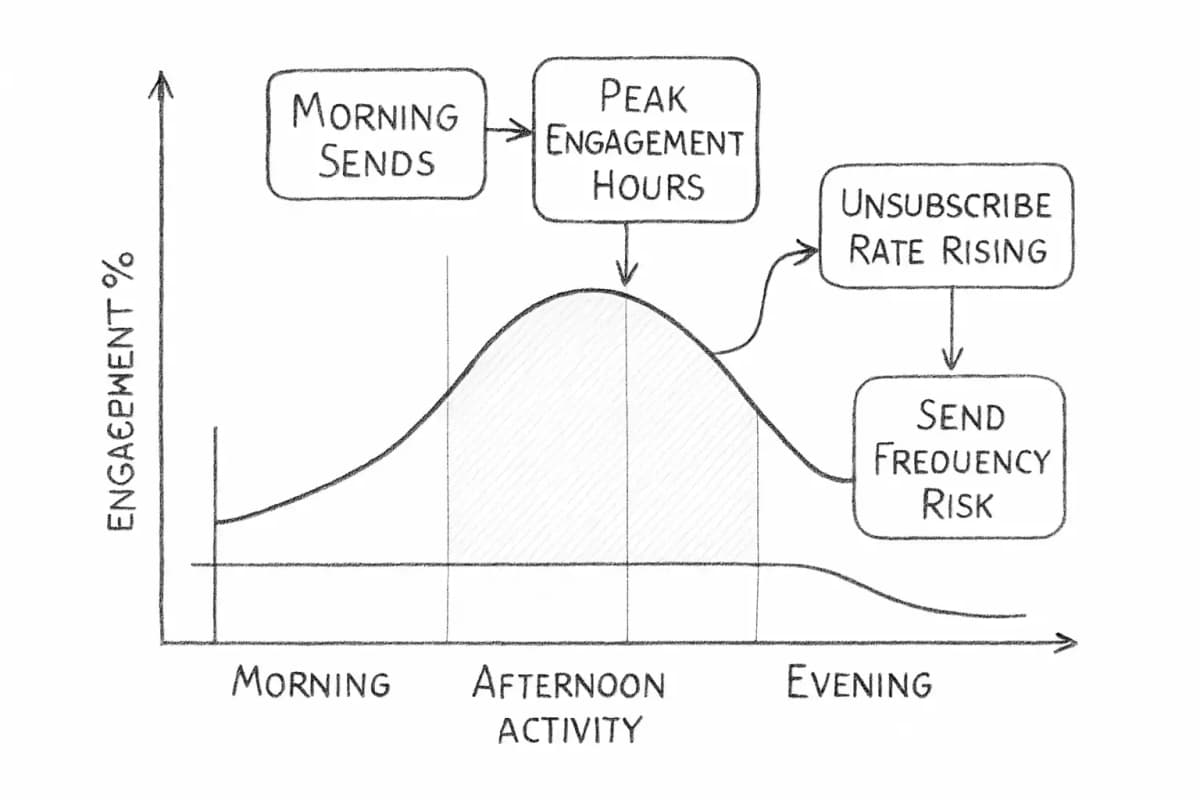
During Black Friday 2024, Klaviyo saw the most active email hour for its customers between 9 a.m. and 10 a.m. ET, with order volume peaking shortly after. Morning sends on the day itself consistently outperform afternoon sends in terms of click-to-open rates.
For the days leading up to Black Friday, Klaviyo recommends emailing your most engaged lists on Thursdays, Fridays, and Sundays in the weeks before the sale, and emailing VIPs between Tuesday and Thursday before Black Friday.
On frequency: more is not better. Communicate every day between Black Friday and Cyber Monday, but not necessarily to your entire list. Use engagement-based data such as opens and clicks to determine how often to send to each group. More engaged means more sends; less engaged means fewer sends.
Bigger discounts do not necessarily equate to higher conversions. During BFCM 2024, the discounts that drove the best conversion rates were in the 10 to 15% or 20 to 25% off range. This tells you that relevance matters more than the size of the discount.
Real-world results confirm this. In 2024, luxury brand Shinola embraced a data-driven approach for its first full-scale BFCM campaign. Shinola implemented strategic segmentation, optimized email and SMS flows, and targeted messaging to their most engaged customers. This strategy led to a 27% year-over-year increase in Klaviyo-attributed revenue, with a remarkable 48% rise in revenue per email recipient and a 40% boost in revenue from automated flows.
Practical personalization levers to use:
Product recommendations based on purchase history or recent browsing behavior
Dynamic content blocks that show different offers by segment
VIP-tier discounts that reward your highest-value customers with a deeper deal than general subscribers receive
Abandoned cart sequences activated during the sale window, since 60% of shoppers return to finish their purchase after getting a personalized abandoned cart reminder
For more on this topic, explore our article on email personalization techniques that boost conversions.
6. Optimize Every Email for Mobile
In 2024, mobile devices drove 70% of online orders during Cyber Week. If your emails are not built for a small screen, you are losing conversions to competitors who are.
Responsive email design increases mobile clicks by 15%. The design principles that matter most for Black Friday:
Use a single-column layout that does not require horizontal scrolling.
Place your primary CTA and offer above the fold so subscribers see the deal without scrolling.
Keep CTA buttons large enough to tap easily (at least 44x44px).
With 35.4% of email opens happening in Dark Mode, ensure your emails are easy to read and engage with across display settings.
Preview every send on both iOS and Android before it goes live.
Clean design also signals credibility. No matter how attractive your prices are, you cannot afford to send out an average-looking sales email with multiple CTA buttons and a mismatched visual style. One clear offer, one primary CTA, and a design that aligns with your brand will outperform cluttered promotional layouts every time.
7. Time Your Sends and Manage Frequency Carefully
Send timing is not just a courtesy; it is a revenue variable.
During Black Friday 2024, Klaviyo saw the most active email hour for its customers between 9 a.m. and 10 a.m. ET, with order volume peaking shortly after. Morning sends on the day itself consistently outperform afternoon sends in terms of click-to-open rates.
For the days leading up to Black Friday, Klaviyo recommends emailing your most engaged lists on Thursdays, Fridays, and Sundays in the weeks before the sale, and emailing VIPs between Tuesday and Thursday before Black Friday.
On frequency: more is not better. Communicate every day between Black Friday and Cyber Monday, but not necessarily to your entire list. Use engagement-based data such as opens and clicks to determine how often to send to each group. More engaged means more sends; less engaged means fewer sends.
Watch your metrics in real time. If you are increasing sending frequency over the holidays, pay attention to your email marketing metrics as the season progresses. When unsubscribes start climbing and open rates start declining, it could be a sign you have pushed things too far.
8. Build a Post-Sale Email Sequence to Retain Buyers
Most Black Friday guides stop at Cyber Monday. That is where the real opportunity starts.
Turning one-time shoppers into loyal customers requires strategic follow-ups. Use data from their Black Friday purchases to send personalized recommendations or offers. Thoughtful post-sale emails strengthen brand loyalty and encourage future interactions.
A simple post-sale sequence to implement:
Order confirmation and shipping update (immediate): More than 94% of consumers say transactional messages are important during holiday shopping. These emails set the post-purchase tone.
Thank-you email (24 to 48 hours post-purchase): Acknowledge the purchase, reinforce your brand, and set expectations for what comes next.
Product recommendation email (5 to 7 days post-purchase): Use purchase data to surface relevant complementary products.
Re-engagement email for non-buyers (3 to 5 days after sale ends): A "last chance" or "extended access" email can recapture subscribers who opened but did not convert during the main sale window.
According to MoEngage research, 31.9% of consumers say their most frustrating experience with a brand was receiving too frequent or too little communication. Post-sale emails succeed when they deliver genuine value rather than recycled urgency.
Research by Sinch found that almost 57% of consumers expect to hear from brands about Black Friday at least one month before a promotion launches. A practical starting point is two to four weeks before the sale for most brands. For your most engaged VIP segment, sending as early as six weeks out is reasonable if you have genuine value to offer, such as early access or exclusive previews.
Watch your metrics in real time. If you are increasing sending frequency over the holidays, pay attention to your email marketing metrics as the season progresses. When unsubscribes start climbing and open rates start declining, it could be a sign you have pushed things too far.
8. Build a Post-Sale Email Sequence to Retain Buyers
Most Black Friday guides stop at Cyber Monday. That is where the real opportunity starts.
Turning one-time shoppers into loyal customers requires strategic follow-ups. Use data from their Black Friday purchases to send personalized recommendations or offers. Thoughtful post-sale emails strengthen brand loyalty and encourage future interactions.
A simple post-sale sequence to implement:
Order confirmation and shipping update (immediate): More than 94% of consumers say transactional messages are important during holiday shopping. These emails set the post-purchase tone.
Thank-you email (24 to 48 hours post-purchase): Acknowledge the purchase, reinforce your brand, and set expectations for what comes next.
Product recommendation email (5 to 7 days post-purchase): Use purchase data to surface relevant complementary products.
Re-engagement email for non-buyers (3 to 5 days after sale ends): A "last chance" or "extended access" email can recapture subscribers who opened but did not convert during the main sale window.
According to MoEngage research, 31.9% of consumers say their most frustrating experience with a brand was receiving too frequent or too little communication. Post-sale emails succeed when they deliver genuine value rather than recycled urgency.
Research by Sinch found that almost 57% of consumers expect to hear from brands about Black Friday at least one month before a promotion launches. A practical starting point is two to four weeks before the sale for most brands. For your most engaged VIP segment, sending as early as six weeks out is reasonable if you have genuine value to offer, such as early access or exclusive previews.
How many emails should I send during Black Friday week?
There is no universal answer, but the data points toward frequency by segment. Communicate every day between Black Friday and Cyber Monday, but not necessarily to your entire list. Use engagement-based data to determine how often to send to each group. More engaged means more sends; less engaged means fewer sends. Three to five emails across the BFCM period is a reasonable baseline for most brands, scaled up for highly engaged subscribers.
What makes a Black Friday subject line work?
Specificity and urgency tied to a real deadline perform best. Vague promotional language ("Big deals inside!") gets ignored. Lines that state the offer, the savings amount, and the time limit give the reader a reason to act now. Statistics show that 65% of marketing professionals personalize their email subject lines, and that personalization reliably lifts open rates. Test at least two to three variations before your main send.
How do I protect my email deliverability during Black Friday?
If you plan to send more than usual, gradually increase your volume in the weeks before Black Friday. Sudden spikes can trigger filters. Beyond volume ramping, keep your authentication records current (SPF, DKIM, DMARC), remove hard bounces and inactive contacts before the season starts, and segment your list so you are only sending to subscribers who have engaged in the past 90 to 180 days. "Emailing unengaged contacts hurts deliverability and reduces the likelihood that your top customers will even see your promotions," according to Klaviyo deliverability strategist Bill Biggers.
No comments yet. Be the first!
How many emails should I send during Black Friday week?
There is no universal answer, but the data points toward frequency by segment. Communicate every day between Black Friday and Cyber Monday, but not necessarily to your entire list. Use engagement-based data to determine how often to send to each group. More engaged means more sends; less engaged means fewer sends. Three to five emails across the BFCM period is a reasonable baseline for most brands, scaled up for highly engaged subscribers.
What makes a Black Friday subject line work?
Specificity and urgency tied to a real deadline perform best. Vague promotional language ("Big deals inside!") gets ignored. Lines that state the offer, the savings amount, and the time limit give the reader a reason to act now. Statistics show that 65% of marketing professionals personalize their email subject lines, and that personalization reliably lifts open rates. Test at least two to three variations before your main send.
How do I protect my email deliverability during Black Friday?
If you plan to send more than usual, gradually increase your volume in the weeks before Black Friday. Sudden spikes can trigger filters. Beyond volume ramping, keep your authentication records current (SPF, DKIM, DMARC), remove hard bounces and inactive contacts before the season starts, and segment your list so you are only sending to subscribers who have engaged in the past 90 to 180 days. "Emailing unengaged contacts hurts deliverability and reduces the likelihood that your top customers will even see your promotions," according to Klaviyo deliverability strategist Bill Biggers.