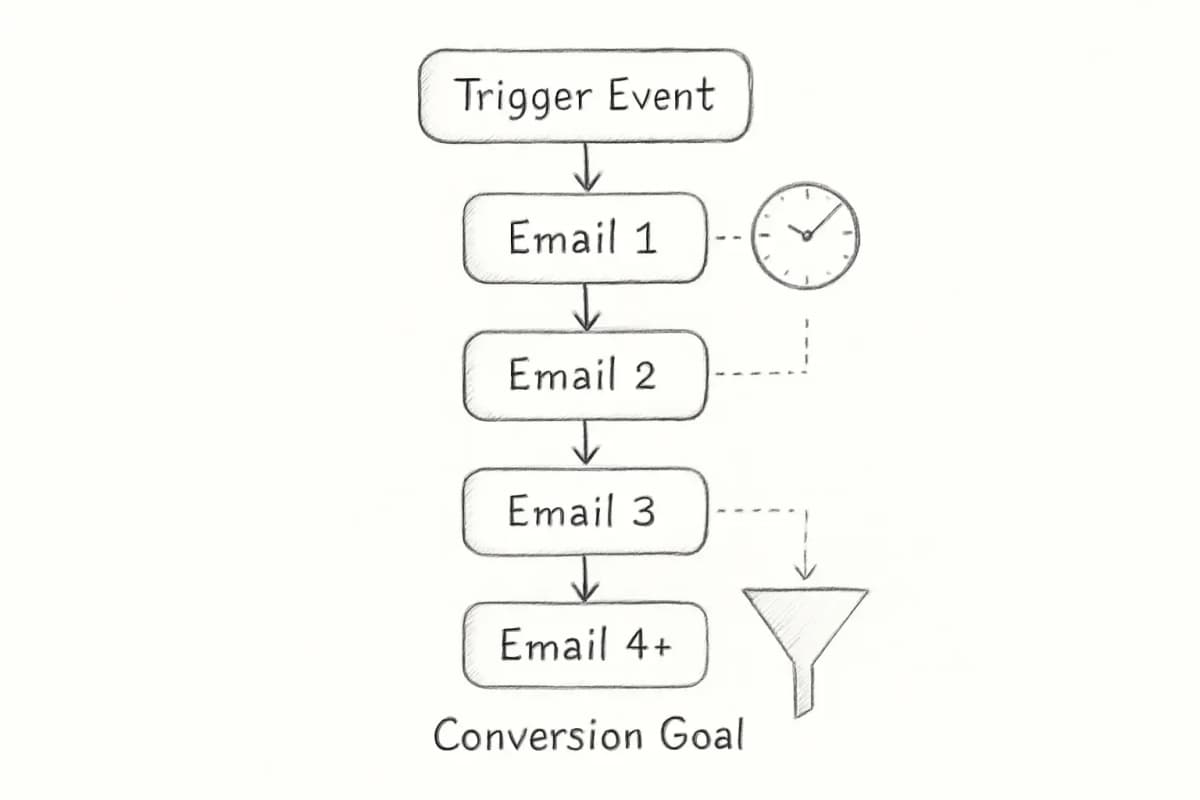
Most businesses send one email and hope for the best. Drip marketing email changes that model entirely. Instead of a single message, you send a pre-planned sequence that delivers the right content to the right person at the right time, triggered by behavior or timing. The result is measurably better than batch-and-blast: automated emails have 52% higher open rates, 332% higher click rates, and 2,361% better conversion rates compared to regular campaigns, according to Omnisend.
This guide covers everything you need to build, optimize, and scale drip email marketing campaigns, from core strategy to platform selection to the metrics that actually matter.
Key Takeaways
In 2024, automated emails drove 37% of all email-generated sales despite accounting for just 2% of email volume.
67% of marketers use automation for drip or nurture campaigns.
Well-targeted drip campaigns typically achieve 25 to 45 percent open rates, compared to 15 to 25 percent for broadcast newsletters.
Segmentation and behavioral triggers are the two levers that separate high-performing drip sequences from generic ones.
Choosing the right drip email marketing platform determines what you can automate, personalize, and measure.
What a Drip Marketing Email Actually Is
A drip marketing email is part of an automated sequence sent to subscribers based on a defined trigger or time interval. Drip campaigns, also called automated email sequences or autoresponders, are the backbone of email marketing. They deliver the right message at the right time based on subscriber behavior, time delays, or lifecycle triggers.
The key distinction from a standard email blast is the logic behind delivery. An email sequence typically refers to a predetermined series of emails sent in a specific order at set intervals, regardless of subscriber behavior. A drip campaign is more dynamic, as emails drip out based on specific triggers such as user actions, behaviors, or engagement levels. In practice, drip campaigns offer more flexibility and personalization, allowing businesses to adapt messaging based on how subscribers interact with the content.
Common drip campaign types include:
Most businesses send one email and hope for the best. Drip marketing email changes that model entirely. Instead of a single message, you send a pre-planned sequence that delivers the right content to the right person at the right time, triggered by behavior or timing. The result is measurably better than batch-and-blast: automated emails have 52% higher open rates, 332% higher click rates, and 2,361% better conversion rates compared to regular campaigns, according to Omnisend.
This guide covers everything you need to build, optimize, and scale drip email marketing campaigns, from core strategy to platform selection to the metrics that actually matter.
Key Takeaways
In 2024, automated emails drove 37% of all email-generated sales despite accounting for just 2% of email volume.
67% of marketers use automation for drip or nurture campaigns.
Well-targeted drip campaigns typically achieve 25 to 45 percent open rates, compared to 15 to 25 percent for broadcast newsletters.
Segmentation and behavioral triggers are the two levers that separate high-performing drip sequences from generic ones.
Choosing the right drip email marketing platform determines what you can automate, personalize, and measure.
What a Drip Marketing Email Actually Is
A drip marketing email is part of an automated sequence sent to subscribers based on a defined trigger or time interval. Drip campaigns, also called automated email sequences or autoresponders, are the backbone of email marketing. They deliver the right message at the right time based on subscriber behavior, time delays, or lifecycle triggers.
The key distinction from a standard email blast is the logic behind delivery. An email sequence typically refers to a predetermined series of emails sent in a specific order at set intervals, regardless of subscriber behavior. A drip campaign is more dynamic, as emails drip out based on specific triggers such as user actions, behaviors, or engagement levels. In practice, drip campaigns offer more flexibility and personalization, allowing businesses to adapt messaging based on how subscribers interact with the content.
Common drip campaign types include:
Welcome sequences sent immediately after sign-up
Lead nurture sequences for prospects who downloaded content or attended a webinar
Onboarding sequences that walk new customers through a product
Abandoned cart sequences targeting shoppers who left without purchasing
Re-engagement sequences for subscribers who have gone inactive
Welcome campaigns introduce your brand and start building trust right away. Lead nurture campaigns help guide prospects toward a buying decision and are commonly sent to people who have downloaded an asset or attended an online event. Sales campaigns drive conversions by sharing product details, testimonials, and case studies. Re-engagement campaigns target dormant leads. Onboarding campaigns walk new customers through how to get the most out of your product or service, reducing churn and improving the overall customer experience.
The Business Case: Why Drip Campaigns Outperform
The performance gap between drip campaigns and one-off emails is substantial enough that the data alone should drive the decision.
Automated emails generate 320% more revenue than non-automated emails. At the macro level, 82% of marketers use automation to create triggered emails, which result in 8 times more opens and greater earnings than typical bulk emails.
The revenue impact is clearest in ecommerce. One brand's welcome series achieved a 998% greater click rate and 3,274% higher revenue per email over promotional campaigns, and an impressive 11% conversion rate. The welcome series generated 39% of the company's total email marketing revenue despite comprising only 1.22% of total email sends.
For abandoned cart recovery, the numbers are equally striking. One customized abandoned cart series achieved a 43.9% open rate, 44% conversion rate, and revenue per email 2,195% higher than its promotional campaigns.
The efficiency argument is also real. The drip marketing email is one of the more practical tools in email marketing for business, and the benefits go beyond convenience. When built correctly, drip sequences lower your cost per lead, increase reader engagement, and give you clear data.
How to Build a Drip Email Marketing Campaign
Building a drip email marketing campaign that converts requires five components working together.
1. Define One Clear Goal Per Sequence
It is best to have only one goal per drip campaign. Otherwise, it will be difficult to keep track of all the actions taken within it. Whether the goal is trial conversion, first purchase, or re-engagement, the objective shapes every email in the sequence.
2. Map Behavioral Triggers
The most effective triggers include newsletter signups, product page visits, cart abandonment, content downloads, demo requests, and purchase milestones. Each action tells you where that person is in their buying journey.
Welcome sequences sent immediately after sign-up
Lead nurture sequences for prospects who downloaded content or attended a webinar
Onboarding sequences that walk new customers through a product
Abandoned cart sequences targeting shoppers who left without purchasing
Re-engagement sequences for subscribers who have gone inactive
Welcome campaigns introduce your brand and start building trust right away. Lead nurture campaigns help guide prospects toward a buying decision and are commonly sent to people who have downloaded an asset or attended an online event. Sales campaigns drive conversions by sharing product details, testimonials, and case studies. Re-engagement campaigns target dormant leads. Onboarding campaigns walk new customers through how to get the most out of your product or service, reducing churn and improving the overall customer experience.
The Business Case: Why Drip Campaigns Outperform
The performance gap between drip campaigns and one-off emails is substantial enough that the data alone should drive the decision.
Automated emails generate 320% more revenue than non-automated emails. At the macro level, 82% of marketers use automation to create triggered emails, which result in 8 times more opens and greater earnings than typical bulk emails.
The revenue impact is clearest in ecommerce. One brand's welcome series achieved a 998% greater click rate and 3,274% higher revenue per email over promotional campaigns, and an impressive 11% conversion rate. The welcome series generated 39% of the company's total email marketing revenue despite comprising only 1.22% of total email sends.
For abandoned cart recovery, the numbers are equally striking. One customized abandoned cart series achieved a 43.9% open rate, 44% conversion rate, and revenue per email 2,195% higher than its promotional campaigns.
The efficiency argument is also real. The drip marketing email is one of the more practical tools in email marketing for business, and the benefits go beyond convenience. When built correctly, drip sequences lower your cost per lead, increase reader engagement, and give you clear data.
How to Build a Drip Email Marketing Campaign
Building a drip email marketing campaign that converts requires five components working together.
1. Define One Clear Goal Per Sequence
It is best to have only one goal per drip campaign. Otherwise, it will be difficult to keep track of all the actions taken within it. Whether the goal is trial conversion, first purchase, or re-engagement, the objective shapes every email in the sequence.
2. Map Behavioral Triggers
The most effective triggers include newsletter signups, product page visits, cart abandonment, content downloads, demo requests, and purchase milestones. Each action tells you where that person is in their buying journey.
Let automation handle trigger-based sends: when someone downloads your whitepaper, they get relevant case studies. When they visit pricing three times, they receive a demo invitation. When engagement drops, they enter re-engagement sequences.
3. Segment Your Audience
Segmentation is the variable that decides whether your drip sequence feels personal or like a mass mailing. According to HubSpot research, segmented emails drive 50% more clickthroughs and 30% more open rates than unsegmented ones.
Segment by:
Demographics: age, location, job title
Behavior: pages visited, links clicked, purchases made
Lifecycle stage: new subscriber, active customer, lapsed buyer
The content in an email drip marketing campaign, while part of a series, must also be able to stand on its own. If a prospect does not open the first two emails but engages with the third, they should be able to understand the call to action regardless of which email they open. Do not assume a subscriber reads every email in a series. Ensure every email expresses context and relevance. That way, you will gain the trust and credibility required to nurture leads.
5. Set Cadence and Sequence Length
Most effective drip campaigns include between 4 and 7 emails spaced out over a week or two, though the right cadence depends on your audience and goal. 59% of people say the most common reason they unsubscribe is too frequent emails, so spacing matters as much as content.
Segmentation and Personalization: The Two Performance Levers
Personalization in drip marketing goes well beyond using a subscriber's first name. Successful drip marketing requires personalization. Once you get your leads, you can figure out how to provide relevant content over time, which helps you chart and respond to the different stages of your customers' journey. When you tailor messages based on customer behavior, you can more easily segment your audiences.
Segmenting the audience based on interests, behaviors, or demographics allows marketers to send tailored messages that resonate. Dynamic content can display different snippets based on recipient actions or preferences. Adding personalized recommendations based on past interactions or purchases increases the likelihood of conversions.
Let automation handle trigger-based sends: when someone downloads your whitepaper, they get relevant case studies. When they visit pricing three times, they receive a demo invitation. When engagement drops, they enter re-engagement sequences.
3. Segment Your Audience
Segmentation is the variable that decides whether your drip sequence feels personal or like a mass mailing. According to HubSpot research, segmented emails drive 50% more clickthroughs and 30% more open rates than unsegmented ones.
Segment by:
Demographics: age, location, job title
Behavior: pages visited, links clicked, purchases made
Lifecycle stage: new subscriber, active customer, lapsed buyer
The content in an email drip marketing campaign, while part of a series, must also be able to stand on its own. If a prospect does not open the first two emails but engages with the third, they should be able to understand the call to action regardless of which email they open. Do not assume a subscriber reads every email in a series. Ensure every email expresses context and relevance. That way, you will gain the trust and credibility required to nurture leads.
5. Set Cadence and Sequence Length
Most effective drip campaigns include between 4 and 7 emails spaced out over a week or two, though the right cadence depends on your audience and goal. 59% of people say the most common reason they unsubscribe is too frequent emails, so spacing matters as much as content.
Segmentation and Personalization: The Two Performance Levers
Personalization in drip marketing goes well beyond using a subscriber's first name. Successful drip marketing requires personalization. Once you get your leads, you can figure out how to provide relevant content over time, which helps you chart and respond to the different stages of your customers' journey. When you tailor messages based on customer behavior, you can more easily segment your audiences.
Segmenting the audience based on interests, behaviors, or demographics allows marketers to send tailored messages that resonate. Dynamic content can display different snippets based on recipient actions or preferences. Adding personalized recommendations based on past interactions or purchases increases the likelihood of conversions.
The customer journey also dictates messaging tone:
Awareness stage: educational content that introduces your brand
Consideration stage: comparisons, testimonials, and case studies
Decision stage: personalized offers or limited-time promotions
Drip customers using dynamic segments earn 5x more revenue than those who do not, according to Drip's platform data.
For a tactical breakdown of personalization, our guide on email personalization techniques that boost conversions 47% covers dynamic content, behavioral triggers, and real-world examples.
Choosing a Drip Email Marketing Platform
The right drip email marketing platform determines the ceiling of what your campaigns can do. There are three big things to consider when choosing a drip marketing platform: ease of use, support for segmentation, personalization, and integrations.
Key features to evaluate:
Visual automation builder with conditional branching (if/else logic)
Behavioral triggers tied to product or site activity, not just time delays
A/B testing within automated sequences, not just one-off campaigns
Revenue attribution so you can trace which sequences drive conversions
Deliverability infrastructure including DKIM, SPF, and DMARC authentication
The best drip campaign software in 2026 shares several key traits: a visual sequence builder that lets you map out multi-step flows with conditional branching, delays, and goal tracking; behavioral triggers that go beyond simple time-based delays; AI-powered content assistance that accelerates sequence creation; strong deliverability so your drip emails actually reach the inbox; and analytics that tie drip campaign performance back to revenue, not just open rates.
Popular drip email marketing platforms by use case:
ActiveCampaign for businesses needing advanced CRM integration and multichannel automation
Klaviyo and Omnisend for ecommerce operations requiring deep behavior-based sequences
Brevo for small businesses and growing startups that need an intuitive interface for building both basic workflows and advanced drip campaigns
HubSpot for teams that want drip campaigns inside a broader CRM and sales platform
Kit (formerly ConvertKit) for content creators managing audience-based email businesses
When evaluating cost, a fair pricing model is a distinguishing feature of good drip email marketing software. Ask whether the platform charges by contact list size and whether complex drip workflows are included in the base plan.
The customer journey also dictates messaging tone:
Awareness stage: educational content that introduces your brand
Consideration stage: comparisons, testimonials, and case studies
Decision stage: personalized offers or limited-time promotions
Drip customers using dynamic segments earn 5x more revenue than those who do not, according to Drip's platform data.
For a tactical breakdown of personalization, our guide on email personalization techniques that boost conversions 47% covers dynamic content, behavioral triggers, and real-world examples.
Choosing a Drip Email Marketing Platform
The right drip email marketing platform determines the ceiling of what your campaigns can do. There are three big things to consider when choosing a drip marketing platform: ease of use, support for segmentation, personalization, and integrations.
Key features to evaluate:
Visual automation builder with conditional branching (if/else logic)
Behavioral triggers tied to product or site activity, not just time delays
A/B testing within automated sequences, not just one-off campaigns
Revenue attribution so you can trace which sequences drive conversions
Deliverability infrastructure including DKIM, SPF, and DMARC authentication
The best drip campaign software in 2026 shares several key traits: a visual sequence builder that lets you map out multi-step flows with conditional branching, delays, and goal tracking; behavioral triggers that go beyond simple time-based delays; AI-powered content assistance that accelerates sequence creation; strong deliverability so your drip emails actually reach the inbox; and analytics that tie drip campaign performance back to revenue, not just open rates.
Popular drip email marketing platforms by use case:
ActiveCampaign for businesses needing advanced CRM integration and multichannel automation
Klaviyo and Omnisend for ecommerce operations requiring deep behavior-based sequences
Brevo for small businesses and growing startups that need an intuitive interface for building both basic workflows and advanced drip campaigns
HubSpot for teams that want drip campaigns inside a broader CRM and sales platform
Kit (formerly ConvertKit) for content creators managing audience-based email businesses
When evaluating cost, a fair pricing model is a distinguishing feature of good drip email marketing software. Ask whether the platform charges by contact list size and whether complex drip workflows are included in the base plan.
Metrics That Matter for Drip Email Marketing Campaigns
One of the biggest advantages of email marketing drip campaigns is that everything is trackable. You can monitor open rates, click-through rates, conversions, unsubscribes, and revenue tied to specific sequences.
Track these metrics at the sequence level, not just individual email level:
Open rate by email position (drop-offs indicate weak subject lines or cadence issues)
Click-through rate as a signal of content relevance
Conversion rate mapped to the campaign's primary goal
Sequence completion rate to identify where subscribers drop off
Revenue per email for ecommerce or product-led sequences
Unsubscribe rate per email as an early warning for frequency or relevance problems
Welcome drips often see the highest open rates at 40 to 60 percent because subscribers are most engaged immediately after signup. Onboarding drips typically average 30 to 45 percent. Re-engagement drips targeting inactive users may see rates as low as 10 to 20 percent.
Focus more on trends and conversion metrics than absolute open rates, especially given the impact of Apple Mail Privacy Protection on open rate accuracy.
Optimization: How to Improve Drip Campaign Performance Over Time
A drip campaign is not a set-and-forget system. The highest-performing teams treat their sequences as living assets.
Start with subject lines. A/B test subject lines first, since they have the largest impact on open rates. Then test email length, calls to action, and send timing in separate tests.
Audit completion rates. Examine completion rates by looking at how many subscribers reach the end of each sequence versus dropping off at intermediate emails. High drop-off at a specific email suggests that message needs revision or the drip cadence is too aggressive.
Use AI for smarter timing. AI can analyze behavior patterns to predict optimal send times, recommend subject lines for specific segments, and adjust email frequency based on individual engagement.
Monitor deliverability. Authentication protocols like DKIM, SPF, and DMARC are not optional. They are your first defense against spoofing and phishing flags that could sink your deliverability.
Metrics That Matter for Drip Email Marketing Campaigns
One of the biggest advantages of email marketing drip campaigns is that everything is trackable. You can monitor open rates, click-through rates, conversions, unsubscribes, and revenue tied to specific sequences.
Track these metrics at the sequence level, not just individual email level:
Open rate by email position (drop-offs indicate weak subject lines or cadence issues)
Click-through rate as a signal of content relevance
Conversion rate mapped to the campaign's primary goal
Sequence completion rate to identify where subscribers drop off
Revenue per email for ecommerce or product-led sequences
Unsubscribe rate per email as an early warning for frequency or relevance problems
Welcome drips often see the highest open rates at 40 to 60 percent because subscribers are most engaged immediately after signup. Onboarding drips typically average 30 to 45 percent. Re-engagement drips targeting inactive users may see rates as low as 10 to 20 percent.
Focus more on trends and conversion metrics than absolute open rates, especially given the impact of Apple Mail Privacy Protection on open rate accuracy.
Optimization: How to Improve Drip Campaign Performance Over Time
A drip campaign is not a set-and-forget system. The highest-performing teams treat their sequences as living assets.
Start with subject lines. A/B test subject lines first, since they have the largest impact on open rates. Then test email length, calls to action, and send timing in separate tests.
Audit completion rates. Examine completion rates by looking at how many subscribers reach the end of each sequence versus dropping off at intermediate emails. High drop-off at a specific email suggests that message needs revision or the drip cadence is too aggressive.
Use AI for smarter timing. AI can analyze behavior patterns to predict optimal send times, recommend subject lines for specific segments, and adjust email frequency based on individual engagement.
Monitor deliverability. Authentication protocols like DKIM, SPF, and DMARC are not optional. They are your first defense against spoofing and phishing flags that could sink your deliverability.
Add interactive content. In 2025, more drip emails include features like polls, quizzes, or product carousels directly inside the message. Marketing automation platforms make it possible to embed and track these interactions. When someone answers a quick survey inside an email, that data flows back into the automation system and can adjust the next steps in the drip campaign.
Building strong welcome sequences is also foundational to overall drip performance. Our welcome email sequence best practices guide walks through the first 7 to 14 days in detail.
Frequently Asked Questions
What is the difference between a drip campaign and an email newsletter?
A newsletter is sent to your full list on a scheduled basis, typically with the same content for everyone. A drip marketing email is sent to specific subscribers based on a trigger or behavior, in a specific order, with each email designed to move the recipient toward a goal. Drip campaigns are more targeted and deliver significantly higher engagement because the content is timed to subscriber intent.
How many emails should a drip sequence include?
Most effective drip campaigns include between 4 and 7 emails spaced out over a week or two, though onboarding sequences for SaaS products or high-consideration purchases often run longer. The right length depends on your goal, product complexity, and how quickly subscribers typically convert. Let conversion data guide the number of emails rather than guessing.
What triggers should I use to start a drip campaign?
The most effective triggers include newsletter signups, product page visits, cart abandonment, content downloads, demo requests, and purchase milestones, because each action signals where a person is in their buying journey. Behavioral triggers consistently outperform time-based triggers because they respond to real intent signals rather than arbitrary schedules.
How do I measure whether my drip email marketing campaign is working?
Establish key performance indicators that align with your campaign goals. These could include open rates, click-through rates, conversion rates, or revenue generated. By tracking these metrics, you can measure your emails' effectiveness and identify improvement areas. At the sequence level, also track completion rate and end-to-end conversion rate, which measure how many subscribers reach your goal across the full campaign, not just a single send.
No comments yet. Be the first!
Add interactive content. In 2025, more drip emails include features like polls, quizzes, or product carousels directly inside the message. Marketing automation platforms make it possible to embed and track these interactions. When someone answers a quick survey inside an email, that data flows back into the automation system and can adjust the next steps in the drip campaign.
Building strong welcome sequences is also foundational to overall drip performance. Our welcome email sequence best practices guide walks through the first 7 to 14 days in detail.
Frequently Asked Questions
What is the difference between a drip campaign and an email newsletter?
A newsletter is sent to your full list on a scheduled basis, typically with the same content for everyone. A drip marketing email is sent to specific subscribers based on a trigger or behavior, in a specific order, with each email designed to move the recipient toward a goal. Drip campaigns are more targeted and deliver significantly higher engagement because the content is timed to subscriber intent.
How many emails should a drip sequence include?
Most effective drip campaigns include between 4 and 7 emails spaced out over a week or two, though onboarding sequences for SaaS products or high-consideration purchases often run longer. The right length depends on your goal, product complexity, and how quickly subscribers typically convert. Let conversion data guide the number of emails rather than guessing.
What triggers should I use to start a drip campaign?
The most effective triggers include newsletter signups, product page visits, cart abandonment, content downloads, demo requests, and purchase milestones, because each action signals where a person is in their buying journey. Behavioral triggers consistently outperform time-based triggers because they respond to real intent signals rather than arbitrary schedules.
How do I measure whether my drip email marketing campaign is working?
Establish key performance indicators that align with your campaign goals. These could include open rates, click-through rates, conversion rates, or revenue generated. By tracking these metrics, you can measure your emails' effectiveness and identify improvement areas. At the sequence level, also track completion rate and end-to-end conversion rate, which measure how many subscribers reach your goal across the full campaign, not just a single send.