Acquisition email marketing is one of the most cost-efficient ways to convert strangers into paying customers. Email is 40 times more effective than social media for customer acquisition, yet most businesses treat it as an afterthought, sending generic blasts that go nowhere. This guide breaks down exactly how to build an acquisition email program that actually moves people from "interested" to "converted."
Key Takeaways
81% of SMBs rely on email as their primary customer acquisition channel, making it the most widely used channel for new customer growth.
Lead-nurturing emails get 4 to 10 times more responses than generic email blasts, and nurtured leads make purchases up to 23% faster.
Email segmentation delivers 760% higher revenue compared to broadcast campaigns, with segmented campaigns achieving 14.31% higher open rates and 100.95% higher click rates.
Welcome emails achieve an average open rate of 83.6%, making them one of the highest-performing automated email types.
Automated emails generate 320% more revenue than non-automated emails, which makes automation central to any scalable acquisition strategy.
What Acquisition Email Marketing Actually Means
Acquisition email marketing is the process of using email to attract new subscribers, nurture them through the buying journey, and convert them into first-time customers. It is distinct from retention email marketing, which focuses on existing buyers.
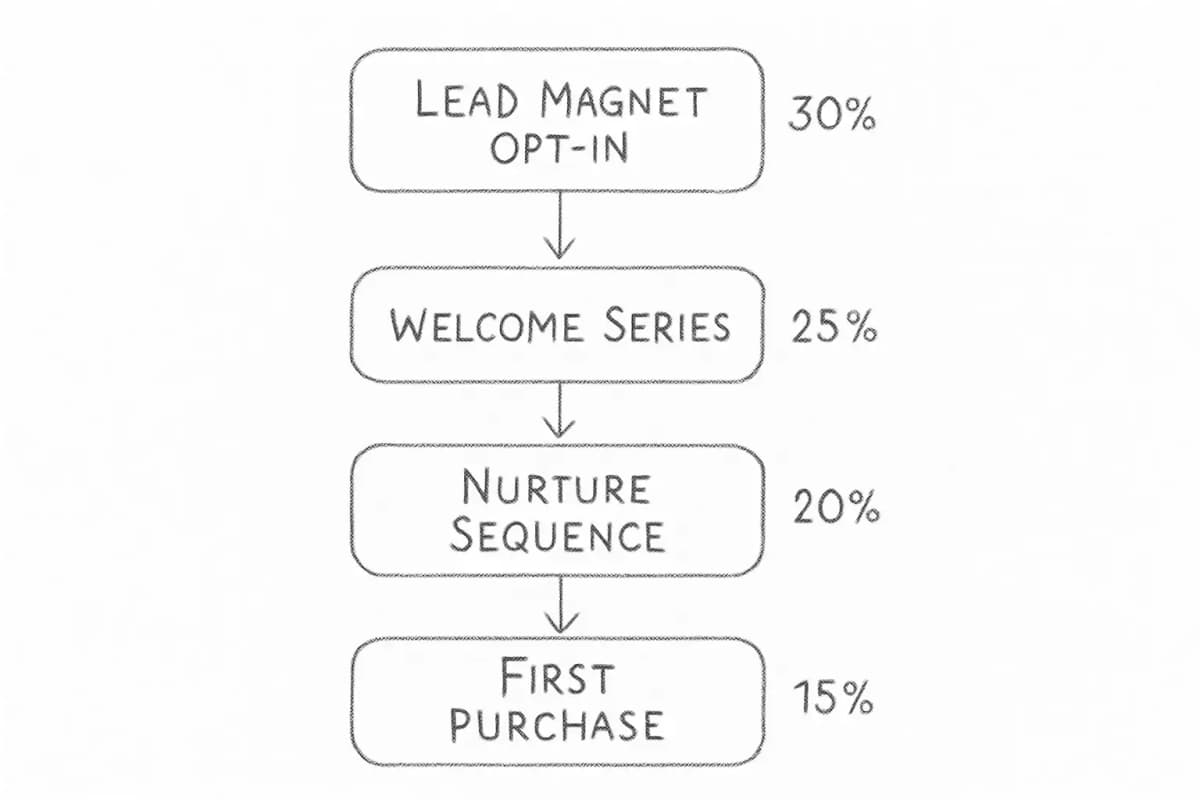
Customer acquisition is the process of bringing new customers to a business by identifying, targeting, and converting potential buyers through specific marketing efforts. In an email context, this spans list building, lead magnet delivery, welcome sequences, nurture campaigns, and first-purchase conversion emails.
Customer acquisition does cost more than retention, which is exactly why email is so valuable here. It gives you direct, owned access to your audience without paying for every impression or click. For every $1 spent on email marketing, the average return is $36, delivering one of the strongest ROIs of any digital channel.
The key distinction to understand: acquisition email is not cold outreach. It targets people who have shown some level of intent, whether they downloaded a resource, visited your pricing page, attended a webinar, or signed up via a lead magnet.
Acquisition email marketing is one of the most cost-efficient ways to convert strangers into paying customers. Email is 40 times more effective than social media for customer acquisition, yet most businesses treat it as an afterthought, sending generic blasts that go nowhere. This guide breaks down exactly how to build an acquisition email program that actually moves people from "interested" to "converted."
Key Takeaways
81% of SMBs rely on email as their primary customer acquisition channel, making it the most widely used channel for new customer growth.
Lead-nurturing emails get 4 to 10 times more responses than generic email blasts, and nurtured leads make purchases up to 23% faster.
Email segmentation delivers 760% higher revenue compared to broadcast campaigns, with segmented campaigns achieving 14.31% higher open rates and 100.95% higher click rates.
Welcome emails achieve an average open rate of 83.6%, making them one of the highest-performing automated email types.
Automated emails generate 320% more revenue than non-automated emails, which makes automation central to any scalable acquisition strategy.
What Acquisition Email Marketing Actually Means
Acquisition email marketing is the process of using email to attract new subscribers, nurture them through the buying journey, and convert them into first-time customers. It is distinct from retention email marketing, which focuses on existing buyers.
Customer acquisition is the process of bringing new customers to a business by identifying, targeting, and converting potential buyers through specific marketing efforts. In an email context, this spans list building, lead magnet delivery, welcome sequences, nurture campaigns, and first-purchase conversion emails.
Customer acquisition does cost more than retention, which is exactly why email is so valuable here. It gives you direct, owned access to your audience without paying for every impression or click. For every $1 spent on email marketing, the average return is $36, delivering one of the strongest ROIs of any digital channel.
The key distinction to understand: acquisition email is not cold outreach. It targets people who have shown some level of intent, whether they downloaded a resource, visited your pricing page, attended a webinar, or signed up via a lead magnet.
Building a List Worth Sending To
Your acquisition funnel lives or dies by list quality. A large list of uninterested subscribers produces worse results than a small list of genuinely qualified prospects.
While average email opt-in rates languish at 1.95%, strategic implementation of lead magnets can elevate conversion rates to 6.5% among top performers, representing a potential 230% improvement in subscriber acquisition efficiency.
The most effective list-building tools are lead magnets: gated content offered in exchange for an email address. According to a 2024 report by Email Vendor Selection, 55% of landing page submissions come from lead magnets.
What works best depends on your audience, but the data points clearly toward a few formats:
When it comes to video content, 73% of respondents said they saw the highest conversion rates with short-form content, like video clips, quick tutorials, or video samples.
Interactive lead magnets such as quizzes, calculators, and instant audit tools are converting 2.4 times higher than static PDF downloads, signaling a clear move toward fast, outcome-driven content.
According to a study by HubSpot, targeted lead magnets can significantly outperform generic ones, with the most effective lead magnets achieving conversion rates of 20 to 25% in some industries.
The principle behind all of this: lead magnets are valuable free resources that offer specific solutions to audience problems in exchange for contact information. The best lead magnets attract the right subscribers who are primed to engage with your offerings.
The Welcome Email: Your First Conversion Opportunity
The moment someone joins your list is the highest-engagement window you will ever have with them. Most businesses waste it with a bland "Thanks for subscribing" message.
According to the latest benchmarks, welcome emails achieve an impressive average open rate of 83.63% and a click-through rate of 16.60%. No other email type comes close to that level of attention.
Automated welcome emails drive not only the second-highest open and click rates, but they also contribute the highest percentage of sales, with an order rate of 3.02%.
A high-converting welcome email for acquisition should do the following:
Confirm what they signed up for and deliver the lead magnet immediately.
Introduce your brand's core value proposition in plain, specific language.
Set expectations for what they will receive and how often.
Include one clear call to action, not five competing ones.
Building a List Worth Sending To
Your acquisition funnel lives or dies by list quality. A large list of uninterested subscribers produces worse results than a small list of genuinely qualified prospects.
While average email opt-in rates languish at 1.95%, strategic implementation of lead magnets can elevate conversion rates to 6.5% among top performers, representing a potential 230% improvement in subscriber acquisition efficiency.
The most effective list-building tools are lead magnets: gated content offered in exchange for an email address. According to a 2024 report by Email Vendor Selection, 55% of landing page submissions come from lead magnets.
What works best depends on your audience, but the data points clearly toward a few formats:
When it comes to video content, 73% of respondents said they saw the highest conversion rates with short-form content, like video clips, quick tutorials, or video samples.
Interactive lead magnets such as quizzes, calculators, and instant audit tools are converting 2.4 times higher than static PDF downloads, signaling a clear move toward fast, outcome-driven content.
According to a study by HubSpot, targeted lead magnets can significantly outperform generic ones, with the most effective lead magnets achieving conversion rates of 20 to 25% in some industries.
The principle behind all of this: lead magnets are valuable free resources that offer specific solutions to audience problems in exchange for contact information. The best lead magnets attract the right subscribers who are primed to engage with your offerings.
The Welcome Email: Your First Conversion Opportunity
The moment someone joins your list is the highest-engagement window you will ever have with them. Most businesses waste it with a bland "Thanks for subscribing" message.
According to the latest benchmarks, welcome emails achieve an impressive average open rate of 83.63% and a click-through rate of 16.60%. No other email type comes close to that level of attention.
Automated welcome emails drive not only the second-highest open and click rates, but they also contribute the highest percentage of sales, with an order rate of 3.02%.
A high-converting welcome email for acquisition should do the following:
Confirm what they signed up for and deliver the lead magnet immediately.
Introduce your brand's core value proposition in plain, specific language.
Set expectations for what they will receive and how often.
Include one clear call to action, not five competing ones.
Emails with a single CTA can increase clicks by up to 371%. Resist the urge to link to everything at once.
For a full framework on structuring the sequence after that first email, read our article on welcome email sequence best practices.
Lead Nurturing: Moving Prospects Toward the First Purchase
Most new subscribers are not ready to buy on day one. With 80% of new leads never converting to sales without proper nurturing, the imperative for sophisticated, data-driven nurturing strategies has never been greater.
A lead nurture sequence is a series of automated emails that build trust, deliver value, and guide the prospect toward a purchase decision at their own pace. The lead nurturing email sequence is a series of automated emails aimed at delivering valuable information to potential customers who are not yet ready to buy but have shown interest. This sequence is particularly valuable for building a connection and guiding potential customers through their buying journey, turning them from interested leads into loyal customers.
The performance advantage of nurture email over generic campaigns is significant:
Companies that excel at lead nurturing generate 50% more sales-ready leads at 33% lower cost, while nurtured leads make 47% larger purchases and convert 23% faster than non-nurtured prospects.
Lead nurturing emails achieve response rates 4 to 10 times higher than generic email broadcasts, with average open rates reaching 36.7 to 42.35% and click-through rates of approximately 8% for nurturing campaigns compared to just 3% for standard emails.
Mapping Nurture Content to Funnel Stage
The content of each email should match where the prospect is in their buying journey. A useful three-stage framework:
Early stage (awareness): Educational content that names and explains the problem. Blog posts, short video explainers, and thought-leadership pieces work well here.
Mid-stage (consideration): Content that helps the prospect evaluate solutions. Case studies, comparison guides, and webinar invites fit this stage.
Late stage (decision): Social proof, trials, demos, limited-time offers, and direct CTAs to purchase or book a call.
Trigger-based automation creates responsive, personalized experiences by reacting to specific prospect behaviors. When a prospect visits your pricing page, automation can send relevant case studies. When they download a whitepaper, follow-up emails can deliver complementary resources on the same topic.
Segmentation and Personalization: The Difference Between Noise and Revenue
Sending the same email to your entire acquisition list is one of the most common and costly mistakes in email marketing. Personalization and segmentation are not nice-to-haves; the revenue data makes them non-negotiable.
Email segmentation delivers extraordinary results with 760% higher revenue compared to broadcast campaigns. Additionally, segmented campaigns achieve 14.31% higher open rates and 100.95% higher click rates.
Personalized emails deliver six times higher transaction rates than non-personalized ones. 63% of people say they never respond to non-personalized emails.
Emails with a single CTA can increase clicks by up to 371%. Resist the urge to link to everything at once.
For a full framework on structuring the sequence after that first email, read our article on welcome email sequence best practices.
Lead Nurturing: Moving Prospects Toward the First Purchase
Most new subscribers are not ready to buy on day one. With 80% of new leads never converting to sales without proper nurturing, the imperative for sophisticated, data-driven nurturing strategies has never been greater.
A lead nurture sequence is a series of automated emails that build trust, deliver value, and guide the prospect toward a purchase decision at their own pace. The lead nurturing email sequence is a series of automated emails aimed at delivering valuable information to potential customers who are not yet ready to buy but have shown interest. This sequence is particularly valuable for building a connection and guiding potential customers through their buying journey, turning them from interested leads into loyal customers.
The performance advantage of nurture email over generic campaigns is significant:
Companies that excel at lead nurturing generate 50% more sales-ready leads at 33% lower cost, while nurtured leads make 47% larger purchases and convert 23% faster than non-nurtured prospects.
Lead nurturing emails achieve response rates 4 to 10 times higher than generic email broadcasts, with average open rates reaching 36.7 to 42.35% and click-through rates of approximately 8% for nurturing campaigns compared to just 3% for standard emails.
Mapping Nurture Content to Funnel Stage
The content of each email should match where the prospect is in their buying journey. A useful three-stage framework:
Early stage (awareness): Educational content that names and explains the problem. Blog posts, short video explainers, and thought-leadership pieces work well here.
Mid-stage (consideration): Content that helps the prospect evaluate solutions. Case studies, comparison guides, and webinar invites fit this stage.
Late stage (decision): Social proof, trials, demos, limited-time offers, and direct CTAs to purchase or book a call.
Trigger-based automation creates responsive, personalized experiences by reacting to specific prospect behaviors. When a prospect visits your pricing page, automation can send relevant case studies. When they download a whitepaper, follow-up emails can deliver complementary resources on the same topic.
Segmentation and Personalization: The Difference Between Noise and Revenue
Sending the same email to your entire acquisition list is one of the most common and costly mistakes in email marketing. Personalization and segmentation are not nice-to-haves; the revenue data makes them non-negotiable.
Email segmentation delivers extraordinary results with 760% higher revenue compared to broadcast campaigns. Additionally, segmented campaigns achieve 14.31% higher open rates and 100.95% higher click rates.
Personalized emails deliver six times higher transaction rates than non-personalized ones. 63% of people say they never respond to non-personalized emails.
Beyond name personalization, the highest-impact segmentation in acquisition email marketing uses behavioral signals:
Lead magnet downloaded: Segment by the specific resource someone grabbed. Their interests are already revealed.
Pages visited: Someone who viewed your pricing page is further along than someone who only read a blog post.
Engagement level: Separate highly engaged subscribers from those who have gone cold, and adjust your messaging accordingly.
Demographic and firmographic data: For B2B, company size, industry, and role should inform email content and offer structure.
Marketers implementing AI-powered personalization report substantial performance improvements, with revenue increasing by 41% and click-through rates rising 13.44% compared to non-personalized campaigns. These gains stem from AI's ability to analyze individual user behavior patterns and dynamically adjust content, timing, and offers to match each recipient's preferences.
Subject Lines and Deliverability: Getting Into the Inbox First
The best nurture sequence in the world delivers nothing if your emails land in spam. Deliverability is a foundational element of acquisition email marketing, not an advanced topic.
Average email deliverability in 2024 was tested at around 83%, which means roughly 17% of emails never reached their intended destination.
Gmail and Yahoo both implemented stricter requirements in 2024 around SPF, DKIM, and DMARC authentication, easy-to-find unsubscribe options, and spam complaint thresholds below 0.3%. These are now table-stakes requirements, not optional configurations.
Once your emails reach the inbox, the subject line determines whether they get opened. Personalized email subject lines can increase email open rates by 26%. For acquisition emails specifically, subject lines that signal relevance and specificity consistently outperform generic ones.
A few evidence-backed principles:
Keep subject lines under 50 characters so they display fully on mobile.
Use the recipient's first name or reference their specific interest when possible.
Avoid spam-trigger language that flags filters before your prospect even sees the message.
Emails with a single CTA can increase clicks by up to 371%, and that same focus should carry through from subject line to body copy to button.
Our full breakdown of subject line optimization is in email subject line best practices that boost open rates by 27%.
Measuring What Matters in Acquisition Email Marketing
Beyond name personalization, the highest-impact segmentation in acquisition email marketing uses behavioral signals:
Lead magnet downloaded: Segment by the specific resource someone grabbed. Their interests are already revealed.
Pages visited: Someone who viewed your pricing page is further along than someone who only read a blog post.
Engagement level: Separate highly engaged subscribers from those who have gone cold, and adjust your messaging accordingly.
Demographic and firmographic data: For B2B, company size, industry, and role should inform email content and offer structure.
Marketers implementing AI-powered personalization report substantial performance improvements, with revenue increasing by 41% and click-through rates rising 13.44% compared to non-personalized campaigns. These gains stem from AI's ability to analyze individual user behavior patterns and dynamically adjust content, timing, and offers to match each recipient's preferences.
Subject Lines and Deliverability: Getting Into the Inbox First
The best nurture sequence in the world delivers nothing if your emails land in spam. Deliverability is a foundational element of acquisition email marketing, not an advanced topic.
Average email deliverability in 2024 was tested at around 83%, which means roughly 17% of emails never reached their intended destination.
Gmail and Yahoo both implemented stricter requirements in 2024 around SPF, DKIM, and DMARC authentication, easy-to-find unsubscribe options, and spam complaint thresholds below 0.3%. These are now table-stakes requirements, not optional configurations.
Once your emails reach the inbox, the subject line determines whether they get opened. Personalized email subject lines can increase email open rates by 26%. For acquisition emails specifically, subject lines that signal relevance and specificity consistently outperform generic ones.
A few evidence-backed principles:
Keep subject lines under 50 characters so they display fully on mobile.
Use the recipient's first name or reference their specific interest when possible.
Avoid spam-trigger language that flags filters before your prospect even sees the message.
Emails with a single CTA can increase clicks by up to 371%, and that same focus should carry through from subject line to body copy to button.
Our full breakdown of subject line optimization is in email subject line best practices that boost open rates by 27%.
Measuring What Matters in Acquisition Email Marketing
Tracking the right metrics is what separates teams that improve from those that guess.
Since Apple's Mail Privacy Protection now affects a significant share of email opens, email marketers now prioritize click-through rates, click-to-open rates, and conversion metrics over open rates when evaluating campaign performance.
For acquisition specifically, the metrics that matter most are:
Click-to-open rate (CTOR): Shows what percentage of people who opened your email actually engaged with the content. The average CTOR across industries is 5.3%.
Lead-to-customer conversion rate: The percentage of new subscribers who become paying customers within a defined window.
Revenue per email (RPE): Total revenue attributed to a campaign divided by the number of emails sent. This gives a direct measure of acquisition efficiency.
Customer acquisition cost (CAC) from email: Compare this against paid channels to understand email's cost advantage.
Acquisition campaigns tend to show lower short-term ROI, while retention and lifecycle campaigns produce stronger long-term returns. This is why patience and consistent measurement matter; an acquisition sequence often takes several touchpoints before it converts.
Automation: Making Acquisition Email Marketing Scalable
Manual sending does not scale. The good news is that automated emails generate 320% more revenue than non-automated emails.
The core automation flows every acquisition program needs are:
Lead magnet delivery email: Instant, triggered on signup. Delivers the promised resource and sets expectations.
Welcome sequence: A 3 to 5 email series sent over the first 1 to 2 weeks that builds trust and introduces your value proposition.
Behavioral trigger emails: Emails fired when a subscriber takes a specific action, such as visiting the pricing page, clicking a specific link, or downloading a second resource.
Re-engagement email: Sent to cold subscribers who have not opened or clicked in 60 to 90 days. Offer something new or ask directly if they want to stay on the list.
Tracking the right metrics is what separates teams that improve from those that guess.
Since Apple's Mail Privacy Protection now affects a significant share of email opens, email marketers now prioritize click-through rates, click-to-open rates, and conversion metrics over open rates when evaluating campaign performance.
For acquisition specifically, the metrics that matter most are:
Click-to-open rate (CTOR): Shows what percentage of people who opened your email actually engaged with the content. The average CTOR across industries is 5.3%.
Lead-to-customer conversion rate: The percentage of new subscribers who become paying customers within a defined window.
Revenue per email (RPE): Total revenue attributed to a campaign divided by the number of emails sent. This gives a direct measure of acquisition efficiency.
Customer acquisition cost (CAC) from email: Compare this against paid channels to understand email's cost advantage.
Acquisition campaigns tend to show lower short-term ROI, while retention and lifecycle campaigns produce stronger long-term returns. This is why patience and consistent measurement matter; an acquisition sequence often takes several touchpoints before it converts.
Automation: Making Acquisition Email Marketing Scalable
Manual sending does not scale. The good news is that automated emails generate 320% more revenue than non-automated emails.
The core automation flows every acquisition program needs are:
Lead magnet delivery email: Instant, triggered on signup. Delivers the promised resource and sets expectations.
Welcome sequence: A 3 to 5 email series sent over the first 1 to 2 weeks that builds trust and introduces your value proposition.
Behavioral trigger emails: Emails fired when a subscriber takes a specific action, such as visiting the pricing page, clicking a specific link, or downloading a second resource.
Re-engagement email: Sent to cold subscribers who have not opened or clicked in 60 to 90 days. Offer something new or ask directly if they want to stay on the list.
Time-based nurture sequences guide prospects through educational journeys with predetermined timing. A well-designed welcome series orients new subscribers to your value proposition, while educational sequences build authority through progressive learning. These structured journeys maintain consistent engagement over extended buying cycles.
Frequently Asked Questions
What is acquisition email marketing?
Acquisition email marketing refers to using email campaigns to attract new subscribers and convert them into first-time customers. It covers the full process from list building and lead magnet delivery through welcome sequences, nurture campaigns, and conversion-focused emails. It differs from retention email marketing, which targets existing customers.
How is acquisition email marketing different from cold email outreach?
Acquisition email marketing targets people who have already shown intent by opting in to receive your emails, typically through a lead magnet, webinar sign-up, or content download. Cold email outreach contacts people who have had no prior interaction with your brand. Acquisition emails work within a permission-based framework, which produces higher engagement and better deliverability.
What email metrics should I track for acquisition campaigns?
Since open rates have become less reliable due to Apple Mail Privacy Protection, focus on click-through rate (CTR), click-to-open rate (CTOR), lead-to-customer conversion rate, revenue per email, and customer acquisition cost from email. Smart marketers now emphasize click-through rates, conversion rates, and revenue per email as primary KPIs.
How many emails should a lead nurture sequence include?
There is no universal number, but most high-performing acquisition sequences run between 4 and 8 emails sent over 2 to 4 weeks. The goal is to match the depth of the sequence to the complexity of your product and the length of your sales cycle. B2B products with longer decision cycles benefit from longer sequences, while B2C products can often convert in 3 to 5 emails. Test your own sequence length using engagement and conversion data.
No comments yet. Be the first!
Time-based nurture sequences guide prospects through educational journeys with predetermined timing. A well-designed welcome series orients new subscribers to your value proposition, while educational sequences build authority through progressive learning. These structured journeys maintain consistent engagement over extended buying cycles.
Frequently Asked Questions
What is acquisition email marketing?
Acquisition email marketing refers to using email campaigns to attract new subscribers and convert them into first-time customers. It covers the full process from list building and lead magnet delivery through welcome sequences, nurture campaigns, and conversion-focused emails. It differs from retention email marketing, which targets existing customers.
How is acquisition email marketing different from cold email outreach?
Acquisition email marketing targets people who have already shown intent by opting in to receive your emails, typically through a lead magnet, webinar sign-up, or content download. Cold email outreach contacts people who have had no prior interaction with your brand. Acquisition emails work within a permission-based framework, which produces higher engagement and better deliverability.
What email metrics should I track for acquisition campaigns?
Since open rates have become less reliable due to Apple Mail Privacy Protection, focus on click-through rate (CTR), click-to-open rate (CTOR), lead-to-customer conversion rate, revenue per email, and customer acquisition cost from email. Smart marketers now emphasize click-through rates, conversion rates, and revenue per email as primary KPIs.
How many emails should a lead nurture sequence include?
There is no universal number, but most high-performing acquisition sequences run between 4 and 8 emails sent over 2 to 4 weeks. The goal is to match the depth of the sequence to the complexity of your product and the length of your sales cycle. B2B products with longer decision cycles benefit from longer sequences, while B2C products can often convert in 3 to 5 emails. Test your own sequence length using engagement and conversion data.