Email Marketing Best Practices 2022: A Complete Guide
Master email marketing in 2022 with proven strategies for deliverability, engagement, and ROI. Learn what actually works from industry data and expert insights.
Email Marketing Best Practices 2022: A Complete Guide
Master email marketing in 2022 with proven strategies for deliverability, engagement, and ROI. Learn what actually works from industry data and expert insights.
Email marketing delivers a higher return on investment than nearly every other digital channel, and following the right email marketing best practices in 2022 is what separates campaigns that produce revenue from ones that sit unopened. For every $1 spent, email marketing returns an average of $36, and that figure climbs further when marketers apply the specific tactics covered in this guide.
Whether you're starting fresh or auditing an existing program, these practices apply directly to improving deliverability, engagement, and revenue from your list.
Key Takeaways
Email marketing ROI typically ranges from 10:1 to 36:1 for most organizations, with top-performing programs exceeding 50:1.
List segmentation increases open rates by 14%+, clicks by 100%+, and email campaign revenue by as much as 760%.
Automated emails generate 320% more revenue than non-automated emails.
Emails featuring personalized subject lines are 50% more likely to be opened.
Only 83.5% of emails globally reach inboxes, meaning one in six emails sent may never be seen, making deliverability a non-negotiable priority.
1. Know Your Benchmarks Before You Optimize
You cannot improve what you are not measuring against. Before adjusting strategy, ground your team in what average performance actually looks like.
According to Campaign Monitor's 2022 Email Marketing Benchmarks Report, the average email open rate was 21.5% across all industries in 2021, up 3.5% from 2020. However, open rate data became less reliable after Apple's Mail Privacy Protection (MPP) update in late 2021. Since Apple Mail accounts for roughly 46% of email clients, this technical change significantly skewed open rate data upward, which is why email marketers now prioritize click-through rates, click-to-open rates, and conversion metrics over open rates when evaluating campaign performance.
For send timing, data still provides useful direction. Monday produces the highest email open rates at 22.0%, Tuesday delivers the best click-through rates at 2.4%, and Wednesday and Tuesday tie for the best click-to-open rates at 10.8%. That said, always test these findings against your own audience data before locking in a send schedule.
Key metrics to track in 2022:
Email marketing delivers a higher return on investment than nearly every other digital channel, and following the right email marketing best practices in 2022 is what separates campaigns that produce revenue from ones that sit unopened. For every $1 spent, email marketing returns an average of $36, and that figure climbs further when marketers apply the specific tactics covered in this guide.
Whether you're starting fresh or auditing an existing program, these practices apply directly to improving deliverability, engagement, and revenue from your list.
Key Takeaways
Email marketing ROI typically ranges from 10:1 to 36:1 for most organizations, with top-performing programs exceeding 50:1.
List segmentation increases open rates by 14%+, clicks by 100%+, and email campaign revenue by as much as 760%.
Automated emails generate 320% more revenue than non-automated emails.
Emails featuring personalized subject lines are 50% more likely to be opened.
Only 83.5% of emails globally reach inboxes, meaning one in six emails sent may never be seen, making deliverability a non-negotiable priority.
1. Know Your Benchmarks Before You Optimize
You cannot improve what you are not measuring against. Before adjusting strategy, ground your team in what average performance actually looks like.
According to Campaign Monitor's 2022 Email Marketing Benchmarks Report, the average email open rate was 21.5% across all industries in 2021, up 3.5% from 2020. However, open rate data became less reliable after Apple's Mail Privacy Protection (MPP) update in late 2021. Since Apple Mail accounts for roughly 46% of email clients, this technical change significantly skewed open rate data upward, which is why email marketers now prioritize click-through rates, click-to-open rates, and conversion metrics over open rates when evaluating campaign performance.
For send timing, data still provides useful direction. Monday produces the highest email open rates at 22.0%, Tuesday delivers the best click-through rates at 2.4%, and Wednesday and Tuesday tie for the best click-to-open rates at 10.8%. That said, always test these findings against your own audience data before locking in a send schedule.
Key metrics to track in 2022:
Click-through rate (CTR): Percentage of recipients who clicked a link
Click-to-open rate (CTOR): Percentage of openers who clicked, which reveals content quality
Conversion rate: Revenue or action taken as a direct result of the email
Bounce rate: Keep this under 2% to maintain sender reputation.
Unsubscribe rate: Under 0.5% is healthy; higher suggests a content-audience mismatch.
2. Protect Your Deliverability First
Great content means nothing if it never reaches the inbox. Deliverability is the foundation of every other email marketing best practice.
Without proper email authentication, ISPs may not trust your emails. Setting up SPF, DKIM, and DMARC correctly proves you are who you say you are, which builds trust with ISPs and helps protect your reputation.
Beyond authentication, list hygiene directly controls your sender score. Verify your email list regularly to purge invalid addresses, spam traps, and disengaged subscribers. This lowers your bounce rate and increases your open rate, both of which will help improve your sender reputation.
ISPs often set spam traps to identify spammy senders using legitimate-looking email addresses. These traps are typically found in purchased email lists to catch senders and add them to blocklists, which prevent emails from that sender from being delivered at all.
Practical deliverability checklist for 2022:
Configure SPF, DKIM, and DMARC records on your sending domain
Use double opt-in to confirm subscriber intent
Remove invalid addresses and hard bounces after every send
Keep spam complaint rates below 0.1%
Warm up new IPs gradually rather than sending high volumes immediately
Use different subdomains for promotional and transactional emails. This practice is common among higher-volume senders, with nearly 50% of senders above 50,000 emails per month separating their mail streams this way.
Sending the same message to your entire list is one of the most common ways marketers leave revenue behind. Studies show that list segmentation increases open rates by 14%+, clicks by 100%+, and email campaign revenue by 760%.
Click-through rate (CTR): Percentage of recipients who clicked a link
Click-to-open rate (CTOR): Percentage of openers who clicked, which reveals content quality
Conversion rate: Revenue or action taken as a direct result of the email
Bounce rate: Keep this under 2% to maintain sender reputation.
Unsubscribe rate: Under 0.5% is healthy; higher suggests a content-audience mismatch.
2. Protect Your Deliverability First
Great content means nothing if it never reaches the inbox. Deliverability is the foundation of every other email marketing best practice.
Without proper email authentication, ISPs may not trust your emails. Setting up SPF, DKIM, and DMARC correctly proves you are who you say you are, which builds trust with ISPs and helps protect your reputation.
Beyond authentication, list hygiene directly controls your sender score. Verify your email list regularly to purge invalid addresses, spam traps, and disengaged subscribers. This lowers your bounce rate and increases your open rate, both of which will help improve your sender reputation.
ISPs often set spam traps to identify spammy senders using legitimate-looking email addresses. These traps are typically found in purchased email lists to catch senders and add them to blocklists, which prevent emails from that sender from being delivered at all.
Practical deliverability checklist for 2022:
Configure SPF, DKIM, and DMARC records on your sending domain
Use double opt-in to confirm subscriber intent
Remove invalid addresses and hard bounces after every send
Keep spam complaint rates below 0.1%
Warm up new IPs gradually rather than sending high volumes immediately
Use different subdomains for promotional and transactional emails. This practice is common among higher-volume senders, with nearly 50% of senders above 50,000 emails per month separating their mail streams this way.
Sending the same message to your entire list is one of the most common ways marketers leave revenue behind. Studies show that list segmentation increases open rates by 14%+, clicks by 100%+, and email campaign revenue by 760%.
Research by Lyris found that 39% of marketers who segment email lists experience higher open rates, 28% experience lower unsubscribe rates, and 24% experience better deliverability and greater revenue.
90% of email marketing professionals report that using subscriber segmentation to deliver targeted messages increases performance for marketing emails.
Effective segmentation criteria for 2022 include:
Demographics: Location, industry, job title, age
Behavior: Pages visited, links clicked, purchase history
Funnel stage: New subscriber, active buyer, lapsed customer
Engagement level: Highly engaged vs. inactive subscribers
Lead source: Where they opted in from (social ad, content download, checkout)
Subscriber behavior changes constantly. Static segments quickly fall out of sync, leading to irrelevant messaging and missed opportunities. Dynamic segmentation ensures contacts automatically move between segments as their actions and status evolve, keeping campaigns accurate without requiring ongoing manual list maintenance.
Your subject line determines whether the rest of the email gets read. It is the single highest-leverage copywriting decision in any campaign.
A 2022 study by Marketo found that subject lines containing 41 to 50 characters yield the highest open rates among B2B email recipients. That range gives you enough room to communicate a clear benefit without truncating on mobile devices.
Emails featuring personalized subject lines are 50% more likely to be opened. Personalization here goes beyond a first name; it includes referencing a product category the subscriber browsed, a location, or a specific pain point relevant to their segment.
Proven subject line tactics:
Use the recipient's name, company, or purchase history where relevant
Questions in subject lines can increase opens by up to 50%, and numbers increase opens by 17%.
Keep mobile preview in mind: test how your subject and preheader text appear together on a small screen
Avoid spam trigger words like "FREE," "GUARANTEED," or excessive punctuation
A/B test subject lines on every send using at least 20% of your list as a test sample
For detailed tactics and examples, Email Subject Line Best Practices That Boost Open Rates by 27% covers the framework in full.
5. Personalize Beyond the First Name
Research by Lyris found that 39% of marketers who segment email lists experience higher open rates, 28% experience lower unsubscribe rates, and 24% experience better deliverability and greater revenue.
90% of email marketing professionals report that using subscriber segmentation to deliver targeted messages increases performance for marketing emails.
Effective segmentation criteria for 2022 include:
Demographics: Location, industry, job title, age
Behavior: Pages visited, links clicked, purchase history
Funnel stage: New subscriber, active buyer, lapsed customer
Engagement level: Highly engaged vs. inactive subscribers
Lead source: Where they opted in from (social ad, content download, checkout)
Subscriber behavior changes constantly. Static segments quickly fall out of sync, leading to irrelevant messaging and missed opportunities. Dynamic segmentation ensures contacts automatically move between segments as their actions and status evolve, keeping campaigns accurate without requiring ongoing manual list maintenance.
Your subject line determines whether the rest of the email gets read. It is the single highest-leverage copywriting decision in any campaign.
A 2022 study by Marketo found that subject lines containing 41 to 50 characters yield the highest open rates among B2B email recipients. That range gives you enough room to communicate a clear benefit without truncating on mobile devices.
Emails featuring personalized subject lines are 50% more likely to be opened. Personalization here goes beyond a first name; it includes referencing a product category the subscriber browsed, a location, or a specific pain point relevant to their segment.
Proven subject line tactics:
Use the recipient's name, company, or purchase history where relevant
Questions in subject lines can increase opens by up to 50%, and numbers increase opens by 17%.
Keep mobile preview in mind: test how your subject and preheader text appear together on a small screen
Avoid spam trigger words like "FREE," "GUARANTEED," or excessive punctuation
A/B test subject lines on every send using at least 20% of your list as a test sample
For detailed tactics and examples, Email Subject Line Best Practices That Boost Open Rates by 27% covers the framework in full.
5. Personalize Beyond the First Name
80% of customers are more likely to purchase from brands that offer personalized experiences throughout their communications and shopping journey. Personalization at the content level, not just the greeting, is where real performance gains occur.
Personalized calls to action demonstrate a 202% better conversion rate than default or standard calls to action. Swapping a generic "Shop Now" button for one that reads "See Your Saved Items" or "Continue Where You Left Off" is a small change with measurable results.
Marketing emails sent in response to behavioral triggers generate 10 times greater revenue than other marketing email types, making them one of the most effective strategies for driving sales.
Levels of personalization to implement in 2022:
Name and company in subject line and greeting
Product recommendations based on browse or purchase history
Dynamic content blocks that change by segment within a single email template
Behavioral triggers such as abandoned cart, post-purchase follow-up, and re-engagement
Send time optimization based on when each individual subscriber historically opens emails
Good data hygiene is one of the key email personalization best practices. Having quality data that is accurate, current, and trustworthy ensures your customers get the personalized experiences they want and helps your business make informed decisions for your email marketing strategy.
6. Automate Key Workflows to Scale Performance
Manual sending at scale is not sustainable, and it underperforms automated alternatives by a wide margin. Automated emails generate 320% more revenue than non-automated emails.
The most important automated workflows to build in 2022:
Welcome series: The open rate for welcome emails is 50%, making them 84% more effective than standard newsletter emails. A well-built welcome series sets expectations, delivers your core value proposition, and begins the segmentation process from day one.
Abandoned cart: Abandoned cart email campaigns have an open rate of 50.50%, according to a 2024 email marketing report from Klaviyo. A three-email sequence with a reminder, social proof, and a time-limited incentive typically performs best.
Post-purchase: Follow up after a purchase to confirm the order, set delivery expectations, request a review, and suggest complementary products.
Re-engagement: Identify subscribers who have not opened or clicked in 60 to 90 days. Send a direct "Are you still interested?" email and suppress non-responders before they damage your sender reputation.
Birthday and anniversary: Automated birthday emails achieved a 43.3% open rate and a 14.3% click-to-conversion rate.
For implementation details on welcome sequences, see Welcome Email Sequence Best Practices: 7 Proven Strategies.
7. Design for Mobile and Clarity
80% of customers are more likely to purchase from brands that offer personalized experiences throughout their communications and shopping journey. Personalization at the content level, not just the greeting, is where real performance gains occur.
Personalized calls to action demonstrate a 202% better conversion rate than default or standard calls to action. Swapping a generic "Shop Now" button for one that reads "See Your Saved Items" or "Continue Where You Left Off" is a small change with measurable results.
Marketing emails sent in response to behavioral triggers generate 10 times greater revenue than other marketing email types, making them one of the most effective strategies for driving sales.
Levels of personalization to implement in 2022:
Name and company in subject line and greeting
Product recommendations based on browse or purchase history
Dynamic content blocks that change by segment within a single email template
Behavioral triggers such as abandoned cart, post-purchase follow-up, and re-engagement
Send time optimization based on when each individual subscriber historically opens emails
Good data hygiene is one of the key email personalization best practices. Having quality data that is accurate, current, and trustworthy ensures your customers get the personalized experiences they want and helps your business make informed decisions for your email marketing strategy.
6. Automate Key Workflows to Scale Performance
Manual sending at scale is not sustainable, and it underperforms automated alternatives by a wide margin. Automated emails generate 320% more revenue than non-automated emails.
The most important automated workflows to build in 2022:
Welcome series: The open rate for welcome emails is 50%, making them 84% more effective than standard newsletter emails. A well-built welcome series sets expectations, delivers your core value proposition, and begins the segmentation process from day one.
Abandoned cart: Abandoned cart email campaigns have an open rate of 50.50%, according to a 2024 email marketing report from Klaviyo. A three-email sequence with a reminder, social proof, and a time-limited incentive typically performs best.
Post-purchase: Follow up after a purchase to confirm the order, set delivery expectations, request a review, and suggest complementary products.
Re-engagement: Identify subscribers who have not opened or clicked in 60 to 90 days. Send a direct "Are you still interested?" email and suppress non-responders before they damage your sender reputation.
Birthday and anniversary: Automated birthday emails achieved a 43.3% open rate and a 14.3% click-to-conversion rate.
For implementation details on welcome sequences, see Welcome Email Sequence Best Practices: 7 Proven Strategies.
7. Design for Mobile and Clarity
50% of people will delete an email if it is not optimized for mobile. With over half of all email opens happening on mobile devices, responsive design is not optional.
Core mobile-friendly design rules:
Use a single-column layout that stacks cleanly on narrow screens
Keep font sizes at 14px minimum for body text, 22px or larger for headlines
Make CTA buttons at least 44px tall for easy tapping
Keep images under 100KB to reduce load time on mobile networks
Always include a plain-text version of every email
For CTAs specifically, including a call-to-action button instead of a simple text link leads to a 28% increase in click-through rate. Prioritize one primary CTA per email. By sticking with one CTA per email, marketers can prevent decision fatigue and funnel recipients toward one action. Emails with a single CTA can increase clicks by up to 371%.
8. Test, Measure, and Iterate Continuously
Brands that use email analytics see a 43% higher ROI than those that do not. Yet about 21% of marketing leaders still do not measure email ROI, which limits their ability to improve.
A disciplined testing process creates a compounding advantage over time. Every campaign is an opportunity to learn something specific.
What to A/B test in 2022:
Subject line: length, personalization, tone, question vs. statement
Send time and day
From name: brand vs. individual's first name
CTA copy and button color
Email length and content format
Plain-text vs. HTML vs. hybrid
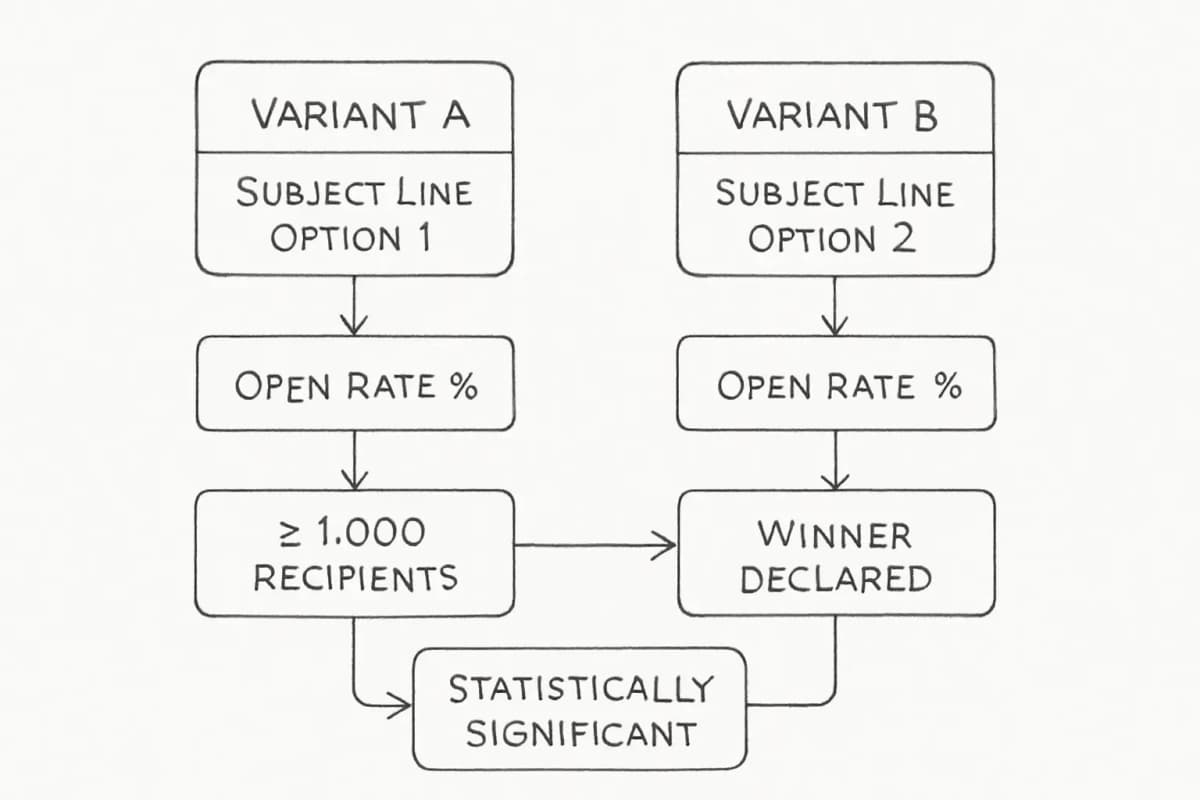
Run one test variable at a time. Wait until you reach statistical significance, typically at least 1,000 recipients per variant, before declaring a winner. Apply the winning variant to future sends, and begin the next test.
Frequently Asked Questions
What are the most important email marketing best practices in 2022?
The highest-impact practices in 2022 are list segmentation, email personalization, automation of core workflows (welcome, cart abandonment, re-engagement), strong deliverability hygiene, and consistent A/B testing. Email marketing ROI consistently outperforms most digital channels, but results depend on applying these fundamentals correctly rather than simply sending more emails.
How often should you send marketing emails?
50% of people will delete an email if it is not optimized for mobile. With over half of all email opens happening on mobile devices, responsive design is not optional.
Core mobile-friendly design rules:
Use a single-column layout that stacks cleanly on narrow screens
Keep font sizes at 14px minimum for body text, 22px or larger for headlines
Make CTA buttons at least 44px tall for easy tapping
Keep images under 100KB to reduce load time on mobile networks
Always include a plain-text version of every email
For CTAs specifically, including a call-to-action button instead of a simple text link leads to a 28% increase in click-through rate. Prioritize one primary CTA per email. By sticking with one CTA per email, marketers can prevent decision fatigue and funnel recipients toward one action. Emails with a single CTA can increase clicks by up to 371%.
8. Test, Measure, and Iterate Continuously
Brands that use email analytics see a 43% higher ROI than those that do not. Yet about 21% of marketing leaders still do not measure email ROI, which limits their ability to improve.
A disciplined testing process creates a compounding advantage over time. Every campaign is an opportunity to learn something specific.
What to A/B test in 2022:
Subject line: length, personalization, tone, question vs. statement
Send time and day
From name: brand vs. individual's first name
CTA copy and button color
Email length and content format
Plain-text vs. HTML vs. hybrid
Run one test variable at a time. Wait until you reach statistical significance, typically at least 1,000 recipients per variant, before declaring a winner. Apply the winning variant to future sends, and begin the next test.
Frequently Asked Questions
What are the most important email marketing best practices in 2022?
The highest-impact practices in 2022 are list segmentation, email personalization, automation of core workflows (welcome, cart abandonment, re-engagement), strong deliverability hygiene, and consistent A/B testing. Email marketing ROI consistently outperforms most digital channels, but results depend on applying these fundamentals correctly rather than simply sending more emails.
How often should you send marketing emails?
There is no universal answer. Frequency depends on your audience's expectations, your content quality, and the type of business you run. The biggest reasons customers unsubscribe from marketing emails include getting too many emails (26%) and finding the emails irrelevant (21%). Start with one to two sends per week, monitor unsubscribe rates closely, and let engagement data guide adjustments.
What is a good email open rate in 2022?
According to Campaign Monitor's 2022 Email Marketing Benchmarks Report, the average email open rate was 21.5% across all industries in 2021, up 3.5% from 2020. However, open rates inflated after Apple's MPP update. Focus on click-through rate and conversion rate as more reliable indicators of campaign health.
How does segmentation affect email deliverability?
Segmentation and deliverability are directly connected. Consistent opens and clicks from targeted segments improve sender reputation and inbox placement. When you send irrelevant emails to disengaged contacts, spam complaints and low engagement rates signal to ISPs that your emails are unwanted, which reduces inbox placement for all future sends. Removing unengaged subscribers regularly is as important as growing your list.
No comments yet. Be the first!
There is no universal answer. Frequency depends on your audience's expectations, your content quality, and the type of business you run. The biggest reasons customers unsubscribe from marketing emails include getting too many emails (26%) and finding the emails irrelevant (21%). Start with one to two sends per week, monitor unsubscribe rates closely, and let engagement data guide adjustments.
What is a good email open rate in 2022?
According to Campaign Monitor's 2022 Email Marketing Benchmarks Report, the average email open rate was 21.5% across all industries in 2021, up 3.5% from 2020. However, open rates inflated after Apple's MPP update. Focus on click-through rate and conversion rate as more reliable indicators of campaign health.
How does segmentation affect email deliverability?
Segmentation and deliverability are directly connected. Consistent opens and clicks from targeted segments improve sender reputation and inbox placement. When you send irrelevant emails to disengaged contacts, spam complaints and low engagement rates signal to ISPs that your emails are unwanted, which reduces inbox placement for all future sends. Removing unengaged subscribers regularly is as important as growing your list.