Restaurants run on thin margins and repeat visits. Email marketing is one of the few channels that directly addresses both realities at once. Email marketing ROI for restaurants sits at approximately $42 for every dollar spent, which makes it one of the most cost-efficient tools available to any food service business. Compare that to social media: X ads generate roughly $2.70 for every $1 spent, and Instagram comes in around $8.40. If you are serious about filling tables, building loyalty, and driving measurable revenue, these email marketing for restaurants tips will give you a clear, actionable path forward.
Key Takeaways
According to MailerLite's 2025 report, restaurant emails have an average open rate of 43.6%, a click-through rate of 1.13%, and an unsubscribe rate of just 0.17%.
Personalized emails deliver six times higher transaction rates than non-personalized ones.
64% of restaurateurs sent personalized offers to customers in 2024, up from 55% in 2023.
Segmented email campaigns achieve 14.31% higher open rates than generic blasts.
A study by Return Path found that 45% of recipients who received win-back emails read subsequent messages, making re-engagement campaigns worth building into every restaurant's strategy.
Tip 1: Build Your Email List From Real Guest Data
Before you can send a single campaign, you need a list worth sending to. Purchased lists are a trap. Do not purchase your email list. To be effective, you need real email addresses from people who are likely to visit your restaurant. Third parties will sell you databases with thousands of addresses, but those are not quality contacts, and mass messaging them could get you flagged for spam.
Instead, collect emails through channels your guests already use:
WiFi sign-up: Offer free WiFi, then gate your network with a landing page that either requires an email address to connect, or asks guests to sign up to receive exclusive offers and promotions.
Reservation forms: Creating a reservation form can be an easy way to collect guests' email addresses. When they request a reservation, ask for their contact information and give them the option to opt in to your mailing list.
Restaurants run on thin margins and repeat visits. Email marketing is one of the few channels that directly addresses both realities at once. Email marketing ROI for restaurants sits at approximately $42 for every dollar spent, which makes it one of the most cost-efficient tools available to any food service business. Compare that to social media: X ads generate roughly $2.70 for every $1 spent, and Instagram comes in around $8.40. If you are serious about filling tables, building loyalty, and driving measurable revenue, these email marketing for restaurants tips will give you a clear, actionable path forward.
Key Takeaways
According to MailerLite's 2025 report, restaurant emails have an average open rate of 43.6%, a click-through rate of 1.13%, and an unsubscribe rate of just 0.17%.
Personalized emails deliver six times higher transaction rates than non-personalized ones.
64% of restaurateurs sent personalized offers to customers in 2024, up from 55% in 2023.
Segmented email campaigns achieve 14.31% higher open rates than generic blasts.
A study by Return Path found that 45% of recipients who received win-back emails read subsequent messages, making re-engagement campaigns worth building into every restaurant's strategy.
Tip 1: Build Your Email List From Real Guest Data
Before you can send a single campaign, you need a list worth sending to. Purchased lists are a trap. Do not purchase your email list. To be effective, you need real email addresses from people who are likely to visit your restaurant. Third parties will sell you databases with thousands of addresses, but those are not quality contacts, and mass messaging them could get you flagged for spam.
Instead, collect emails through channels your guests already use:
WiFi sign-up: Offer free WiFi, then gate your network with a landing page that either requires an email address to connect, or asks guests to sign up to receive exclusive offers and promotions.
Reservation forms: Creating a reservation form can be an easy way to collect guests' email addresses. When they request a reservation, ask for their contact information and give them the option to opt in to your mailing list.
QR codes: Place QR codes on menus, receipts, and table cards. QR codes have made a massive comeback post-pandemic and are well-suited for in-restaurant list building.
Online ordering: If you use an online ordering system, make sure it allows you to collect email addresses and that you get access to the data. Many third-party platforms do not share guest contact information.
The goal is consent-based collection at every natural touchpoint in the guest journey.
Tip 2: Segment Your List Before You Send Anything
Sending the same email to your entire list is one of the most common and costly mistakes in restaurant email marketing. Most restaurants blast the same email to their entire list, sending the same message to a 22-year-old college student and a 55-year-old couple celebrating an anniversary. That approach is lazy, and the data proves it. Segmented email campaigns achieve 14.31% higher open rates than generic blasts.
Practical segments for restaurants include:
Visit frequency: Regulars (2+ times per month), occasional diners, and lapsed customers (60+ days since last visit)
Order behavior: Frequent visitors vs. occasional diners, takeout vs. delivery vs. dine-in customers, and nearby office workers vs. weekend visitors
Engagement level: Identify loyal customers who open your emails frequently and send them exclusive rewards, while crafting re-engagement campaigns for less active subscribers
The moment a guest subscribes is the highest-intent moment in your entire email relationship with them. Do not waste it on a single generic email.
The average business email open rate is 19.7%, while welcome emails have an open rate of 68.6%. They also achieve 4x higher open rates and 5x higher click-through rates than standard campaigns.
A three-part welcome sequence is enough to establish your brand, share your best dishes, and drive a first (or return) visit:
QR codes: Place QR codes on menus, receipts, and table cards. QR codes have made a massive comeback post-pandemic and are well-suited for in-restaurant list building.
Online ordering: If you use an online ordering system, make sure it allows you to collect email addresses and that you get access to the data. Many third-party platforms do not share guest contact information.
The goal is consent-based collection at every natural touchpoint in the guest journey.
Tip 2: Segment Your List Before You Send Anything
Sending the same email to your entire list is one of the most common and costly mistakes in restaurant email marketing. Most restaurants blast the same email to their entire list, sending the same message to a 22-year-old college student and a 55-year-old couple celebrating an anniversary. That approach is lazy, and the data proves it. Segmented email campaigns achieve 14.31% higher open rates than generic blasts.
Practical segments for restaurants include:
Visit frequency: Regulars (2+ times per month), occasional diners, and lapsed customers (60+ days since last visit)
Order behavior: Frequent visitors vs. occasional diners, takeout vs. delivery vs. dine-in customers, and nearby office workers vs. weekend visitors
Engagement level: Identify loyal customers who open your emails frequently and send them exclusive rewards, while crafting re-engagement campaigns for less active subscribers
The moment a guest subscribes is the highest-intent moment in your entire email relationship with them. Do not waste it on a single generic email.
The average business email open rate is 19.7%, while welcome emails have an open rate of 68.6%. They also achieve 4x higher open rates and 5x higher click-through rates than standard campaigns.
A three-part welcome sequence is enough to establish your brand, share your best dishes, and drive a first (or return) visit:
Day 1: Thank them for joining, introduce your restaurant's story or chef, and include a first-visit incentive such as a free appetizer or a percentage-off offer
Day 3: Showcase two or three of your signature dishes with high-quality photography
Day 7: Share social proof, such as a review highlight or a behind-the-scenes story, and include a clear reservation link
Welcome emails increase long-term engagement by 33%, which makes automating this sequence one of the highest-return actions any restaurant can take. For a full breakdown of what to include, see our Welcome Email Sequence Best Practices: 7 Proven Strategies.
Tip 4: Personalize Beyond the First Name
Personalization is the difference between an email that feels like direct mail and one that feels like a conversation. Personalization goes beyond using someone's name. You can tailor recommendations based on their favorite dishes or send offers relevant to their location. Personalized emails create stronger emotional connections and higher open rates.
For restaurants, meaningful personalization looks like this:
Order history references: Subject lines like "Loved our spicy ramen? Try our new miso bowl!" reference past behavior and create relevance
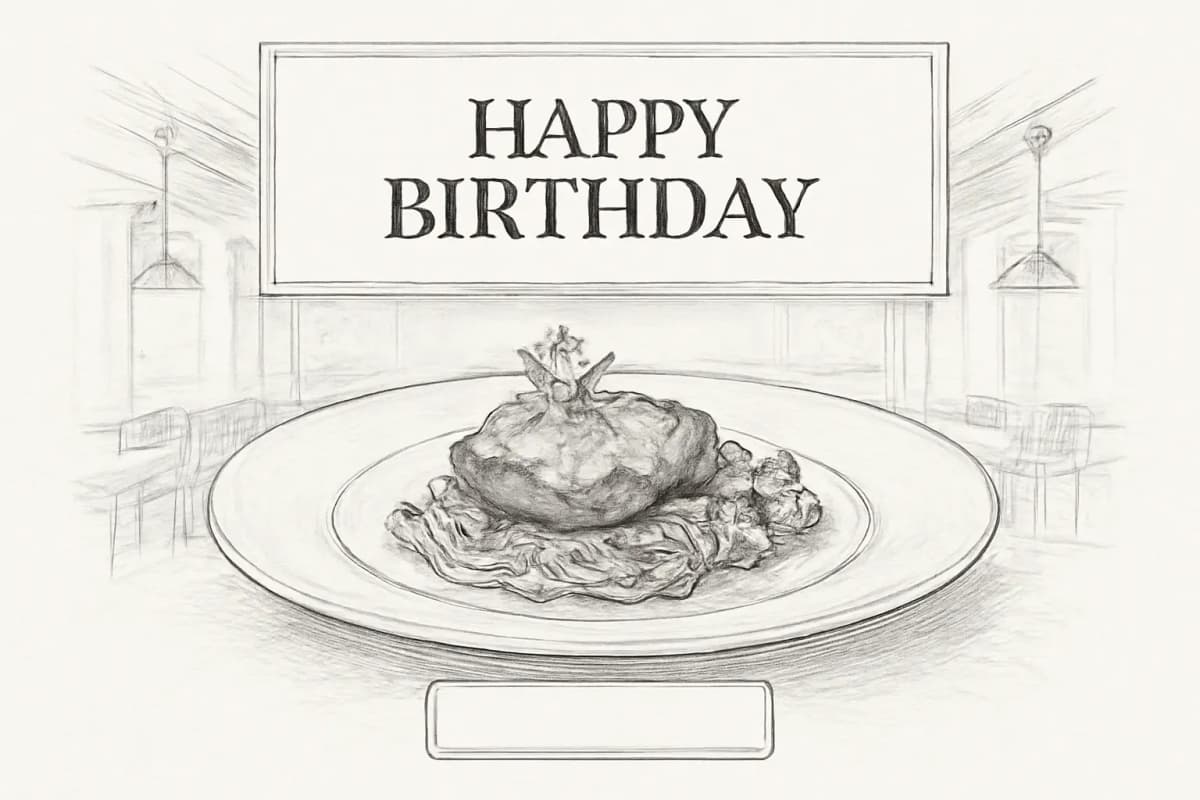
Birthday and anniversary offers: Schedule birthday offers 7 to 10 days before the actual date, not on the day itself, for better conversion
Loyalty milestones: Keep loyalty members engaged by updating them on their status: points balance notifications ("You're only 50 points away from a free entrée!"), reward redemption reminders, and level-up announcements
64% of restaurateurs were sending personalized offers to customers in 2024, a significant increase from the 55% who did so in 2023. The gap between those doing this and those not is widening quickly.
Tip 5: Write Subject Lines That Earn the Open
Your subject line determines whether any of the rest of your work matters. No matter how well-written your email is, it will be wasted if the reader does not open it. You could be offering free meals for life, and the email will still fail if the subject line does not compel the recipient to open and act. Many marketers treat subject lines as an afterthought, but the subject line is often more important than the email itself.
Tactics that consistently perform well for restaurant subject lines:
Urgency with specificity: "Tonight only: 50% off all bottles of wine" outperforms vague offers every time
Name personalization: Emails with the recipient's name in the subject line tend to see higher open rates
Question format: "Ready for the best pasta in [City]?" activates curiosity
A/B testing: Create attention-grabbing subject lines that include promotional offers and actionable language. Conduct A/B testing to identify the most compelling subject lines. A/B testing on subject lines has reported open rates of 46 to 50%.
Day 1: Thank them for joining, introduce your restaurant's story or chef, and include a first-visit incentive such as a free appetizer or a percentage-off offer
Day 3: Showcase two or three of your signature dishes with high-quality photography
Day 7: Share social proof, such as a review highlight or a behind-the-scenes story, and include a clear reservation link
Welcome emails increase long-term engagement by 33%, which makes automating this sequence one of the highest-return actions any restaurant can take. For a full breakdown of what to include, see our Welcome Email Sequence Best Practices: 7 Proven Strategies.
Tip 4: Personalize Beyond the First Name
Personalization is the difference between an email that feels like direct mail and one that feels like a conversation. Personalization goes beyond using someone's name. You can tailor recommendations based on their favorite dishes or send offers relevant to their location. Personalized emails create stronger emotional connections and higher open rates.
For restaurants, meaningful personalization looks like this:
Order history references: Subject lines like "Loved our spicy ramen? Try our new miso bowl!" reference past behavior and create relevance
Birthday and anniversary offers: Schedule birthday offers 7 to 10 days before the actual date, not on the day itself, for better conversion
Loyalty milestones: Keep loyalty members engaged by updating them on their status: points balance notifications ("You're only 50 points away from a free entrée!"), reward redemption reminders, and level-up announcements
64% of restaurateurs were sending personalized offers to customers in 2024, a significant increase from the 55% who did so in 2023. The gap between those doing this and those not is widening quickly.
Tip 5: Write Subject Lines That Earn the Open
Your subject line determines whether any of the rest of your work matters. No matter how well-written your email is, it will be wasted if the reader does not open it. You could be offering free meals for life, and the email will still fail if the subject line does not compel the recipient to open and act. Many marketers treat subject lines as an afterthought, but the subject line is often more important than the email itself.
Tactics that consistently perform well for restaurant subject lines:
Urgency with specificity: "Tonight only: 50% off all bottles of wine" outperforms vague offers every time
Name personalization: Emails with the recipient's name in the subject line tend to see higher open rates
Question format: "Ready for the best pasta in [City]?" activates curiosity
A/B testing: Create attention-grabbing subject lines that include promotional offers and actionable language. Conduct A/B testing to identify the most compelling subject lines. A/B testing on subject lines has reported open rates of 46 to 50%.
For a structured approach to subject line testing and examples with proven lift data, see our post on Email Subject Line Best Practices That Boost Open Rates by 27%.
Tip 6: Use Automation to Stay Consistent Without Extra Work
Manual email marketing does not scale. The majority of restaurateurs have already automated their marketing efforts, with 97% having adopted automation or planning to do so. If you are not yet automating, you are leaving revenue on the table and spending unnecessary hours on tasks a platform can handle.
Key automated email flows every restaurant should have running:
Welcome sequence (triggered by signup)
Post-visit feedback request (triggered 24 to 48 hours after a reservation or online order)
Loyalty milestone notifications (triggered when a guest hits a point threshold or visit count)
Win-back sequence: Anyone who has not visited in 30 days receives a casual "we miss you" email. If they do not respond within 10 days, a slightly more promotional email goes out. If still no action after 10 more days, they move into an inactive segment and receive emails less frequently.
Birthday offer (triggered 7 to 10 days before the guest's birthday)
Invest in email marketing automation to target subscribers at key moments. You can set up automated emails triggered by specific behaviors and occasions, such as sending gift cards to customers on their birthdays or giving them a free dessert.
Tip 7: Track the Right Metrics and Iterate
Tracking open rates alone gives you an incomplete picture, especially now. Apple's Mail Privacy Protection has made open rates less reliable. MPP automatically preloads email content and images for Apple Mail users, even if they never actually open the email. This inflates open rate data across the board.
Focus on metrics that reflect actual engagement and revenue:
Click-through rate (CTR): Shows how many people took action on your email
Click-to-open rate (CTOR): Measures content quality among those who opened
Offer redemption rate: Tracks how many subscribers used a discount or promo
Conversion rate: Counts first-timers who made a reservation or order after receiving your email
Measuring campaign performance is essential to identify loopholes, rethink strategies, and ensure ROI. Key parameters include open rate, click rate, offer redemption rate, and conversions such as first-timers who made a reservation after reading an email.
A/B testing is a powerful tool for refining subject lines, content, and design elements. Set a regular cadence for reviewing results, monthly at minimum, and update your segmentation or copy based on what the data shows.
Frequently Asked Questions
How often should a restaurant send marketing emails?
For a structured approach to subject line testing and examples with proven lift data, see our post on Email Subject Line Best Practices That Boost Open Rates by 27%.
Tip 6: Use Automation to Stay Consistent Without Extra Work
Manual email marketing does not scale. The majority of restaurateurs have already automated their marketing efforts, with 97% having adopted automation or planning to do so. If you are not yet automating, you are leaving revenue on the table and spending unnecessary hours on tasks a platform can handle.
Key automated email flows every restaurant should have running:
Welcome sequence (triggered by signup)
Post-visit feedback request (triggered 24 to 48 hours after a reservation or online order)
Loyalty milestone notifications (triggered when a guest hits a point threshold or visit count)
Win-back sequence: Anyone who has not visited in 30 days receives a casual "we miss you" email. If they do not respond within 10 days, a slightly more promotional email goes out. If still no action after 10 more days, they move into an inactive segment and receive emails less frequently.
Birthday offer (triggered 7 to 10 days before the guest's birthday)
Invest in email marketing automation to target subscribers at key moments. You can set up automated emails triggered by specific behaviors and occasions, such as sending gift cards to customers on their birthdays or giving them a free dessert.
Tip 7: Track the Right Metrics and Iterate
Tracking open rates alone gives you an incomplete picture, especially now. Apple's Mail Privacy Protection has made open rates less reliable. MPP automatically preloads email content and images for Apple Mail users, even if they never actually open the email. This inflates open rate data across the board.
Focus on metrics that reflect actual engagement and revenue:
Click-through rate (CTR): Shows how many people took action on your email
Click-to-open rate (CTOR): Measures content quality among those who opened
Offer redemption rate: Tracks how many subscribers used a discount or promo
Conversion rate: Counts first-timers who made a reservation or order after receiving your email
Measuring campaign performance is essential to identify loopholes, rethink strategies, and ensure ROI. Key parameters include open rate, click rate, offer redemption rate, and conversions such as first-timers who made a reservation after reading an email.
A/B testing is a powerful tool for refining subject lines, content, and design elements. Set a regular cadence for reviewing results, monthly at minimum, and update your segmentation or copy based on what the data shows.
Frequently Asked Questions
How often should a restaurant send marketing emails?
Aim for 1 to 4 emails per month, depending on the season, audience preferences, and current restaurant promotions. Most restaurants see good results sending one to two emails per week. The key is consistency and quality: make sure every email adds value. Start conservatively and increase frequency only if your unsubscribe rate stays low.
What type of emails drive the most reservations for restaurants?
Transactional emails have 8x the open rates of any other email type, making reservation confirmations and reminder emails your highest-performing sends. Beyond those, birthday offers, loyalty milestone notifications, and limited-time promotional emails consistently drive bookings when paired with a clear call to action.
How do I collect email addresses from restaurant guests?
The most effective methods are WiFi gating, reservation form opt-ins, QR codes on menus and receipts, and loyalty program sign-ups. Customers will not hand over their email address just because you ask nicely. If you want to grow a high-quality email list, you need to offer something in return, and it has to feel worth it. A first-visit discount or a free menu item in exchange for sign-up works well.
What is a good open rate for restaurant email campaigns?
According to MailerLite's 2025 report, restaurant emails average a 43.6% open rate, which is significantly higher than the cross-industry average. Keep in mind that Apple Mail Privacy Protection inflates this number for some senders. Use click-through rate and offer redemption rate as your primary performance indicators alongside open rate.
No comments yet. Be the first!
Aim for 1 to 4 emails per month, depending on the season, audience preferences, and current restaurant promotions. Most restaurants see good results sending one to two emails per week. The key is consistency and quality: make sure every email adds value. Start conservatively and increase frequency only if your unsubscribe rate stays low.
What type of emails drive the most reservations for restaurants?
Transactional emails have 8x the open rates of any other email type, making reservation confirmations and reminder emails your highest-performing sends. Beyond those, birthday offers, loyalty milestone notifications, and limited-time promotional emails consistently drive bookings when paired with a clear call to action.
How do I collect email addresses from restaurant guests?
The most effective methods are WiFi gating, reservation form opt-ins, QR codes on menus and receipts, and loyalty program sign-ups. Customers will not hand over their email address just because you ask nicely. If you want to grow a high-quality email list, you need to offer something in return, and it has to feel worth it. A first-visit discount or a free menu item in exchange for sign-up works well.
What is a good open rate for restaurant email campaigns?
According to MailerLite's 2025 report, restaurant emails average a 43.6% open rate, which is significantly higher than the cross-industry average. Keep in mind that Apple Mail Privacy Protection inflates this number for some senders. Use click-through rate and offer redemption rate as your primary performance indicators alongside open rate.