Seniors are one of the most lucrative and least correctly targeted segments in email marketing. Many brands either ignore them or apply tactics built for younger audiences and then wonder why results fall flat. The data tells a different story: 91% of seniors check their email daily, and 74% of seniors believe email is the most personal channel when communicating with companies. If your list includes adults 65 and older, or the broader 50-plus demographic, getting your email marketing strategy right for this group is a direct revenue opportunity.
This guide covers everything you need to know to build a senior-focused email program that earns trust, drives clicks, and converts.
Key Takeaways
88% of adults 65 and older use the internet, up significantly from prior years, making digital outreach to seniors more viable than ever.
84.1% of those 65 and older use email regularly, and 74% say it is the most personal channel when communicating with companies.
Seniors prioritize trust, clarity, and relevance. Aggressive sales tactics and cluttered designs consistently underperform with this audience.
Accessible design is not optional. Font size, color contrast, and layout directly affect whether seniors read and act on your emails.
Segmentation and personalization are high-leverage levers. Emails with personalized subject lines are 26% more likely to be opened, and segmentation can lead to a 760% increase in revenue from email campaigns.
Why Seniors Are a High-Value Email Audience
The common assumption that older adults avoid digital communication is wrong. About 87% of people 65 and older use email. And this demographic is not just present online; they are engaged. A 2024 Pew Research Center survey found that 90% of adults ages 65 and older are online, compared with 98% of those ages 50 to 64.
The buying power that accompanies this engagement is significant. The senior market represents one of the fastest-growing consumer segments, with significant digital adoption and substantial spending power. Online shopping is no longer just for younger consumers, with nearly eight in ten seniors shopping online.
For marketers, this creates a clear window. Email marketing is one of the smartest and most cost-effective tools to use for creating personalized campaigns targeting this demographic, particularly given their preference for the channel over social media.
Seniors are one of the most lucrative and least correctly targeted segments in email marketing. Many brands either ignore them or apply tactics built for younger audiences and then wonder why results fall flat. The data tells a different story: 91% of seniors check their email daily, and 74% of seniors believe email is the most personal channel when communicating with companies. If your list includes adults 65 and older, or the broader 50-plus demographic, getting your email marketing strategy right for this group is a direct revenue opportunity.
This guide covers everything you need to know to build a senior-focused email program that earns trust, drives clicks, and converts.
Key Takeaways
88% of adults 65 and older use the internet, up significantly from prior years, making digital outreach to seniors more viable than ever.
84.1% of those 65 and older use email regularly, and 74% say it is the most personal channel when communicating with companies.
Seniors prioritize trust, clarity, and relevance. Aggressive sales tactics and cluttered designs consistently underperform with this audience.
Accessible design is not optional. Font size, color contrast, and layout directly affect whether seniors read and act on your emails.
Segmentation and personalization are high-leverage levers. Emails with personalized subject lines are 26% more likely to be opened, and segmentation can lead to a 760% increase in revenue from email campaigns.
Why Seniors Are a High-Value Email Audience
The common assumption that older adults avoid digital communication is wrong. About 87% of people 65 and older use email. And this demographic is not just present online; they are engaged. A 2024 Pew Research Center survey found that 90% of adults ages 65 and older are online, compared with 98% of those ages 50 to 64.
The buying power that accompanies this engagement is significant. The senior market represents one of the fastest-growing consumer segments, with significant digital adoption and substantial spending power. Online shopping is no longer just for younger consumers, with nearly eight in ten seniors shopping online.
For marketers, this creates a clear window. Email marketing is one of the smartest and most cost-effective tools to use for creating personalized campaigns targeting this demographic, particularly given their preference for the channel over social media.
Understand How Seniors Actually Engage With Email
Before you write a single subject line, you need to understand what drives senior email behavior. It is different from what you see in younger cohorts.
Seniors are cautious online consumers who prioritize trust and reliability when engaging with brands. They are more likely to engage with companies that provide clear, transparent information and avoid those using aggressive sales tactics.
Overly complex language, excessive jargon, or cluttered email designs can be off-putting for older audiences. Seniors appreciate straightforward messaging, easy navigation, and concise content that gets to the point. Research shows that emails with clear, simple language and logical formatting increase engagement, as older adults tend to skim content rather than read in-depth.
Senior subscribers also respond well to consistency. Email remains one of the most direct ways to engage seniors, especially when messages are personalized and relevant. Many seniors actively check their email, and with the right targeting, email marketing can drive engagement and conversions. Regular emails on a consistent schedule keep your brand in front of this audience.
Frequency, however, requires discipline. Unlike younger audiences who may be used to getting many emails from brands, older adults prefer a more measured approach when it comes to communication. Starting at one to two emails per month and scaling based on engagement data is a sound approach for this segment.
Segmentation: The Foundation of Senior Email Marketing
Treating the 65-plus audience as a single block is a strategic mistake. Treating the senior market as a monolithic entity is a mistake. This demographic is diverse, with varying interests, habits, and technological comfort levels.
Effective segmentation for email marketing to seniors should account for:
Health and wellness interests (fitness, chronic condition management, nutrition)
Life stage (active retirees, caregivers, recently retired professionals)
Geographic location (local services, regional health resources)
Purchase history (repeat buyers versus first-time contacts)
For example, you can create segments for retirees interested in travel and leisure, while another segment may focus on seniors seeking healthcare solutions. Tailoring your email content to these segments increases the relevance of your campaigns and can lead to higher conversion rates.
Understand How Seniors Actually Engage With Email
Before you write a single subject line, you need to understand what drives senior email behavior. It is different from what you see in younger cohorts.
Seniors are cautious online consumers who prioritize trust and reliability when engaging with brands. They are more likely to engage with companies that provide clear, transparent information and avoid those using aggressive sales tactics.
Overly complex language, excessive jargon, or cluttered email designs can be off-putting for older audiences. Seniors appreciate straightforward messaging, easy navigation, and concise content that gets to the point. Research shows that emails with clear, simple language and logical formatting increase engagement, as older adults tend to skim content rather than read in-depth.
Senior subscribers also respond well to consistency. Email remains one of the most direct ways to engage seniors, especially when messages are personalized and relevant. Many seniors actively check their email, and with the right targeting, email marketing can drive engagement and conversions. Regular emails on a consistent schedule keep your brand in front of this audience.
Frequency, however, requires discipline. Unlike younger audiences who may be used to getting many emails from brands, older adults prefer a more measured approach when it comes to communication. Starting at one to two emails per month and scaling based on engagement data is a sound approach for this segment.
Segmentation: The Foundation of Senior Email Marketing
Treating the 65-plus audience as a single block is a strategic mistake. Treating the senior market as a monolithic entity is a mistake. This demographic is diverse, with varying interests, habits, and technological comfort levels.
Effective segmentation for email marketing to seniors should account for:
Health and wellness interests (fitness, chronic condition management, nutrition)
Life stage (active retirees, caregivers, recently retired professionals)
Geographic location (local services, regional health resources)
Purchase history (repeat buyers versus first-time contacts)
For example, you can create segments for retirees interested in travel and leisure, while another segment may focus on seniors seeking healthcare solutions. Tailoring your email content to these segments increases the relevance of your campaigns and can lead to higher conversion rates.
This connects directly to revenue. Research shows that email list segmentation strategies can boost ROI by 760%, and that uplift applies as much to a senior audience as any other when the segments are meaningful and the content matches intent.
Email Design for Older Adults: Practical Rules
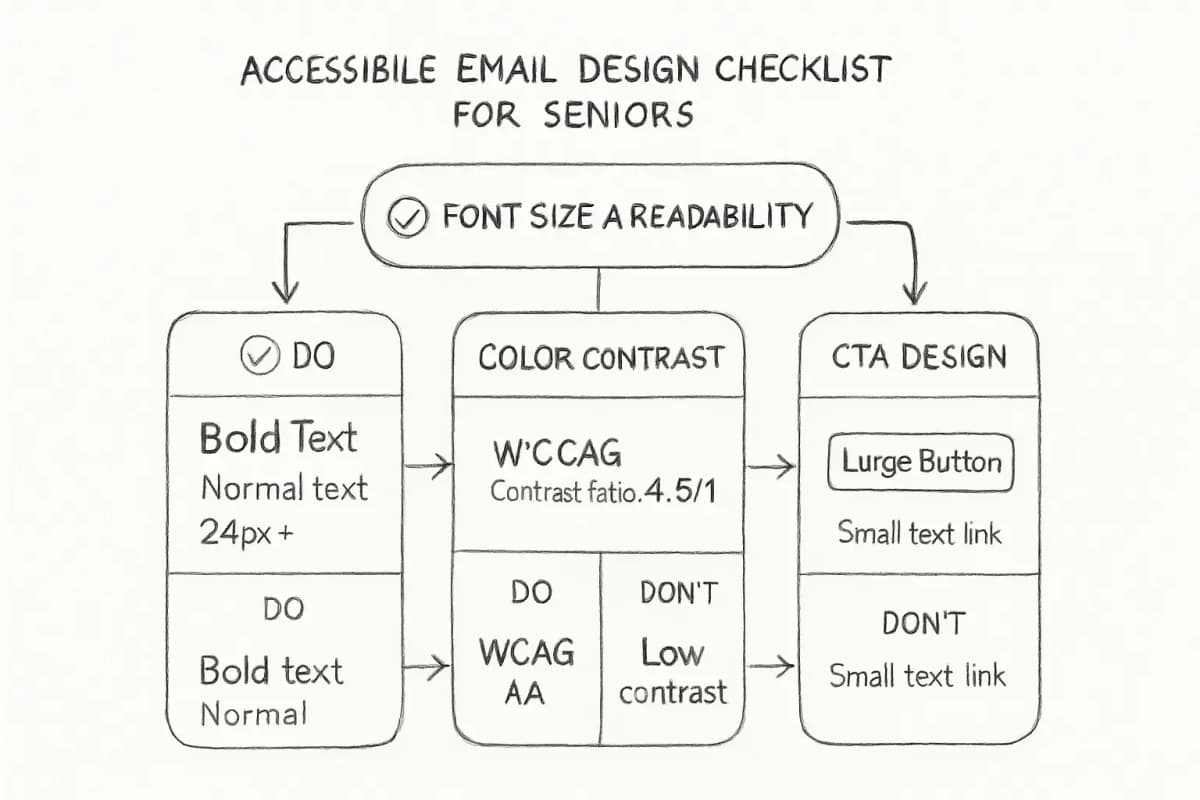
Design is where most senior-focused email programs fail. Poor contrast, small fonts, and cluttered layouts lose this audience before they read a single word.
Typography
Opt for large, legible font sizes (at least 16px) with sufficient line spacing, and avoid decorative fonts in favor of readable typefaces. Use a legible sans-serif font such as Arial, Calibri, Helvetica, or Tahoma.
Set line height to 1.5 times the font size per WCAG 2.1, Level AA standards. Proper line spacing improves readability by avoiding crowded text.
Layout
Use a single-column layout. A single-column layout helps users find and understand content better, and it is also mobile-friendly.
Maintain generous white space. When scanning an email, it should be easy to identify paragraphs and keep your place. Create enough white space above and below paragraphs, and move text away from the edges of your emails.
Color and Contrast
Proper color contrast in emails benefits those with low vision or color blindness, since it makes text more readable. Single-color backgrounds provide a consistent and high-contrast environment. WCAG 2.1, Level AA requires a 4.5:1 contrast ratio for text smaller than 18px bold or 24px normal.
CTAs and Buttons
Ensure your CTAs are easy to see and tap, especially for those using mobile devices. Instead of small links, use large buttons with clear instructions. Never rely on color alone to indicate a clickable element.
Subject Lines That Work for Senior Subscribers
The subject line is the single most important factor in whether a senior opens your email. Seniors are more likely to open emails with subject lines that are straightforward and relevant.
Key rules for subject lines targeting older adults:
This connects directly to revenue. Research shows that email list segmentation strategies can boost ROI by 760%, and that uplift applies as much to a senior audience as any other when the segments are meaningful and the content matches intent.
Email Design for Older Adults: Practical Rules
Design is where most senior-focused email programs fail. Poor contrast, small fonts, and cluttered layouts lose this audience before they read a single word.
Typography
Opt for large, legible font sizes (at least 16px) with sufficient line spacing, and avoid decorative fonts in favor of readable typefaces. Use a legible sans-serif font such as Arial, Calibri, Helvetica, or Tahoma.
Set line height to 1.5 times the font size per WCAG 2.1, Level AA standards. Proper line spacing improves readability by avoiding crowded text.
Layout
Use a single-column layout. A single-column layout helps users find and understand content better, and it is also mobile-friendly.
Maintain generous white space. When scanning an email, it should be easy to identify paragraphs and keep your place. Create enough white space above and below paragraphs, and move text away from the edges of your emails.
Color and Contrast
Proper color contrast in emails benefits those with low vision or color blindness, since it makes text more readable. Single-color backgrounds provide a consistent and high-contrast environment. WCAG 2.1, Level AA requires a 4.5:1 contrast ratio for text smaller than 18px bold or 24px normal.
CTAs and Buttons
Ensure your CTAs are easy to see and tap, especially for those using mobile devices. Instead of small links, use large buttons with clear instructions. Never rely on color alone to indicate a clickable element.
Subject Lines That Work for Senior Subscribers
The subject line is the single most important factor in whether a senior opens your email. Seniors are more likely to open emails with subject lines that are straightforward and relevant.
Key rules for subject lines targeting older adults:
Be direct. State the benefit clearly. Avoid teaser copy or vague curiosity-bait.
Keep it short. Aim for 40 to 50 characters so the full line is visible on mobile.
Use personalization. Personalized subject lines are key to capturing the attention of senior recipients. Addressing them by name or tailoring subject lines to their interests can significantly improve open rates.
Avoid all-caps, excessive punctuation, or urgency triggers like "ACT NOW!!!" These feel aggressive and erode trust with older audiences.
Match the subject to the content. False promises only lead to frustration, complaints, and unsubscribes.
For a deeper breakdown of what moves the needle on open rates across all segments, the email subject line best practices that boost open rates by 27% are a useful reference alongside these senior-specific guidelines.
Building Trust Through Content and Tone
Trust is the currency of senior email marketing. Seniors appreciate honesty and ethical marketing practices. Misleading claims, hidden fees, and aggressive upselling can quickly erode trust.
Older consumers prioritize brands that offer transparency, reliability, and clear solutions. Content that performs well with this demographic includes:
Educational guides: financial planning tips, health management resources, technology how-tos
Product usage content: simple, step-by-step explanations of how your offering works
Community stories: testimonials from peers rather than celebrities or influencers
Service updates: clear, factual communications about changes, benefits, or new offerings
Social proof plays a critical role in shaping a brand's reputation. Testimonials from other seniors, case studies, and expert endorsements help establish credibility.
HubSpot's State of Marketing 2024 report shows that 75% of marketers believe that personalized experiences are a key part of ensuring repeat business. For seniors, that personalization should feel like genuine understanding, not data extraction. Reference past interactions, acknowledge their circumstances, and write like a person who actually read their profile.
Applying email personalization techniques goes well beyond first-name tokens. Behavioral data, purchase history, and content preferences all feed into messaging that converts.
Sending Frequency and Timing
Email marketing frequency depends on your industry and audience expectations. Most businesses send one to four emails per month. Too many emails increase unsubscribes; too few cause subscribers to forget you.
For senior audiences specifically, err toward less frequent and higher quality. A well-timed, well-written monthly newsletter will outperform a weekly stream of promotional blasts for this demographic. As engagement grows and you build list trust, you can test higher cadences with engaged segments only.
To find the right send time, test mornings on weekdays. The conversion rate for desktop shopping among those 65 and above is 72%, significantly higher than mobile or tablet shopping, which suggests that seniors are more likely to engage with email during daytime hours on a larger screen. Build your timing tests around that behavioral pattern.
Compliance, Privacy, and List Hygiene
Be direct. State the benefit clearly. Avoid teaser copy or vague curiosity-bait.
Keep it short. Aim for 40 to 50 characters so the full line is visible on mobile.
Use personalization. Personalized subject lines are key to capturing the attention of senior recipients. Addressing them by name or tailoring subject lines to their interests can significantly improve open rates.
Avoid all-caps, excessive punctuation, or urgency triggers like "ACT NOW!!!" These feel aggressive and erode trust with older audiences.
Match the subject to the content. False promises only lead to frustration, complaints, and unsubscribes.
For a deeper breakdown of what moves the needle on open rates across all segments, the email subject line best practices that boost open rates by 27% are a useful reference alongside these senior-specific guidelines.
Building Trust Through Content and Tone
Trust is the currency of senior email marketing. Seniors appreciate honesty and ethical marketing practices. Misleading claims, hidden fees, and aggressive upselling can quickly erode trust.
Older consumers prioritize brands that offer transparency, reliability, and clear solutions. Content that performs well with this demographic includes:
Educational guides: financial planning tips, health management resources, technology how-tos
Product usage content: simple, step-by-step explanations of how your offering works
Community stories: testimonials from peers rather than celebrities or influencers
Service updates: clear, factual communications about changes, benefits, or new offerings
Social proof plays a critical role in shaping a brand's reputation. Testimonials from other seniors, case studies, and expert endorsements help establish credibility.
HubSpot's State of Marketing 2024 report shows that 75% of marketers believe that personalized experiences are a key part of ensuring repeat business. For seniors, that personalization should feel like genuine understanding, not data extraction. Reference past interactions, acknowledge their circumstances, and write like a person who actually read their profile.
Applying email personalization techniques goes well beyond first-name tokens. Behavioral data, purchase history, and content preferences all feed into messaging that converts.
Sending Frequency and Timing
Email marketing frequency depends on your industry and audience expectations. Most businesses send one to four emails per month. Too many emails increase unsubscribes; too few cause subscribers to forget you.
For senior audiences specifically, err toward less frequent and higher quality. A well-timed, well-written monthly newsletter will outperform a weekly stream of promotional blasts for this demographic. As engagement grows and you build list trust, you can test higher cadences with engaged segments only.
To find the right send time, test mornings on weekdays. The conversion rate for desktop shopping among those 65 and above is 72%, significantly higher than mobile or tablet shopping, which suggests that seniors are more likely to engage with email during daytime hours on a larger screen. Build your timing tests around that behavioral pattern.
Compliance, Privacy, and List Hygiene
Seniors are especially wary of spam. Be sure that your emails come from a sender they recognize. Consistency in your from-name and email domain is not a minor detail for this audience; it is a trust signal.
From a compliance standpoint:
Always use double opt-in for new senior subscribers to confirm consent and reduce spam complaints.
Ensure compliance with privacy regulations like CAN-SPAM to build trust with your audience.
Ensure every email includes a prominently displayed unsubscribe link. This transparency not only fosters trust but also ensures regulatory compliance.
Implement a preference center where subscribers can customize their email experience, including options to select the types of content they wish to receive and adjust email frequency.
Clean your list regularly. Remove hard bounces, suppress persistent non-openers, and run re-engagement sequences before suppressing inactive contacts. A smaller, engaged senior list will always outperform a large, cold one.
Review your email marketing analytics to track open rates, click-through rates, and unsubscribe trends by segment. These numbers tell you whether your senior-focused adjustments are working.
Frequently Asked Questions
What email metrics should I track for a senior audience?
Focus on open rate, click-through rate (CTR), conversion rate, and unsubscribe rate. For senior lists, a higher open rate than your general list average is a realistic expectation given their email engagement habits. Continuous evaluation is critical for successful email marketing. Track metrics like open rates, click-through rates, and conversions to assess performance. Watch unsubscribe rates closely as a signal of frequency or content misalignment.
How often should I email senior subscribers?
Start with one to two emails per month. Sending emails once a month has the highest open rate at 28%, with two to four emails a month having the second highest open rate. Use engagement data to adjust cadence per segment. Seniors who open consistently can receive more frequent sends; those who rarely engage should receive fewer.
Do seniors prefer plain text or HTML emails?
Neither format wins universally. What matters is clarity and accessibility. A clean, single-column HTML email with large fonts and high contrast performs well. Avoid image-heavy templates that rely on graphics to convey meaning. Lean toward text-based emails, keeping a balance of 80% text to 20% images.
How do I build a senior email list ethically?
A successful email marketing campaign relies on a clean, targeted email list. Collect email addresses through website forms, community events, or referrals from your sales team. Avoid purchased lists. Instead, use lead magnets relevant to your senior audience, such as guides on retirement planning, health tips, or local event information. Double opt-in confirms intent and reduces spam complaints from this privacy-conscious demographic.
Seniors are especially wary of spam. Be sure that your emails come from a sender they recognize. Consistency in your from-name and email domain is not a minor detail for this audience; it is a trust signal.
From a compliance standpoint:
Always use double opt-in for new senior subscribers to confirm consent and reduce spam complaints.
Ensure compliance with privacy regulations like CAN-SPAM to build trust with your audience.
Ensure every email includes a prominently displayed unsubscribe link. This transparency not only fosters trust but also ensures regulatory compliance.
Implement a preference center where subscribers can customize their email experience, including options to select the types of content they wish to receive and adjust email frequency.
Clean your list regularly. Remove hard bounces, suppress persistent non-openers, and run re-engagement sequences before suppressing inactive contacts. A smaller, engaged senior list will always outperform a large, cold one.
Review your email marketing analytics to track open rates, click-through rates, and unsubscribe trends by segment. These numbers tell you whether your senior-focused adjustments are working.
Frequently Asked Questions
What email metrics should I track for a senior audience?
Focus on open rate, click-through rate (CTR), conversion rate, and unsubscribe rate. For senior lists, a higher open rate than your general list average is a realistic expectation given their email engagement habits. Continuous evaluation is critical for successful email marketing. Track metrics like open rates, click-through rates, and conversions to assess performance. Watch unsubscribe rates closely as a signal of frequency or content misalignment.
How often should I email senior subscribers?
Start with one to two emails per month. Sending emails once a month has the highest open rate at 28%, with two to four emails a month having the second highest open rate. Use engagement data to adjust cadence per segment. Seniors who open consistently can receive more frequent sends; those who rarely engage should receive fewer.
Do seniors prefer plain text or HTML emails?
Neither format wins universally. What matters is clarity and accessibility. A clean, single-column HTML email with large fonts and high contrast performs well. Avoid image-heavy templates that rely on graphics to convey meaning. Lean toward text-based emails, keeping a balance of 80% text to 20% images.
How do I build a senior email list ethically?
A successful email marketing campaign relies on a clean, targeted email list. Collect email addresses through website forms, community events, or referrals from your sales team. Avoid purchased lists. Instead, use lead magnets relevant to your senior audience, such as guides on retirement planning, health tips, or local event information. Double opt-in confirms intent and reduces spam complaints from this privacy-conscious demographic.