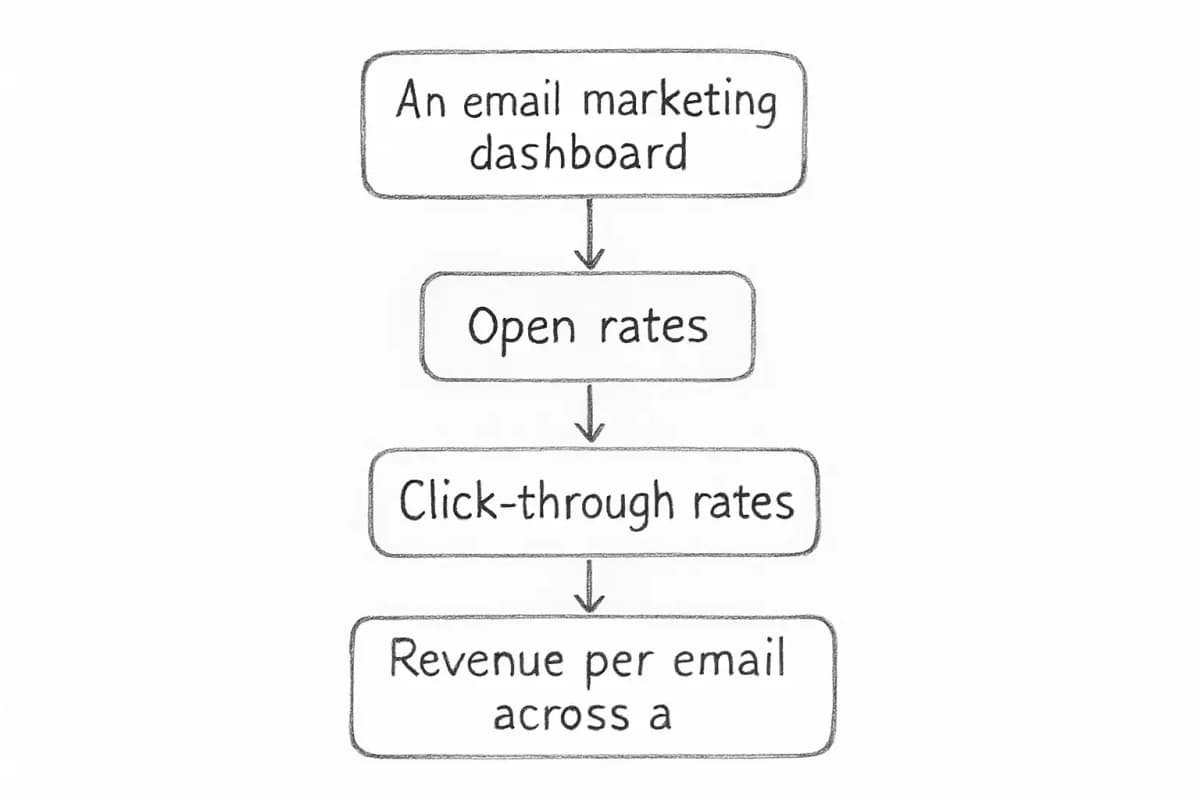
Email marketing consistently delivers the highest return on investment of any digital channel. Businesses earn an average of $36 for every $1 spent on email marketing, and that figure climbs even higher with the right strategies in place. But most teams are leaving significant revenue on the table. They send generic blasts, skip segmentation, and never test a single element. The great email marketing ideas covered here are not theoretical. They are backed by current data and applied by teams who treat email as a revenue system, not a broadcast tool.
Key Takeaways
For every $1 spent on email marketing, businesses see a return of $36, representing a 3,600% ROI.
Email segmentation leads to a 760% increase in revenue generation.
Automated emails account for just 2% of email volume but generated 37% of all email-attributed sales in 2024.
Personalized emails see a 29% higher open rate compared to non-personalized emails.
Marketers who A/B test achieve 83% higher ROI than non-testers.
1. Segment Your List Before You Send Anything
Sending the same email to every subscriber is the fastest way to erode engagement and revenue. Segmentation fixes this by matching your message to the right audience.
51% of marketers believe segmentation is one of the most effective email marketing strategies, and the most effective campaigns combine segmentation (78%), message personalization (72%), and email automation (71%).
The revenue impact is direct. Addressing the recipient by their first name can increase the open rate by 35%, and email segmentation leads to a 760% increase in revenue generation.
Common ways to segment your list:
Purchase history and order frequency
Engagement level (active, dormant, lapsed)
Geographic location and time zone
Lead source or acquisition channel
Stage in the customer lifecycle
Segmentation is not optional. Segmented campaigns deliver 14.31 to 30% higher open rates than non-segmented emails. If you are sending one-size-fits-all campaigns, you are voluntarily accepting lower results.
For a deeper look at how to build segments that directly lift ROI, see our guide on .
Email marketing consistently delivers the highest return on investment of any digital channel. Businesses earn an average of $36 for every $1 spent on email marketing, and that figure climbs even higher with the right strategies in place. But most teams are leaving significant revenue on the table. They send generic blasts, skip segmentation, and never test a single element. The great email marketing ideas covered here are not theoretical. They are backed by current data and applied by teams who treat email as a revenue system, not a broadcast tool.
Key Takeaways
For every $1 spent on email marketing, businesses see a return of $36, representing a 3,600% ROI.
Email segmentation leads to a 760% increase in revenue generation.
Automated emails account for just 2% of email volume but generated 37% of all email-attributed sales in 2024.
Personalized emails see a 29% higher open rate compared to non-personalized emails.
Marketers who A/B test achieve 83% higher ROI than non-testers.
1. Segment Your List Before You Send Anything
Sending the same email to every subscriber is the fastest way to erode engagement and revenue. Segmentation fixes this by matching your message to the right audience.
51% of marketers believe segmentation is one of the most effective email marketing strategies, and the most effective campaigns combine segmentation (78%), message personalization (72%), and email automation (71%).
The revenue impact is direct. Addressing the recipient by their first name can increase the open rate by 35%, and email segmentation leads to a 760% increase in revenue generation.
Common ways to segment your list:
Purchase history and order frequency
Engagement level (active, dormant, lapsed)
Geographic location and time zone
Lead source or acquisition channel
Stage in the customer lifecycle
Segmentation is not optional. Segmented campaigns deliver 14.31 to 30% higher open rates than non-segmented emails. If you are sending one-size-fits-all campaigns, you are voluntarily accepting lower results.
For a deeper look at how to build segments that directly lift ROI, see our guide on .
First-name personalization is table stakes. High-performing teams go further, using behavioral data, purchase history, and real-time signals to make each email feel purpose-built for the reader.
Personalized emails have been shown to deliver six times more transactions than generic, non-personalized ones. The lift comes from relevance: when an email reflects what a subscriber actually did or needs, they respond.
Emails with personalized subject lines are 50% more likely to be opened, and 80% of customers are more likely to purchase from brands that offer personalized experiences.
Personalization tactics that move the needle:
Behavioral triggers: Send emails based on pages visited, products viewed, or links clicked
Dynamic content blocks: Show different product recommendations or offers based on subscriber data
Personalized CTAs: Personalized calls to action result in 42% higher conversion rates than regular CTAs.
Birthday and anniversary emails: Birthday emails generate 342% higher revenue per email than standard promotional emails.
Companies that invest in personalizing email outreach earn 40% more than their competitors. The gap between personalized and non-personalized programs keeps widening.
3. Build Automated Email Flows That Work While You Sleep
Automation is where the math gets undeniable. Klaviyo's analysis of over 325 billion emails found that automated flows generate up to 30 times more revenue per recipient than standard campaigns.
Automated lifecycle flows generate up to 30 times more revenue per recipient than one-off broadcast campaigns, and automated emails drove 37% of all email-generated sales in 2024 despite accounting for just 2% of total email volume.
First-name personalization is table stakes. High-performing teams go further, using behavioral data, purchase history, and real-time signals to make each email feel purpose-built for the reader.
Personalized emails have been shown to deliver six times more transactions than generic, non-personalized ones. The lift comes from relevance: when an email reflects what a subscriber actually did or needs, they respond.
Emails with personalized subject lines are 50% more likely to be opened, and 80% of customers are more likely to purchase from brands that offer personalized experiences.
Personalization tactics that move the needle:
Behavioral triggers: Send emails based on pages visited, products viewed, or links clicked
Dynamic content blocks: Show different product recommendations or offers based on subscriber data
Personalized CTAs: Personalized calls to action result in 42% higher conversion rates than regular CTAs.
Birthday and anniversary emails: Birthday emails generate 342% higher revenue per email than standard promotional emails.
Companies that invest in personalizing email outreach earn 40% more than their competitors. The gap between personalized and non-personalized programs keeps widening.
3. Build Automated Email Flows That Work While You Sleep
Automation is where the math gets undeniable. Klaviyo's analysis of over 325 billion emails found that automated flows generate up to 30 times more revenue per recipient than standard campaigns.
Automated lifecycle flows generate up to 30 times more revenue per recipient than one-off broadcast campaigns, and automated emails drove 37% of all email-generated sales in 2024 despite accounting for just 2% of total email volume.
The core flows every program should have running:
Welcome series: A welcome email achieves an impressive average open rate of 83.63%. This is the highest-engagement moment in the subscriber relationship. Use it to set expectations, deliver value, and guide new subscribers toward a first purchase or key action.
Abandoned cart emails: Abandoned cart flows drive the highest average revenue per recipient of $3.65 and the highest average placed order rate of 3.33% of all Klaviyo flow types. In 2025, the global shopping cart abandonment rate was 75.38%. Recovering even a fraction of that revenue computes quickly.
Browse abandonment: Triggered when a subscriber views a product but does not add it to their cart, these emails catch earlier-stage intent.
Ecommerce brands that deploy automated campaigns including welcome sequences, cart recovery, and post-purchase flows see up to 320% more revenue per email compared to brands relying solely on one-off newsletters.
For more on setting up a welcome sequence that converts, see welcome email sequence best practices: 7 proven strategies.
4. Write Subject Lines That Earn the Open
The subject line determines whether everything you built inside the email gets seen. Most teams treat it as an afterthought. The best ones treat it as the most important sentence in the campaign.
Emails with a subject line between 61 and 70 characters get the highest open rates at 43.38%.
Personalized subject lines increase opens by 22 to 50%. Simply adding the subscriber's first name boosts opens by approximately 26%.
What consistently works:
Specificity over cleverness. "3 products you left behind" outperforms "We miss you."
Questions that signal relevance: "Did you see this new arrival?"
Numbers and data: They communicate precision and set clear expectations
Urgency when it is real: Manufactured scarcity trains subscribers to ignore it
78% of people open emails because of the sender name, not the subject line. Only 22% open based primarily on the subject line. This means your sender reputation and name matter as much as the words you choose.
Custom preheaders lift open rates to 44.67%, compared to 39.28% without one. Treat the preheader as a second subject line. It shows up in the inbox preview and influences the decision to open before a single word of body copy is read.
For an in-depth breakdown, read our post on email subject line best practices that boost open rates by 27%.
5. Run A/B Tests on Every Major Campaign Element
Most email programs run on assumptions. A/B testing replaces assumptions with data.
Brands that regularly A/B test their emails achieve 83% higher ROI than those that never test. Companies that never test report average ROI of 2,300%, while those that often test achieve 4,200%.
Campaign Monitor tested different elements and were able to get a 127% increase in click-throughs as a result. The principle applies at any scale: systematic testing produces consistent gains over time.
Elements worth testing in order of impact:
Subject line (tone, length, personalization, question vs. statement)
Sender name (person name vs. brand name vs. hybrid)
Call-to-action copy and button placement
Email length and content structure
Send time and day of week
Offer type (discount vs. free shipping vs. bonus)
Businesses that master A/B testing their subject lines see up to 49% higher open rates compared to those who do not test at all.
Welcome series: A welcome email achieves an impressive average open rate of 83.63%. This is the highest-engagement moment in the subscriber relationship. Use it to set expectations, deliver value, and guide new subscribers toward a first purchase or key action.
Abandoned cart emails: Abandoned cart flows drive the highest average revenue per recipient of $3.65 and the highest average placed order rate of 3.33% of all Klaviyo flow types. In 2025, the global shopping cart abandonment rate was 75.38%. Recovering even a fraction of that revenue computes quickly.
Browse abandonment: Triggered when a subscriber views a product but does not add it to their cart, these emails catch earlier-stage intent.
Ecommerce brands that deploy automated campaigns including welcome sequences, cart recovery, and post-purchase flows see up to 320% more revenue per email compared to brands relying solely on one-off newsletters.
For more on setting up a welcome sequence that converts, see welcome email sequence best practices: 7 proven strategies.
4. Write Subject Lines That Earn the Open
The subject line determines whether everything you built inside the email gets seen. Most teams treat it as an afterthought. The best ones treat it as the most important sentence in the campaign.
Emails with a subject line between 61 and 70 characters get the highest open rates at 43.38%.
Personalized subject lines increase opens by 22 to 50%. Simply adding the subscriber's first name boosts opens by approximately 26%.
What consistently works:
Specificity over cleverness. "3 products you left behind" outperforms "We miss you."
Questions that signal relevance: "Did you see this new arrival?"
Numbers and data: They communicate precision and set clear expectations
Urgency when it is real: Manufactured scarcity trains subscribers to ignore it
78% of people open emails because of the sender name, not the subject line. Only 22% open based primarily on the subject line. This means your sender reputation and name matter as much as the words you choose.
Custom preheaders lift open rates to 44.67%, compared to 39.28% without one. Treat the preheader as a second subject line. It shows up in the inbox preview and influences the decision to open before a single word of body copy is read.
For an in-depth breakdown, read our post on email subject line best practices that boost open rates by 27%.
5. Run A/B Tests on Every Major Campaign Element
Most email programs run on assumptions. A/B testing replaces assumptions with data.
Brands that regularly A/B test their emails achieve 83% higher ROI than those that never test. Companies that never test report average ROI of 2,300%, while those that often test achieve 4,200%.
Campaign Monitor tested different elements and were able to get a 127% increase in click-throughs as a result. The principle applies at any scale: systematic testing produces consistent gains over time.
Elements worth testing in order of impact:
Subject line (tone, length, personalization, question vs. statement)
Sender name (person name vs. brand name vs. hybrid)
Call-to-action copy and button placement
Email length and content structure
Send time and day of week
Offer type (discount vs. free shipping vs. bonus)
Businesses that master A/B testing their subject lines see up to 49% higher open rates compared to those who do not test at all.
One practical rule: test one variable at a time. Testing multiple elements simultaneously makes it impossible to know what drove the change. Email A/B tests should run for 3 to 7 days or until reaching statistical significance, accounting for different daily engagement patterns and ensuring reliable results.
6. Prioritize Deliverability as a Core Strategy
You can have the best subject line, the sharpest copy, and a perfectly timed send. None of it matters if the email lands in spam.
The average deliverability rate sits at 85% in 2024, heavily influenced by authentication protocols like DMARC, SPF, and DKIM. Brands that implement proper authentication see deliverability rates above 90%.
Deliverability testing increases returns by 39% by ensuring emails avoid spam folders. Testing email appearance across devices adds an 18% ROI uplift.
Key practices that protect deliverability:
Authenticate your sending domain with SPF, DKIM, and DMARC
Remove hard bounces and inactive subscribers on a regular schedule
Bot-driven phantom engagement has made open rates unreliable, pushing high-performing teams toward revenue per email, list churn, and lifetime value as the metrics that matter.
Measuring the right things matters as much as the technical setup. Teams that track revenue per email and list health catch problems before they damage sender reputation.
7. Use Newsletters and Relationship Emails to Build Long-Term Revenue
Promotional blasts are not the most profitable email type. The data says otherwise.
The top 8% of programs, those hitting 45:1 or higher ROI, most commonly send newsletters and onboarding emails, not promotions.
Email allows for direct communication with personalized, targeted messages directly to a subscriber's inbox, making it effective for connecting with audiences, driving conversions, and nurturing customer relationships.
Effective newsletters share a few characteristics:
A consistent structure subscribers recognize and expect
One primary topic or theme per issue (not a dump of everything happening)
A single, clear call to action
Value before ask: teach, inform, or entertain before selling
52% of email marketing professionals reported that their email campaign ROI doubled between 2022 and 2023. Much of that growth came from programs that invested in relationship-building content, not just promotions.
The channel also outperforms social. 52% of consumers made a purchase directly from an email they received, making email the most effective channel for driving sales. It beats social media posts by 13% and social media ads by 11%.
One practical rule: test one variable at a time. Testing multiple elements simultaneously makes it impossible to know what drove the change. Email A/B tests should run for 3 to 7 days or until reaching statistical significance, accounting for different daily engagement patterns and ensuring reliable results.
6. Prioritize Deliverability as a Core Strategy
You can have the best subject line, the sharpest copy, and a perfectly timed send. None of it matters if the email lands in spam.
The average deliverability rate sits at 85% in 2024, heavily influenced by authentication protocols like DMARC, SPF, and DKIM. Brands that implement proper authentication see deliverability rates above 90%.
Deliverability testing increases returns by 39% by ensuring emails avoid spam folders. Testing email appearance across devices adds an 18% ROI uplift.
Key practices that protect deliverability:
Authenticate your sending domain with SPF, DKIM, and DMARC
Remove hard bounces and inactive subscribers on a regular schedule
Bot-driven phantom engagement has made open rates unreliable, pushing high-performing teams toward revenue per email, list churn, and lifetime value as the metrics that matter.
Measuring the right things matters as much as the technical setup. Teams that track revenue per email and list health catch problems before they damage sender reputation.
7. Use Newsletters and Relationship Emails to Build Long-Term Revenue
Promotional blasts are not the most profitable email type. The data says otherwise.
The top 8% of programs, those hitting 45:1 or higher ROI, most commonly send newsletters and onboarding emails, not promotions.
Email allows for direct communication with personalized, targeted messages directly to a subscriber's inbox, making it effective for connecting with audiences, driving conversions, and nurturing customer relationships.
Effective newsletters share a few characteristics:
A consistent structure subscribers recognize and expect
One primary topic or theme per issue (not a dump of everything happening)
A single, clear call to action
Value before ask: teach, inform, or entertain before selling
52% of email marketing professionals reported that their email campaign ROI doubled between 2022 and 2023. Much of that growth came from programs that invested in relationship-building content, not just promotions.
The channel also outperforms social. 52% of consumers made a purchase directly from an email they received, making email the most effective channel for driving sales. It beats social media posts by 13% and social media ads by 11%.
Frequently Asked Questions
What are the most effective email marketing ideas for small businesses?
For small businesses, the highest-impact ideas are building a properly segmented list, setting up a welcome sequence, and sending consistently valuable newsletters. Automated workflows generate 30 times higher returns compared to one-off email campaigns, making automation the best investment for teams with limited time. Start with a welcome series and one abandoned cart flow before building out more complex sequences.
How often should I email my subscribers?
Two of the top reasons customers consider unsubscribing include sending too many emails in general (26%) and emails that are irrelevant to them (21%). Frequency matters less than relevance. Start with one to two sends per week, then test. Brands sending 9 to 16 emails monthly achieve average ROI of 4,600%, the highest of any frequency bracket. That said, a smaller, more engaged list will always outperform a larger, fatigued one.
What email metrics should I track beyond open rates?
With privacy-focused email clients pre-loading images, open rate is now an unreliable signal of true human engagement. CTR, click-to-open rate, unsubscribe rate, and deliverability metrics are the most meaningful benchmarks for strategic decision-making in 2026. Revenue per email, list growth rate, and conversion rate give you the clearest picture of whether your program is actually working. For a full breakdown of what to track, see our guide on email marketing analytics best practices.
How do I improve email deliverability?
Start with authentication. Set up SPF, DKIM, and DMARC on your sending domain. Then clean your list regularly by removing hard bounces and subscribers who have not engaged in 90 or more days. Trust depends on proper authentication. SPF, DKIM, and DMARC are now mandatory for reliable inbox placement, and inbox providers use these signals to assess sender legitimacy. Weak authentication often leads to silent deliverability issues. Consistent sending volume, relevant content, and low spam complaint rates compound over time to build a strong sender reputation.
No comments yet. Be the first!
Frequently Asked Questions
What are the most effective email marketing ideas for small businesses?
For small businesses, the highest-impact ideas are building a properly segmented list, setting up a welcome sequence, and sending consistently valuable newsletters. Automated workflows generate 30 times higher returns compared to one-off email campaigns, making automation the best investment for teams with limited time. Start with a welcome series and one abandoned cart flow before building out more complex sequences.
How often should I email my subscribers?
Two of the top reasons customers consider unsubscribing include sending too many emails in general (26%) and emails that are irrelevant to them (21%). Frequency matters less than relevance. Start with one to two sends per week, then test. Brands sending 9 to 16 emails monthly achieve average ROI of 4,600%, the highest of any frequency bracket. That said, a smaller, more engaged list will always outperform a larger, fatigued one.
What email metrics should I track beyond open rates?
With privacy-focused email clients pre-loading images, open rate is now an unreliable signal of true human engagement. CTR, click-to-open rate, unsubscribe rate, and deliverability metrics are the most meaningful benchmarks for strategic decision-making in 2026. Revenue per email, list growth rate, and conversion rate give you the clearest picture of whether your program is actually working. For a full breakdown of what to track, see our guide on email marketing analytics best practices.
How do I improve email deliverability?
Start with authentication. Set up SPF, DKIM, and DMARC on your sending domain. Then clean your list regularly by removing hard bounces and subscribers who have not engaged in 90 or more days. Trust depends on proper authentication. SPF, DKIM, and DMARC are now mandatory for reliable inbox placement, and inbox providers use these signals to assess sender legitimacy. Weak authentication often leads to silent deliverability issues. Consistent sending volume, relevant content, and low spam complaint rates compound over time to build a strong sender reputation.