Your blog content is sitting on untapped email marketing potential. Most marketers create a post, share it on social, and move on, leaving an entire distribution channel unused. Repurposing blog content for email marketing closes that gap, turning already-researched, already-written material into subscriber-facing touchpoints that drive opens, clicks, and revenue without starting from scratch.
Email marketing generates $36 to $40 for every $1 spent, making it one of the highest-ROI channels in digital marketing. The problem most teams face is not strategy, but content volume. Repurposing solves that directly.
Key Takeaways
According to a survey by ReferralRock, 94% of marketers already repurpose their content, while the remaining 6% intend to incorporate it into their marketing strategy.
In the same survey, 46% of marketers identified content repurposing as the most effective strategy, outperforming both creating new content and updating old content.
Drip campaigns built from sequenced content boast open rates about 80% higher than single-send emails, with click-through rates tripling in comparison, and leads who receive drip emails produce 47% more sales-ready buyers.
Segmented email campaigns receive 100.95% higher click rates than non-segmented ones and are linked with a 760% increase in email revenue.
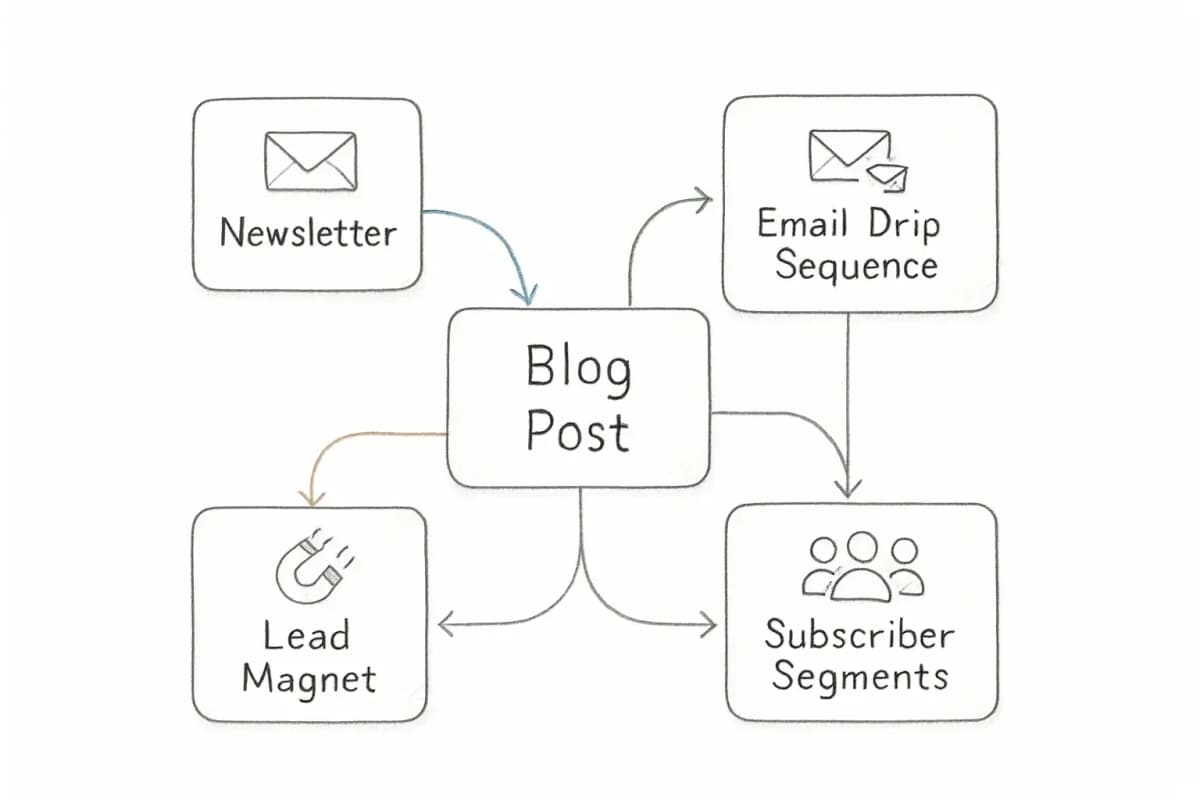
The core principle: one blog post can generate a newsletter, a drip sequence, a lead magnet, and a re-engagement campaign, each with minimal additional writing.
Why Blog Content Is the Ideal Raw Material for Email
Blog posts are structured for depth. They cover a topic with context, supporting data, and a clear argument. That structure transfers naturally into email formats because subscribers want the same things: a specific idea, explained clearly, with a reason to act.
Repurposing content is a time-saving strategy that involves adapting existing materials like blog posts, webinars, or case studies into new formats for email marketing campaigns. By breaking down long-form content into a series of emails or highlighting key takeaways, you can provide consistent value to your subscribers without constantly creating new material from scratch.
In 2025, blog posts were the third most popular content format used by marketers and were also ranked among the top five highest-ROI content formats. That performance on the web signals the same content will likely resonate in an inbox.
Your blog content is sitting on untapped email marketing potential. Most marketers create a post, share it on social, and move on, leaving an entire distribution channel unused. Repurposing blog content for email marketing closes that gap, turning already-researched, already-written material into subscriber-facing touchpoints that drive opens, clicks, and revenue without starting from scratch.
Email marketing generates $36 to $40 for every $1 spent, making it one of the highest-ROI channels in digital marketing. The problem most teams face is not strategy, but content volume. Repurposing solves that directly.
Key Takeaways
According to a survey by ReferralRock, 94% of marketers already repurpose their content, while the remaining 6% intend to incorporate it into their marketing strategy.
In the same survey, 46% of marketers identified content repurposing as the most effective strategy, outperforming both creating new content and updating old content.
Drip campaigns built from sequenced content boast open rates about 80% higher than single-send emails, with click-through rates tripling in comparison, and leads who receive drip emails produce 47% more sales-ready buyers.
Segmented email campaigns receive 100.95% higher click rates than non-segmented ones and are linked with a 760% increase in email revenue.
The core principle: one blog post can generate a newsletter, a drip sequence, a lead magnet, and a re-engagement campaign, each with minimal additional writing.
Why Blog Content Is the Ideal Raw Material for Email
Blog posts are structured for depth. They cover a topic with context, supporting data, and a clear argument. That structure transfers naturally into email formats because subscribers want the same things: a specific idea, explained clearly, with a reason to act.
Repurposing content is a time-saving strategy that involves adapting existing materials like blog posts, webinars, or case studies into new formats for email marketing campaigns. By breaking down long-form content into a series of emails or highlighting key takeaways, you can provide consistent value to your subscribers without constantly creating new material from scratch.
In 2025, blog posts were the third most popular content format used by marketers and were also ranked among the top five highest-ROI content formats. That performance on the web signals the same content will likely resonate in an inbox.
The key distinction: repurposing is not copy-pasting. Repurposing content means adapting existing materials for new channels and audiences. Content repurposing, also known as content recycling, is taking old, traditional content and using it as a starting place for content in new formats. Email subscribers expect a different voice and level of brevity than blog readers, so the format must shift, even when the ideas stay the same.
Step 1: Identify Which Blog Posts Are Worth Repurposing
Not every post deserves a second life. When getting started, the best content to repurpose is your top-performing content, because it is highly likely that high-performing content in written form will translate into high-performing content in other formats.
Use Google Analytics to pull posts by:
Time on page (signals genuine interest, not accidental clicks)
Organic traffic volume (confirms the topic has search demand)
Social shares (shows emotional resonance)
Conversion rate (shows subscribers already take action on this topic)
Usually, the best-performing content is evergreen content. A post on "how to write a follow-up email" will stay relevant longer than a post tied to a specific platform update. Prioritize posts that answer questions your audience will still be asking in six months.
Also flag posts that explain a concept tied to a product or service you sell. These have direct commercial value when adapted into nurture emails.
Step 2: Match Blog Content to Email Formats
Each blog post can become multiple email types depending on its structure and goal. The format you choose should match your subscriber's stage in the buyer journey.
Newsletter Feature
Take the core argument of a post and write a 200 to 300 word version for your newsletter. Cut the preamble, lead with the main point, and include a "Read the full post" link. Repurposing content from other channels for use in an email campaign involves more than just a quick article teaser and a blog post link. Repurposing means taking key ideas and insights from old content and molding them into one or more emails that will engage subscribers through short lists, infographics, relevant images, and call-to-action buttons.
Email Drip Sequence
Long posts on complex topics (how to build a content calendar, how to set up email automation) can be broken into a 3 to 5 part email series. Repurposing blog posts for an email series is a strategic way to extend the value of your content while keeping your audience engaged. Select comprehensive, high-value blog posts that resonate with your audience and break them into smaller, more digestible segments for each email.
Most effective drip campaigns include between 4 and 7 emails spaced out over a week or two. Map your post's sections to individual emails, each covering one idea with one CTA.
Lead Magnet Upgrade
The key distinction: repurposing is not copy-pasting. Repurposing content means adapting existing materials for new channels and audiences. Content repurposing, also known as content recycling, is taking old, traditional content and using it as a starting place for content in new formats. Email subscribers expect a different voice and level of brevity than blog readers, so the format must shift, even when the ideas stay the same.
Step 1: Identify Which Blog Posts Are Worth Repurposing
Not every post deserves a second life. When getting started, the best content to repurpose is your top-performing content, because it is highly likely that high-performing content in written form will translate into high-performing content in other formats.
Use Google Analytics to pull posts by:
Time on page (signals genuine interest, not accidental clicks)
Organic traffic volume (confirms the topic has search demand)
Social shares (shows emotional resonance)
Conversion rate (shows subscribers already take action on this topic)
Usually, the best-performing content is evergreen content. A post on "how to write a follow-up email" will stay relevant longer than a post tied to a specific platform update. Prioritize posts that answer questions your audience will still be asking in six months.
Also flag posts that explain a concept tied to a product or service you sell. These have direct commercial value when adapted into nurture emails.
Step 2: Match Blog Content to Email Formats
Each blog post can become multiple email types depending on its structure and goal. The format you choose should match your subscriber's stage in the buyer journey.
Newsletter Feature
Take the core argument of a post and write a 200 to 300 word version for your newsletter. Cut the preamble, lead with the main point, and include a "Read the full post" link. Repurposing content from other channels for use in an email campaign involves more than just a quick article teaser and a blog post link. Repurposing means taking key ideas and insights from old content and molding them into one or more emails that will engage subscribers through short lists, infographics, relevant images, and call-to-action buttons.
Email Drip Sequence
Long posts on complex topics (how to build a content calendar, how to set up email automation) can be broken into a 3 to 5 part email series. Repurposing blog posts for an email series is a strategic way to extend the value of your content while keeping your audience engaged. Select comprehensive, high-value blog posts that resonate with your audience and break them into smaller, more digestible segments for each email.
Most effective drip campaigns include between 4 and 7 emails spaced out over a week or two. Map your post's sections to individual emails, each covering one idea with one CTA.
Lead Magnet Upgrade
If you have multiple blog posts on the same or similar topics, combine them into a well-designed eBook. Gate it behind an email opt-in and use it to grow your list while showcasing existing work.
Re-engagement Content
Use high-performing evergreen posts to build a re-engagement sequence for inactive subscribers. A dormant subscriber who last clicked on a sales-related topic should receive a curated selection of your best posts in that category, not a generic "we miss you" email.
Step 3: Rewrite for the Inbox, Not the Web
The same information reads differently depending on the medium. Blog posts tolerate long paragraphs, subheadings, and extensive lists. Email does not.
When adapting content for email, use a friendly and easy-to-read tone. Break down long pieces into smaller, easier-to-read sections with clear titles and bullet points. Most people read emails on their phones, so make sure your content looks good on small screens.
Practical translation rules:
Shorten the introduction. Blog posts often take 2 to 3 paragraphs to set context. Emails need to make their point in the first two sentences.
One main idea per email. A blog post can cover eight tips. An email that tries to cover all eight will lose the reader by tip three.
Single CTA. Every repurposed email should have one clear next step, whether that is reading the full post, downloading a resource, or booking a call.
Write like you are sending to one person. Write each email as though you are speaking directly to one person. Focus every message on a single idea, use straightforward language, and end with a clear next step.
Strong subject lines are non-negotiable when repurposing. The post title rarely works as-is. See our guide on email subject line best practices that boost open rates by 27% for tested approaches that translate well from content-based emails.
Step 4: Segment Your List Before Sending
Repurposed content performs best when it reaches subscribers who already care about that topic. Sending a technical post about API integrations to your entire list including beginners will hurt engagement and damage your sender reputation.
With 376.4 billion emails sent daily in 2025, standing out in crowded inboxes requires strategic email list segmentation. By segmenting email campaigns, you can achieve 50% more CTR and a 760% increase in revenue compared to the same email sent to all.
Segment repurposed blog content by:
Topic interest: Tag subscribers based on links they have clicked in previous campaigns
Funnel stage: Customers in the awareness stage have recently discovered your brand. Send newsletters with educational content, blog posts, and welcome emails to nurture their interest.
Purchase behavior: Match content topics to product categories they have browsed or bought
Engagement level: Send high-frequency content only to your most active subscribers
If you have multiple blog posts on the same or similar topics, combine them into a well-designed eBook. Gate it behind an email opt-in and use it to grow your list while showcasing existing work.
Re-engagement Content
Use high-performing evergreen posts to build a re-engagement sequence for inactive subscribers. A dormant subscriber who last clicked on a sales-related topic should receive a curated selection of your best posts in that category, not a generic "we miss you" email.
Step 3: Rewrite for the Inbox, Not the Web
The same information reads differently depending on the medium. Blog posts tolerate long paragraphs, subheadings, and extensive lists. Email does not.
When adapting content for email, use a friendly and easy-to-read tone. Break down long pieces into smaller, easier-to-read sections with clear titles and bullet points. Most people read emails on their phones, so make sure your content looks good on small screens.
Practical translation rules:
Shorten the introduction. Blog posts often take 2 to 3 paragraphs to set context. Emails need to make their point in the first two sentences.
One main idea per email. A blog post can cover eight tips. An email that tries to cover all eight will lose the reader by tip three.
Single CTA. Every repurposed email should have one clear next step, whether that is reading the full post, downloading a resource, or booking a call.
Write like you are sending to one person. Write each email as though you are speaking directly to one person. Focus every message on a single idea, use straightforward language, and end with a clear next step.
Strong subject lines are non-negotiable when repurposing. The post title rarely works as-is. See our guide on email subject line best practices that boost open rates by 27% for tested approaches that translate well from content-based emails.
Step 4: Segment Your List Before Sending
Repurposed content performs best when it reaches subscribers who already care about that topic. Sending a technical post about API integrations to your entire list including beginners will hurt engagement and damage your sender reputation.
With 376.4 billion emails sent daily in 2025, standing out in crowded inboxes requires strategic email list segmentation. By segmenting email campaigns, you can achieve 50% more CTR and a 760% increase in revenue compared to the same email sent to all.
Segment repurposed blog content by:
Topic interest: Tag subscribers based on links they have clicked in previous campaigns
Funnel stage: Customers in the awareness stage have recently discovered your brand. Send newsletters with educational content, blog posts, and welcome emails to nurture their interest.
Purchase behavior: Match content topics to product categories they have browsed or bought
Engagement level: Send high-frequency content only to your most active subscribers
Step 5: Build a Repurposing System, Not a One-Off Habit
You need a plan to make the process easily repeatable. Identify the criteria for content to be repurposed, what repurposing options exist, and so on. By identifying the reasons and the options, your content creation team will be able to enjoy a break from the pressure of developing all original content all the time.
A practical system looks like this:
Monthly audit: Pull the top 5 posts by traffic and engagement from the previous month.
Format assignment: Assign each post to an email format (newsletter feature, drip email, or lead magnet).
Editorial calendar: Schedule the repurposed email content 2 to 4 weeks after the blog post publishes, capturing interest while the topic is still fresh.
Performance tracking: Compare click rates between repurposed emails and original campaigns. Choose emails with high open and click rates for future repurposing and give preference to evergreen content.
Automated email campaigns generate a 320% higher ROI compared to manually executed campaigns. Build automation triggers so that new subscribers automatically receive your best repurposed content based on their opt-in source or initial behavior.
Step 6: Measure What Actually Matters
Repurposing adds efficiency only if you measure whether it adds performance. Track these metrics separately from your standard campaign data:
Open rate by content type: Do posts about a specific topic category outperform others?
Click-to-open rate (CTOR): This tells you whether the content in the email was relevant once someone opened it.
Revenue per email: Especially important for drip sequences built from product-adjacent blog posts.
List growth from gated repurposed content: Measure how many new subscribers your blog-to-eBook conversions generate.
You can use analytics to leverage your top-performing content from other platforms to more effectively engage email subscribers. If a blog post drove high organic traffic but low email engagement, the topic may not align with what your subscribers care about. That is useful data for your editorial calendar.
For deeper guidance on reading these signals, our email marketing analytics best practices guide covers the specific metrics that separate surface-level reporting from decisions that change campaign performance.
Common Mistakes to Avoid
Step 5: Build a Repurposing System, Not a One-Off Habit
You need a plan to make the process easily repeatable. Identify the criteria for content to be repurposed, what repurposing options exist, and so on. By identifying the reasons and the options, your content creation team will be able to enjoy a break from the pressure of developing all original content all the time.
A practical system looks like this:
Monthly audit: Pull the top 5 posts by traffic and engagement from the previous month.
Format assignment: Assign each post to an email format (newsletter feature, drip email, or lead magnet).
Editorial calendar: Schedule the repurposed email content 2 to 4 weeks after the blog post publishes, capturing interest while the topic is still fresh.
Performance tracking: Compare click rates between repurposed emails and original campaigns. Choose emails with high open and click rates for future repurposing and give preference to evergreen content.
Automated email campaigns generate a 320% higher ROI compared to manually executed campaigns. Build automation triggers so that new subscribers automatically receive your best repurposed content based on their opt-in source or initial behavior.
Step 6: Measure What Actually Matters
Repurposing adds efficiency only if you measure whether it adds performance. Track these metrics separately from your standard campaign data:
Open rate by content type: Do posts about a specific topic category outperform others?
Click-to-open rate (CTOR): This tells you whether the content in the email was relevant once someone opened it.
Revenue per email: Especially important for drip sequences built from product-adjacent blog posts.
List growth from gated repurposed content: Measure how many new subscribers your blog-to-eBook conversions generate.
You can use analytics to leverage your top-performing content from other platforms to more effectively engage email subscribers. If a blog post drove high organic traffic but low email engagement, the topic may not align with what your subscribers care about. That is useful data for your editorial calendar.
For deeper guidance on reading these signals, our email marketing analytics best practices guide covers the specific metrics that separate surface-level reporting from decisions that change campaign performance.
Common Mistakes to Avoid
Repurposing weak content. If a post underperformed on the blog, it will likely underperform in email too. Repurposing sounds easy, but doing it wrong is one of the fastest ways to waste time and dilute your brand. Many marketers try to squeeze ROI out of underperforming content or approach repurposing like a copy-paste job.
Sending to your full list without segmentation. Relevance drives performance. A mismatch between content topic and subscriber interest kills open rates and trains subscribers to ignore you.
Ignoring mobile formatting. Over 60% of emails are opened on phones. A blog post structure that looks clean on a desktop becomes a wall of text on a phone screen. Use short paragraphs and test on mobile before sending.
Sending the blog post link without adding email-native value. Subscribers who receive nothing more than a link to a blog post have no reason to click. Add a unique insight, an exclusive comment, or a short summary that makes the email worth reading on its own.
Frequently Asked Questions
How often should I repurpose blog content into emails?
There is no fixed rule, but a practical cadence is once or twice per month for newsletter features and quarterly for drip sequences and lead magnets. The frequency should match your publishing pace and the depth of your existing content library. Prioritize posts that are consistently driving organic traffic, since that signals sustained interest.
Does repurposing blog content hurt SEO or email deliverability?
Repurposing does not duplicate content in the SEO sense, because email is not indexed by search engines. Your blog post remains unique and indexable. For deliverability, repurposed email content that is relevant and well-targeted typically improves engagement metrics like open rate and CTOR, which in turn supports healthy sender reputation.
What types of blog posts work best for email drip sequences?
Posts that cover a multi-step process, a complex decision, or a topic with several distinct subtopics are the best candidates. A post titled "How to build an email welcome sequence" could easily become a five-part drip where each email covers one step in depth. How-to guides, comparison posts, and beginner-focused explainers tend to translate well. For examples of how sequenced email content performs, see our welcome email sequence best practices guide.
How do I know if a repurposed email campaign is working?
Measure CTOR (click-to-open rate), which strips out open rate inflation and shows whether the content itself drove action. Also track revenue per email for any campaigns tied to a product or service. Compare these against your baseline campaign averages. If repurposed content consistently underperforms, revisit your segmentation before blaming the content.
Can I repurpose the same blog post more than once for email?
Yes, especially for evergreen content. You can feature the same post in a newsletter one month, adapt a section of it into a drip sequence six months later, and update it with new data to re-promote it the following year. Repurposing content maximizes your content marketing ROI by extending content lifespan, saves time and resources, boosts brand visibility across channels, and helps engage different audience preferences with varied formats. Each format reaches subscribers at a different point in their journey, so repetition of the underlying idea is rarely a problem.
Repurposing weak content. If a post underperformed on the blog, it will likely underperform in email too. Repurposing sounds easy, but doing it wrong is one of the fastest ways to waste time and dilute your brand. Many marketers try to squeeze ROI out of underperforming content or approach repurposing like a copy-paste job.
Sending to your full list without segmentation. Relevance drives performance. A mismatch between content topic and subscriber interest kills open rates and trains subscribers to ignore you.
Ignoring mobile formatting. Over 60% of emails are opened on phones. A blog post structure that looks clean on a desktop becomes a wall of text on a phone screen. Use short paragraphs and test on mobile before sending.
Sending the blog post link without adding email-native value. Subscribers who receive nothing more than a link to a blog post have no reason to click. Add a unique insight, an exclusive comment, or a short summary that makes the email worth reading on its own.
Frequently Asked Questions
How often should I repurpose blog content into emails?
There is no fixed rule, but a practical cadence is once or twice per month for newsletter features and quarterly for drip sequences and lead magnets. The frequency should match your publishing pace and the depth of your existing content library. Prioritize posts that are consistently driving organic traffic, since that signals sustained interest.
Does repurposing blog content hurt SEO or email deliverability?
Repurposing does not duplicate content in the SEO sense, because email is not indexed by search engines. Your blog post remains unique and indexable. For deliverability, repurposed email content that is relevant and well-targeted typically improves engagement metrics like open rate and CTOR, which in turn supports healthy sender reputation.
What types of blog posts work best for email drip sequences?
Posts that cover a multi-step process, a complex decision, or a topic with several distinct subtopics are the best candidates. A post titled "How to build an email welcome sequence" could easily become a five-part drip where each email covers one step in depth. How-to guides, comparison posts, and beginner-focused explainers tend to translate well. For examples of how sequenced email content performs, see our welcome email sequence best practices guide.
How do I know if a repurposed email campaign is working?
Measure CTOR (click-to-open rate), which strips out open rate inflation and shows whether the content itself drove action. Also track revenue per email for any campaigns tied to a product or service. Compare these against your baseline campaign averages. If repurposed content consistently underperforms, revisit your segmentation before blaming the content.
Can I repurpose the same blog post more than once for email?
Yes, especially for evergreen content. You can feature the same post in a newsletter one month, adapt a section of it into a drip sequence six months later, and update it with new data to re-promote it the following year. Repurposing content maximizes your content marketing ROI by extending content lifespan, saves time and resources, boosts brand visibility across channels, and helps engage different audience preferences with varied formats. Each format reaches subscribers at a different point in their journey, so repetition of the underlying idea is rarely a problem.