Email marketing remains one of the most durable channels in digital marketing, and the 2025 email marketing outlook is largely a story of rising expectations. Email remains the most effective channel for delivering the highest ROI in digital marketing, but only for marketers who adapt to evolving audience behavior, emerging AI tools, and smarter segmentation. The baseline numbers are hard to argue with, but execution gaps between average and top performers are widening. This guide breaks down where email is headed, what forces are reshaping it, and the practical moves your team needs to make now.
Key Takeaways
Email marketing delivers approximately $36 in revenue for each dollar invested in campaigns.
Automated emails generate roughly 320% more revenue than non-automated ones.
Segmenting email lists can lead to up to a 760% increase in email revenue.
For domains sending over 5,000 emails per day, Outlook now requires compliance with SPF, DKIM, and DMARC.
Personalization, segmentation, and automation have ranked among the highest-impact email marketing trends for six consecutive years, according to Oracle's Digital Experience Agency surveys.
The State of the Email Marketing Outlook in 2025
The foundation of any honest email marketing outlook starts with the market size. The global email user base reached 4.6 billion people in 2025, with projections showing continued growth toward 4.85 billion users by 2027. That is not a channel in decline.
The volume of global email traffic is projected to hit 376 billion emails per day in 2025, up from 361 billion the previous year. That is roughly 4.3 million emails every second. The scale creates both opportunity and real competition for inbox attention.
From a revenue perspective, email marketing revenue worldwide is expected to reach $17.9 billion by 2027. For individual businesses, the channel continues to deliver: a good email ROI rate averages between 3600% and 4200%, meaning that for every $1 invested, businesses receive a return of $36 to $42.
What does this mean for strategy? It means the channel reward is large, but only if you execute well. The inbox is crowded, and subject lines, timing, and relevance matter more than ever.
Email marketing remains one of the most durable channels in digital marketing, and the 2025 email marketing outlook is largely a story of rising expectations. Email remains the most effective channel for delivering the highest ROI in digital marketing, but only for marketers who adapt to evolving audience behavior, emerging AI tools, and smarter segmentation. The baseline numbers are hard to argue with, but execution gaps between average and top performers are widening. This guide breaks down where email is headed, what forces are reshaping it, and the practical moves your team needs to make now.
Key Takeaways
Email marketing delivers approximately $36 in revenue for each dollar invested in campaigns.
Automated emails generate roughly 320% more revenue than non-automated ones.
Segmenting email lists can lead to up to a 760% increase in email revenue.
For domains sending over 5,000 emails per day, Outlook now requires compliance with SPF, DKIM, and DMARC.
Personalization, segmentation, and automation have ranked among the highest-impact email marketing trends for six consecutive years, according to Oracle's Digital Experience Agency surveys.
The State of the Email Marketing Outlook in 2025
The foundation of any honest email marketing outlook starts with the market size. The global email user base reached 4.6 billion people in 2025, with projections showing continued growth toward 4.85 billion users by 2027. That is not a channel in decline.
The volume of global email traffic is projected to hit 376 billion emails per day in 2025, up from 361 billion the previous year. That is roughly 4.3 million emails every second. The scale creates both opportunity and real competition for inbox attention.
From a revenue perspective, email marketing revenue worldwide is expected to reach $17.9 billion by 2027. For individual businesses, the channel continues to deliver: a good email ROI rate averages between 3600% and 4200%, meaning that for every $1 invested, businesses receive a return of $36 to $42.
What does this mean for strategy? It means the channel reward is large, but only if you execute well. The inbox is crowded, and subject lines, timing, and relevance matter more than ever.
AI Is Reshaping How Campaigns Get Built
The most significant shift in the 2025 email marketing outlook is how teams are using artificial intelligence, not just to save time, but to improve outcomes at scale.
91% of marketers now use AI tools in their workflows as automation and personalization gain traction. However, the approach matters. 65% of marketers advocate using AI as an assistive tool but oppose fully hands-off deployment. The human voice check remains essential.
Adoption of generative AI for email personalization jumped by 21%, according to Oracle Digital Experience Agency's digital marketing experts. The most common starting point is subject lines. Many brands are doing small-scale or localized experiments with subject lines and founding working groups to explore and manage their use of generative AI.
Looking further ahead, by 2026, marketing experts predict up to 75% of email strategy operations to be fully AI-driven. Teams that build fluency with these tools now will have a structural advantage.
Practically, AI can help with:
Subject line generation and A/B variant creation
Send-time prediction based on individual subscriber behavior
Dynamic content blocks tailored to audience segments
Personalization and Segmentation: Still the Highest-Impact Tactics
Personalization has been a top email strategy for years, but the bar in 2025 has moved from basic first-name tokens to behavior-driven, predictive messaging.
71% of consumers expect companies to deliver personalized experiences, which means platforms must be equipped to enable that level of precision automatically. Basic demographic personalization no longer satisfies this expectation.
Hyper-personalization relies on combining behavioral data, purchase history, and engagement metrics to generate unique messages for every recipient. That requires CRM data to be clean, accessible, and connected to your email platform.
On the segmentation side, segmented email campaigns generate 30% more opens and 50% more click-throughs, and 78% of marketers say segmentation is their most effective tactic. The revenue impact is even more dramatic: marketing professionals have experienced a 760% increase in revenue through email list building and campaign utilization when they implement rigorous segmentation.
AI Is Reshaping How Campaigns Get Built
The most significant shift in the 2025 email marketing outlook is how teams are using artificial intelligence, not just to save time, but to improve outcomes at scale.
91% of marketers now use AI tools in their workflows as automation and personalization gain traction. However, the approach matters. 65% of marketers advocate using AI as an assistive tool but oppose fully hands-off deployment. The human voice check remains essential.
Adoption of generative AI for email personalization jumped by 21%, according to Oracle Digital Experience Agency's digital marketing experts. The most common starting point is subject lines. Many brands are doing small-scale or localized experiments with subject lines and founding working groups to explore and manage their use of generative AI.
Looking further ahead, by 2026, marketing experts predict up to 75% of email strategy operations to be fully AI-driven. Teams that build fluency with these tools now will have a structural advantage.
Practically, AI can help with:
Subject line generation and A/B variant creation
Send-time prediction based on individual subscriber behavior
Dynamic content blocks tailored to audience segments
Personalization and Segmentation: Still the Highest-Impact Tactics
Personalization has been a top email strategy for years, but the bar in 2025 has moved from basic first-name tokens to behavior-driven, predictive messaging.
71% of consumers expect companies to deliver personalized experiences, which means platforms must be equipped to enable that level of precision automatically. Basic demographic personalization no longer satisfies this expectation.
Hyper-personalization relies on combining behavioral data, purchase history, and engagement metrics to generate unique messages for every recipient. That requires CRM data to be clean, accessible, and connected to your email platform.
On the segmentation side, segmented email campaigns generate 30% more opens and 50% more click-throughs, and 78% of marketers say segmentation is their most effective tactic. The revenue impact is even more dramatic: marketing professionals have experienced a 760% increase in revenue through email list building and campaign utilization when they implement rigorous segmentation.
The email marketing outlook in 2025 includes a hard infrastructure reality: authentication is no longer optional. Major inbox providers have formalized requirements that were previously treated as best practices.
Starting February 1, 2024, email senders who send more than 5,000 messages per day to Gmail accounts must set up SPF and DKIM email authentication for their domain, as well as DMARC email authentication for their sending domain.
Microsoft followed suit. For domains sending over 5,000 emails per day, Outlook requires compliance with SPF, DKIM, and DMARC. Non-compliant messages will first be routed to Junk.
The case for acting now is strong. Fully authenticated domains (SPF, DKIM, and DMARC) achieve a 2.7x higher likelihood of inbox placement compared to unauthenticated emails. Despite this, only about 18% of top domains have valid DMARC and just 7-8% enforce quarantine or reject policies, leaving most brands exposed to spoofing and deliverability issues.
The recommended rollout sequence:
Configure SPF records to authorize your sending IPs
Enable DKIM to add a verified signature to outgoing mail
Publish a DMARC record, starting at p=none for monitoring
Gradually escalate to p=quarantine, then p=reject once you have confirmed all legitimate senders are included
The 83.1% average deliverability rate means 16.9% of "delivered" emails never reach intended inboxes. For any team running volume campaigns, that gap represents direct revenue loss.
Outlook Email Marketing and Dynamics CRM: What Microsoft Users Need to Know
For teams using Microsoft's ecosystem, the outlook email marketing environment has changed materially. In August 2024, Microsoft announced that outbound marketing would be removed after June 30, 2025. Teams still running outbound marketing in Dynamics are now overdue for migration to Customer Insights Journeys.
Dynamics CRM email marketing through Microsoft Dynamics 365 Customer Insights provides a more capable foundation. Dynamics 365 stands out for its ability to efficiently manage campaigns, offering personalization and detailed analysis. Email features include templates, audience segmentation, programmatic journeys, and real-time emails with personalization elements.
A significant advantage of Dynamics 365 is its ability to integrate with other digital marketing tools, such as social media platforms and CRM automation software, making it a practical choice for organizations that want a unified view of the customer across sales and marketing.
For CRM-driven email programs, the most effective approach is to treat CRM data as the source of truth for segmentation. Dynamics CRM natively integrates intelligence to guide tailored content matching detected needs, validate target segments demonstrating affinity, and arm personalized messaging to intersect moments of influence.
The email marketing outlook in 2025 includes a hard infrastructure reality: authentication is no longer optional. Major inbox providers have formalized requirements that were previously treated as best practices.
Starting February 1, 2024, email senders who send more than 5,000 messages per day to Gmail accounts must set up SPF and DKIM email authentication for their domain, as well as DMARC email authentication for their sending domain.
Microsoft followed suit. For domains sending over 5,000 emails per day, Outlook requires compliance with SPF, DKIM, and DMARC. Non-compliant messages will first be routed to Junk.
The case for acting now is strong. Fully authenticated domains (SPF, DKIM, and DMARC) achieve a 2.7x higher likelihood of inbox placement compared to unauthenticated emails. Despite this, only about 18% of top domains have valid DMARC and just 7-8% enforce quarantine or reject policies, leaving most brands exposed to spoofing and deliverability issues.
The recommended rollout sequence:
Configure SPF records to authorize your sending IPs
Enable DKIM to add a verified signature to outgoing mail
Publish a DMARC record, starting at p=none for monitoring
Gradually escalate to p=quarantine, then p=reject once you have confirmed all legitimate senders are included
The 83.1% average deliverability rate means 16.9% of "delivered" emails never reach intended inboxes. For any team running volume campaigns, that gap represents direct revenue loss.
Outlook Email Marketing and Dynamics CRM: What Microsoft Users Need to Know
For teams using Microsoft's ecosystem, the outlook email marketing environment has changed materially. In August 2024, Microsoft announced that outbound marketing would be removed after June 30, 2025. Teams still running outbound marketing in Dynamics are now overdue for migration to Customer Insights Journeys.
Dynamics CRM email marketing through Microsoft Dynamics 365 Customer Insights provides a more capable foundation. Dynamics 365 stands out for its ability to efficiently manage campaigns, offering personalization and detailed analysis. Email features include templates, audience segmentation, programmatic journeys, and real-time emails with personalization elements.
A significant advantage of Dynamics 365 is its ability to integrate with other digital marketing tools, such as social media platforms and CRM automation software, making it a practical choice for organizations that want a unified view of the customer across sales and marketing.
For CRM-driven email programs, the most effective approach is to treat CRM data as the source of truth for segmentation. Dynamics CRM natively integrates intelligence to guide tailored content matching detected needs, validate target segments demonstrating affinity, and arm personalized messaging to intersect moments of influence.
Key areas to configure in Dynamics 365 for email marketing success:
Consent preferences and preference center setup
Real-time journey triggers based on behavioral signals
Suppression lists connected to CRM contact records
Campaign-level analytics tied to revenue outcomes, not just opens
Mobile, Interactivity, and Design Priorities
Over 50% of users delete an email if it is not optimized for mobile, and mobile email usage accounts for over 50% of all email opens in 2025. A desktop-first design approach is a deliverability and engagement risk.
Beyond mobile responsiveness, interactive email elements are gaining real traction. Interactive emails drive a 520% higher user response rate, which is why marketers are increasingly embracing interactivity, visuals, and gamification to grow their content success rates.
An interactive email contains dynamic content like forms, accordions, carousels, and calendars that allow a website-like experience inside the inbox. The practical upside is reduced friction: subscribers can take action without leaving their email client.
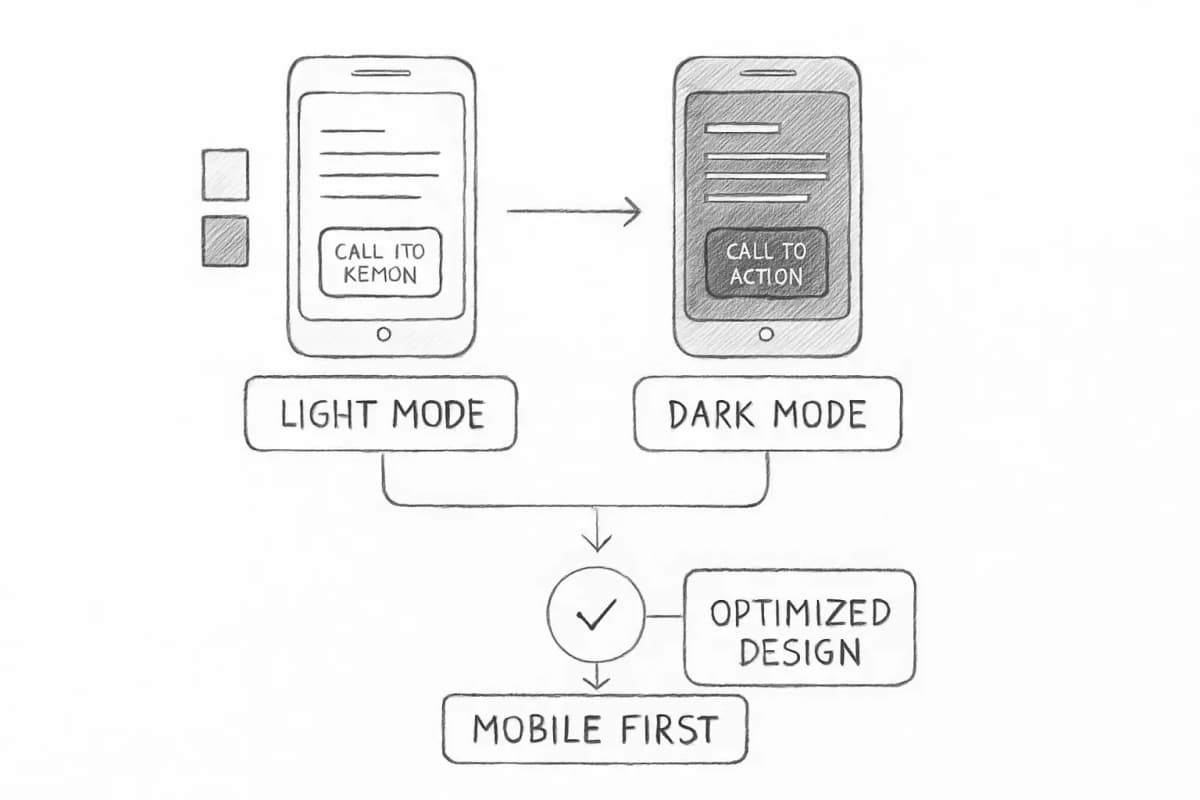
Around 40% of users view emails in Dark Mode, which means design and color testing for dark mode rendering is no longer a niche concern. Test your templates across both light and dark mode before sending.
Metrics That Actually Matter in 2025
The measurement side of the email marketing outlook has shifted following Apple's Mail Privacy Protection, which inflated open rates across senders. According to the State of Email Report 2025, 15% of email marketers still rely on open rates as a primary measure of success, which is a strategic blind spot for those sending to large Apple Mail audiences.
Unique click-through rate is the second most popular way marketers measure email success, and a shift toward it is expected as engagement becomes a key factor in email deliverability.
Better metrics to prioritize in 2025:
Key areas to configure in Dynamics 365 for email marketing success:
Consent preferences and preference center setup
Real-time journey triggers based on behavioral signals
Suppression lists connected to CRM contact records
Campaign-level analytics tied to revenue outcomes, not just opens
Mobile, Interactivity, and Design Priorities
Over 50% of users delete an email if it is not optimized for mobile, and mobile email usage accounts for over 50% of all email opens in 2025. A desktop-first design approach is a deliverability and engagement risk.
Beyond mobile responsiveness, interactive email elements are gaining real traction. Interactive emails drive a 520% higher user response rate, which is why marketers are increasingly embracing interactivity, visuals, and gamification to grow their content success rates.
An interactive email contains dynamic content like forms, accordions, carousels, and calendars that allow a website-like experience inside the inbox. The practical upside is reduced friction: subscribers can take action without leaving their email client.
Around 40% of users view emails in Dark Mode, which means design and color testing for dark mode rendering is no longer a niche concern. Test your templates across both light and dark mode before sending.
Metrics That Actually Matter in 2025
The measurement side of the email marketing outlook has shifted following Apple's Mail Privacy Protection, which inflated open rates across senders. According to the State of Email Report 2025, 15% of email marketers still rely on open rates as a primary measure of success, which is a strategic blind spot for those sending to large Apple Mail audiences.
Unique click-through rate is the second most popular way marketers measure email success, and a shift toward it is expected as engagement becomes a key factor in email deliverability.
Better metrics to prioritize in 2025:
Click-to-open rate (CTOR): Measures engagement quality among openers
Revenue per email: Ties campaigns directly to business outcomes
List health rate: Tracks unsubscribes, spam complaints, and bounces together
Conversion rate by segment: Identifies which audience cuts perform best
Deliverability rate: Distinguishes inbox placement from simple delivery
The email marketing outlook for 2025 rewards teams that treat the channel as a system rather than a series of sends. The data points to three consistent foundations:
Automation converts. Automated messages drove 37% of sales despite making up just 2% of sends. Welcome sequences, abandoned cart flows, and behavioral triggers generate revenue with minimal ongoing effort once configured well. For welcome email best practices, see our guide on Welcome Email Sequence Best Practices: 7 Proven Strategies.
First-party data is the competitive edge. Amid rising privacy regulations and Google's ongoing changes to third-party cookies, first-party data has become increasingly valuable. Brands that collect preferences, behaviors, and purchase signals directly from subscribers are less exposed to platform-level privacy changes.
Frequency management protects list health. 96% of recipients have unsubscribed because emails were sent too frequently. Preference centers and send-frequency controls are not just a compliance courtesy; they protect the long-term value of your list.
Frequently Asked Questions
What is the current email marketing ROI outlook for 2025?
Email marketing ROI averages about $36 to $42 for every $1 spent. Results vary by industry, list quality, and execution, but the channel consistently outperforms paid social and display advertising on a cost-per-conversion basis. Brands that invest in segmentation, personalization, and automation tend to reach the higher end of that range.
How is AI changing the email marketing outlook?
As AI tools improve, AI-powered creative generation is redefining how campaigns get built, helping senders create more targeted emails in less time. AI features can now write compelling copy, design templates, create hyper-personalized content, and produce subject lines that drive opens. Most teams start with AI-assisted subject line testing and gradually expand to dynamic content and send-time optimization.
What are the new deliverability requirements for 2025?
The key shift in 2025 is that mailbox providers are no longer encouraging good behavior; they are enforcing it. Google and Yahoo's bulk-sender rules effectively make SPF, DKIM, and DMARC table stakes, especially once you scale sequences across multiple reps and tools. Microsoft Outlook followed with similar enforcement for high-volume senders. Non-compliance routes messages to Junk.
What role does Dynamics CRM play in email marketing?
Click-to-open rate (CTOR): Measures engagement quality among openers
Revenue per email: Ties campaigns directly to business outcomes
List health rate: Tracks unsubscribes, spam complaints, and bounces together
Conversion rate by segment: Identifies which audience cuts perform best
Deliverability rate: Distinguishes inbox placement from simple delivery
The email marketing outlook for 2025 rewards teams that treat the channel as a system rather than a series of sends. The data points to three consistent foundations:
Automation converts. Automated messages drove 37% of sales despite making up just 2% of sends. Welcome sequences, abandoned cart flows, and behavioral triggers generate revenue with minimal ongoing effort once configured well. For welcome email best practices, see our guide on Welcome Email Sequence Best Practices: 7 Proven Strategies.
First-party data is the competitive edge. Amid rising privacy regulations and Google's ongoing changes to third-party cookies, first-party data has become increasingly valuable. Brands that collect preferences, behaviors, and purchase signals directly from subscribers are less exposed to platform-level privacy changes.
Frequency management protects list health. 96% of recipients have unsubscribed because emails were sent too frequently. Preference centers and send-frequency controls are not just a compliance courtesy; they protect the long-term value of your list.
Frequently Asked Questions
What is the current email marketing ROI outlook for 2025?
Email marketing ROI averages about $36 to $42 for every $1 spent. Results vary by industry, list quality, and execution, but the channel consistently outperforms paid social and display advertising on a cost-per-conversion basis. Brands that invest in segmentation, personalization, and automation tend to reach the higher end of that range.
How is AI changing the email marketing outlook?
As AI tools improve, AI-powered creative generation is redefining how campaigns get built, helping senders create more targeted emails in less time. AI features can now write compelling copy, design templates, create hyper-personalized content, and produce subject lines that drive opens. Most teams start with AI-assisted subject line testing and gradually expand to dynamic content and send-time optimization.
What are the new deliverability requirements for 2025?
The key shift in 2025 is that mailbox providers are no longer encouraging good behavior; they are enforcing it. Google and Yahoo's bulk-sender rules effectively make SPF, DKIM, and DMARC table stakes, especially once you scale sequences across multiple reps and tools. Microsoft Outlook followed with similar enforcement for high-volume senders. Non-compliance routes messages to Junk.
What role does Dynamics CRM play in email marketing?
Microsoft Dynamics CRM email marketing helps with tasks like sending large batches of personalized emails for marketing purposes, creating automations based on the customer journey, and viewing the results of outreach efforts. For organizations already using Dynamics 365 Sales, connecting Customer Insights Journeys enables a unified view of pipeline and campaign activity, making attribution more accurate and segmentation more precise.
No comments yet. Be the first!
Microsoft Dynamics CRM email marketing helps with tasks like sending large batches of personalized emails for marketing purposes, creating automations based on the customer journey, and viewing the results of outreach efforts. For organizations already using Dynamics 365 Sales, connecting Customer Insights Journeys enables a unified view of pipeline and campaign activity, making attribution more accurate and segmentation more precise.