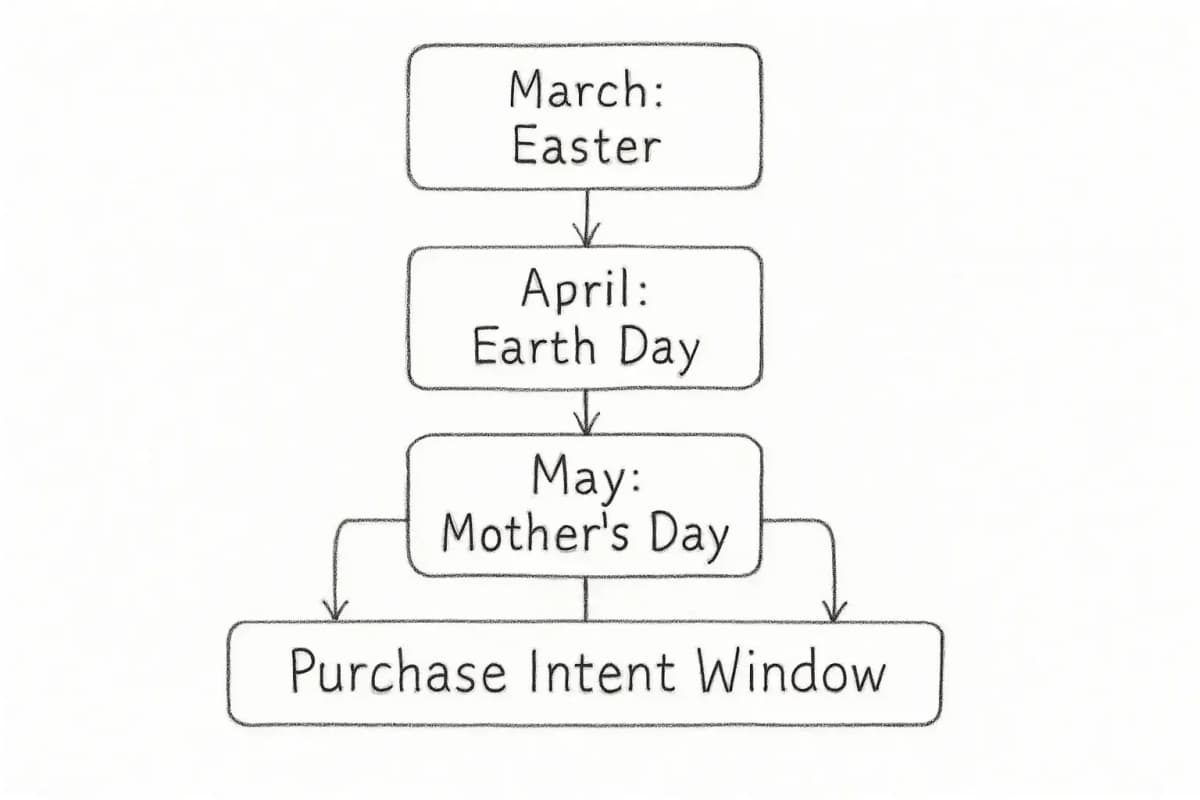
Spring is one of the most commercially active periods of the year for email marketers. The National Retail Federation reported that Mother's Day expenditure was expected to reach $34.1 billion in 2025, and that figure does not account for Easter, Earth Day, or Memorial Day spend. The window between March and May gives businesses a concentrated stretch of purchase intent, renewed consumer energy, and proven seasonal hooks that are genuinely easy to build campaigns around. This guide explains how to use spring email marketing to convert that seasonal attention into measurable revenue.
Key Takeaways
Email marketing generates between $36 and $40 for every dollar spent, translating to a 3,600% to 4,000% return on investment, outperforming most other marketing channels by a significant margin.
Emails with personalized subject lines have a 46% open rate compared to 35% without, a meaningful lift that applies directly to spring campaign performance.
Emails tailored by user behavior yield up to 760% more revenue than non-segmented blasts, making segmentation the highest-leverage tactic in any spring campaign.
In 2024, automated emails outperformed scheduled ones by 52% for opens, 332% for clicks, and 2,361% for conversions. Seasonal trigger sequences capture this advantage.
Spring campaigns that align timing, personalization, design, and segmentation consistently outperform generic sends. The tactics below show exactly how to execute each element.
Why Spring Is a High-Value Window for Email Marketers
Spring brings a sense of renewal, growth, and optimism, making it a great time for campaigns that encourage people to refresh their lifestyles, homes, and habits. Businesses that offer travel, outdoor gear, or seasonal fashion have a particular advantage in this window.
Beyond consumer psychology, the calendar density works in your favor. The top spring holidays for email campaigns include April Fool's Day, Easter, Earth Day, Mother's Day, and Memorial Day. These events provide genuine opportunities for promotions and themed content.
Seasonal marketing is important because it ensures brands are visible when customer interest is naturally increasing. During key times of the year, people are more inclined to browse, compare, and purchase, making timing a crucial part of the strategy rather than just a backdrop.
Spring is one of the most commercially active periods of the year for email marketers. The National Retail Federation reported that Mother's Day expenditure was expected to reach $34.1 billion in 2025, and that figure does not account for Easter, Earth Day, or Memorial Day spend. The window between March and May gives businesses a concentrated stretch of purchase intent, renewed consumer energy, and proven seasonal hooks that are genuinely easy to build campaigns around. This guide explains how to use spring email marketing to convert that seasonal attention into measurable revenue.
Key Takeaways
Email marketing generates between $36 and $40 for every dollar spent, translating to a 3,600% to 4,000% return on investment, outperforming most other marketing channels by a significant margin.
Emails with personalized subject lines have a 46% open rate compared to 35% without, a meaningful lift that applies directly to spring campaign performance.
Emails tailored by user behavior yield up to 760% more revenue than non-segmented blasts, making segmentation the highest-leverage tactic in any spring campaign.
In 2024, automated emails outperformed scheduled ones by 52% for opens, 332% for clicks, and 2,361% for conversions. Seasonal trigger sequences capture this advantage.
Spring campaigns that align timing, personalization, design, and segmentation consistently outperform generic sends. The tactics below show exactly how to execute each element.
Why Spring Is a High-Value Window for Email Marketers
Spring brings a sense of renewal, growth, and optimism, making it a great time for campaigns that encourage people to refresh their lifestyles, homes, and habits. Businesses that offer travel, outdoor gear, or seasonal fashion have a particular advantage in this window.
Beyond consumer psychology, the calendar density works in your favor. The top spring holidays for email campaigns include April Fool's Day, Easter, Earth Day, Mother's Day, and Memorial Day. These events provide genuine opportunities for promotions and themed content.
Seasonal marketing is important because it ensures brands are visible when customer interest is naturally increasing. During key times of the year, people are more inclined to browse, compare, and purchase, making timing a crucial part of the strategy rather than just a backdrop.
The implication is clear: spring email marketing is not just about slapping a flower graphic on a standard promotional email. It requires planning campaigns around specific dates, audience behaviors, and purchase triggers that are unique to the season.
Map Your Spring Email Calendar Early
Start planning before the seasonal peak, not when the date nears. Effective planning begins with a calendar, milestones, campaign goals, and lead time to build momentum. The key is to prepare early so your campaign appears deliberate rather than rushed.
Here is a core spring campaign calendar to build from:
March: St. Patrick's Day (March 17), First Day of Spring (March 20), International Happiness Day (March 20)
April: April Fool's Day (April 1), Easter (date varies), Earth Day (April 22)
May: Mother's Day (second Sunday), Memorial Day (last Monday)
Easter is a key holiday for spring promotions, especially in retail, food, and family-oriented brands. Easter sales, brunch-themed campaigns, and gift guides work well here. Mother's Day is one of the biggest gift-giving holidays of the season, ideal for heartfelt emails featuring gift guides, exclusive discounts, and personalized offers.
For each date, work backwards at least two to three weeks to allow for design, copy review, A/B testing, and list segmentation. Campaigns that launch the week of a holiday are consistently under-planned.
Segment Your List Before You Send a Single Spring Email
Emails tailored by user behavior yield up to 760% more revenue than non-segmented blasts, and spring is precisely where this advantage compounds. Subscribers respond differently to seasonal content depending on their purchase history, location, and engagement level.
For spring email marketing specifically, four segmentation approaches deliver the most value:
Purchase history: Subscribers who bought spring or outdoor products in prior years are your highest-intent audience. Surface new arrivals and seasonal restocks to them first.
Geography: Segmenting your email list based on geographic factors such as city, state, or time zone is a great way to localize your messaging and promote hyper-specific offers. A subscriber in Minnesota experiences spring differently than one in Georgia.
Engagement level: Engaged users can receive exclusive offers or sneak peeks to reward their loyalty, while less active subscribers benefit from re-engagement campaigns aimed at reigniting their interest.
Lifecycle stage: New subscribers need different messaging than long-term customers. A first-time buyer does not need a loyalty reward; they need a reason to purchase again.
The implication is clear: spring email marketing is not just about slapping a flower graphic on a standard promotional email. It requires planning campaigns around specific dates, audience behaviors, and purchase triggers that are unique to the season.
Map Your Spring Email Calendar Early
Start planning before the seasonal peak, not when the date nears. Effective planning begins with a calendar, milestones, campaign goals, and lead time to build momentum. The key is to prepare early so your campaign appears deliberate rather than rushed.
Here is a core spring campaign calendar to build from:
March: St. Patrick's Day (March 17), First Day of Spring (March 20), International Happiness Day (March 20)
April: April Fool's Day (April 1), Easter (date varies), Earth Day (April 22)
May: Mother's Day (second Sunday), Memorial Day (last Monday)
Easter is a key holiday for spring promotions, especially in retail, food, and family-oriented brands. Easter sales, brunch-themed campaigns, and gift guides work well here. Mother's Day is one of the biggest gift-giving holidays of the season, ideal for heartfelt emails featuring gift guides, exclusive discounts, and personalized offers.
For each date, work backwards at least two to three weeks to allow for design, copy review, A/B testing, and list segmentation. Campaigns that launch the week of a holiday are consistently under-planned.
Segment Your List Before You Send a Single Spring Email
Emails tailored by user behavior yield up to 760% more revenue than non-segmented blasts, and spring is precisely where this advantage compounds. Subscribers respond differently to seasonal content depending on their purchase history, location, and engagement level.
For spring email marketing specifically, four segmentation approaches deliver the most value:
Purchase history: Subscribers who bought spring or outdoor products in prior years are your highest-intent audience. Surface new arrivals and seasonal restocks to them first.
Geography: Segmenting your email list based on geographic factors such as city, state, or time zone is a great way to localize your messaging and promote hyper-specific offers. A subscriber in Minnesota experiences spring differently than one in Georgia.
Engagement level: Engaged users can receive exclusive offers or sneak peeks to reward their loyalty, while less active subscribers benefit from re-engagement campaigns aimed at reigniting their interest.
Lifecycle stage: New subscribers need different messaging than long-term customers. A first-time buyer does not need a loyalty reward; they need a reason to purchase again.
Crafting compelling subject lines is vital, as 47% of recipients open emails based on the subject line alone. For seasonal campaigns, subject lines have an additional job: signaling relevance to the moment.
Emails with personalized subject lines have a 46% open rate compared to 35% without, representing a 31% boost in visibility. Applied to spring campaigns, this means using subscriber names, referencing past purchases, or tailoring the seasonal hook to a specific segment.
Effective spring subject line patterns include:
Seasonal urgency: Phrases like "Spring Sale ends Sunday" or "Last chance for Easter delivery" create time pressure without resorting to hype.
Personalized seasonal hooks: "Sarah, your spring picks are here" outperforms generic alternatives.
Question-based openers: Subject lines framed as questions hit a 46% open rate, outperforming all other types by sparking curiosity and hinting at genuine value.
Numbers in the subject line: Adding numbers to subject lines boosts open rates by 57%. "5 spring cleaning deals worth your time" is more compelling than "Spring cleaning deals."
Avoid spring-themed emoji overload. Subject lines without emojis have a higher open rate of 53.94% compared to those with emojis at 47.06%.
For full best practices on writing subject lines that move the open rate needle, read our post on email subject line best practices that boost open rates by 27%.
Design Spring Emails That Drive Action
Visual design is where seasonal email marketing either earns attention or wastes it. Spring gives you a clear palette to work with, but the design choices need to serve conversion, not just aesthetics.
Choose a color palette that complements the season: pastels, bold greens, and bright yellows. Use images of blooming flowers, lush greenery, and spring landscapes to add visual interest.
Key design principles for spring email marketing:
Mobile-first layout: 55% of email opens occur on mobile devices, so single-column layouts, large tap targets, and short preview text are not optional.
Images with intent: Emails with images get about 4.84% click-through rate, compared to just 1.6% for text-only messages. Use seasonal images that show the product or outcome, not just decoration.
One primary CTA: 73% of marketers stick to just one or two CTAs per email. Limiting your CTAs encourages subscribers to take the desired action.
Countdown timers: For time-limited spring offers, a countdown in the email body reinforces urgency without requiring aggressive copy.
Crafting compelling subject lines is vital, as 47% of recipients open emails based on the subject line alone. For seasonal campaigns, subject lines have an additional job: signaling relevance to the moment.
Emails with personalized subject lines have a 46% open rate compared to 35% without, representing a 31% boost in visibility. Applied to spring campaigns, this means using subscriber names, referencing past purchases, or tailoring the seasonal hook to a specific segment.
Effective spring subject line patterns include:
Seasonal urgency: Phrases like "Spring Sale ends Sunday" or "Last chance for Easter delivery" create time pressure without resorting to hype.
Personalized seasonal hooks: "Sarah, your spring picks are here" outperforms generic alternatives.
Question-based openers: Subject lines framed as questions hit a 46% open rate, outperforming all other types by sparking curiosity and hinting at genuine value.
Numbers in the subject line: Adding numbers to subject lines boosts open rates by 57%. "5 spring cleaning deals worth your time" is more compelling than "Spring cleaning deals."
Avoid spring-themed emoji overload. Subject lines without emojis have a higher open rate of 53.94% compared to those with emojis at 47.06%.
For full best practices on writing subject lines that move the open rate needle, read our post on email subject line best practices that boost open rates by 27%.
Design Spring Emails That Drive Action
Visual design is where seasonal email marketing either earns attention or wastes it. Spring gives you a clear palette to work with, but the design choices need to serve conversion, not just aesthetics.
Choose a color palette that complements the season: pastels, bold greens, and bright yellows. Use images of blooming flowers, lush greenery, and spring landscapes to add visual interest.
Key design principles for spring email marketing:
Mobile-first layout: 55% of email opens occur on mobile devices, so single-column layouts, large tap targets, and short preview text are not optional.
Images with intent: Emails with images get about 4.84% click-through rate, compared to just 1.6% for text-only messages. Use seasonal images that show the product or outcome, not just decoration.
One primary CTA: 73% of marketers stick to just one or two CTAs per email. Limiting your CTAs encourages subscribers to take the desired action.
Countdown timers: For time-limited spring offers, a countdown in the email body reinforces urgency without requiring aggressive copy.
For product-focused spring campaigns, showing the item in a seasonal context (outdoor furniture in a garden, activewear on a trail) converts better than studio photography alone.
Use Automation to Capture Spring Purchase Intent
In 2024, automated emails drove 37% of all email-generated sales, despite accounting for just 2% of email volume. Spring is an ideal season to build behavioral triggers that capture the spike in consumer interest.
High-performing automated sequences for spring campaigns:
Spring welcome flow: New subscribers who join during a spring promotion need an onboarding sequence that introduces your brand through a seasonal lens. Welcome emails achieve an average open rate of 83.6%, making them one of the highest-performing automated email types.
Browse abandonment: A subscriber who views your spring collection but does not purchase is warm traffic. A triggered email within two hours recaptures that intent.
Post-purchase cross-sell: A subscriber who buys a spring item is in a purchasing mindset. An automated follow-up offering a complementary product within 48 hours capitalizes on that momentum.
Re-engagement trigger: Less active subscribers benefit from re-engagement campaigns aimed at reigniting their interest. These emails often highlight new features or personalized recommendations. A spring refresh angle ("See what's new this season") gives you a natural reason to reach out.
In 2024, automated emails outperformed scheduled ones by 52% for opens, 332% for clicks, and 2,361% for conversions. Setting up even two or three of these flows before the season starts will outperform a calendar full of manually scheduled blasts.
Spring-Specific Campaign Ideas That Convert
Beyond the mechanics, execution comes down to the specific campaigns you build. Here are proven formats that work across industries during spring:
Spring cleaning sale: Some campaigns are driven less by holidays and more by seasonal changes in lifestyle and needs. Spring refresh campaigns work well because they resonate with what customers are already doing, feeling, or preparing for at that time of year. Position clearance inventory as a "make way for spring" opportunity.
Mother's Day gift guide: Mother's Day is a major sales event worldwide. For businesses, it presents the opportunity not only to promote gifts and activities for families but also to thank mothers everywhere. Build a curated gift guide segmented by price point and recipient type.
Earth Day sustainability campaign: Earth Day on April 22 is perfect for eco-friendly initiatives. Promote sustainable products, highlight green practices, or offer discounts on reusable or ethical goods. Even brands that are not sustainability-focused can find a genuine angle here.
Easter promotion with gamification: Gamification boosts seasonal marketing by making campaigns interactive, memorable, and engaging. Instead of standard messages, it offers activities like spinning or revealing, helping brands stand out and generate excitement beyond discounts. An Easter egg hunt across your email or website is a low-effort, high-engagement mechanic.
For product-focused spring campaigns, showing the item in a seasonal context (outdoor furniture in a garden, activewear on a trail) converts better than studio photography alone.
Use Automation to Capture Spring Purchase Intent
In 2024, automated emails drove 37% of all email-generated sales, despite accounting for just 2% of email volume. Spring is an ideal season to build behavioral triggers that capture the spike in consumer interest.
High-performing automated sequences for spring campaigns:
Spring welcome flow: New subscribers who join during a spring promotion need an onboarding sequence that introduces your brand through a seasonal lens. Welcome emails achieve an average open rate of 83.6%, making them one of the highest-performing automated email types.
Browse abandonment: A subscriber who views your spring collection but does not purchase is warm traffic. A triggered email within two hours recaptures that intent.
Post-purchase cross-sell: A subscriber who buys a spring item is in a purchasing mindset. An automated follow-up offering a complementary product within 48 hours capitalizes on that momentum.
Re-engagement trigger: Less active subscribers benefit from re-engagement campaigns aimed at reigniting their interest. These emails often highlight new features or personalized recommendations. A spring refresh angle ("See what's new this season") gives you a natural reason to reach out.
In 2024, automated emails outperformed scheduled ones by 52% for opens, 332% for clicks, and 2,361% for conversions. Setting up even two or three of these flows before the season starts will outperform a calendar full of manually scheduled blasts.
Spring-Specific Campaign Ideas That Convert
Beyond the mechanics, execution comes down to the specific campaigns you build. Here are proven formats that work across industries during spring:
Spring cleaning sale: Some campaigns are driven less by holidays and more by seasonal changes in lifestyle and needs. Spring refresh campaigns work well because they resonate with what customers are already doing, feeling, or preparing for at that time of year. Position clearance inventory as a "make way for spring" opportunity.
Mother's Day gift guide: Mother's Day is a major sales event worldwide. For businesses, it presents the opportunity not only to promote gifts and activities for families but also to thank mothers everywhere. Build a curated gift guide segmented by price point and recipient type.
Earth Day sustainability campaign: Earth Day on April 22 is perfect for eco-friendly initiatives. Promote sustainable products, highlight green practices, or offer discounts on reusable or ethical goods. Even brands that are not sustainability-focused can find a genuine angle here.
Easter promotion with gamification: Gamification boosts seasonal marketing by making campaigns interactive, memorable, and engaging. Instead of standard messages, it offers activities like spinning or revealing, helping brands stand out and generate excitement beyond discounts. An Easter egg hunt across your email or website is a low-effort, high-engagement mechanic.
Memorial Day preview: Like any holiday weekend, Memorial Day is a chance for a major promotion while customers are in the mood to spend. It also serves as a natural segue into summer campaigns, giving you a content bridge between seasons.
Measure Spring Campaign Performance Correctly
Open rates have become less reliable with Apple's Mail Privacy Protection pre-loading images and inflating metrics. Smart marketers now emphasize click-through rates, conversion rates, and revenue per email as primary KPIs.
For spring email marketing specifically, track these metrics per campaign and across the season as a whole:
Revenue per email sent: Ties campaign performance directly to business outcomes.
Click-to-conversion rate: Email campaign click-to-conversion rates reached 27.6% in 2024, showing how well email turns engaged subscribers into paying customers.
Segment performance: Compare how your spring segments perform against each other to inform next year's planning.
Unsubscribe rate by campaign: A spike on a specific send is a signal about content relevance, not just frequency.
Marketers who A/B test their emails often increase email ROI by 86% compared to those who never do. Run A/B tests on subject lines, CTAs, and send times throughout spring to build a reliable playbook for the following year.
When should I start sending spring email marketing campaigns?
Start planning before the seasonal peak, not when the date nears. Effective planning begins with a calendar, milestones, campaign goals, and lead time to build momentum. For major spring dates like Mother's Day and Easter, begin sending at least two to three weeks before the event. For a season-long strategy, campaign planning should begin in late January or early February.
Memorial Day preview: Like any holiday weekend, Memorial Day is a chance for a major promotion while customers are in the mood to spend. It also serves as a natural segue into summer campaigns, giving you a content bridge between seasons.
Measure Spring Campaign Performance Correctly
Open rates have become less reliable with Apple's Mail Privacy Protection pre-loading images and inflating metrics. Smart marketers now emphasize click-through rates, conversion rates, and revenue per email as primary KPIs.
For spring email marketing specifically, track these metrics per campaign and across the season as a whole:
Revenue per email sent: Ties campaign performance directly to business outcomes.
Click-to-conversion rate: Email campaign click-to-conversion rates reached 27.6% in 2024, showing how well email turns engaged subscribers into paying customers.
Segment performance: Compare how your spring segments perform against each other to inform next year's planning.
Unsubscribe rate by campaign: A spike on a specific send is a signal about content relevance, not just frequency.
Marketers who A/B test their emails often increase email ROI by 86% compared to those who never do. Run A/B tests on subject lines, CTAs, and send times throughout spring to build a reliable playbook for the following year.
When should I start sending spring email marketing campaigns?
Start planning before the seasonal peak, not when the date nears. Effective planning begins with a calendar, milestones, campaign goals, and lead time to build momentum. For major spring dates like Mother's Day and Easter, begin sending at least two to three weeks before the event. For a season-long strategy, campaign planning should begin in late January or early February.
What types of spring emails convert best?
Welcome emails achieve an average open rate of 83.6%, making them one of the highest-performing automated email types. Abandoned cart emails recover 3 to 5% of lost sales on average, and achieve an average open rate of 50.5%. For spring specifically, gift guides tied to Mother's Day, Earth Day promotions, and post-purchase cross-sell sequences consistently outperform generic seasonal blasts.
How important is segmentation for spring email campaigns?
Very. Segmented emails drive 30% more opens and 50% more click-throughs than unsegmented ones. For spring campaigns, segment by purchase history, geography, and engagement level at a minimum. Subscribers in warmer climates enter spring buying mode earlier, and past spring purchasers convert at higher rates than cold audiences.
Should I change my email design for spring campaigns?
Yes, but with restraint. Reflect the season's energy of renewal and growth with vibrant colors and crisp imagery. Choose a color palette that complements the season: pastels, bold greens, and bright yellows. That said, do not let seasonal design override clarity. The primary CTA should always be the most visually dominant element, regardless of how festive the surrounding design is.
No comments yet. Be the first!
What types of spring emails convert best?
Welcome emails achieve an average open rate of 83.6%, making them one of the highest-performing automated email types. Abandoned cart emails recover 3 to 5% of lost sales on average, and achieve an average open rate of 50.5%. For spring specifically, gift guides tied to Mother's Day, Earth Day promotions, and post-purchase cross-sell sequences consistently outperform generic seasonal blasts.
How important is segmentation for spring email campaigns?
Very. Segmented emails drive 30% more opens and 50% more click-throughs than unsegmented ones. For spring campaigns, segment by purchase history, geography, and engagement level at a minimum. Subscribers in warmer climates enter spring buying mode earlier, and past spring purchasers convert at higher rates than cold audiences.
Should I change my email design for spring campaigns?
Yes, but with restraint. Reflect the season's energy of renewal and growth with vibrant colors and crisp imagery. Choose a color palette that complements the season: pastels, bold greens, and bright yellows. That said, do not let seasonal design override clarity. The primary CTA should always be the most visually dominant element, regardless of how festive the surrounding design is.