A maioria das campanhas de email falha não porque a oferta está errada, mas porque a mensagem está errada. Falam sobre o remetente, não sobre o leitor. Listam funcionalidades, não transformações. Vendem antes de construir qualquer confiança. Email marketing com StoryBrand resolve tudo isto ao aplicar o comprovado framework SB7 de Donald Miller diretamente às suas sequências de email, tornando o seu subscriber o herói da história e a sua marca o guia confiável que o ajuda a vencer.
Email marketing já gera entre 36 e 40 euros para cada euro gasto, traduzindo-se num retorno de investimento de 3.600% a 4.000% que supera a maioria dos outros canais. Aplicar uma estrutura narrativa a essas campanhas torna resultados já poderosos ainda mais fortes. A narrativa pode aumentar as taxas de conversão em até 30%, e 62% dos profissionais de marketing B2B consideram-na uma tática eficaz no marketing de conteúdo. A abordagem StoryBrand oferece-lhe uma estrutura repetível para capturar esse aumento em cada campanha que enviar.
Pontos-chave
- O framework StoryBrand posiciona o seu cliente como o herói e a sua marca como o guia, não o contrário.
- Um funil de email StoryBrand completo inclui um gerador de leads, uma sequência de vendas e uma sequência de nutrição contínua.
- As pessoas retêm informação até 22 vezes mais quando é apresentada como uma narrativa do que como uma lista de factos.
- Emails automatizados geraram 37% de todas as vendas geradas por email em 2024, enquanto responderam por apenas 2% do volume de email.
- Cada email StoryBrand deve ter um problema claro, um sinal claro de empatia e uma chamada à ação clara.
O Que Realmente é o Framework StoryBrand
O Framework StoryBrand é uma ferramenta de mensagens concebida para melhorar a sua estratégia de marketing empresarial, esclarecendo a sua mensagem e tornando-a mais centrada no cliente. O framework foi criado por Donald Miller, autor de Building a StoryBrand.
O framework baseia-se na "jornada do herói", uma estrutura narrativa utilizada em histórias há séculos. O cliente é posicionado como o herói com um problema a resolver e obstáculos a ultrapassar. A sua empresa guia-o para o sucesso.
Segundo Miller, existem sete elementos na fórmula SB7: o herói (cliente) quer algo e encontra um problema que o impede de o conseguir. Precisa da ajuda de um guia (a sua marca) que tem um plano para ajudar a resolver o problema. O guia o chama para agir, as apostas são claras em termos do que pode perder se não agir e do que pode ganhar se agir.
A maioria das empresas comete o erro crítico de centrar o seu marketing em si mesmas. A grande revelação de Donald Miller é: "O seu negócio não é o herói da história da sua marca. O seu cliente é." Num mundo onde toda a gente lista funcionalidades e benefícios, Miller recomenda que comece do ponto de vista do seu cliente.
Por Que Emails Narrativos Superam Campanhas Padrão
Existe uma razão neurológica mensurável pela qual a narrativa funciona no email. O cérebro humano é naturalmente predisposto para preferir histórias. O framework StoryBrand torna a sua mensagem mais fácil de compreender e recordar, para que os clientes prestem atenção.
As histórias de marca exercem uma influência significativa sobre o comportamento do consumidor, com 68% dos indivíduos dizendo que essas narrativas influenciam significativamente as suas decisões de compra. Empresas que dominam a criação de uma história de marca persuasiva experimentam um aumento de 20% na lealdade do cliente.
Os números de campanhas reais confirmam isto. Após segmentar audiências de newsletter e adicionar histórias às campanhas de email, a Drip viu um aumento médio de 123.74% na taxa de abertura e de 63.15% na taxa de cliques para uma newsletter. A sua newsletter de meio de funil viu um aumento de 139.94% na taxa de abertura e de 352.63% na taxa de cliques.
Clientes emocionalmente ligados são muito mais valiosos a longo prazo. O seu lifetime value é 306% superior ao dos clientes meramente satisfeitos, e mantêm-se leais durante uma média de 5.1 anos em comparação com 3.4 anos. Além disso, 71% dos clientes emocionalmente ligados classificam as marcas altamente, enquanto apenas 45% dos clientes satisfeitos o fazem.
Os Dois Tipos de Sequências de Email StoryBrand
Aplicar o framework StoryBrand ao email não é sobre escrever uma mensagem excelente. É sobre construir duas sequências distintas que funcionam em conjunto ao longo da jornada do cliente.
Existem dois tipos de sequências de email StoryBrand: a sequência de email de vendas e a sequência de email de nutrição. Ambas são necessárias e trazem o seu próprio valor. A sequência de email de vendas StoryBrand consiste em 6 emails que o prospect recebe após inscrever-se num gerador de leads. O seu objetivo principal é guiar prospects através da jornada do cliente para fazer uma compra.
A sequência de nutrição, por outro lado, oferece mais flexibilidade do que a sequência estruturada de vendas. Enquanto cada email de vendas tem um propósito e posição específicos, emails de nutrição permitem maior liberdade, dando-lhe mais espaço para personalização alinhada com a jornada única da sua audiência e a narrativa da sua marca.
A Sequência de Email de Vendas (6 Emails)
Antes de escrever um único email, precisa de compreender a jornada que o seu cliente seguirá do interesse até à compra. Os seus emails devem guiá-lo através de três fases principais: Consciência (ajude-o a identificar o seu problema e introduza a sua marca como uma solução potencial), Envolvimento (forneça valor e construa confiança enquanto demonstra como o seu produto resolve o seu problema) e Ação (leve-o para uma chamada à ação clara e convincente).
A sequência de vendas de seis emails funciona normalmente assim:
- Boas-vindas e entrega do ímã de leads. O primeiro email entrega o ímã de leads, como um ebook, checklist ou vídeo, que foi prometido em troca do endereço de email do subscriber.
- Declaração do problema. Nomeie o problema externo e interno que o seu leitor enfrenta. Mostre que compreende como se sente.
- Introdução do guia. Posicione a sua marca como o guia empático e credível com um plano.
- O plano. Guie os subscribers através de um caminho simples e claro para resolver o seu problema.
- Prova social. Partilhe uma história de sucesso do cliente que espelha a situação do seu leitor.
- Chamada à ação direta. Peça a venda com clareza e confiança.
Cada email StoryBrand tem um objetivo único e claro, o que torna fácil para os clientes dar o próximo passo.
A Sequência de Email de Nutrição (Contínua)
O propósito de uma campanha de nutrição automatizada é construir um relacionamento com potenciais clientes e guiá-los através da jornada de compra. Estes emails fornecem informações relevantes, oferecem valor e mantêm a marca na mente do destinatário. Têm como objetivo converter leads em clientes ao envolver-se com eles consistentemente, responder às suas necessidades e encorajá-los a agir.
Quase todos os emails de nutrição caem num de três tipos: fornecer conteúdo valioso, partilhar uma história de sucesso ou vender um produto ou serviço.
Uma boa regra é fornecer valor com 80% do seu conteúdo e pedir uma venda apenas cerca de 20% das vezes. Esta proporção mantém a confiança e evita o cansaço do subscriber.
Construa o Seu BrandScript StoryBrand Antes de Escrever uma Palavra Sequer
Cada campanha de email StoryBrand eficaz começa com um BrandScript completo, não com um rascunho de email em branco. O BrandScript é a fundação do Framework StoryBrand. É uma fórmula de sete partes que o ajuda a esclarecer a sua mensagem.
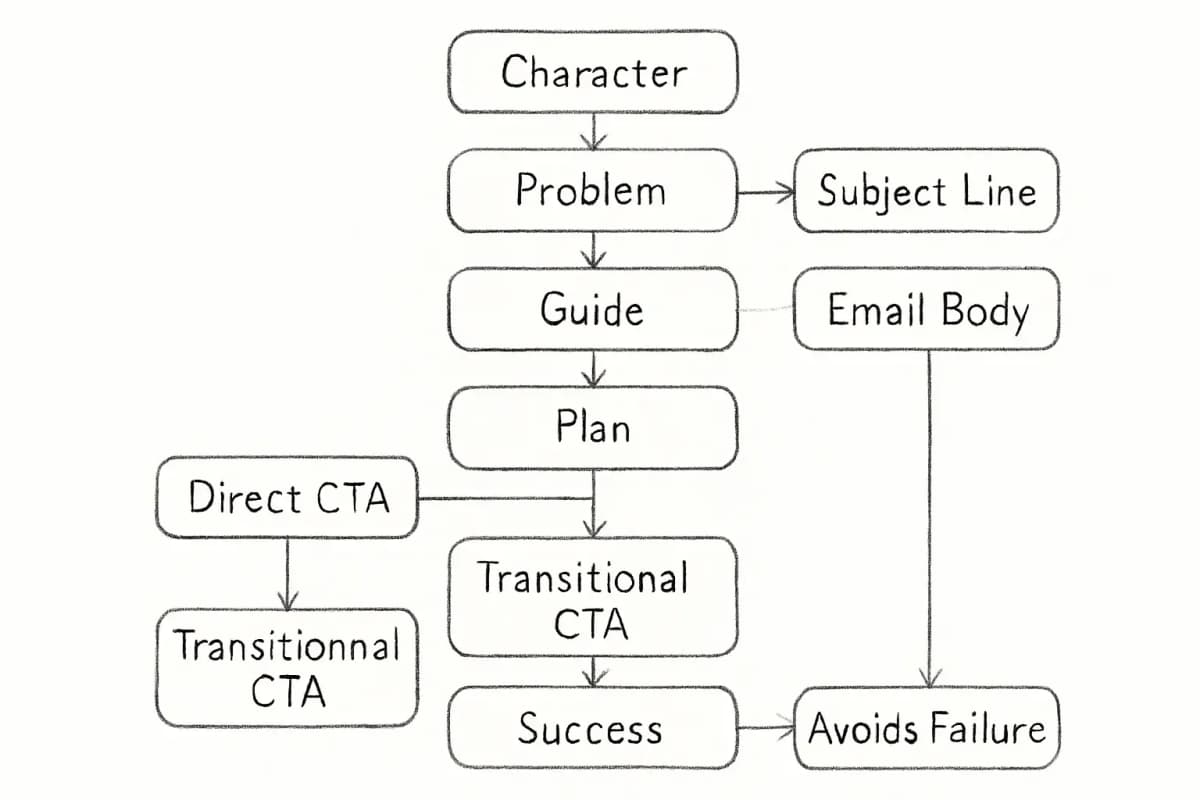
O BrandScript define a personagem (cliente), o problema, o guia (a sua marca), o plano, a chamada à ação e os resultados de sucesso e fracasso.
Uma distinção crítica dentro da camada de problema: é fácil vender soluções para problemas externos, mas Donald Miller aponta que os clientes realmente compram soluções para problemas internos. Problemas filosóficos também podem influenciar decisões de compra. Abordar todos os três níveis quando comunica sobre as suas ofertas cria uma mensagem muito mais convincente.
Uma vez que o seu BrandScript está completo, tem blocos de cópia que pode usar em cada email que escrever. Linhas de assunto vêm da camada de problema. O corpo de cada email mapeia para empatia, autoridade ou o plano. O CTA reflete uma ação direta (compre agora, agende uma chamada) ou uma ação transicional (descarregue um guia, leia uma publicação).
Escrever Cada Email: O Framework PEACE na Prática
Traduziir o BrandScript em emails individuais requer uma estrutura repetível. Uma abordagem prática é o framework PEACE, baseado na estratégia Soundbite do StoryBrand. O objetivo é simples: ajude o leitor a compreender rapidamente por que este email é importante para ele e o que fazer a seguir.
Os cinco elementos do PEACE são:
- P: Problema. Comece nomeando um problema que o seu leitor já está a enfrentar. Deve parecer familiar e específico, não abstrato ou teórico.
- E: Empatia. Mostre que compreende como esse problema se sente. É aqui que normaliza a frustração, confusão ou incerteza que o seu leitor pode estar a carregar.
- A: Autoridade. Demonstre brevemente por que a sua marca está qualificada para ajudar. Uma estatística curta, credencial ou resultado do cliente funciona aqui.
- C: Chamada à ação. Uma ação apenas. Não ofereça múltiplos links ou opções.
- E: Termine com sucesso. Pinte um quadro breve do que a vida parece após o problema ser resolvido.
Emails StoryBrand funcionam melhor quando são conversacionais, acessíveis e centrados no cliente. Evite jargão e fale diretamente com a sua audiência.
As linhas de assunto merecem atenção particular. A linha de assunto é o primeiro sinal do seu leitor sobre se este email é para ele. Aplicar o mesmo pensamento orientado para o problema às linhas de assunto produz dividendos mensuráveis. Para uma perspetiva mais profunda sobre como aplicar essa lógica em escala, consulte o nosso guia sobre melhores práticas de linhas de assunto de email que aumentam taxas de abertura.
Segmentação Torna Campanhas StoryBrand Mais Relevantes
Mesmo a melhor narrativa elaborada falha se for enviada para o segmento errado da sua lista. Após implementar segmentação narrativa, campanhas de email num caso documentado viram um aumento de 41% nas taxas de clique e um aumento de 23% nas conversões.
O framework StoryBrand apoia naturalmente a segmentação porque começa com uma personagem específica com um problema específico. Quando tem claramente definido quem é o seu herói e o que seu problema parece, pode mapear diferentes segmentos de subscribers para diferentes arcos de história. Um prospect que descarregou um checklist sobre fluxo de caixa está numa história diferente de um que descarregou um guia sobre gestão de equipa. Ambos precisam de sequências de email separadas com declarações de problema separadas.
Emparelhar as suas campanhas StoryBrand com segmentação inteligente de listas aumenta os resultados. A nossa análise detalhada de estratégias de segmentação de lista de email cobre os frameworks específicos que geram um aumento de ROI de 760% apenas da segmentação.
O Gerador de Leads: O Seu Ponto de Entrada do Funil StoryBrand
Os clientes em perspetiva não querem ler a sua newsletter. Querem saber como vai resolver o seu problema.
É aqui que o gerador de leads (ou ímã de leads) se torna essencial num funil StoryBrand. Crie um gerador de leads valioso na forma de um ebook, checklist, série de vídeos ou guia que os seus prospects vão trocar pelo seu endereço de email.
No framework StoryBrand, uma chamada à ação transicional serve como um ponto de entrada de baixo risco para potenciais clientes. Não está a pedir um compromisso importante; está a convidá-los a dar um passo menor que ajuda a construir confiança.
O gerador de leads deve ser intitulado em torno do resultado desejado do seu subscriber, não em torno do seu produto. Em vez de "O Nosso Guia de Serviços de Marketing", use "O Framework de 5 Passos para Duplicar os Seus Leads Sem Aumentar Gastos em Publicidade." O primeiro é sobre si. O segundo é sobre ele.
Uma vez que um subscriber descarrega o gerador de leads, o seu email de boas-vindas ativa imediatamente. Como o seu primeiro email é tratado determina se o relacionamento avança ou estagna. O nosso recurso sobre melhores práticas de sequência de email de boas-vindas cobre exatamente como estruturar essa sequência crítica de abertura.
Medindo o Que Importa nas Suas Campanhas StoryBrand
A qualidade narrativa não é apenas um julgamento artístico. Produz resultados mensuráveis que pode rastrear.
Rastreie métricas-chave como taxas de abertura, taxas de cliques e conversões. Teste A/B linhas de assunto, CTAs e conteúdo de email para refinar a sua abordagem.
Aqui estão as métricas que mais refletem diretamente se os seus emails StoryBrand estão funcionando:
- Taxa de abertura: Uma taxa de abertura baixa sinaliza que a linha de assunto não está conectando com o problema declarado. Teste linhas de assunto orientadas para o problema contra alternativas de lacuna de curiosidade.
- Taxa de cliques: Um CTR baixo geralmente significa que o CTA está enterrado, vago ou competindo com outros links. Em emails StoryBrand, um email, um CTA, sempre.
- Taxa de resposta: A métrica mais subutilizada. Respostas sinalizam um envolvimento genuíno com a sua história. Personalização e empatia geram respostas mais que qualquer outro elemento.
- Taxa de cancelamento de subscrição: Uma taxa crescente de cancelamento de subscrição geralmente significa que passou de servir o herói para vender-lhe agressivamente. Verifique a sua proporção de valor para vendas de 80/20.
- Taxa de conversão: As taxas de clique para conversão de campanhas de email cresceram 27.6% em 2024, indicando que os consumidores que se envolvem com emails têm cada vez mais probabilidade de fazer compras após clicar.
O cérebro humano precisa de ver a sua mensagem de marca 7 a 8 vezes antes de ser internalizada e agir sobre ela, às vezes chamada a Regra de 7. É por isto que uma série curta de emails raramente converte em escala. Exposição consistente e sequenciada é o que transforma intenção em ação.
Perguntas Frequentes
O que é email marketing com StoryBrand?
Email marketing com StoryBrand é uma abordagem estratégica para campanhas de email que aproveita os princípios do framework StoryBrand de Donald Miller. O framework centra-se em esclarecer a mensagem da sua marca e posicionar o seu cliente como o herói de uma história, com a sua marca jogando o papel de um guia para ajudá-lo a superar desafios e atingir os seus objetivos. Aplicado ao email, significa que cada mensagem que envia aborda um problema específico do subscriber, demonstra empatia, apresenta a sua marca como um guia credível e termina com um próximo passo claro.
Quantos emails devem estar numa sequência de vendas StoryBrand?
Uma sequência de email de vendas StoryBrand normalmente consiste em 6 emails. Cada email serve o seu próprio propósito e posição na jornada do cliente. A sequência move através de entrega de ímã de leads, identificação de problema, introdução do guia, o plano, prova social e uma chamada à ação direta. Enviar emails 2 a 3 dias separados dá aos prospects tempo para absorver cada mensagem sem perder impulso.
O email marketing com StoryBrand pode funcionar para empresas B2B?
Sim. Audiências B2B respondem fortemente à autenticidade, jornadas de inovação e histórias de sucesso humano que mostram resultados tangíveis. O framework StoryBrand é agnóstico de canal e indústria. A estrutura da jornada do herói funciona se o seu cliente é um empreendedor individual a comprar software ou um gerente de compras a avaliar um contrato empresarial. A chave é identificar o problema interno específico que o seu comprador B2B enfrenta, não apenas o problema comercial externo, e abordar ambos nos seus emails.
Qual é a diferença entre um email de nutrição StoryBrand e uma newsletter padrão?
A principal diferença entre um email que segue o Framework StoryBrand e a maioria dos emails na sua caixa de entrada é o foco do conteúdo. Em vez de focar na sua empresa, StoryBrand ensina os proprietários de negócios a focar nos problemas dos seus clientes e como o seu produto ou serviço fornece soluções. Uma newsletter padrão normalmente cobre notícias da empresa, atualizações de produtos e ofertas promocionais. Um email de nutrição StoryBrand abre com um problema que o subscriber reconhece, empatiza com como se sente, fornece uma peça útil de orientação e fecha com uma única ação de baixo atrito. O subscriber é sempre o assunto do email. A sua marca é sempre o guia.