Most brands approaching influencer partnerships treat the first email as a formality. It isn't. That email is often the only chance to start a conversation before the creator moves on. A well-constructed influencer marketing email template makes the difference between a response and silence, and the stakes are significant: the global influencer marketing industry is expected to reach $32.55 billion by the end of 2025, up from $24 billion in 2024. With that much money in motion, brands that can't convert cold outreach into real partnerships are leaving results on the table.
This guide covers exactly what belongs in each section of an outreach email, which templates convert best by use case, and how to track and improve your reply rates over time.
Key Takeaways
Industry benchmarks put influencer outreach reply rates at 8 to 20%, but personalized outreach can reach 30% or higher.
A personalized subject line is 26% more likely to be opened compared to a generic one.
Emails with 75 to 100 words have the highest response rate; brevity signals respect for the creator's time.
55% of replies to cold email campaigns come from follow-up emails rather than the first message, making a structured follow-up sequence essential.
65% of influencers would rather be involved in creative or product development conversations early on than follow a rigid brief, so your email should open a dialogue, not issue a directive.
Why Influencer Outreach Emails Fail
Generic, copy-paste messages are instantly deleted. Influencers with engaged audiences are inundated daily with requests that lack personalization, offer no clear value, and demonstrate zero understanding of their content or community.
The problem isn't the template itself. It's treating the template as the finished product. Every element of your outreach email needs to earn the creator's attention. The difference between a thriving campaign and wasted effort often comes down to crafting messages that cut through crowded inboxes and spark genuine interest. Most influencers receive dozens of collaboration requests daily, making your approach crucial.
Three patterns cause most failures:
Vague openers: "I love your content" with no specific reference reads as a mail merge.
Most brands approaching influencer partnerships treat the first email as a formality. It isn't. That email is often the only chance to start a conversation before the creator moves on. A well-constructed influencer marketing email template makes the difference between a response and silence, and the stakes are significant: the global influencer marketing industry is expected to reach $32.55 billion by the end of 2025, up from $24 billion in 2024. With that much money in motion, brands that can't convert cold outreach into real partnerships are leaving results on the table.
This guide covers exactly what belongs in each section of an outreach email, which templates convert best by use case, and how to track and improve your reply rates over time.
Key Takeaways
Industry benchmarks put influencer outreach reply rates at 8 to 20%, but personalized outreach can reach 30% or higher.
A personalized subject line is 26% more likely to be opened compared to a generic one.
Emails with 75 to 100 words have the highest response rate; brevity signals respect for the creator's time.
55% of replies to cold email campaigns come from follow-up emails rather than the first message, making a structured follow-up sequence essential.
65% of influencers would rather be involved in creative or product development conversations early on than follow a rigid brief, so your email should open a dialogue, not issue a directive.
Why Influencer Outreach Emails Fail
Generic, copy-paste messages are instantly deleted. Influencers with engaged audiences are inundated daily with requests that lack personalization, offer no clear value, and demonstrate zero understanding of their content or community.
The problem isn't the template itself. It's treating the template as the finished product. Every element of your outreach email needs to earn the creator's attention. The difference between a thriving campaign and wasted effort often comes down to crafting messages that cut through crowded inboxes and spark genuine interest. Most influencers receive dozens of collaboration requests daily, making your approach crucial.
Three patterns cause most failures:
Vague openers: "I love your content" with no specific reference reads as a mail merge.
Brand-first framing: Focusing on what the brand needs rather than what the creator gains.
Burying the offer: Hiding compensation type deep in paragraph four wastes everyone's time.
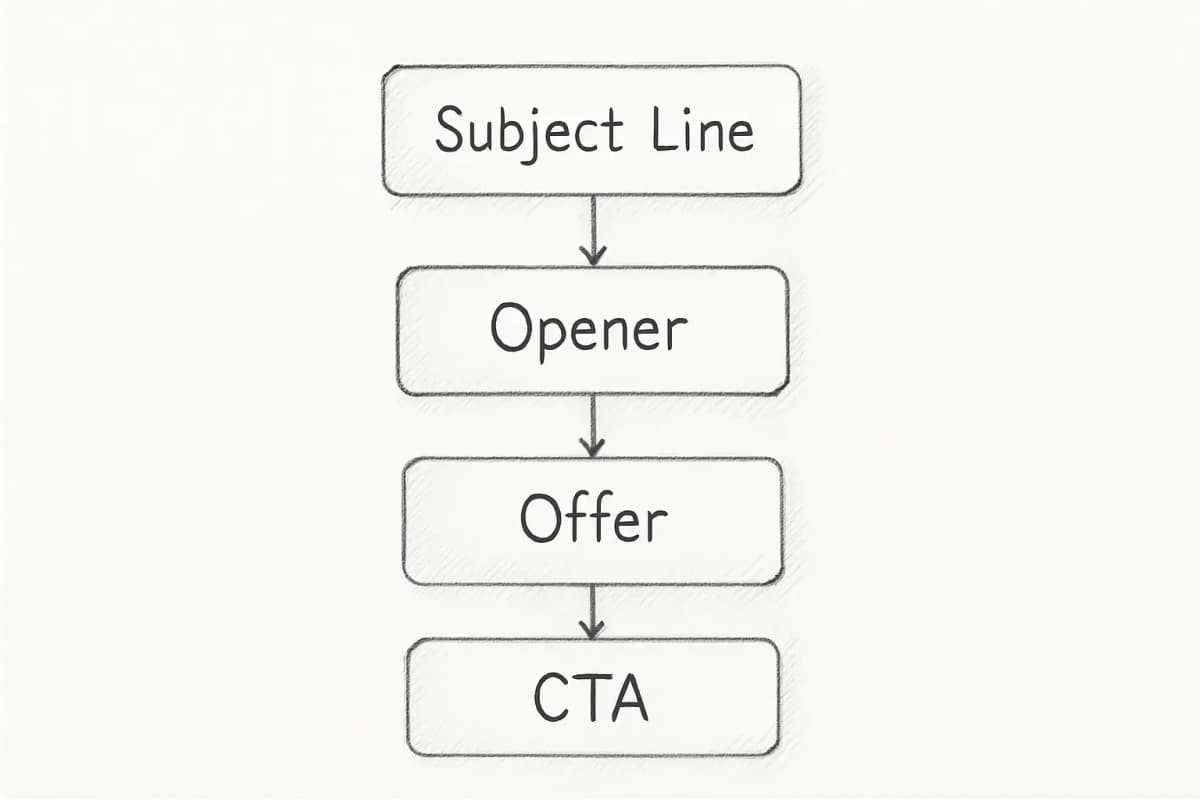
The Anatomy of a High-Converting Influencer Marketing Email Template
Every effective outreach email follows a clear structure. Here are the core components:
Subject Line
64% of recipients decide whether to open an email based solely on the subject line. For influencer outreach specifically, adding the influencer's first name into the subject line increases the open rate by 30%.
Keep subject lines under 50 characters so they display cleanly on mobile. For influencer outreach, the subject line signals legitimacy, relevance, and effort. Creators get spammy pitches daily, so a clear, specific subject line can separate a serious brand from a mass blast.
Strong subject line formulas that work:
[First Name], paid collab with [Brand]?
[First Name], loved your post on [Topic]
[Brand] x [Creator Handle]: partnership idea
Avoid vague phrases like "Collaboration Opportunity" or "Exciting Partnership." Subject lines work when they are specific, including the creator's name, brand, and "paid collab," rather than just "Partnership opportunity" alone.
Personalized Opening
Go beyond changing just the creator's name. Reference specific content they've created, mention what impressed you about their work, and explain why you chose them specifically. This shows you're not sending mass emails to every creator you find.
Spend two minutes on each creator's recent posts before writing. One genuine sentence about a specific video or article is worth more than three complimentary paragraphs about their "amazing content."
Brand Introduction (Keep It Short)
Use a couple of sentences to introduce yourself and your brand. Focus on your product's value proposition and unique features. This is not the place for a company history or mission statement. State who you are, what you make, and why it's relevant to their audience.
The Offer
Outline all important details upfront. Include compensation (payment, free products, revenue share), expected deliverables, timeline, usage rights, and any exclusivity requirements.
For the first email, you don't need a full contract breakdown. A sentence or two covering deliverable type and compensation range gives the creator enough to decide whether to engage. Burying the paid nature of the collaboration deep in paragraph four wastes everyone's time.
Clear Call to Action
Your CTA should ask for one thing and make it easy to say yes. Options that work:
"Would you be open to a quick call this week to discuss?"
"Can I send over our brief and rate card?"
"Are you taking brand partnerships in [month]?"
Brand-first framing: Focusing on what the brand needs rather than what the creator gains.
Burying the offer: Hiding compensation type deep in paragraph four wastes everyone's time.
The Anatomy of a High-Converting Influencer Marketing Email Template
Every effective outreach email follows a clear structure. Here are the core components:
Subject Line
64% of recipients decide whether to open an email based solely on the subject line. For influencer outreach specifically, adding the influencer's first name into the subject line increases the open rate by 30%.
Keep subject lines under 50 characters so they display cleanly on mobile. For influencer outreach, the subject line signals legitimacy, relevance, and effort. Creators get spammy pitches daily, so a clear, specific subject line can separate a serious brand from a mass blast.
Strong subject line formulas that work:
[First Name], paid collab with [Brand]?
[First Name], loved your post on [Topic]
[Brand] x [Creator Handle]: partnership idea
Avoid vague phrases like "Collaboration Opportunity" or "Exciting Partnership." Subject lines work when they are specific, including the creator's name, brand, and "paid collab," rather than just "Partnership opportunity" alone.
Personalized Opening
Go beyond changing just the creator's name. Reference specific content they've created, mention what impressed you about their work, and explain why you chose them specifically. This shows you're not sending mass emails to every creator you find.
Spend two minutes on each creator's recent posts before writing. One genuine sentence about a specific video or article is worth more than three complimentary paragraphs about their "amazing content."
Brand Introduction (Keep It Short)
Use a couple of sentences to introduce yourself and your brand. Focus on your product's value proposition and unique features. This is not the place for a company history or mission statement. State who you are, what you make, and why it's relevant to their audience.
The Offer
Outline all important details upfront. Include compensation (payment, free products, revenue share), expected deliverables, timeline, usage rights, and any exclusivity requirements.
For the first email, you don't need a full contract breakdown. A sentence or two covering deliverable type and compensation range gives the creator enough to decide whether to engage. Burying the paid nature of the collaboration deep in paragraph four wastes everyone's time.
Clear Call to Action
Your CTA should ask for one thing and make it easy to say yes. Options that work:
"Would you be open to a quick call this week to discuss?"
"Can I send over our brief and rate card?"
"Are you taking brand partnerships in [month]?"
Increase response rates by optimizing the timing and frequency of follow-up emails (3 to 7 days after initial outreach is ideal). Seek genuine relationships with influencers, show authenticity and trustworthiness, provide clear next steps, and make it easy for the influencer to respond.
Ready-to-Use Influencer Marketing Email Templates
Below are four templates built for specific scenarios. Each follows the structure above. Customize the bracketed fields before sending; do not swap them for merge tags and call it personalized.
Template 1: Paid Collaboration Outreach
Subject:[First Name], paid collab with [Brand Name]?
Hi [First Name],
I just watched your recent [post/video] on [specific topic]. The way you [specific observation] genuinely stood out.
I'm [Your Name] from [Brand Name]. We make [brief product description] for [target audience], and your audience on [platform] is a strong match.
We're looking for one creator to collaborate with on a paid campaign in [month]. Deliverables would be [X posts/stories/videos], and we're offering [compensation range or "open to your standard rate"].
Are you taking brand partnerships next month? Happy to send the brief if so.
[Your Name]
Template 2: Product Gifting (No Obligation Post)
Subject:[First Name], a gift from [Brand] for you
Hi [First Name],
I've been following your content on [platform] for a while, especially your recent piece on [specific topic].
I'm [Your Name] at [Brand Name]. We'd love to send you [product] with zero strings attached. If you enjoy it and it feels natural to share, that's a bonus.
No deliverables, no obligation. Interested in receiving it?
[Your Name]
Note: Product gifting emails must not imply a required post. Per FTC Endorsement Guides{rel="nofollow"}, any sponsored content must be clearly disclosed. Never ask a creator to hide a sponsorship relationship.
Template 3: Affiliate or Long-Term Program
Subject:[First Name], recurring revenue opportunity with [Brand]
Hi [First Name],
Your content on [topic] tells me you'd genuinely find [product/service] useful, and your audience would likely agree.
Increase response rates by optimizing the timing and frequency of follow-up emails (3 to 7 days after initial outreach is ideal). Seek genuine relationships with influencers, show authenticity and trustworthiness, provide clear next steps, and make it easy for the influencer to respond.
Ready-to-Use Influencer Marketing Email Templates
Below are four templates built for specific scenarios. Each follows the structure above. Customize the bracketed fields before sending; do not swap them for merge tags and call it personalized.
Template 1: Paid Collaboration Outreach
Subject:[First Name], paid collab with [Brand Name]?
Hi [First Name],
I just watched your recent [post/video] on [specific topic]. The way you [specific observation] genuinely stood out.
I'm [Your Name] from [Brand Name]. We make [brief product description] for [target audience], and your audience on [platform] is a strong match.
We're looking for one creator to collaborate with on a paid campaign in [month]. Deliverables would be [X posts/stories/videos], and we're offering [compensation range or "open to your standard rate"].
Are you taking brand partnerships next month? Happy to send the brief if so.
[Your Name]
Template 2: Product Gifting (No Obligation Post)
Subject:[First Name], a gift from [Brand] for you
Hi [First Name],
I've been following your content on [platform] for a while, especially your recent piece on [specific topic].
I'm [Your Name] at [Brand Name]. We'd love to send you [product] with zero strings attached. If you enjoy it and it feels natural to share, that's a bonus.
No deliverables, no obligation. Interested in receiving it?
[Your Name]
Note: Product gifting emails must not imply a required post. Per FTC Endorsement Guides{rel="nofollow"}, any sponsored content must be clearly disclosed. Never ask a creator to hide a sponsorship relationship.
Template 3: Affiliate or Long-Term Program
Subject:[First Name], recurring revenue opportunity with [Brand]
Hi [First Name],
Your content on [topic] tells me you'd genuinely find [product/service] useful, and your audience would likely agree.
I'm [Your Name] from [Brand Name]. We're building our affiliate program and looking for [number] creators who align with our mission of [brief description]. The program pays [commission %] recurring on every sale through your link.
This is designed as a long-term arrangement rather than a one-off post. If that sounds like a fit, I can send full details.
[Your Name]
Template 4: Follow-Up Email
Subject:Re: [Original Subject Line]
Hi [First Name],
Just circling back on my note from [date]. Completely understand if the timing isn't right.
If you're open to hearing more, I'd love to share the brief. If not, no worries at all.
[Your Name]
Send initial emails Tuesday through Thursday when email engagement rates peak. Wait 5 to 7 days before sending a polite, brief follow-up message. Limit follow-ups to two maximum before considering the outreach unsuccessful.
Segmenting Your Outreach by Creator Tier
Not every creator should receive the same template. 44% of brands preferred collaborating with nano influencers and 26% preferred micro influencers, compared to only 17% for macro influencers. Each tier has different expectations.
Nano influencers (under 10K followers): More conversational tone, product gifting works well, flexible on terms.
Micro influencers (10K to 100K): Expect a clear rate card or budget range, usually respond well to specific creative direction.
Mid-tier and macro influencers (100K+): Often managed by an agent. Keep your subject line tight, lead with the budget, and save creative details for after initial interest.
B2B influencers on LinkedIn: LinkedIn accounts for 71% of all B2B influencer activity in 2025. A more professional tone is expected, and deliverables tend to be longer-term.
I'm [Your Name] from [Brand Name]. We're building our affiliate program and looking for [number] creators who align with our mission of [brief description]. The program pays [commission %] recurring on every sale through your link.
This is designed as a long-term arrangement rather than a one-off post. If that sounds like a fit, I can send full details.
[Your Name]
Template 4: Follow-Up Email
Subject:Re: [Original Subject Line]
Hi [First Name],
Just circling back on my note from [date]. Completely understand if the timing isn't right.
If you're open to hearing more, I'd love to share the brief. If not, no worries at all.
[Your Name]
Send initial emails Tuesday through Thursday when email engagement rates peak. Wait 5 to 7 days before sending a polite, brief follow-up message. Limit follow-ups to two maximum before considering the outreach unsuccessful.
Segmenting Your Outreach by Creator Tier
Not every creator should receive the same template. 44% of brands preferred collaborating with nano influencers and 26% preferred micro influencers, compared to only 17% for macro influencers. Each tier has different expectations.
Nano influencers (under 10K followers): More conversational tone, product gifting works well, flexible on terms.
Micro influencers (10K to 100K): Expect a clear rate card or budget range, usually respond well to specific creative direction.
Mid-tier and macro influencers (100K+): Often managed by an agent. Keep your subject line tight, lead with the budget, and save creative details for after initial interest.
B2B influencers on LinkedIn: LinkedIn accounts for 71% of all B2B influencer activity in 2025. A more professional tone is expected, and deliverables tend to be longer-term.
For more guidance on structuring your broader strategy, the Email List Segmentation Strategies That Boost ROI by 760% framework applies directly here: when you segment creator outreach by tier, niche, and engagement, your conversion rate from outreach to signed deal improves significantly.
Subject Line Strategy and A/B Testing
A/B testing different subject lines is essential; studies indicate that this method can lead to a 29% higher open rate and a 24% higher click-through rate.
The fastest way to improve your outreach program is to run controlled tests. Change one variable at a time: subject line only, or opener only. Track reply rate as your primary success metric, not open rate alone.
Just like any marketing strategy, testing is key. A/B test different outreach approaches by changing the subject line, call-to-action, or tone. Analyze which templates get the best responses and adjust your approach over time to improve your results.
Keep a simple log: creator name, date sent, template variant, subject line, replied (yes/no), outcome. Log the template variant, subject line, and reply outcome. Otherwise every quarter repeats the same guesses.
For the broader principles of what makes a subject line convert, see our guide to Email Subject Line Best Practices That Boost Open Rates by 27%.
Deliverability and Sender Reputation
Your template can be excellent, and your email can still miss the inbox. About 17% of cold outreach emails never reach any inbox at all, vanishing due to bounces, spam filtering, or authentication failures.
Before scaling your outreach, check these technical foundations:
Authenticate your domain: SPF, DKIM, and DMARC records are required by major inbox providers. These are no longer optional. Since February 2024, Google and Yahoo have required all bulk senders to have these in place. Microsoft followed in May 2025.
Warm up new sending domains: Sending a high volume from a cold domain triggers spam filters.
Keep bounce rates low: Verify emails before sending using a list-cleaning tool.
Avoid spam trigger words: Phrases like "free," "act now," and "guaranteed" send emails straight to junk. Deliverability is the backbone of any cold email strategy. Even the most engaging subject lines and personalized content won't matter if your emails land in the spam folder.
Effective measurement extends beyond vanity metrics like likes and follows. Essential metrics include cost per acquisition (CPA) and customer lifetime value (CLV) from influenced customers, which provide clearer pictures of actual business impact.
For your outreach email program specifically, track:
For more guidance on structuring your broader strategy, the Email List Segmentation Strategies That Boost ROI by 760% framework applies directly here: when you segment creator outreach by tier, niche, and engagement, your conversion rate from outreach to signed deal improves significantly.
Subject Line Strategy and A/B Testing
A/B testing different subject lines is essential; studies indicate that this method can lead to a 29% higher open rate and a 24% higher click-through rate.
The fastest way to improve your outreach program is to run controlled tests. Change one variable at a time: subject line only, or opener only. Track reply rate as your primary success metric, not open rate alone.
Just like any marketing strategy, testing is key. A/B test different outreach approaches by changing the subject line, call-to-action, or tone. Analyze which templates get the best responses and adjust your approach over time to improve your results.
Keep a simple log: creator name, date sent, template variant, subject line, replied (yes/no), outcome. Log the template variant, subject line, and reply outcome. Otherwise every quarter repeats the same guesses.
For the broader principles of what makes a subject line convert, see our guide to Email Subject Line Best Practices That Boost Open Rates by 27%.
Deliverability and Sender Reputation
Your template can be excellent, and your email can still miss the inbox. About 17% of cold outreach emails never reach any inbox at all, vanishing due to bounces, spam filtering, or authentication failures.
Before scaling your outreach, check these technical foundations:
Authenticate your domain: SPF, DKIM, and DMARC records are required by major inbox providers. These are no longer optional. Since February 2024, Google and Yahoo have required all bulk senders to have these in place. Microsoft followed in May 2025.
Warm up new sending domains: Sending a high volume from a cold domain triggers spam filters.
Keep bounce rates low: Verify emails before sending using a list-cleaning tool.
Avoid spam trigger words: Phrases like "free," "act now," and "guaranteed" send emails straight to junk. Deliverability is the backbone of any cold email strategy. Even the most engaging subject lines and personalized content won't matter if your emails land in the spam folder.
Effective measurement extends beyond vanity metrics like likes and follows. Essential metrics include cost per acquisition (CPA) and customer lifetime value (CLV) from influenced customers, which provide clearer pictures of actual business impact.
For your outreach email program specifically, track:
Open rate: A directional signal for subject line quality (note: Apple Mail Privacy Protection can inflate this figure).
Reply rate: The most reliable measure of outreach quality. A good response rate for template emails typically ranges from 10% to 25%, depending on factors such as industry and email content.
Conversion rate: Replies that turn into signed agreements.
Time to reply: Faster replies often signal better creator-brand alignment.
Campaigns with follow-ups have a higher average reply rate (4.9%) than campaigns without follow-ups (3%). The difference looks small in percentage terms but compounds quickly across a 200-creator outreach campaign.
Once you've secured a partnership, the work shifts to campaign execution and tracking. Connecting your influencer campaign data to your broader email and analytics setup helps close the attribution loop. If you're building out that infrastructure, B2B Marketing Email Templates for Every Campaign offers complementary frameworks for the communication side of managing active partnerships.
Frequently Asked Questions
How long should an influencer outreach email be?
Keep your email content short. Emails with 75 to 100 words have the highest response rate. If you need to include more context, use short bullet points rather than dense paragraphs. The goal of the first email is to get a reply, not to close the deal in one message.
When is the best time to send an influencer outreach email?
Send initial emails Tuesday through Thursday when email engagement rates peak. Avoid major holidays and industry event dates when influencers receive higher-than-usual volumes of pitches and are less likely to respond.
How many follow-up emails should I send?
Sending two to three follow-up emails, starting three days after your initial message, can increase response rates by up to 65.8%. Mid-mornings on Tuesdays or Thursdays tend to work best. The first follow-up can boost replies by 49%, while the second adds another 3%. A third follow-up often sees diminishing returns, with effectiveness dropping by about 30%. Two follow-ups after the initial email is the practical standard.
Should I mention budget in the first email?
For micro and macro influencers, mentioning a compensation range (or confirming the collaboration is paid) in the first email respects their time and filters mismatched conversations early. For nano influencers and gifting campaigns, this is less critical. A rate range or "open to your standard rate" usually beats silence. Creators need to triage their inboxes, and clarity on compensation type helps them do that faster.
What should I never include in an influencer outreach email?
Avoid asking an influencer to hide a paid relationship, demanding exclusivity without compensation, pitching in a social media comment thread, or sending from a personal Gmail address with no brand affiliation. Disclosure belongs in the published content, and your email should never ask anyone to hide a sponsorship relationship. This is a legal requirement in most markets, not a style choice.
Open rate: A directional signal for subject line quality (note: Apple Mail Privacy Protection can inflate this figure).
Reply rate: The most reliable measure of outreach quality. A good response rate for template emails typically ranges from 10% to 25%, depending on factors such as industry and email content.
Conversion rate: Replies that turn into signed agreements.
Time to reply: Faster replies often signal better creator-brand alignment.
Campaigns with follow-ups have a higher average reply rate (4.9%) than campaigns without follow-ups (3%). The difference looks small in percentage terms but compounds quickly across a 200-creator outreach campaign.
Once you've secured a partnership, the work shifts to campaign execution and tracking. Connecting your influencer campaign data to your broader email and analytics setup helps close the attribution loop. If you're building out that infrastructure, B2B Marketing Email Templates for Every Campaign offers complementary frameworks for the communication side of managing active partnerships.
Frequently Asked Questions
How long should an influencer outreach email be?
Keep your email content short. Emails with 75 to 100 words have the highest response rate. If you need to include more context, use short bullet points rather than dense paragraphs. The goal of the first email is to get a reply, not to close the deal in one message.
When is the best time to send an influencer outreach email?
Send initial emails Tuesday through Thursday when email engagement rates peak. Avoid major holidays and industry event dates when influencers receive higher-than-usual volumes of pitches and are less likely to respond.
How many follow-up emails should I send?
Sending two to three follow-up emails, starting three days after your initial message, can increase response rates by up to 65.8%. Mid-mornings on Tuesdays or Thursdays tend to work best. The first follow-up can boost replies by 49%, while the second adds another 3%. A third follow-up often sees diminishing returns, with effectiveness dropping by about 30%. Two follow-ups after the initial email is the practical standard.
Should I mention budget in the first email?
For micro and macro influencers, mentioning a compensation range (or confirming the collaboration is paid) in the first email respects their time and filters mismatched conversations early. For nano influencers and gifting campaigns, this is less critical. A rate range or "open to your standard rate" usually beats silence. Creators need to triage their inboxes, and clarity on compensation type helps them do that faster.
What should I never include in an influencer outreach email?
Avoid asking an influencer to hide a paid relationship, demanding exclusivity without compensation, pitching in a social media comment thread, or sending from a personal Gmail address with no brand affiliation. Disclosure belongs in the published content, and your email should never ask anyone to hide a sponsorship relationship. This is a legal requirement in most markets, not a style choice.