Restaurant email marketing is one of the highest-return channels available to food and beverage businesses, and the data makes a compelling case: email marketing ROI for restaurants reaches approximately $42 for every dollar spent. Yet most restaurants still operate without a real strategy, sending sporadic newsletter blasts to lists they barely segment. Most restaurant chains capture fewer than 15% of guest emails and send undifferentiated blasts to stale lists, leaving significant revenue on the table.
The good news is that fixing this does not require a large team or a big budget. It requires following the right restaurant email marketing steps in the right order. This guide walks you through exactly that.
Key Takeaways
Email generates an average of $36 for every dollar spent, making it one of the highest-ROI digital channels available to restaurant operators.
53% of diners say email is their preferred way to hear from restaurants, which means your guests are already expecting to hear from you.
Targeted, segmented campaigns drive 77% of total email revenue, significantly outperforming generic list blasts.
Restaurant welcome series achieve 50 to 60% open rates on the first email, the highest of any automated sequence.
Personalization, automation, and consistent list hygiene separate restaurants that grow through email from those that burn out their subscriber base.
Step 1: Build a Permission-Based Email List
No restaurant email marketing strategy works without a quality list. The emphasis here is on quality, not size.
Never buy a list. Every subscriber should choose to hear from you. It's not only about following the law, it's about building trust.
The most effective collection points for restaurant operators are:
Online ordering checkout. Email addresses are captured through the online ordering process as part of providing confirmation and order status updates. However, online ordering customers may also want to hear about upcoming promotions. Store email addresses from online ordering in your guest database to ensure they stay connected.
Reservation forms. Diners who book a reservation supply their email address so you can confirm their booking and send reminders. After their reservation, you can continue the conversation by allowing customers to opt into email communications.
Restaurant email marketing is one of the highest-return channels available to food and beverage businesses, and the data makes a compelling case: email marketing ROI for restaurants reaches approximately $42 for every dollar spent. Yet most restaurants still operate without a real strategy, sending sporadic newsletter blasts to lists they barely segment. Most restaurant chains capture fewer than 15% of guest emails and send undifferentiated blasts to stale lists, leaving significant revenue on the table.
The good news is that fixing this does not require a large team or a big budget. It requires following the right restaurant email marketing steps in the right order. This guide walks you through exactly that.
Key Takeaways
Email generates an average of $36 for every dollar spent, making it one of the highest-ROI digital channels available to restaurant operators.
53% of diners say email is their preferred way to hear from restaurants, which means your guests are already expecting to hear from you.
Targeted, segmented campaigns drive 77% of total email revenue, significantly outperforming generic list blasts.
Restaurant welcome series achieve 50 to 60% open rates on the first email, the highest of any automated sequence.
Personalization, automation, and consistent list hygiene separate restaurants that grow through email from those that burn out their subscriber base.
Step 1: Build a Permission-Based Email List
No restaurant email marketing strategy works without a quality list. The emphasis here is on quality, not size.
Never buy a list. Every subscriber should choose to hear from you. It's not only about following the law, it's about building trust.
The most effective collection points for restaurant operators are:
Online ordering checkout. Email addresses are captured through the online ordering process as part of providing confirmation and order status updates. However, online ordering customers may also want to hear about upcoming promotions. Store email addresses from online ordering in your guest database to ensure they stay connected.
Reservation forms. Diners who book a reservation supply their email address so you can confirm their booking and send reminders. After their reservation, you can continue the conversation by allowing customers to opt into email communications.
In-restaurant QR codes. When customers visit your brick-and-mortar location, use that time to encourage them to sign up for your restaurant email list by including QR codes on your menu, receipts, and more.
Website opt-in forms. Add an opt-in form that's quick and simple, with no more than a name and email address. The same applies to your online ordering system.
Once you start building, use an incentive to accelerate growth. Make a generous offer such as a free appetizer, dessert, or any meal upon joining your restaurant email list or signing up on your website. You may even offer a discount or a coupon on the next order.
Double opt-in requires subscribers to confirm that they want to be on your list, usually by clicking a link in an email sent right after signup. This extra step ensures that only interested people subscribe, which can give you better ROI over the long term.
Step 2: Segment Your List by Diner Behavior
A single undifferentiated list is one of the most common and costly mistakes in restaurant email marketing. Once you have subscribers, the next restaurant email marketing step is breaking them into meaningful groups.
Segmented email campaigns get 14.31% higher open rates than generic blasts. That gap compounds over time. More opens means more clicks, more visits, more revenue, and a better sender reputation.
Start with a straightforward behavioral framework:
Start with visit frequency: regulars (2 or more times per month), occasional (once a month), and lapsed (haven't visited in 60 or more days). Each group gets different messaging. Regulars get VIP perks. Occasional visitors get "here's what's new" reminders. Lapsed customers get win-back offers.
You can also layer in order type data. Dine-in customers care about ambiance and events. Takeout and delivery customers care about specials and speed. Do not send a wine dinner invitation to someone who only orders delivery.
Your subject line determines whether your email gets read or deleted. 64% of email recipients make a decision to open an email based on the quality of the subject line.
Personalization is the single highest-impact lever you can pull. Campaign Monitor research shows personalized subject lines increase open rates by 26%. In fact, including just a first name in the subject line can increase open rates by 14.68%. Personalization increases engagement because it makes customers feel valued and understood.
A few additional subject line rules to follow:
In-restaurant QR codes. When customers visit your brick-and-mortar location, use that time to encourage them to sign up for your restaurant email list by including QR codes on your menu, receipts, and more.
Website opt-in forms. Add an opt-in form that's quick and simple, with no more than a name and email address. The same applies to your online ordering system.
Once you start building, use an incentive to accelerate growth. Make a generous offer such as a free appetizer, dessert, or any meal upon joining your restaurant email list or signing up on your website. You may even offer a discount or a coupon on the next order.
Double opt-in requires subscribers to confirm that they want to be on your list, usually by clicking a link in an email sent right after signup. This extra step ensures that only interested people subscribe, which can give you better ROI over the long term.
Step 2: Segment Your List by Diner Behavior
A single undifferentiated list is one of the most common and costly mistakes in restaurant email marketing. Once you have subscribers, the next restaurant email marketing step is breaking them into meaningful groups.
Segmented email campaigns get 14.31% higher open rates than generic blasts. That gap compounds over time. More opens means more clicks, more visits, more revenue, and a better sender reputation.
Start with a straightforward behavioral framework:
Start with visit frequency: regulars (2 or more times per month), occasional (once a month), and lapsed (haven't visited in 60 or more days). Each group gets different messaging. Regulars get VIP perks. Occasional visitors get "here's what's new" reminders. Lapsed customers get win-back offers.
You can also layer in order type data. Dine-in customers care about ambiance and events. Takeout and delivery customers care about specials and speed. Do not send a wine dinner invitation to someone who only orders delivery.
Your subject line determines whether your email gets read or deleted. 64% of email recipients make a decision to open an email based on the quality of the subject line.
Personalization is the single highest-impact lever you can pull. Campaign Monitor research shows personalized subject lines increase open rates by 26%. In fact, including just a first name in the subject line can increase open rates by 14.68%. Personalization increases engagement because it makes customers feel valued and understood.
A few additional subject line rules to follow:
Keep it short. Subject lines with fewer than 70 characters get the highest open rates. Brevity wins, and analysts attribute this to optimization for mobile device display.
Use numbers. There are 57% more opens when a number appears in the subject line.
Ask questions. Questions in subject lines can increase opens by up to 50%.
Avoid spam triggers. 69% of email recipients will report email as spam based on the subject line alone.
For a comprehensive breakdown of subject line strategy, see our article on Email Subject Line Best Practices That Boost Open Rates by 27%.
Step 4: Set Up Automated Email Sequences
Manual one-off campaigns will not build long-term revenue. The restaurants that win at email set up trigger-based sequences that run automatically once a guest takes a specific action.
Restaurants using automated email campaigns generate 15 to 25% more repeat visits and achieve 3 to 5x higher ROI than manual promotional outreach.
The four automated sequences every restaurant should have running are:
Welcome Sequence
The welcome sequence triggers when a diner places their first order. It is the highest-leverage campaign you can turn on, since new diners are most likely to convert into regulars within their first 7 days.
A basic three-email structure works well: send Email 1 immediately, Email 2 three days later with a helpful tip, and Email 3 seven days later with a second offer for guests who have not yet visited.
Birthday Campaign
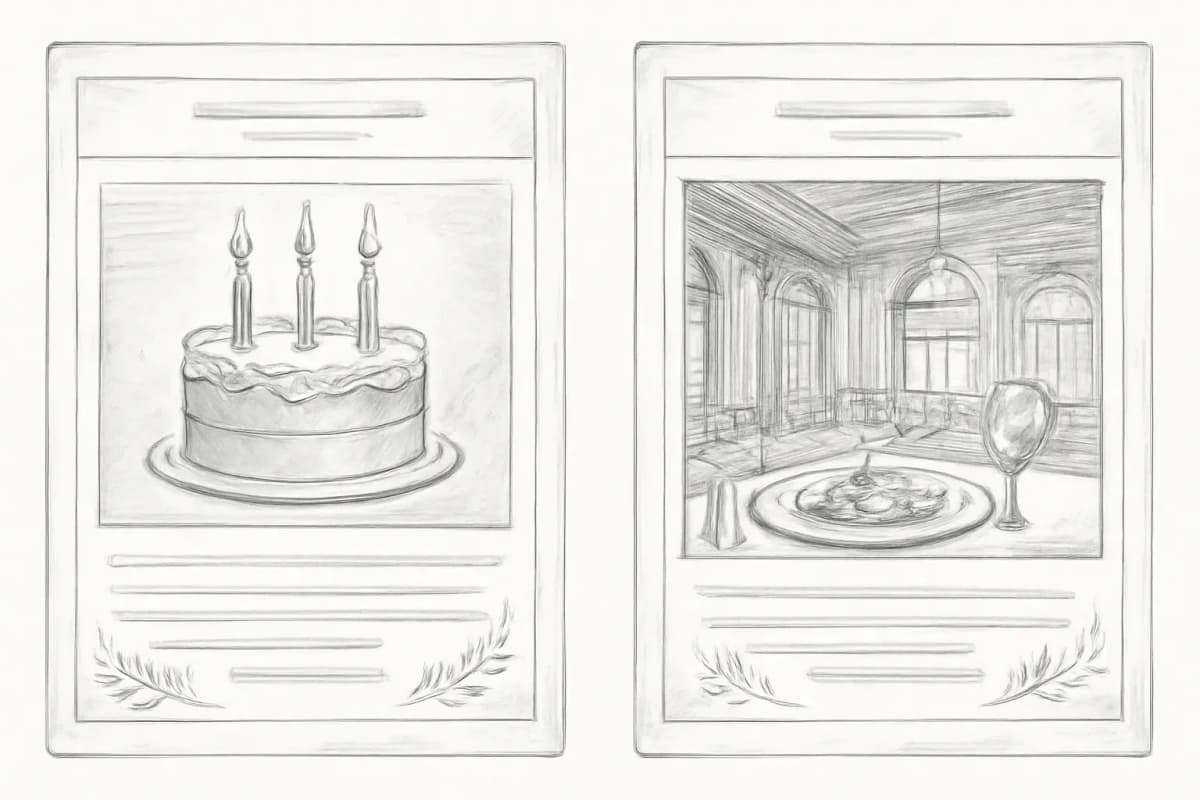
Birthday campaigns generate the highest per-message revenue of any restaurant automated sequence, averaging $85 per redemption, because guests bring groups and spend above their normal check average. Send the offer 7 to 10 days before the birthday so guests can plan.
Win-Back Sequence
Guests who have not visited in 30 days carry a 65% higher churn risk. By monitoring your data, your system can automatically trigger a "We Miss You" email with a tailored offer. These segmented re-engagement campaigns often achieve redemption rates of up to 25%, far outperforming generic promotions that typically hover around 2%.
Loyalty and VIP Recognition
VIP guests generate 4.2x more lifetime value when recognized. Automate emails that notify loyalty members about expiring points, upcoming rewards, and early access to new menu items.
For a deeper dive on structuring these sequences, see our guide on Welcome Email Sequence Best Practices: 7 Proven Strategies.
Step 5: Personalize Beyond the First Name
Personalization in restaurant email marketing goes well beyond addressing subscribers by name. It means sending content that reflects what each guest actually does at your restaurant.
The open rate for personalized messages is 26% higher, and the click-through rate for personalized emails reaches 41%. According to Gitnux, personalization increases customer retention by 20%.
According to TouchBistro's 2024 Restaurant Industry Trends report, 64% of restaurateurs are sending personalized offers to their customers, a significant increase from the 55% who did so in 2023.
Practical personalization tactics for restaurants include:
Keep it short. Subject lines with fewer than 70 characters get the highest open rates. Brevity wins, and analysts attribute this to optimization for mobile device display.
Use numbers. There are 57% more opens when a number appears in the subject line.
Ask questions. Questions in subject lines can increase opens by up to 50%.
Avoid spam triggers. 69% of email recipients will report email as spam based on the subject line alone.
For a comprehensive breakdown of subject line strategy, see our article on Email Subject Line Best Practices That Boost Open Rates by 27%.
Step 4: Set Up Automated Email Sequences
Manual one-off campaigns will not build long-term revenue. The restaurants that win at email set up trigger-based sequences that run automatically once a guest takes a specific action.
Restaurants using automated email campaigns generate 15 to 25% more repeat visits and achieve 3 to 5x higher ROI than manual promotional outreach.
The four automated sequences every restaurant should have running are:
Welcome Sequence
The welcome sequence triggers when a diner places their first order. It is the highest-leverage campaign you can turn on, since new diners are most likely to convert into regulars within their first 7 days.
A basic three-email structure works well: send Email 1 immediately, Email 2 three days later with a helpful tip, and Email 3 seven days later with a second offer for guests who have not yet visited.
Birthday Campaign
Birthday campaigns generate the highest per-message revenue of any restaurant automated sequence, averaging $85 per redemption, because guests bring groups and spend above their normal check average. Send the offer 7 to 10 days before the birthday so guests can plan.
Win-Back Sequence
Guests who have not visited in 30 days carry a 65% higher churn risk. By monitoring your data, your system can automatically trigger a "We Miss You" email with a tailored offer. These segmented re-engagement campaigns often achieve redemption rates of up to 25%, far outperforming generic promotions that typically hover around 2%.
Loyalty and VIP Recognition
VIP guests generate 4.2x more lifetime value when recognized. Automate emails that notify loyalty members about expiring points, upcoming rewards, and early access to new menu items.
For a deeper dive on structuring these sequences, see our guide on Welcome Email Sequence Best Practices: 7 Proven Strategies.
Step 5: Personalize Beyond the First Name
Personalization in restaurant email marketing goes well beyond addressing subscribers by name. It means sending content that reflects what each guest actually does at your restaurant.
The open rate for personalized messages is 26% higher, and the click-through rate for personalized emails reaches 41%. According to Gitnux, personalization increases customer retention by 20%.
According to TouchBistro's 2024 Restaurant Industry Trends report, 64% of restaurateurs are sending personalized offers to their customers, a significant increase from the 55% who did so in 2023.
Practical personalization tactics for restaurants include:
Offering personalized menu recommendations based on order history, which can increase the average click-through rate by 3.5%.
Cross-selling and upselling via email, for example: a customer orders pasta and you send an email with a wine recommendation or a higher-value dish suggestion.
Sending special birthday discounts, recommendations based on past orders, or exclusive deals for frequent diners. Restaurateurs typically use dining history, favorite dishes, frequency of visits, and special dates for these offers.
Noting that data from the National Restaurant Association indicates 77% of loyalty program members are more likely to return to a restaurant when sent personalized email offers.
Step 6: Optimize Send Times and Email Design
Even the best content underperforms when it lands at the wrong moment or renders poorly on mobile.
Timing. The best days for sending restaurant emails are Monday and Tuesday, and the best time is in the morning between 8 and 9 AM, when recipients are most likely to check their inboxes.
Frequency. According to Mailchimp, 2 to 4 emails per month is the sweet spot for restaurants. Automated triggered emails like welcome, birthday, and win-back sequences do not count against this limit because they are personalized and expected.
Mobile design. More than 70% of emails are opened on smartphones. If your design is not mobile-friendly, you risk losing potential customers before they even read your message. Use responsive email templates that adjust to different screens.
Visual content. Visuals are essential. Use high-quality images and videos that highlight your restaurant's ambiance, food offerings, and special events, giving viewers a preview of what awaits them when they visit.
Call to action. The 2024 Diner Trends Report notes that 58% of diners are influenced to open restaurant emails for coupons and promotions. Make your CTA button visible, action-oriented, and specific. Examples like "Reserve Your Table" or "Order Now and Get 20% Off" perform better than generic "Learn More" buttons.
Step 7: Track the Metrics That Actually Matter
The final restaurant email marketing step is measurement. Most platforms surface open rates and click-through rates by default, but restaurants need to connect those engagement signals back to revenue.
Email success is measured in both engagement and revenue, and you should be tracking both for every email you send.
The core metrics to monitor are:
Offering personalized menu recommendations based on order history, which can increase the average click-through rate by 3.5%.
Cross-selling and upselling via email, for example: a customer orders pasta and you send an email with a wine recommendation or a higher-value dish suggestion.
Sending special birthday discounts, recommendations based on past orders, or exclusive deals for frequent diners. Restaurateurs typically use dining history, favorite dishes, frequency of visits, and special dates for these offers.
Noting that data from the National Restaurant Association indicates 77% of loyalty program members are more likely to return to a restaurant when sent personalized email offers.
Step 6: Optimize Send Times and Email Design
Even the best content underperforms when it lands at the wrong moment or renders poorly on mobile.
Timing. The best days for sending restaurant emails are Monday and Tuesday, and the best time is in the morning between 8 and 9 AM, when recipients are most likely to check their inboxes.
Frequency. According to Mailchimp, 2 to 4 emails per month is the sweet spot for restaurants. Automated triggered emails like welcome, birthday, and win-back sequences do not count against this limit because they are personalized and expected.
Mobile design. More than 70% of emails are opened on smartphones. If your design is not mobile-friendly, you risk losing potential customers before they even read your message. Use responsive email templates that adjust to different screens.
Visual content. Visuals are essential. Use high-quality images and videos that highlight your restaurant's ambiance, food offerings, and special events, giving viewers a preview of what awaits them when they visit.
Call to action. The 2024 Diner Trends Report notes that 58% of diners are influenced to open restaurant emails for coupons and promotions. Make your CTA button visible, action-oriented, and specific. Examples like "Reserve Your Table" or "Order Now and Get 20% Off" perform better than generic "Learn More" buttons.
Step 7: Track the Metrics That Actually Matter
The final restaurant email marketing step is measurement. Most platforms surface open rates and click-through rates by default, but restaurants need to connect those engagement signals back to revenue.
Email success is measured in both engagement and revenue, and you should be tracking both for every email you send.
The core metrics to monitor are:
Open rate. The percentage of subscribers who opened your email out of the total audience. A high open rate is indicative of a good subject line, preview text, and brand recognition. The dining and food services industry averages a 32.54% open rate according to Constant Contact 2024 data.
Click-through rate (CTR). The number of unique clicks as a percentage of all emails delivered. CTR measures how relevant and engaging your content is to the people you sent it to.
Unsubscribe rate. Your unsubscribe rate measures how many people opt out. This data can be a good indicator of where your email is not performing well, such as frequency, formatting, or irrelevant content.
Revenue per campaign. Connect your email platform to your POS or online ordering system. Email marketing for restaurants, when done right, can be your most lucrative channel. We have seen restaurants generate as much as $400,000 in revenue in one year from emails alone.
List hygiene matters too. Remove inactive subscribers periodically and keep an eye on your engagement. A smaller, more active list will consistently outperform a big, unresponsive one.
How often should a restaurant send marketing emails?
According to Mailchimp, 2 to 4 emails per month is the sweet spot for restaurant broadcast campaigns. Automated triggered emails such as welcome sequences, birthday offers, and win-back flows do not count toward this limit, because they are personalized and contextually expected by recipients.
What types of restaurant emails generate the most revenue?
The most profitable email campaigns include welcome emails, first-time customer campaigns, repeat order emails, and win-back emails, all designed to drive sales and customer retention efficiently. Birthday campaigns also consistently perform well due to group dining behavior.
Should restaurants buy an email list to grow faster?
No. Putting people who did not opt in to your list will tank your open rate without accomplishing your marketing goals. Some email marketing tools prohibit the use of bought email lists outright. Build your list organically through reservations, online ordering, and in-restaurant sign-up points.
How do I measure the ROI of restaurant email campaigns?
Start by connecting your email platform to your POS system or online ordering platform. Track revenue attributed to each campaign alongside engagement metrics. Using a customer data platform for your restaurant email marketing strategy allows you to measure accurate, tangible results for every campaign you launch, showing customer engagement and whether a specific campaign is bringing you the ROI required to extend it. Benchmark your open rate against the dining and food services industry average of 32.54% and focus on improving CTR and repeat visit rates as your primary revenue indicators.
Open rate. The percentage of subscribers who opened your email out of the total audience. A high open rate is indicative of a good subject line, preview text, and brand recognition. The dining and food services industry averages a 32.54% open rate according to Constant Contact 2024 data.
Click-through rate (CTR). The number of unique clicks as a percentage of all emails delivered. CTR measures how relevant and engaging your content is to the people you sent it to.
Unsubscribe rate. Your unsubscribe rate measures how many people opt out. This data can be a good indicator of where your email is not performing well, such as frequency, formatting, or irrelevant content.
Revenue per campaign. Connect your email platform to your POS or online ordering system. Email marketing for restaurants, when done right, can be your most lucrative channel. We have seen restaurants generate as much as $400,000 in revenue in one year from emails alone.
List hygiene matters too. Remove inactive subscribers periodically and keep an eye on your engagement. A smaller, more active list will consistently outperform a big, unresponsive one.
How often should a restaurant send marketing emails?
According to Mailchimp, 2 to 4 emails per month is the sweet spot for restaurant broadcast campaigns. Automated triggered emails such as welcome sequences, birthday offers, and win-back flows do not count toward this limit, because they are personalized and contextually expected by recipients.
What types of restaurant emails generate the most revenue?
The most profitable email campaigns include welcome emails, first-time customer campaigns, repeat order emails, and win-back emails, all designed to drive sales and customer retention efficiently. Birthday campaigns also consistently perform well due to group dining behavior.
Should restaurants buy an email list to grow faster?
No. Putting people who did not opt in to your list will tank your open rate without accomplishing your marketing goals. Some email marketing tools prohibit the use of bought email lists outright. Build your list organically through reservations, online ordering, and in-restaurant sign-up points.
How do I measure the ROI of restaurant email campaigns?
Start by connecting your email platform to your POS system or online ordering platform. Track revenue attributed to each campaign alongside engagement metrics. Using a customer data platform for your restaurant email marketing strategy allows you to measure accurate, tangible results for every campaign you launch, showing customer engagement and whether a specific campaign is bringing you the ROI required to extend it. Benchmark your open rate against the dining and food services industry average of 32.54% and focus on improving CTR and repeat visit rates as your primary revenue indicators.