HomeBlogEmail Marketing for HospitalityRestaurant Email Marketing Tips: Drive More Orders
Email Marketing for Hospitality

Restaurant Email Marketing Tips: Drive More Orders

Learn proven restaurant email marketing strategies to boost customer engagement, increase repeat orders, and grow revenue. Expert tips inside.

R

Rachel Torres

May 11, 2026

11 min read
HomeBlogEmail Marketing for HospitalityRestaurant Email Marketing Tips: Drive More Orders
Email Marketing for Hospitality

Restaurant Email Marketing Tips: Drive More Orders

Learn proven restaurant email marketing strategies to boost customer engagement, increase repeat orders, and grow revenue. Expert tips inside.

R

Rachel Torres

May 11, 2026

11 min read
Share:
Share:
#Restaurant Marketing#Customer Retention#email campaigns#Hospitality
Illustration for restaurant email marketing tips

Stay in the loop

Get the latest posts delivered straight to your inbox. No spam, unsubscribe anytime.

Restaurant email marketing delivers results that few digital channels can match. Email marketing ROI for restaurants comes in at approximately $42 for every dollar spent. Compare that to what social media generates: X ads return around $2.70 per dollar and Instagram around $8.40. For a marketing channel that you fully own, those numbers are hard to ignore.

This guide covers the restaurant email marketing tips that directly move the needle: building a quality list, writing subject lines that get opened, segmenting your audience, automating the right campaigns, and measuring what counts. Whether you run a single-location diner or a multi-unit group, these tactics apply.

Key Takeaways

  • According to MailerLite's 2025 report, restaurant emails achieve an average open rate of 43.6%, a click-through rate of 1.13%, and an unsubscribe rate of just 0.17%.
  • Automated emails generate 320% more revenue than non-automated emails.
  • The open rate for personalized messages is 26% higher, and the click-through rate for personalized emails reaches 41%.
  • Segmentation accounts for about 77% of all ROI from email marketing campaigns, according to the Direct Marketing Association.
  • 70% of customers want restaurants to send them coupons and are prepared to use them.

1. Build an Email List Worth Sending To

A restaurant email program is only as strong as the list behind it. Collecting addresses from guests who genuinely want to hear from you keeps your deliverability healthy and your engagement metrics honest.

The most effective collection points are:

  • Online ordering and reservations: You can collect emails through online orders, reservations, in-person sign-ups via QR codes, social media promotions, websites, and digital receipts.
  • WiFi sign-ups: Setting up free WiFi gated with a landing page that requires an email address or invites visitors to register for unique deals is a proven tactic for capturing guest emails.
  • Lead magnets: Making an offer to customers to encourage newsletter subscriptions, such as "Save 15% on your next order," converts casual visitors into subscribers.

Stay in the loop

Get the latest posts delivered straight to your inbox. No spam, unsubscribe anytime.

Restaurant email marketing delivers results that few digital channels can match. Email marketing ROI for restaurants comes in at approximately $42 for every dollar spent. Compare that to what social media generates: X ads return around $2.70 per dollar and Instagram around $8.40. For a marketing channel that you fully own, those numbers are hard to ignore.

This guide covers the restaurant email marketing tips that directly move the needle: building a quality list, writing subject lines that get opened, segmenting your audience, automating the right campaigns, and measuring what counts. Whether you run a single-location diner or a multi-unit group, these tactics apply.

Key Takeaways

  • According to MailerLite's 2025 report, restaurant emails achieve an average open rate of 43.6%, a click-through rate of 1.13%, and an unsubscribe rate of just 0.17%.
  • Automated emails generate 320% more revenue than non-automated emails.
  • The open rate for personalized messages is 26% higher, and the click-through rate for personalized emails reaches 41%.
  • Segmentation accounts for about 77% of all ROI from email marketing campaigns, according to the Direct Marketing Association.
  • 70% of customers want restaurants to send them coupons and are prepared to use them.

1. Build an Email List Worth Sending To

A restaurant email program is only as strong as the list behind it. Collecting addresses from guests who genuinely want to hear from you keeps your deliverability healthy and your engagement metrics honest.

The most effective collection points are:

  • Online ordering and reservations: You can collect emails through online orders, reservations, in-person sign-ups via QR codes, social media promotions, websites, and digital receipts.
  • WiFi sign-ups: Setting up free WiFi gated with a landing page that requires an email address or invites visitors to register for unique deals is a proven tactic for capturing guest emails.
  • Lead magnets: Making an offer to customers to encourage newsletter subscriptions, such as "Save 15% on your next order," converts casual visitors into subscribers.

Once someone joins your list, send your first email immediately. Send the first email immediately after signup. Include the recipient's name in the subject line, tell a quick story about why you opened the restaurant, offer something specific for their first visit such as a free appetizer or $10 off, and end with a link to your menu or reservation system.

For a deeper dive into setting up automated welcome sequences that convert new subscribers into regulars, see Welcome Email Sequence Best Practices: 7 Proven Strategies.


2. Segment Your List Based on Guest Behavior

Generic email blasts are the fastest way to train your guests to ignore you. Most restaurants blast the same email to their entire list, sending the same subject line and offer to a 22-year-old college student and a 55-year-old couple celebrating their anniversary. That's the equivalent of handing the same flyer to every person who walks past your restaurant. Segmented email campaigns get 14.31% higher open rates than generic blasts.

Practical segmentation categories for restaurants:

  • Visit frequency: Start with regulars (2 or more times per month), occasional diners (once a month), and lapsed customers (no visit in 60 or more days).
  • Dining preferences: Divide by dining frequency, menu preferences, and customers' favorite dishes or cuisines, then send targeted emails according to those preferences.
  • Order channel: Separating dine-in customers from takeout customers lets you tailor messaging to how each group interacts with your restaurant.
  • Engagement level: Identify loyal customers who open your emails frequently and send them exclusive rewards, while crafting re-engagement campaigns for less active subscribers.

The data is clear on what segmentation produces: the Direct Marketing Association estimates that segmentation accounts for about 77% of all ROI from email marketing campaigns.

To go deeper on list segmentation mechanics and ROI impact, the guide on Email List Segmentation Strategies That Boost ROI by 760% covers advanced frameworks you can adapt directly.


3. Write Subject Lines That Actually Get Opened

A great subject line is the difference between an opened email and one that is ignored. It should spark curiosity or deliver value immediately.

Specific practices that move open rates:

Once someone joins your list, send your first email immediately. Send the first email immediately after signup. Include the recipient's name in the subject line, tell a quick story about why you opened the restaurant, offer something specific for their first visit such as a free appetizer or $10 off, and end with a link to your menu or reservation system.

For a deeper dive into setting up automated welcome sequences that convert new subscribers into regulars, see Welcome Email Sequence Best Practices: 7 Proven Strategies.


2. Segment Your List Based on Guest Behavior

Generic email blasts are the fastest way to train your guests to ignore you. Most restaurants blast the same email to their entire list, sending the same subject line and offer to a 22-year-old college student and a 55-year-old couple celebrating their anniversary. That's the equivalent of handing the same flyer to every person who walks past your restaurant. Segmented email campaigns get 14.31% higher open rates than generic blasts.

Practical segmentation categories for restaurants:

  • Visit frequency: Start with regulars (2 or more times per month), occasional diners (once a month), and lapsed customers (no visit in 60 or more days).
  • Dining preferences: Divide by dining frequency, menu preferences, and customers' favorite dishes or cuisines, then send targeted emails according to those preferences.
  • Order channel: Separating dine-in customers from takeout customers lets you tailor messaging to how each group interacts with your restaurant.
  • Engagement level: Identify loyal customers who open your emails frequently and send them exclusive rewards, while crafting re-engagement campaigns for less active subscribers.

The data is clear on what segmentation produces: the Direct Marketing Association estimates that segmentation accounts for about 77% of all ROI from email marketing campaigns.

To go deeper on list segmentation mechanics and ROI impact, the guide on Email List Segmentation Strategies That Boost ROI by 760% covers advanced frameworks you can adapt directly.


3. Write Subject Lines That Actually Get Opened

A great subject line is the difference between an opened email and one that is ignored. It should spark curiosity or deliver value immediately.

Specific practices that move open rates:

  • Keep them short: Keep subject lines under 50 characters to ensure they display fully on mobile devices, and A/B test different approaches to see what resonates best with your audience.
  • Use personalization: Emails containing personalization in the subject line are 22% more likely to be opened.
  • Create urgency: Words like "Limited Time," "Today Only," or "Ending Soon" encourage action. For example: "Final Hours: 20% Off Your Next Order."
  • Ask questions: Subject lines like "Craving Something Delicious?" or "Have You Tried Our New Special Yet?" spark curiosity.

The practical format: Limit to 40 to 50 characters for easy mobile viewing, use personalization such as "John, your weekend table awaits," include action-driven language like "Claim Your Friday Deal!", and test different variations using A/B testing to see which subject lines resonate most.

For more subject line tactics with conversion data, see Email Subject Line Best Practices That Boost Open Rates by 27%.


4. Personalize Beyond the First Name

Putting a guest's name in the subject line is the floor, not the ceiling. The restaurants getting the strongest results use behavioral data to personalize the entire message.

Personalized, carefully designed email campaigns work much better than mass mailings. The open rate for personalized messages is 26% higher, and the click-through rate for personalized emails reaches 41%.

Effective personalization tactics for restaurants:

  • Order history: Offering personalized menu recommendations based on order history on your online ordering platform can increase the average click-through rate by 3.5%.
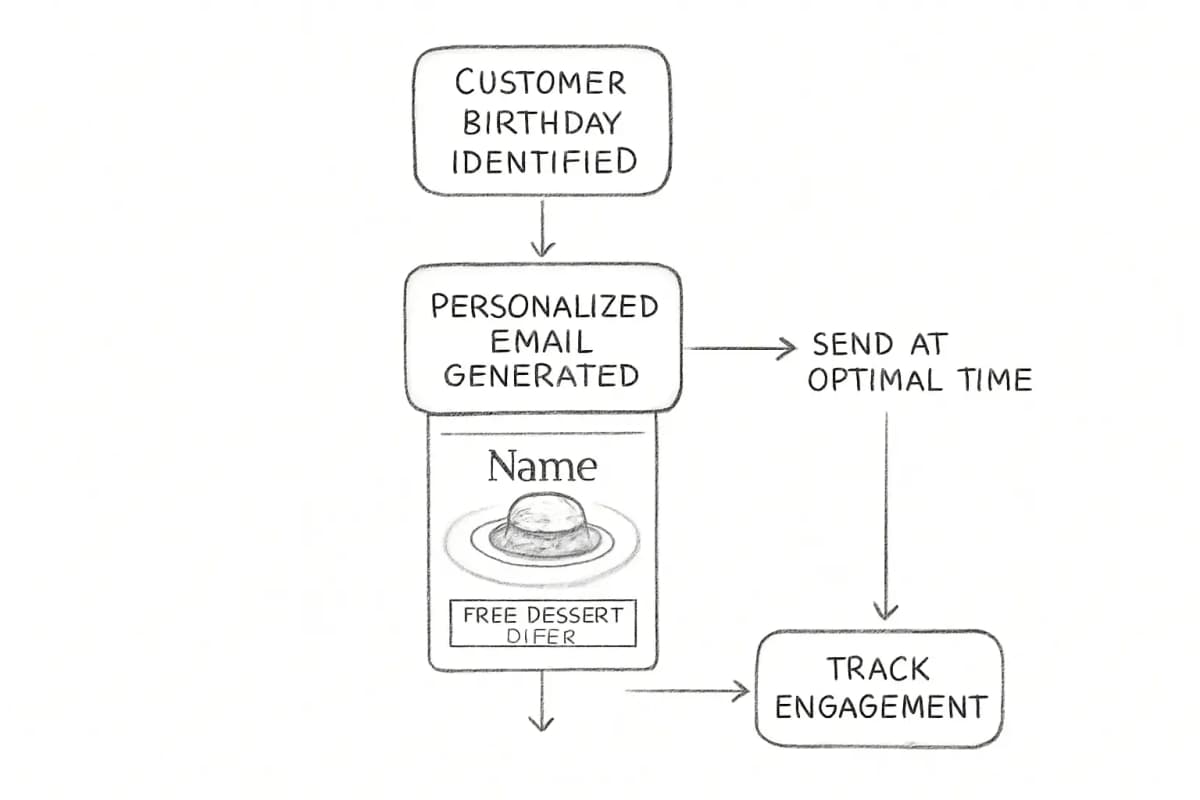
  • Birthday and anniversary emails: Sending emails for birthdays and anniversaries with exclusive offers, such as "Happy Birthday, Sarah! Celebrate with a Free Dessert on Us!", is a proven way to drive visits.
  • Win-back sequences: Anyone who has not visited in 30 days gets the first email with a casual "we miss you" tone. If they do not respond in 10 days, a second email goes out that is slightly more promotional. If still inactive, they move into a less-frequent send segment.

80% of customers are more likely to purchase from a brand that offers personalized promotions. That stat alone justifies the setup time. Restaurant email personalization example showing a segmented customer journey: a diner receives a personalized birthday email with their name prominently displayed at the top, featuring a free dessert reward offer with an appetizing food image, along with a clear CTA button. The email demonstrates targeted messaging for a specific customer segment based on birthday data, showing how personalization increases relevance and conversion likelihood in restaurant email marketing.

5. Use Automation to Run Campaigns in the Background

Email automation is one of the most effective ways to improve customer loyalty without adding more to your plate. Once your sequences are set up, they run in the background, reaching the right customers at the right time with zero manual effort.

  • Keep them short: Keep subject lines under 50 characters to ensure they display fully on mobile devices, and A/B test different approaches to see what resonates best with your audience.
  • Use personalization: Emails containing personalization in the subject line are 22% more likely to be opened.
  • Create urgency: Words like "Limited Time," "Today Only," or "Ending Soon" encourage action. For example: "Final Hours: 20% Off Your Next Order."
  • Ask questions: Subject lines like "Craving Something Delicious?" or "Have You Tried Our New Special Yet?" spark curiosity.

The practical format: Limit to 40 to 50 characters for easy mobile viewing, use personalization such as "John, your weekend table awaits," include action-driven language like "Claim Your Friday Deal!", and test different variations using A/B testing to see which subject lines resonate most.

For more subject line tactics with conversion data, see Email Subject Line Best Practices That Boost Open Rates by 27%.


4. Personalize Beyond the First Name

Putting a guest's name in the subject line is the floor, not the ceiling. The restaurants getting the strongest results use behavioral data to personalize the entire message.

Personalized, carefully designed email campaigns work much better than mass mailings. The open rate for personalized messages is 26% higher, and the click-through rate for personalized emails reaches 41%.

Effective personalization tactics for restaurants:

  • Order history: Offering personalized menu recommendations based on order history on your online ordering platform can increase the average click-through rate by 3.5%.
  • Birthday and anniversary emails: Sending emails for birthdays and anniversaries with exclusive offers, such as "Happy Birthday, Sarah! Celebrate with a Free Dessert on Us!", is a proven way to drive visits.
  • Win-back sequences: Anyone who has not visited in 30 days gets the first email with a casual "we miss you" tone. If they do not respond in 10 days, a second email goes out that is slightly more promotional. If still inactive, they move into a less-frequent send segment.

80% of customers are more likely to purchase from a brand that offers personalized promotions. That stat alone justifies the setup time. Restaurant email personalization example showing a segmented customer journey: a diner receives a personalized birthday email with their name prominently displayed at the top, featuring a free dessert reward offer with an appetizing food image, along with a clear CTA button. The email demonstrates targeted messaging for a specific customer segment based on birthday data, showing how personalization increases relevance and conversion likelihood in restaurant email marketing.


5. Use Automation to Run Campaigns in the Background

Email automation is one of the most effective ways to improve customer loyalty without adding more to your plate. Once your sequences are set up, they run in the background, reaching the right customers at the right time with zero manual effort.

The automation flows every restaurant should have running:

  1. Welcome sequence: Triggered immediately after sign-up. Deliver a warm introduction, a menu highlight, and a first-visit incentive.
  2. Post-visit follow-up: After every online order or reservation, automatically send a feedback request 24 hours later.
  3. Loyalty milestones: Keep loyalty members engaged by regularly updating them on their status with notifications like "You're only 50 points away from a free entrée!"
  4. Birthday emails: Send gift cards to customers on their birthdays or give them a free dessert as an automated trigger.
  5. Seasonal campaigns: Stay on top of holidays and local events by announcing seasonal menus, extended hours, or last-minute reservation openings.

The majority of restaurateurs have already automated their marketing efforts, with 30% aiming to catch up as soon as possible. That means 97% of those surveyed have adopted or are planning to adopt automation. Restaurants not yet using automation are competing at a structural disadvantage.


6. Send Promotions That Drive Action

Promotions and discounts are powerful tactics for engaging diners and strengthening brand relationships. Restaurant emails that include promotional campaigns with triggers show higher CTR of 21.32% and conversion rates.

Promotional formats that convert well for restaurants:

  • Flash offers with time limits: Examples include "Tonight only: Half-price appetizers from 5 to 7pm" or "Tuesday Wine Night: 50% off all bottles."
  • Seasonal menu previews: Give subscribers an exclusive first look at new items before they go live, which builds anticipation and makes the list feel valuable.
  • Exclusive subscriber discounts: Beyond building relationships, email marketing serves as a lever to increase customer loyalty and encourage repeat visits. Exclusive promotions and a well-structured loyalty program can turn occasional visitors into regulars.

Timing matters as much as the offer itself. For lunch promotions, send emails between 9 AM and 11 AM to catch early planners. For dinner specials, send between 3 PM and 5 PM when customers are already thinking about dinner. For weekend events, send reminders on Thursday evenings or Friday mornings.


7. Optimize for Mobile

Most diners open emails on mobile devices, with 55 to 56% of all email opens happening on mobile, which means responsive design should be your first priority.

50% of people will delete an email if it is not optimized for mobile. That is a significant share of your campaign cost going to waste on poor formatting.

What mobile-optimized restaurant emails look like in practice:

The automation flows every restaurant should have running:

  1. Welcome sequence: Triggered immediately after sign-up. Deliver a warm introduction, a menu highlight, and a first-visit incentive.
  2. Post-visit follow-up: After every online order or reservation, automatically send a feedback request 24 hours later.
  3. Loyalty milestones: Keep loyalty members engaged by regularly updating them on their status with notifications like "You're only 50 points away from a free entrée!"
  4. Birthday emails: Send gift cards to customers on their birthdays or give them a free dessert as an automated trigger.
  5. Seasonal campaigns: Stay on top of holidays and local events by announcing seasonal menus, extended hours, or last-minute reservation openings.

The majority of restaurateurs have already automated their marketing efforts, with 30% aiming to catch up as soon as possible. That means 97% of those surveyed have adopted or are planning to adopt automation. Restaurants not yet using automation are competing at a structural disadvantage.


6. Send Promotions That Drive Action

Promotions and discounts are powerful tactics for engaging diners and strengthening brand relationships. Restaurant emails that include promotional campaigns with triggers show higher CTR of 21.32% and conversion rates.

Promotional formats that convert well for restaurants:

  • Flash offers with time limits: Examples include "Tonight only: Half-price appetizers from 5 to 7pm" or "Tuesday Wine Night: 50% off all bottles."
  • Seasonal menu previews: Give subscribers an exclusive first look at new items before they go live, which builds anticipation and makes the list feel valuable.
  • Exclusive subscriber discounts: Beyond building relationships, email marketing serves as a lever to increase customer loyalty and encourage repeat visits. Exclusive promotions and a well-structured loyalty program can turn occasional visitors into regulars.

Timing matters as much as the offer itself. For lunch promotions, send emails between 9 AM and 11 AM to catch early planners. For dinner specials, send between 3 PM and 5 PM when customers are already thinking about dinner. For weekend events, send reminders on Thursday evenings or Friday mornings.


7. Optimize for Mobile

Most diners open emails on mobile devices, with 55 to 56% of all email opens happening on mobile, which means responsive design should be your first priority.

50% of people will delete an email if it is not optimized for mobile. That is a significant share of your campaign cost going to waste on poor formatting.

What mobile-optimized restaurant emails look like in practice:

  • Use single-column layouts to ensure easy reading on small screens. Create large, touch-friendly CTA buttons of at least 44 x 44 pixels. Keep subject lines to 41 characters or 7 words for best performance.
  • Keep copy tight: Most emails are opened on phones. 200 to 400 words is the sweet spot. Use one headline, one image, 2 to 3 short paragraphs, and one clear call to action such as "reserve, order, or visit." Readers should understand what you are offering within 10 seconds of scrolling.
  • Use high-quality food photography: Include high-quality, mouth-watering food images to stir cravings and emotions. Strategically placed visuals of new menu items or promotions can drive engagement and online orders.

8. Track the Metrics That Matter and Improve Systematically

Most email marketing tools offer detailed reporting so you can track which patterns work and which practices need improvement. If you send a promotional email for a new seasonal menu and the open rate is lower than expected, that may indicate your subject line or preview text is underperforming.

The core metrics to track for restaurant email campaigns:

  • Open rate: Benchmark is 43.6% for restaurants according to MailerLite's 2025 data.
  • Click-through rate (CTR): According to Campaign Monitor, the industry average for click-through rates is 2%. Anything above that is strong.
  • Unsubscribe rate: According to Mailchimp, the average unsubscription rate within the restaurant industry is 0.3%. Try to keep yours at or below this benchmark.
  • Conversion rate: Track how many email recipients complete a reservation, place an order, or redeem an offer.

If your CTR is low despite solid open rates, your content is not translating into action. Instead of "Your favorite dishes got an upgrade," try "Have an exclusive look at our new summer menu." If your CTA feels generic, change vague messages like "Click here" to clear phrasing like "Download the menu."

For a structured approach to tracking and improving your campaign performance over time, see Email Marketing Analytics Best Practices.


Frequently Asked Questions

How often should a restaurant send marketing emails?

A good guideline is one to four times per month. Too many emails can lead to unsubscribes, while too few can make customers forget about your restaurant. Test your specific audience's tolerance and monitor unsubscribe signals to find the right cadence.

What types of emails work best for restaurants?

Restaurants should send welcome emails for new subscribers, promotional offers and discounts, loyalty program updates, event invitations, transactional emails such as order confirmations and receipts, re-engagement campaigns for inactive customers, birthday and anniversary greetings with special offers, post-dining follow-ups requesting feedback, and abandoned cart reminders for online ordering.

How do I grow my restaurant email list without buying contacts?

  • Use single-column layouts to ensure easy reading on small screens. Create large, touch-friendly CTA buttons of at least 44 x 44 pixels. Keep subject lines to 41 characters or 7 words for best performance.
  • Keep copy tight: Most emails are opened on phones. 200 to 400 words is the sweet spot. Use one headline, one image, 2 to 3 short paragraphs, and one clear call to action such as "reserve, order, or visit." Readers should understand what you are offering within 10 seconds of scrolling.
  • Use high-quality food photography: Include high-quality, mouth-watering food images to stir cravings and emotions. Strategically placed visuals of new menu items or promotions can drive engagement and online orders.

8. Track the Metrics That Matter and Improve Systematically

Most email marketing tools offer detailed reporting so you can track which patterns work and which practices need improvement. If you send a promotional email for a new seasonal menu and the open rate is lower than expected, that may indicate your subject line or preview text is underperforming.

The core metrics to track for restaurant email campaigns:

  • Open rate: Benchmark is 43.6% for restaurants according to MailerLite's 2025 data.
  • Click-through rate (CTR): According to Campaign Monitor, the industry average for click-through rates is 2%. Anything above that is strong.
  • Unsubscribe rate: According to Mailchimp, the average unsubscription rate within the restaurant industry is 0.3%. Try to keep yours at or below this benchmark.
  • Conversion rate: Track how many email recipients complete a reservation, place an order, or redeem an offer.

If your CTR is low despite solid open rates, your content is not translating into action. Instead of "Your favorite dishes got an upgrade," try "Have an exclusive look at our new summer menu." If your CTA feels generic, change vague messages like "Click here" to clear phrasing like "Download the menu."

For a structured approach to tracking and improving your campaign performance over time, see Email Marketing Analytics Best Practices.


Frequently Asked Questions

How often should a restaurant send marketing emails?

A good guideline is one to four times per month. Too many emails can lead to unsubscribes, while too few can make customers forget about your restaurant. Test your specific audience's tolerance and monitor unsubscribe signals to find the right cadence.

What types of emails work best for restaurants?

Restaurants should send welcome emails for new subscribers, promotional offers and discounts, loyalty program updates, event invitations, transactional emails such as order confirmations and receipts, re-engagement campaigns for inactive customers, birthday and anniversary greetings with special offers, post-dining follow-ups requesting feedback, and abandoned cart reminders for online ordering.

How do I grow my restaurant email list without buying contacts?

You can collect emails through online orders, reservations, in-person sign-ups via QR codes, social media promotions, your website, and digital receipts. Purchased lists tend to hurt deliverability and produce low engagement. Focus on earned subscribers who have actively opted in.

What is a good open rate for restaurant emails?

According to MailerLite's 2025 report, a good open rate for restaurant emails is 43.6%. For restaurants, the average open rate is more than 12% higher than the general average across all industries. If you are tracking below 35%, focus on improving subject lines, list quality, and send-time testing before adjusting anything else.
No comments yet. Be the first!

Leave a comment

Comments are reviewed before publishing.

You can collect emails through online orders, reservations, in-person sign-ups via QR codes, social media promotions, your website, and digital receipts. Purchased lists tend to hurt deliverability and produce low engagement. Focus on earned subscribers who have actively opted in.

What is a good open rate for restaurant emails?

According to MailerLite's 2025 report, a good open rate for restaurant emails is 43.6%. For restaurants, the average open rate is more than 12% higher than the general average across all industries. If you are tracking below 35%, focus on improving subject lines, list quality, and send-time testing before adjusting anything else.
No comments yet. Be the first!

Leave a comment

Comments are reviewed before publishing.

More from

Related posts

Illustration for restaurant email marketing steps
Email Marketing for HospitalityMay 11, 2026 9 min

Restaurant Email Marketing: 7 Steps to Boost Sales

Learn the 7 essential steps for restaurant email marketing. Build your list, segment customers, and drive repeat orders with proven strategies.

More from

Related posts

Illustration for restaurant email marketing steps
Email Marketing for HospitalityMay 11, 2026 9 min

Restaurant Email Marketing: 7 Steps to Boost Sales

Learn the 7 essential steps for restaurant email marketing. Build your list, segment customers, and drive repeat orders with proven strategies.

J
James Chen
J
James Chen