
Most restaurant owners capture email addresses from only 5% to 15% of their monthly guests, according to Bloom Intelligence. That gap is exactly where revenue is being lost. A well-built restaurant email list is one of the highest-ROI marketing assets you can own, and growing it fast requires a deliberate, multi-touchpoint strategy that turns every guest interaction into a list-building opportunity.
This guide walks through exactly how to grow a restaurant email marketing list using proven tactics, from in-venue capture to digital funnels, so you can build an owned audience that drives real, repeatable revenue.
Key Takeaways
- Email marketing ROI for restaurants reaches approximately $42 for every dollar spent.
- Nearly 60% of customers say they registered for a restaurant's email list specifically to receive exclusive discounts and deals.
- The most effective way to build a restaurant email list is through passive, automated data capture across multiple guest touchpoints, including guest WiFi logins, POS transaction data, online ordering systems, reservation platforms, and website widgets.
- More than 53% of diners have visited a new restaurant because of a marketing email.
- Segmenting your list once it grows is just as important as growing it. Targeted campaigns consistently outperform mass blasts in both open rates and revenue.
Why Your Restaurant Email List Is Your Most Valuable Marketing Asset
Social media reach is rented. Your email list is owned.
69% of guests worldwide choose email as their preferred communication method from consumer brands, and consumers are willing to spend 32% more with brands that use their preferred communication channel. Research shows that email is 40 times more effective at bringing new guests back than Facebook or Twitter.
Automated email campaigns generate 320% more revenue than non-automated email marketing campaigns. The compounding effect is real: a larger, better-segmented list means more opens, more covers, and more repeat visits with each send.
For practical examples of how restaurants use email to drive bookings and loyalty, see our roundup of restaurant email marketing examples that drive sales.
1. Capture Emails at Every In-Venue Touchpoint
The dining room is your highest-converting list-building environment. Guests are already there, already engaged, and already have a positive association with your brand.
Guest WiFi Login
Guest WiFi login is the most passive way to grow your email list. Setting your WiFi to require an email address for access, combined with reservation system email capture and loyalty program signups, builds your list continuously.
POS and Checkout
Most restaurant POS systems allow you to capture emails automatically when prompted, and an email opt-in screen for online orders is also an easy way to build this list. Train staff to ask at the point of payment with a clear, brief value statement, such as a discount off the next visit.
QR Codes on Menus and Table Tents
Guests visiting your restaurant are reading menus and table materials several times during their visit. Adding a QR code that takes them to a signup page makes it easy for guests to join your restaurant email list right from their table.
QR codes have made a significant comeback and are ideal for in-restaurant list building. Creating custom QR codes for different placements lets you track which locations generate the most signups, helping you refine your in-restaurant marketing.
Reservation Confirmations
Creating a reservation form can be an easy way to collect guests' email addresses. When guests request a reservation, asking for their contact information and giving them the option to opt in to the mailing list captures intent at a high-engagement moment.
2. Use Sign-Up Incentives That Actually Motivate Guests
Nearly 60% of customers say they registered for a restaurant's email list to receive exclusive discounts and deals. The implication is clear: guests want a reason to share their email address. Give them one.
Effective incentive options include:
- A discount on the next visit (10% to 15% off is a common, proven threshold)
- A free appetizer, dessert, or drink on the next dine-in visit
- Early access to seasonal menus or new dish announcements
- Entry into a monthly giveaway or contest
Teppanyaki Time has seen success by advertising an enticing "$15 off" offer to grow their email list to over 4,000 engaged followers.
The incentive needs to be immediate, tangible, and delivered automatically. A new subscriber who doesn't receive their promised reward within minutes will disengage and may not return. High-performing signup forms deliver what they promise immediately, whether it's a discount code, downloadable guide, or access link. A smooth post-signup experience builds trust and makes subscribers feel they made the right choice.
3. Build Your Digital Capture Funnel
Your website, online ordering system, and social channels all represent list-building surfaces that work 24 hours a day.
Website Signup Forms
Place sign-up forms strategically on high-traffic pages such as the homepage, menu page, and reservation page. Use exit-intent popups to capture visitors who are about to leave. Asking only for essential information (name and email) reduces friction and improves conversion.
Direct Online Ordering
Online orders can also help gather guests' email addresses, but this only works if you take orders directly from your website. If you use a third-party delivery app, such as UberEats or DoorDash, the app collects the guest's email, not you. Owning your online ordering channel is one of the most underutilized list-building advantages independent restaurants have.
Social Media Promotions
If your restaurant has social media accounts, promote your email list there by making posts that encourage guests to join and link to a signup page. Social media promotions can be very useful for growing your mailing list and can include giveaways, discounts, or free menu items for those who join.
Email Signature Links
For restaurant staff who regularly email external stakeholders, such as general managers or events managers, adding an email sign-up link below the email signature grows the visibility of email marketing and subtly reminds contacts to stay in touch. Simple language like "Never miss an event from us!" works well.
4. Leverage Loyalty Programs for Continuous List Growth
A loyalty program is one of the most scalable engines for restaurant email list growth because it makes signing up a natural part of the guest relationship.
A loyalty program can capture email addresses automatically through online orders, catering requests, merchandise purchases, gift card sales, and event ticketing.
Data from the National Restaurant Association indicates that 77% of loyalty program members are more likely to return to a restaurant. Loyalty signups simultaneously grow your list and improve retention, making them a dual-purpose growth lever.
Incorporating an email sign-up option within your digital loyalty program and offering guests incentives such as exclusive discounts or early access to events encourages subscriptions.
Once the list is growing, segmentation is the next step. Sending every subscriber the same message wastes the data you have collected. Our guide on email list segmentation strategies that boost ROI by 760% covers exactly how to structure those segments for a restaurant audience.
5. Run Contests and Giveaways
Contests lower the barrier to entry and tend to generate fast, high-volume list growth.
For decades, restaurants have run contests to collect business cards from guests. The digital equivalent involves collecting emails by offering a prize like a gift card, a party, or a special dinner event, then asking guests to sign up using their email for a chance to win.
Giveaway formats that work well for restaurants include:
- Monthly dinner-for-two drawings
- Private chef's table experience raffles
- Gift card giveaways promoted across Instagram and email
- "Win a year of free desserts" campaigns tied to seasonal launches
Once your email list starts getting off the ground, you can ask guests who are already on it to refer their friends and family, offering another perk such as a discount, free appetizer, or gift card to guests who get others to sign up.
6. Automate the Welcome Experience to Lock In New Subscribers
Growing your list is only half the equation. Subscribers who don't hear from you within 24 to 48 hours of signing up are significantly more likely to disengage or unsubscribe before ever converting.
Automated email sequences get about 45% more engagement than one-off blasts. Each flow is aimed at a specific customer behavior, maximizing reservations and repeat visits with the right message at the right time.
A strong welcome sequence for a restaurant should follow this structure:
- Immediate email (within minutes of signup): Deliver the promised incentive, confirm the subscription, and introduce the brand.
- Day 3: Share a signature dish, your story, and what subscribers can expect from being on the list.
- Day 7: Include social proof such as a review highlight, a "most popular dishes" breakdown, or an event preview.
Personalized marketing can result in a 20% lift in spend by email recipients over 30 days, with a surge in sales the day after it is sent.
For a detailed breakdown of how to build this sequence, see our guide on welcome email sequence best practices.
7. Maintain List Quality as You Scale
A large list with low engagement hurts deliverability and skews your metrics. List quality matters as much as list size.
Key practices to maintain a healthy restaurant email list:
- Remove hard bounces immediately. The bounce rate for restaurant emails averages 8.78%. Anything significantly above this signals list health issues that require attention.
- Suppress inactive subscribers. Guests who haven't opened in 90 days should enter a re-engagement flow before being removed.
- Set frequency expectations at signup. Restaurants that send daily emails see high unsubscribe rates. Two to four emails per month is the right cadence for most restaurants.
- Comply with CAN-SPAM and GDPR rules. These laws require clear consent and opt-in before sending email communications. Always offer an easy unsubscribe option and include your restaurant's name and address at the bottom of every email.
Monitoring your list growth rate is also essential. The email list growth rate helps you analyze how quickly your subscriber list is expanding, indicating the effectiveness of your lead generation and marketing efforts. If it plateaus, revisit your capture points and incentives. 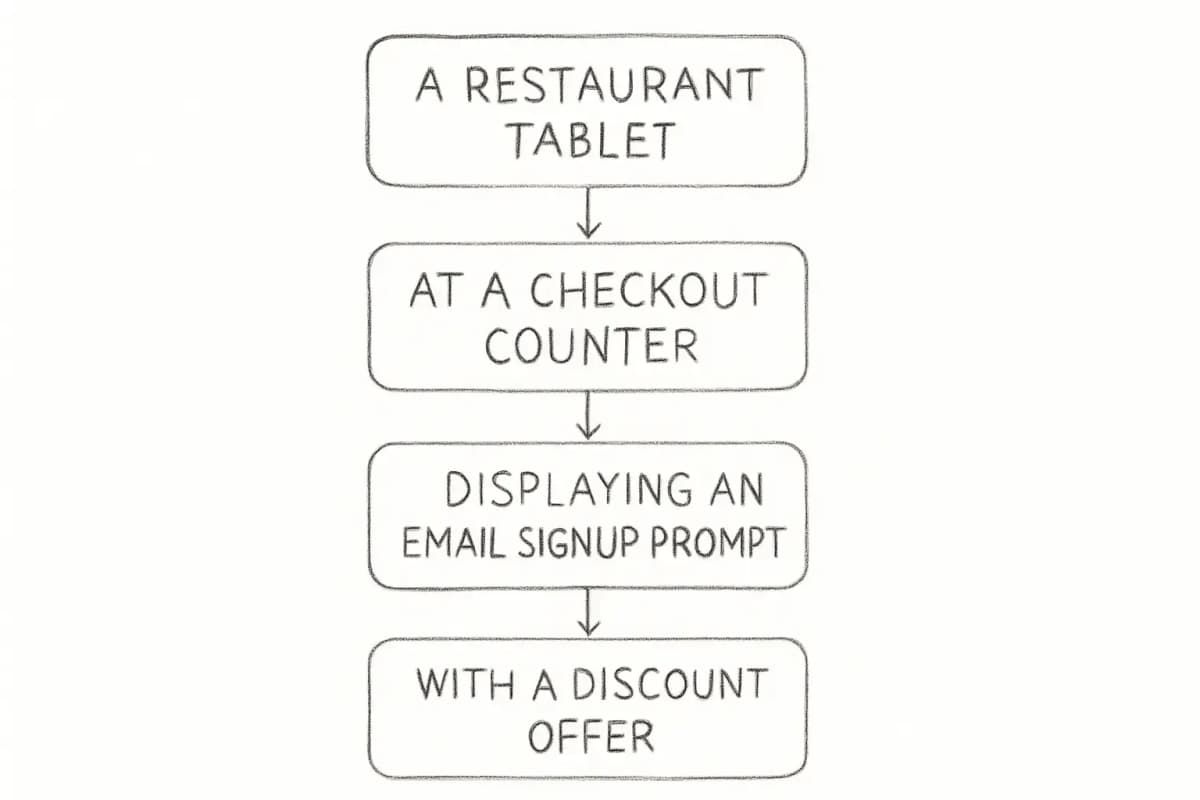
8. Track What's Working and Iterate
Dining and food services industry benchmarks include an open rate of 32.54% and a click-through rate of 0.81% according to OptinMonster, while Sender data shows an average restaurant email open rate of 43.69% and a CTR of 1.13%.
Use these benchmarks to evaluate each signup channel and each campaign. If one touchpoint, such as the WiFi login, drives most of your signups but those subscribers show lower engagement, it may indicate the incentive or the welcome sequence needs adjusting.
The best days to send restaurant emails, based on Mailerlite data, are Monday (51.90% open rate), Tuesday (51%), and Sunday (51.28%). The best time window is 3 PM to 7 PM.
Track sign-up source, open rate by segment, and revenue generated per subscriber (not just per campaign). These metrics together tell you whether your list is growing in the right direction or just getting larger.
Frequently Asked Questions
What is the fastest way to grow a restaurant email list?
The fastest growth comes from combining in-venue capture (WiFi login, POS opt-in, QR codes) with a compelling signup incentive like a discount or free item. The most effective approach uses passive, automated data capture across multiple guest touchpoints, including guest WiFi logins, POS transaction data, online ordering systems, and reservation platforms. Running a contest or giveaway in parallel can accelerate growth further by generating social sharing.
How many emails should a restaurant send per month?
Restaurants that send daily emails see high unsubscribe rates. Two to four emails per month is the right cadence for most restaurants. Save daily communication for social media; email should be reserved for meaningful content such as events, seasonal menus, and special occasions.
Should I offer a discount to grow my restaurant email list?
Yes, with some nuance. Nearly 60% of customers say they registered for a restaurant's email list to receive exclusive discounts and deals, making discount incentives highly effective for list growth. However, vary your incentives over time to avoid training guests to expect a discount on every visit. Exclusive access, early menu previews, and birthday offers also convert well without conditioning guests to wait for a deal.
How do I keep subscribers from unsubscribing after they join?
Deliver the promised incentive immediately, follow up with a quality welcome sequence, and segment early so your sends stay relevant. According to Popmenu, the three biggest unsubscribe drivers are too-frequent messaging, irrelevant content, and no perceived value. Address all three by capping send frequency, personalizing campaigns based on guest behavior, and consistently offering content or offers subscribers cannot get anywhere else.