
Brevo released its 2026 Marketing Engagement Benchmark on April 21, drawing on proprietary data from billions of messages sent by 175,000 businesses globally across email, SMS, WhatsApp, push notifications, and mobile wallet channels. The core finding is direct: top-performing brands are shifting from volume-based strategies to orchestrated, lifecycle-driven engagement across multiple channels. For marketers still measuring success by send volume alone, this report signals a clear change in what effective engagement actually looks like.
The Core Problem: Email Overload Is Hurting Performance
As businesses scale, they tend to overload email, which drives inbox competition up and engagement down. The Brevo benchmark makes this structural problem visible with data. Email remains the anchor channel, but high-volume senders (those sending 1 million or more messages per year) are seeing drops in click-through rate as inbox competition peaks.
This pattern is consistent with what other industry observers are reporting. Automation in 2026 is less about isolated drip campaigns and more about full lifecycle orchestration, with email automation now supporting entire customer journeys from first interaction through long-term retention. The Brevo data gives that shift a measurable foundation.
What the Benchmark Actually Measures
The benchmark is built on aggregated, anonymized messaging data from over 50,000 active Brevo customers across 2025, using unweighted averages with extreme outliers removed to give a realistic baseline view of typical performance across all channels.
The report covers five channels with a specific framing: each channel should serve a distinct function in the customer journey rather than duplicating the same message across platforms. Top teams assign specific "jobs to be done" to complementary channels when email is not the right tool.
SMS, Push, and Mobile Wallet Each Have a Role
The benchmark draws a clear line between what each channel does well. SMS volume spikes exactly when inbox competition is highest, positioning it as the urgency layer in a well-structured channel mix. This is supported by broader industry data: the Dotdigital 2026 Global Benchmark Report found that SMS sees a click-through rate of 25.7%, seven times higher than email.
Push notifications fill a different gap. Push acts as a steady, real-time engager, while mobile wallet is surging as a silent loyalty driver, up 43% year over year. On the wallet side specifically, mobile wallets are helping businesses build stronger relationships with customers, leading to a 52% revenue increase for walletized customers compared to non-walletized ones and a 95% retention rate.
WhatsApp rounds out the channel picture. WhatsApp messages carry a 98% open rate, making them well-suited for delivering time-sensitive offers to a targeted audience. That kind of reach is difficult to replicate with email alone, particularly against a backdrop of Apple Mail Privacy Protection distorting open rate data. 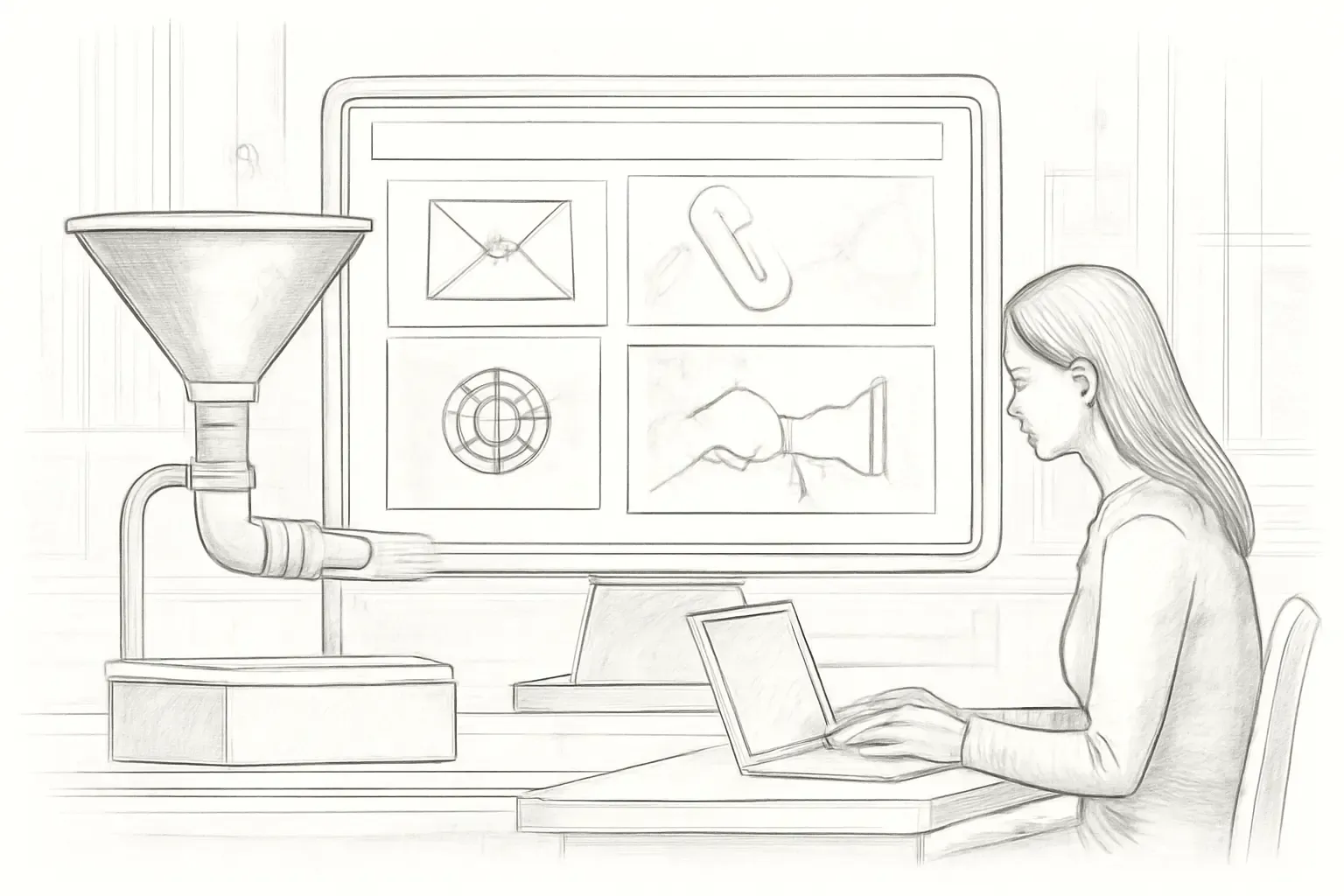
The Strategic Shift: From Channel Pile-Up to Orchestration
The distinction Brevo draws is between adding channels and orchestrating them. Brands do not win with email alone; they protect it by assigning each channel a specific job. That framing matters practically. Marketers who add SMS or push without a defined role for each risk compounding the same overload problem they already have with email.
Email's evolution into the orchestration layer for the entire customer experience has accelerated, with leading brands designing journeys where email acts as the connective tissue linking every touchpoint. The Brevo benchmark puts numbers to that direction, giving teams a data-backed case for restructuring how they assign messaging responsibilities.
Klaviyo's analysis of marketing automation trends for 2026 points to the same shift, with experts describing "omnichannel marketing automation powered by deep access to back-end data" as the defining characteristic of brands that will stand out.
What This Means for Your Email Program
The practical implications are concrete. Benchmarking your KPIs helps you spot early signs of inbox fatigue. Comparing performance by industry, then understanding how top teams relieve email pressure using other channels, gives you a clear sequence for diagnosing and fixing the problem.
With privacy changes eroding traditional tracking, first-party data, meaning your own subscriber behavior, preferences, and engagement signals, becomes your most strategic asset. Unified data platforms are no longer optional; they are enablers of accurate segmentation, behavior-triggered journeys that feel one-to-one rather than broadcast, and better measurement of real business outcomes.
For teams still operating channel by channel without a shared data layer, the Brevo report is a useful forcing function. The full 2026 benchmark is available directly from Brevo and includes an interactive tool for comparing your email KPIs against 30,000-plus brands by industry. The core takeaway does not require a download: sending more is not the answer, and the brands seeing the best engagement are the ones treating each channel as a deliberate choice, not a default.