
Email
Email

A modern blog built with Payload CMS, Next.js, and shadcn/ui.

RSS FeedSitemap

Explore

  • Blog
  • News
  • Statistics
  • Authors

Categories

  • CRM & Email Marketing Tools
  • Email Analytics & Reporting
  • Email Security & Compliance
  • Email Automation
  • Email List Building
  • Seasonal & Holiday Email Marketing
  • Email Marketing Benchmarks & Statistics
  • Email Design & Personalization

Latest articles

  • Attentive SMS Email Marketing Automation ReviewsJul 21, 2026
  • Email Marketing Automation Platforms: 2024 ComparisonJul 20, 2026
  • Email Marketing with the Best Automation ToolsJul 20, 2026
  • Email Marketing Automation Course: Build SkillsJul 20, 2026

Popular topics

  • #deliverability and segmentation
  • #beauty brand email strategy
  • #skincare email marketing
  • #Marketing
  • #email engagement metrics
  • #Content Generation
  • #Sales Efficiency
  • #Cyber Monday Trends
  • #Email Campaign Benchmarks
  • #Holiday Marketing Statistics
  • #BFCM Email Strategy
  • #Enterprise Email
  • #credit card marketing
  • #Business Software
  • #CRM Software
  • #MarTech

Stay in the loop

Join 2,000+ readers. Unsubscribe anytime.

Subscribe
Email

© 2026 Email. All rights reserved.

SitemapRSS
HomeNewsSouth African MSP Adds Email Authentication Revenue Line
Email Marketing Tools

South African MSP Adds Email Authentication Revenue Line

Digital Infinity IT Group joins PowerDMARC's MSP program to deliver DMARC, DKIM, and SPF management as a scalable service, addressing growing compliance demands.

M

Marcus Webb

April 22, 2026

5 min read
Share:
#Compliance#Email Strategy#Email Deliverability
Illustration for partnership: South African MSP Adds Email Authentication Revenue Line

Stay in the loop

Get the latest posts delivered straight to your inbox. No spam, unsubscribe anytime.

South Africa-based managed IT service provider Digital Infinity IT Group (PTY) Ltd. joined PowerDMARC's MSP Partner Program on April 21, 2026, adding email authentication as a formal, recurring service line across its managed client base. Through PowerDMARC's centralized DMARC, DKIM, and SPF management platform, the company now protects clients from spoofing and phishing attacks while delivering email authentication as a scalable, cost-effective offering.

The move is a direct response to a problem most MSPs know well: email authentication has become non-negotiable, yet managing it across multiple client domains manually is resource-intensive, error-prone, and difficult to scale.

The Operational Problem Digital Infinity Had to Solve

Like many managed service providers, Digital Infinity IT Group faced the challenge of managing email authentication across a diverse and growing client base. Configuring DMARC, DKIM, and SPF records individually for each client, while tracking evolving sender requirements from Google, Yahoo, and Microsoft, was becoming increasingly resource-intensive.

JP Bosman, Co-Founder of Digital Infinity IT Group, highlighted the need for a platform that could simplify client DMARC and DKIM management without driving up costs. The company required centralized control, clear reporting, and a smooth onboarding experience for both its internal team and managed clients.

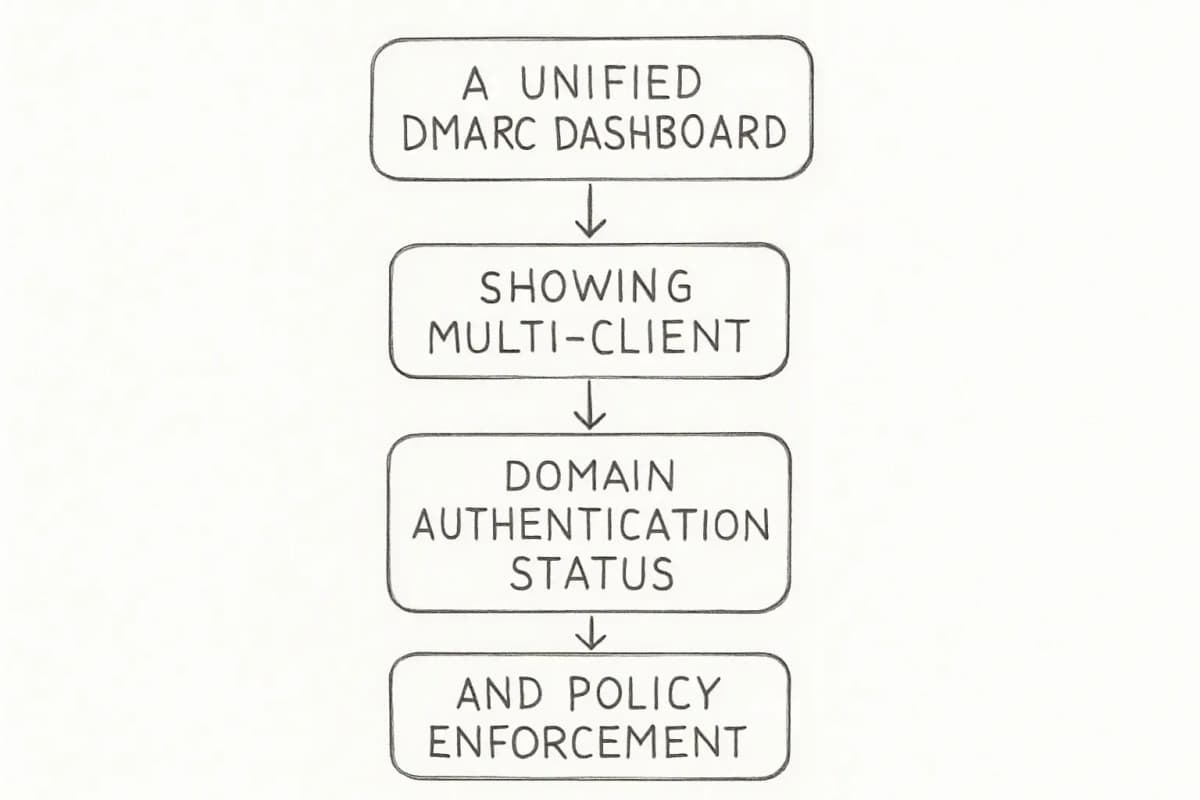
By implementing PowerDMARC's MSP-exclusive platform, Digital Infinity gained a single, unified dashboard for managing DMARC, DKIM, and SPF across every client domain. The solution delivers real-time visibility into authentication results, faster identification of misconfigurations and unauthorized senders, and simplified enforcement of email security policies.

As a multi-tenant platform, PowerDMARC also allows Digital Infinity to offer enterprise-grade email security to clients of every size, cost-effectively, under a unified service model.

Why This Matters: Authentication Gaps Are Still Widespread

The partnership reflects a broader and urgent market reality. As of Q2 2025, only about 18% of the world's 10 million most-visited domains publish a valid DMARC record, and just around 4% fully enforce a reject policy, according to PowerDMARC's phishing and DMARC statistics report. That means the overwhelming majority of business domains remain open to impersonation.

Research by EasyDMARC found that over 90% of the world's top email domains are vulnerable to spoofing, with just 7.7% of the top 1.8 million email domains having implemented the most stringent DMARC enforcement policy, as reported by Infosecurity Magazine.

The financial stakes are not abstract. The average cost of a phishing-related breach was approximately $4.88 million in 2025, according to PowerDMARC's security trend data. For business owners and marketers who depend on email for revenue, that number is a persuasive argument for getting authentication right.

There is also a direct deliverability dimension. Gmail and Yahoo now mandate SPF, DKIM, and DMARC authentication for bulk senders transmitting over 5,000 messages per day, along with requirements like one-click unsubscribe and low spam complaint rates, as outlined by Landbase's deliverability statistics research. Non-compliance can result in filtered, rejected, or delivery-limited email, making authentication implementation essential for sustained email marketing success.

DMARC as a Service: The MSP Revenue Angle

For MSPs, this authentication gap is not just a security problem. When offered as a managed service, DMARC becomes more than just a security control. It turns into a steady, recurring service that improves client protection while also supporting long-term revenue, according to EasyDMARC's MSP revenue guide.

Email authentication opens a new revenue stream that providers can offer as a premium add-on or as part of a complete security bundle. MSPs also play a key role in guiding clients through the DMARC adoption process, from initial monitoring at p=none to full enforcement at p=reject, improving client reputation and email deliverability along the way, as PowerDMARC's MSP implementation guide explains.

PowerDMARC's MSP-ready architecture includes full multi-tenancy support and white-label capabilities, enabling partners to onboard, manage, and monitor client domains from a single interface. The platform serves a global network of 500-plus channel partners and supports organizations ranging from small businesses to large enterprises, according to G2's PowerDMARC product listing. A unified DMARC dashboard showing multi-client domain authentication status and policy enforcement
What This Signals for Email Marketers and Growth Teams

Partnerships like this one carry a direct implication for marketing and revenue teams. If your email program operates through a managed IT provider, ask explicitly whether DMARC is configured, actively monitored, and enforced beyond p=none. A published but unenforced DMARC record provides little real protection.

Despite growing awareness, only 388,096, or roughly 3.9%, of the internet's 10 million most popular domains enforce a reject policy including on subdomains, leaving the remaining domains exposed to spoofing risks even when SPF and DKIM are already configured, according to Fortra's Q2 2025 global DMARC adoption analysis.

Companies that delay implementing and enforcing SPF, DKIM, and DMARC face increasing delivery issues, higher phishing exposure, and reduced trust in their domains as authentication standards continue to tighten, as PowerDMARC's trend report notes.

For growth teams, proper authentication is not just an IT task. It is a prerequisite for inbox placement, sender reputation, and the ROI of every email campaign you run.


No comments yet. Be the first!

Leave a comment

Comments are reviewed before publishing.

Breaking

Related news

Illustration for product_launch: Fastmail launches EU data centre in Amsterdam
Email Marketing ToolsJul 14, 2026 5 min

Fastmail launches EU data centre in Amsterdam

Fastmail debuts Amsterdam infrastructure for EU data residency. August launch gives European customers GDPR-compliant email hosting with local control.

JJames Chen
Illustration for new_technology: Critical Zero-Click Outlook Flaw Patched Immediately
Email Marketing ToolsMay 15, 2026 5 min

Critical Zero-Click Outlook Flaw Patched Immediately

Microsoft patches CVE-2026-40361, a critical zero-click Outlook vulnerability enabling RCE. Learn why this flaw threatens enterprise leaders and how to protect systems immediately.

PPriya Kapoor
Illustration for industry_trend: Creators Return to Newsletters as Algorithm Dependency Fades in 2026
Email Marketing ToolsMay 14, 2026 5 min

Creators Return to Newsletters as Algorithm Dependency Fades in 2026

Free newsletter platforms like Substack and Beehiiv are gaining traction as creators escape social media algorithms. Email now offers owned audiences and faster monetization paths.

JJames Chen
HomeNewsSouth African MSP Adds Email Authentication Revenue Line
Email Marketing Tools

South African MSP Adds Email Authentication Revenue Line

Digital Infinity IT Group joins PowerDMARC's MSP program to deliver DMARC, DKIM, and SPF management as a scalable service, addressing growing compliance demands.

M

Marcus Webb

April 22, 2026

5 min read
Share:
#Compliance#Email Strategy#Email Deliverability
Illustration for partnership: South African MSP Adds Email Authentication Revenue Line

Stay in the loop

Get the latest posts delivered straight to your inbox. No spam, unsubscribe anytime.

South Africa-based managed IT service provider Digital Infinity IT Group (PTY) Ltd. joined PowerDMARC's MSP Partner Program on April 21, 2026, adding email authentication as a formal, recurring service line across its managed client base. Through PowerDMARC's centralized DMARC, DKIM, and SPF management platform, the company now protects clients from spoofing and phishing attacks while delivering email authentication as a scalable, cost-effective offering.

The move is a direct response to a problem most MSPs know well: email authentication has become non-negotiable, yet managing it across multiple client domains manually is resource-intensive, error-prone, and difficult to scale.

The Operational Problem Digital Infinity Had to Solve

Like many managed service providers, Digital Infinity IT Group faced the challenge of managing email authentication across a diverse and growing client base. Configuring DMARC, DKIM, and SPF records individually for each client, while tracking evolving sender requirements from Google, Yahoo, and Microsoft, was becoming increasingly resource-intensive.

JP Bosman, Co-Founder of Digital Infinity IT Group, highlighted the need for a platform that could simplify client DMARC and DKIM management without driving up costs. The company required centralized control, clear reporting, and a smooth onboarding experience for both its internal team and managed clients.

By implementing PowerDMARC's MSP-exclusive platform, Digital Infinity gained a single, unified dashboard for managing DMARC, DKIM, and SPF across every client domain. The solution delivers real-time visibility into authentication results, faster identification of misconfigurations and unauthorized senders, and simplified enforcement of email security policies.

As a multi-tenant platform, PowerDMARC also allows Digital Infinity to offer enterprise-grade email security to clients of every size, cost-effectively, under a unified service model.

Why This Matters: Authentication Gaps Are Still Widespread

The partnership reflects a broader and urgent market reality. As of Q2 2025, only about 18% of the world's 10 million most-visited domains publish a valid DMARC record, and just around 4% fully enforce a reject policy, according to PowerDMARC's phishing and DMARC statistics report. That means the overwhelming majority of business domains remain open to impersonation.

Research by EasyDMARC found that over 90% of the world's top email domains are vulnerable to spoofing, with just 7.7% of the top 1.8 million email domains having implemented the most stringent DMARC enforcement policy, as reported by Infosecurity Magazine.

The financial stakes are not abstract. The average cost of a phishing-related breach was approximately $4.88 million in 2025, according to PowerDMARC's security trend data. For business owners and marketers who depend on email for revenue, that number is a persuasive argument for getting authentication right.

There is also a direct deliverability dimension. Gmail and Yahoo now mandate SPF, DKIM, and DMARC authentication for bulk senders transmitting over 5,000 messages per day, along with requirements like one-click unsubscribe and low spam complaint rates, as outlined by Landbase's deliverability statistics research. Non-compliance can result in filtered, rejected, or delivery-limited email, making authentication implementation essential for sustained email marketing success.

DMARC as a Service: The MSP Revenue Angle

For MSPs, this authentication gap is not just a security problem. When offered as a managed service, DMARC becomes more than just a security control. It turns into a steady, recurring service that improves client protection while also supporting long-term revenue, according to EasyDMARC's MSP revenue guide.

Email authentication opens a new revenue stream that providers can offer as a premium add-on or as part of a complete security bundle. MSPs also play a key role in guiding clients through the DMARC adoption process, from initial monitoring at p=none to full enforcement at p=reject, improving client reputation and email deliverability along the way, as PowerDMARC's MSP implementation guide explains.

PowerDMARC's MSP-ready architecture includes full multi-tenancy support and white-label capabilities, enabling partners to onboard, manage, and monitor client domains from a single interface. The platform serves a global network of 500-plus channel partners and supports organizations ranging from small businesses to large enterprises, according to G2's PowerDMARC product listing. A unified DMARC dashboard showing multi-client domain authentication status and policy enforcement

What This Signals for Email Marketers and Growth Teams

Partnerships like this one carry a direct implication for marketing and revenue teams. If your email program operates through a managed IT provider, ask explicitly whether DMARC is configured, actively monitored, and enforced beyond p=none. A published but unenforced DMARC record provides little real protection.

Despite growing awareness, only 388,096, or roughly 3.9%, of the internet's 10 million most popular domains enforce a reject policy including on subdomains, leaving the remaining domains exposed to spoofing risks even when SPF and DKIM are already configured, according to Fortra's Q2 2025 global DMARC adoption analysis.

Companies that delay implementing and enforcing SPF, DKIM, and DMARC face increasing delivery issues, higher phishing exposure, and reduced trust in their domains as authentication standards continue to tighten, as PowerDMARC's trend report notes.

For growth teams, proper authentication is not just an IT task. It is a prerequisite for inbox placement, sender reputation, and the ROI of every email campaign you run.

No comments yet. Be the first!

Leave a comment

Comments are reviewed before publishing.

Breaking

Related news

Illustration for product_launch: Fastmail launches EU data centre in Amsterdam
Email Marketing ToolsJul 14, 2026 5 min

Fastmail launches EU data centre in Amsterdam

Fastmail debuts Amsterdam infrastructure for EU data residency. August launch gives European customers GDPR-compliant email hosting with local control.

JJames Chen
Illustration for new_technology: Critical Zero-Click Outlook Flaw Patched Immediately
Email Marketing ToolsMay 15, 2026 5 min

Critical Zero-Click Outlook Flaw Patched Immediately

Microsoft patches CVE-2026-40361, a critical zero-click Outlook vulnerability enabling RCE. Learn why this flaw threatens enterprise leaders and how to protect systems immediately.

PPriya Kapoor
Illustration for industry_trend: Creators Return to Newsletters as Algorithm Dependency Fades in 2026
Email Marketing ToolsMay 14, 2026 5 min

Creators Return to Newsletters as Algorithm Dependency Fades in 2026

Free newsletter platforms like Substack and Beehiiv are gaining traction as creators escape social media algorithms. Email now offers owned audiences and faster monetization paths.

JJames Chen