
Retail brands shift from seasonal blasts to year-round personalized messaging across email, SMS, WhatsApp. Endear data shows 50% rise in personalized messages, highest open rates in February.
Retail email strategy is undergoing a measurable structural shift. After analyzing more than 22,000 personalized campaigns and billions of customer messages, retail CRM platform Endear found that personalized messaging to existing customers is up more than 50% year-over-year, and peak email engagement no longer belongs to November.
According to the PR Newswire report, February now posts the highest email open rates of the year at 56.1%, suggesting strong opportunities for post-holiday re-engagement that most brands leave on the table. For marketers planning their annual calendar around Q4 send volume alone, that number is worth a serious rethink.
The End of the Blast Campaign
Retail brands are no longer relying on one-off mass marketing to reach customers. Instead, they are increasingly engaging shoppers through continuous, personalized conversations across email, SMS, and WhatsApp.
The data points to a structural shift: retail messaging is becoming an always-on layer of operations rather than a periodic marketing tactic, with brands treating it as a continuous, relationship-driven function. That distinction matters for growth teams deciding where to invest. Sending a single Black Friday blast and going quiet until January is no longer a competitive strategy.
"Retailers are focused on ongoing conversations with customers, where every message is part of building lasting relationships and brand loyalists," said Leigh Sevin, co-founder and CEO of Endear.
Sevin added that retailers treating messaging as a relationship channel rather than a broadcast tool are seeing the strongest results. Seasonal patterns still play a role, with November seeing the highest-volume month and Q4 accounting for just over a quarter of annual messaging volume. But volume and engagement are clearly decoupling.
Retail brands shift from seasonal blasts to year-round personalized messaging across email, SMS, WhatsApp. Endear data shows 50% rise in personalized messages, highest open rates in February.
Retail email strategy is undergoing a measurable structural shift. After analyzing more than 22,000 personalized campaigns and billions of customer messages, retail CRM platform Endear found that personalized messaging to existing customers is up more than 50% year-over-year, and peak email engagement no longer belongs to November.
According to the PR Newswire report, February now posts the highest email open rates of the year at 56.1%, suggesting strong opportunities for post-holiday re-engagement that most brands leave on the table. For marketers planning their annual calendar around Q4 send volume alone, that number is worth a serious rethink.
The End of the Blast Campaign
Retail brands are no longer relying on one-off mass marketing to reach customers. Instead, they are increasingly engaging shoppers through continuous, personalized conversations across email, SMS, and WhatsApp.
The data points to a structural shift: retail messaging is becoming an always-on layer of operations rather than a periodic marketing tactic, with brands treating it as a continuous, relationship-driven function. That distinction matters for growth teams deciding where to invest. Sending a single Black Friday blast and going quiet until January is no longer a competitive strategy.
"Retailers are focused on ongoing conversations with customers, where every message is part of building lasting relationships and brand loyalists," said Leigh Sevin, co-founder and CEO of Endear.
Sevin added that retailers treating messaging as a relationship channel rather than a broadcast tool are seeing the strongest results. Seasonal patterns still play a role, with November seeing the highest-volume month and Q4 accounting for just over a quarter of annual messaging volume. But volume and engagement are clearly decoupling.
February Outperforms November on Opens
The February open rate finding challenges a core assumption in retail email planning. The average email open rate across all industries was 43.46% in 2025 according to MailerLite benchmarks. Endear's reported 56.1% for February sits well above that figure, pointing to the compounding effect of personalization on engagement rather than seasonal intent alone.
Research from MoEngage supports this direction: behavior-based emails have open rates as high as 42.36%, while broadcast emails see only between 14.5% and 26.9% opens, and in retail specifically, open rates are higher when emails are tailored to the customer journey rather than sent generically.
For email marketers, the implication is direct. Personalized emails achieve an average open rate of 29% and a click-through rate of 41%, according to data compiled by DemandSage, versus far lower figures for mass sends. Pair that with the post-holiday re-engagement window in February, when inboxes are quieter and customers are receptive, and the timing advantage becomes clear.
Multi-Channel Messaging Becomes the Norm
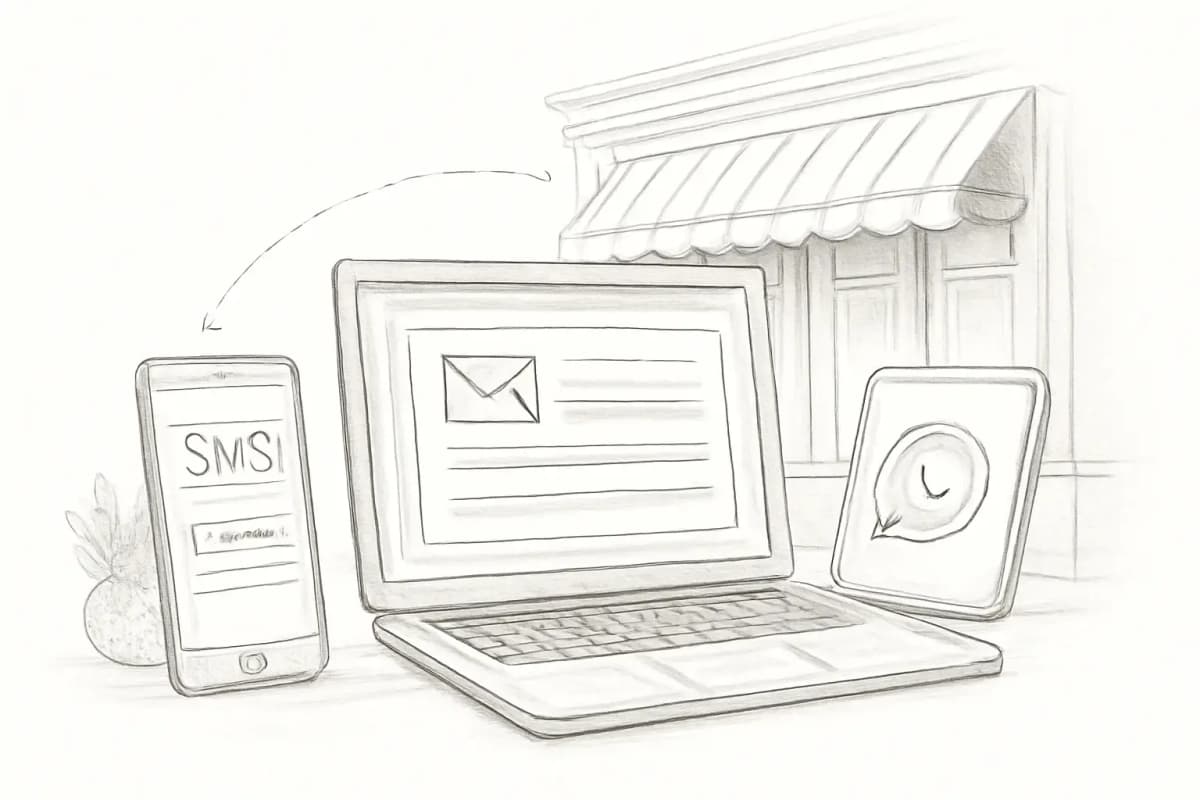
Email remains the primary channel for structured communication, SMS is increasingly used for real-time, high-intent outreach, and WhatsApp adoption began accelerating in late 2025 as retailers expanded into more conversational customer engagement.
WhatsApp's momentum in retail is backed by platform-level data. In the Braze 2024 Global Customer Engagement Review, marketers identified messaging apps like WhatsApp as the number one channel they plan to use, with the platform driving 72% higher sessions per user compared to other marketing channels. For brands already running email and SMS, adding WhatsApp creates a meaningful engagement layer rather than a redundant touchpoint.
Endear supports more than 2,000 stores across 19 countries, powering clienteling and relationship-driven selling for brands including Reformation, AG Jeans, and Boll & Branch.
Why Personalization Compounds Over Time
The ROI case for moving away from blast campaigns is now well-established. AI-driven personalization leads to stronger customer retention, with 60% of consumers becoming repeat buyers after personalized experiences, and customers receiving preference-based personalization showing 33% higher lifetime value than those receiving generic experiences, according to data cited by Envive.ai.
Acquiring new customers costs 5 to 25 times more than retaining existing ones, and a 5% increase in retention can boost profits by 25 to 95%, according to Anchor Group. That economics make the case for relationship-based messaging even before factoring in the open rate lift.
Clienteling is not mass marketing. When customers receive a message from a real person they have met in-store rather than a faceless brand email, they respond dramatically better, 36 times better according to Endear's 2025 Clienteling Benchmarks.
What This Means for Your Email Strategy
The Endear data maps directly to three decisions retail marketers and growth teams should revisit now:
Calendar planning. If your highest-volume months are Q4 and your Q1 engagement is low, you have a February opportunity that is going largely untapped.
Audience focus. The 50% year-over-year increase in personalized messaging is concentrated on existing customers, not net-new acquisition. The performance gains come from treating the current customer base as an ongoing relationship, not a one-time transaction.
Channel mix. Cross-channel personalization that aligns email, push, in-app, and SMS to the same outcome produces bigger gains in retention and lifetime value than individual channel metrics suggest, per data compiled by involve.me.
The shift Endear is documenting is not a trend in tactics. It is a change in how retail brands understand the function of messaging itself: from periodic broadcast to continuous, behavior-driven conversation. For marketers still optimizing around November send volume, the gap is growing.
February Outperforms November on Opens
The February open rate finding challenges a core assumption in retail email planning. The average email open rate across all industries was 43.46% in 2025 according to MailerLite benchmarks. Endear's reported 56.1% for February sits well above that figure, pointing to the compounding effect of personalization on engagement rather than seasonal intent alone.
Research from MoEngage supports this direction: behavior-based emails have open rates as high as 42.36%, while broadcast emails see only between 14.5% and 26.9% opens, and in retail specifically, open rates are higher when emails are tailored to the customer journey rather than sent generically.
For email marketers, the implication is direct. Personalized emails achieve an average open rate of 29% and a click-through rate of 41%, according to data compiled by DemandSage, versus far lower figures for mass sends. Pair that with the post-holiday re-engagement window in February, when inboxes are quieter and customers are receptive, and the timing advantage becomes clear.
Multi-Channel Messaging Becomes the Norm
Email remains the primary channel for structured communication, SMS is increasingly used for real-time, high-intent outreach, and WhatsApp adoption began accelerating in late 2025 as retailers expanded into more conversational customer engagement.
WhatsApp's momentum in retail is backed by platform-level data. In the Braze 2024 Global Customer Engagement Review, marketers identified messaging apps like WhatsApp as the number one channel they plan to use, with the platform driving 72% higher sessions per user compared to other marketing channels. For brands already running email and SMS, adding WhatsApp creates a meaningful engagement layer rather than a redundant touchpoint.
Endear supports more than 2,000 stores across 19 countries, powering clienteling and relationship-driven selling for brands including Reformation, AG Jeans, and Boll & Branch.
Why Personalization Compounds Over Time
The ROI case for moving away from blast campaigns is now well-established. AI-driven personalization leads to stronger customer retention, with 60% of consumers becoming repeat buyers after personalized experiences, and customers receiving preference-based personalization showing 33% higher lifetime value than those receiving generic experiences, according to data cited by Envive.ai.
Acquiring new customers costs 5 to 25 times more than retaining existing ones, and a 5% increase in retention can boost profits by 25 to 95%, according to Anchor Group. That economics make the case for relationship-based messaging even before factoring in the open rate lift.
Clienteling is not mass marketing. When customers receive a message from a real person they have met in-store rather than a faceless brand email, they respond dramatically better, 36 times better according to Endear's 2025 Clienteling Benchmarks.
What This Means for Your Email Strategy
The Endear data maps directly to three decisions retail marketers and growth teams should revisit now:
Calendar planning. If your highest-volume months are Q4 and your Q1 engagement is low, you have a February opportunity that is going largely untapped.
Audience focus. The 50% year-over-year increase in personalized messaging is concentrated on existing customers, not net-new acquisition. The performance gains come from treating the current customer base as an ongoing relationship, not a one-time transaction.
Channel mix. Cross-channel personalization that aligns email, push, in-app, and SMS to the same outcome produces bigger gains in retention and lifetime value than individual channel metrics suggest, per data compiled by involve.me.
The shift Endear is documenting is not a trend in tactics. It is a change in how retail brands understand the function of messaging itself: from periodic broadcast to continuous, behavior-driven conversation. For marketers still optimizing around November send volume, the gap is growing.