
Email
Email

A modern blog built with Payload CMS, Next.js, and shadcn/ui.

RSS FeedSitemap

Explore

  • Blog
  • News
  • Statistics
  • Authors

Categories

  • CRM & Email Marketing Tools
  • Email Analytics & Reporting
  • Email Security & Compliance
  • Email Automation
  • Email List Building
  • Seasonal & Holiday Email Marketing
  • Email Marketing Benchmarks & Statistics
  • Email Design & Personalization

Latest articles

  • Email Marketing Automation Software Comparison 2024Jul 20, 2026
  • Best Email Marketing Software for AutomationJul 20, 2026
  • Cybersecurity Email Marketing Automation GuideJul 20, 2026
  • Postscript SMS Email Marketing Automation ReviewsJul 20, 2026

Popular topics

  • #deliverability and segmentation
  • #beauty brand email strategy
  • #skincare email marketing
  • #Marketing
  • #email engagement metrics
  • #Content Generation
  • #Sales Efficiency
  • #Cyber Monday Trends
  • #Email Campaign Benchmarks
  • #Holiday Marketing Statistics
  • #BFCM Email Strategy
  • #Enterprise Email
  • #credit card marketing
  • #Business Software
  • #CRM Software
  • #MarTech

Stay in the loop

Join 2,000+ readers. Unsubscribe anytime.

Subscribe
Email

© 2026 Email. All rights reserved.

SitemapRSS
HomeBlogEmail Marketing StrategySan Diego Email Marketing: Strategy and Services
Email Marketing Strategy

San Diego Email Marketing: Strategy and Services

Learn how San Diego businesses use email marketing to grow revenue. Expert strategies, local insights, and ROI tips for your campaigns.

J

James Chen

April 21, 2026

12 min read
Share:
#San Diego#Email Marketing#local marketing#Email Strategy
Illustration for san diego email marketing

Stay in the loop

Get the latest posts delivered straight to your inbox. No spam, unsubscribe anytime.

San Diego businesses operate in one of the most competitive and economically diverse markets on the West Coast. With breakthrough technology companies and research organizations, the largest military concentration in the world, and a strong tourism industry, the San Diego region has one of the most dynamic economies in the country. For businesses here, whether a biotech startup in Sorrento Valley or a retail brand in the Gaslamp Quarter, san diego email marketing is one of the clearest paths to consistent, measurable revenue growth.

The case is straightforward. Email delivers an average return of between $36 and $42 for every $1 spent, which is higher than paid ads, social media ads, and SEO. No other digital channel matches that efficiency at scale. This guide covers what an effective email marketing strategy looks like for San Diego businesses, what to look for in a local service provider, and the tactical decisions that separate strong campaigns from forgettable ones.


Key Takeaways

  • For every $1 spent on email marketing, $36 is made in return, according to Litmus data. That equals a 3,600% ROI.
  • 81% of SMBs rely on email as their primary customer acquisition channel.
  • Major deliverability changes rolled out in February 2024: Google and Yahoo now require bulk senders of more than 5,000 daily emails to authenticate using DKIM, SPF, and DMARC.
  • Segmented email campaigns boost revenue by 760%.
  • Automated emails generate 320% more revenue than non-automated emails.

Why San Diego Businesses Need a Strong Email Strategy

San Diego is home to a thriving business community, from startups and creative firms to established enterprises. In such a competitive market, digital marketing is an absolute must for businesses to stand out and build lasting customer relationships.

That competitive pressure is real. The region's tech workforce has expanded to 78,860 professionals, with startups raising a record-setting $5.7 billion in venture capital in 2024. The tech talent workforce grew by 12.5% in just five years, making San Diego one of the fastest-growing markets for technology professionals in the United States. Every industry vertical in the city, including biotech, defense, hospitality, SaaS, and retail, competes hard for customer attention.

Email cuts through that noise because it goes directly to the inbox. Email remains one of the few marketing channels that businesses truly own. Unlike social platforms that rely on algorithms or advertising platforms that require ongoing spend, email allows companies to communicate directly with their audience.

Constant Contact's Small Business Now report reveals that in 2024, 53% of small business owners in the U.S., U.K., Canada, and Australia used email marketing as the most frequent strategy for finding new and retaining repeat customers.


San Diego's Industry Mix Shapes Email Strategy

The industries that define San Diego's economy each carry different email marketing requirements, audience expectations, and conversion goals.

With more than 3,100 software establishments and more than 100 research institutions in the region, the technology industry is a major driver of the innovation economy in San Diego. SaaS companies in this ecosystem typically use email for user onboarding, product education, and retention. If you run a SaaS business locally, read our full SaaS Email Marketing Strategy guide for sequences built around your customer lifecycle.

For biotech and life sciences firms, with over 1,400 life science companies, 71,448 direct jobs, and $54.1B in economic output in 2026, the cluster remains one of the nation's largest and most productive. These organizations often use email to nurture institutional relationships, share research updates, and support conference follow-up campaigns.

San Diego's tourism and hospitality sector, covering everything from craft breweries to high-end resorts in La Jolla, depends on email to drive bookings and repeat visits. Restaurants need campaigns that push reservations and loyalty. Retailers need abandoned cart recovery and seasonal promotions.

The point: the right san diego email marketing strategy depends entirely on your industry and your audience. Tactics that work for a biotech firm's investor newsletter will not work for a Mission Beach surf shop's weekly promo.


Core Email Strategy Components for San Diego Businesses

Regardless of industry, effective email programs share the same structural foundation.

List Building and Segmentation

Your list is your most valuable marketing asset. Building it correctly matters more than its size.

Statista found that 48% of consumers surveyed happily gave their email address to receive a discount. Lead magnets, gated content, and discount offers at checkout are all proven entry points. Once subscribers are on your list, segmentation unlocks significantly higher returns.

Segmented email campaigns boost revenue by 760%. That figure is not theoretical. It reflects what happens when you match the right message to the right person at the right stage of their customer journey. Our Email List Segmentation Strategies That Boost ROI by 760% guide walks through exactly how to structure this.

Personalization

71% of consumers expect personalized interactions from brands, and 76% get frustrated when their brand interactions aren't personalized to their interests. That makes personalization incredibly important to a great email marketing strategy.

For San Diego businesses competing in dense markets, generic batch-and-blast campaigns are a missed opportunity. Even basic personalization, like using a subscriber's name or tailoring content to their purchase history, produces measurable gains. Personalized subject lines alone can increase open rates by 20 to 26%.

Automation

Automated emails drive 37% of all email-generated sales, despite making up only 2% of email volume. Automation is not a luxury for large enterprises. A local restaurant can automate a birthday offer. A fitness studio can automate a re-engagement sequence for members who haven't booked a class in 30 days.

The most impactful automation sequences for most businesses are:

  1. Welcome series: Sets expectations and builds early trust. See our Welcome Email Sequence Best Practices for a framework.
  2. Abandoned cart recovery: Abandoned cart email campaigns have an open rate of 50.50%, according to a 2024 email marketing report from Klaviyo. Businesses also earn an average of $3.45 in revenue per abandoned cart email recipient.
  3. Post-purchase sequences: Drive reviews, referrals, and repeat purchases.
  4. Re-engagement campaigns: Win back dormant subscribers before removing them from your list.

Subject Lines

88% of email users check their inbox multiple times a day. Your subject line determines whether that check results in an open or an ignore. Strong subject lines are specific, create curiosity without being misleading, and match the content inside. Our Email Subject Line Best Practices That Boost Open Rates by 27% covers the techniques that actually move the metric.


Deliverability: What San Diego Senders Must Know in 2025

High-quality content means nothing if it lands in the spam folder. Deliverability has become more technically demanding in the past two years, and San Diego businesses using email at any meaningful volume need to take it seriously.

Big changes rolled out to the email industry in February 2024: Google and Yahoo required mass senders to abide by a series of new rules. If you send more than 5,000 daily emails to Google and Yahoo addresses, you must authenticate your emails using security protocols like DKIM, SPF, and DMARC. Allow people to unsubscribe by clicking just one link, and honor unsubscribes within two days. Maintain a spam complaint rate under 0.3%.

In May 2025, Microsoft joined the movement, applying similar standards across Outlook and O365.

The practical implications for San Diego senders:

  • Authentication is non-negotiable. Set up SPF, DKIM, and DMARC records correctly. Without them, your emails will be blocked or filtered at scale.
  • List hygiene protects your sender reputation. The average deliverability rate sits at 85% in 2024, heavily influenced by authentication protocols like DMARC, SPF, and DKIM. Brands that implement proper authentication see deliverability rates above 90%.
  • Spam complaint rate is a hard limit. Your spam complaint rate must stay under 0.3%. If more than 3 users out of every 1,000 mark your email as spam, you're in trouble. The safe zone is under 0.1%, and the danger zone is 0.3% or higher, which triggers delivery throttling.
  • One-click unsubscribe is required. Gmail and Yahoo now require a one-click unsubscribe link in the header of marketing emails. It must be processed within 48 hours.

These rules apply regardless of whether you manage campaigns in-house or work with a san diego email marketing agency. The technical setup is your responsibility.


Choosing a San Diego Email Marketing Service or Agency

San Diego is home to over 700 digital marketing agencies, offering a wide range of services to help businesses enhance their online presence. Not all of them treat email as a core competency. When evaluating a partner for san diego email marketing, apply these filters.

What to look for:

  • Proven work in your specific industry vertical (SaaS, ecommerce, hospitality, B2B)
  • Clear reporting on deliverability metrics, not just open rates
  • Capability across strategy, copywriting, design, and technical setup
  • Transparent pricing with documented scope
  • References or case studies from San Diego-based or comparable clients

Questions to ask:

  1. How do you handle email authentication and deliverability monitoring?
  2. How do you segment lists, and how frequently do you clean inactive subscribers?
  3. What does your reporting include beyond open and click rates?
  4. Do you build automation flows or only manage broadcast sends?
  5. How do you approach A/B testing?

Working with a local agency gives you insider knowledge of the San Diego market, making your campaigns resonate more with local audiences. That local context matters when crafting campaigns tied to regional events, seasonal patterns specific to Southern California, or messaging aligned with the culture of different neighborhoods and demographics across the city.

Notable agencies operating in the San Diego space include Power Digital Marketing, Ignite Visibility, and Thrive Internet Marketing Agency, all of which list email marketing among their core services.


In-House vs. Agency: What Makes Sense for Your Business

The decision to manage san diego email marketing internally or outsource it depends on volume, budget, and internal capability.

In-house makes sense when:

  • You have a dedicated marketing team with email expertise
  • Your campaigns require deep product or brand knowledge that takes time to transfer
  • You send at low-to-moderate volume with straightforward automation needs

Agency or freelance support makes sense when:

  • You lack the technical skills for deliverability setup and monitoring
  • Campaign quality is inconsistent and open rates are declining
  • You want to scale quickly without hiring full-time staff

A hybrid model works well for many San Diego businesses: handle content creation and list management in-house, and bring in specialist support for deliverability audits, automation architecture, and quarterly strategy reviews.

According to research conducted in 2024, 73% of SMBs surveyed lacked confidence in their marketing strategies. If you identify with that figure, external expertise can provide both a structural foundation and the accountability to act on what the data shows.


Measuring What Matters

Privacy changes from major inbox providers, new deliverability rules from companies like Google and Yahoo, and the rise of artificial intelligence are reshaping how marketers design, send, and measure campaigns. Traditional metrics like open rates are becoming less reliable, while personalization, automation, and deliverability are becoming more important than ever.

The metrics that consistently correlate with revenue outcomes are:

  • Click-to-open rate (CTOR): Measures content relevance, independent of open rate inflation caused by Apple Mail Privacy Protection
  • Conversion rate: The percentage of recipients who complete the target action
  • Revenue per email sent: Tracks direct commercial impact
  • List growth rate: Monitors whether your acquisition is outpacing churn
  • Spam complaint rate and bounce rate: Indicators of list health and deliverability standing

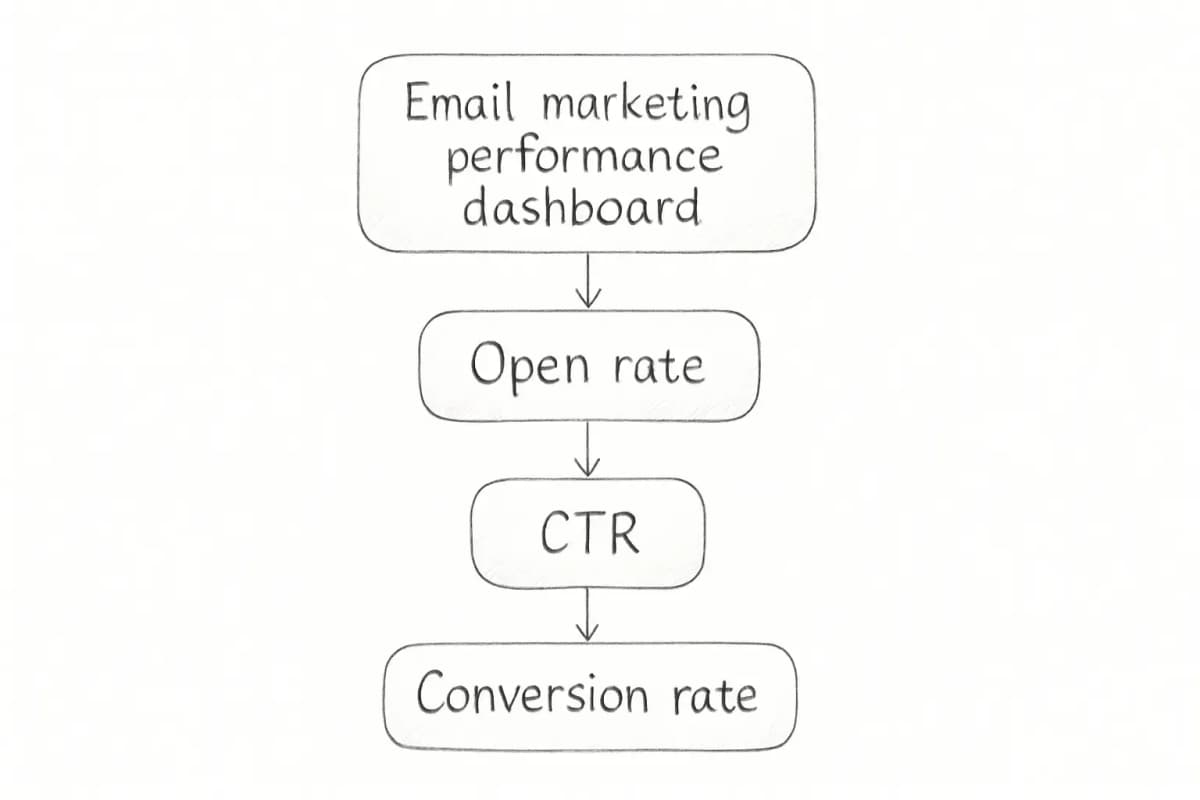
Email marketing remains the most reliable high-ROI digital channel in 2024 to 2026, but averages only tell part of the story. The biggest gains come from automation, personalization, deliverability discipline, and realistic attribution, not from sending more emails. Email marketing performance dashboard showing open rate, CTR, and conversion rate metrics

Frequently Asked Questions

What is a realistic email marketing ROI for San Diego businesses?

According to data from Forbes, the average ROI for email marketing has climbed to $42 for every $1 spent in 2025, up from $40 in previous years. Actual returns vary significantly by industry, list quality, and how well campaigns are personalized and automated. Businesses that invest in segmentation and triggered flows consistently outperform those sending undifferentiated broadcast campaigns.

How do I find a good email marketing agency in San Diego?

Start by narrowing candidates to agencies with documented email-specific experience, not just agencies that list email as one of twenty services. The challenge isn't finding a digital marketing partner; it's identifying which agencies have the proven services, enterprise-grade expertise, and data-driven approaches necessary to scale your business sustainably. Ask for examples of campaigns in your industry, request data on deliverability rates they've achieved for clients, and verify that they understand current Gmail and Yahoo sender requirements before signing any contract.

What email authentication do I need to set up in 2025?

If you send more than 5,000 daily emails to Google and Yahoo addresses, you must authenticate your emails using security protocols like DKIM, SPF, and DMARC. Even at lower volumes, setting up these records protects your sender reputation and improves inbox placement. DMARC without proper DKIM alignment will still fail Google's bulk sender requirements, so all three protocols need to be correctly configured.

How often should San Diego businesses send marketing emails?

There is no universal answer, but frequency should be driven by subscriber engagement data, not arbitrary calendars. Receiving too many emails is one of the most common reasons users unsubscribe from mailing lists. A good starting point is one to two emails per week for most consumer brands, with frequency adjusted based on segment behavior. Monitor unsubscribe rates and spam complaints closely whenever you increase send frequency, and always give subscribers control through preference centers.


No comments yet. Be the first!

Leave a comment

Comments are reviewed before publishing.

More from

Related posts

Illustration for cybersecurity email marketing automation
Email Marketing StrategyJul 20, 2026 14 min

Cybersecurity Email Marketing Automation Guide

Learn how to automate email marketing securely without compromising data protection. Best practices, tools, and strategies to reduce risk while scaling campaigns.

JJames Chen
Illustration for email marketing automation comparison
Email Marketing StrategyJul 20, 2026 14 min

Email Marketing Automation Comparison: 2024

Compare top email automation platforms. See pricing, features, deliverability, and ease of use to find the right tool for your business needs.

SSarah Mitchell
Illustration for machine learning and email marketing
Email Marketing StrategyJul 20, 2026 15 min

Machine Learning in Email Marketing: Complete Guide

Learn how machine learning improves email marketing through personalization, send time optimization, and predictive analytics. Boost engagement and ROI today.

RRachel Torres
HomeBlogEmail Marketing StrategySan Diego Email Marketing: Strategy and Services
Email Marketing Strategy

San Diego Email Marketing: Strategy and Services

Learn how San Diego businesses use email marketing to grow revenue. Expert strategies, local insights, and ROI tips for your campaigns.

J

James Chen

April 21, 2026

12 min read
Share:
#San Diego#Email Marketing#local marketing#Email Strategy
Illustration for san diego email marketing

Stay in the loop

Get the latest posts delivered straight to your inbox. No spam, unsubscribe anytime.

San Diego businesses operate in one of the most competitive and economically diverse markets on the West Coast. With breakthrough technology companies and research organizations, the largest military concentration in the world, and a strong tourism industry, the San Diego region has one of the most dynamic economies in the country. For businesses here, whether a biotech startup in Sorrento Valley or a retail brand in the Gaslamp Quarter, san diego email marketing is one of the clearest paths to consistent, measurable revenue growth.

The case is straightforward. Email delivers an average return of between $36 and $42 for every $1 spent, which is higher than paid ads, social media ads, and SEO. No other digital channel matches that efficiency at scale. This guide covers what an effective email marketing strategy looks like for San Diego businesses, what to look for in a local service provider, and the tactical decisions that separate strong campaigns from forgettable ones.


Key Takeaways

  • For every $1 spent on email marketing, $36 is made in return, according to Litmus data. That equals a 3,600% ROI.
  • 81% of SMBs rely on email as their primary customer acquisition channel.
  • Major deliverability changes rolled out in February 2024: Google and Yahoo now require bulk senders of more than 5,000 daily emails to authenticate using DKIM, SPF, and DMARC.
  • Segmented email campaigns boost revenue by 760%.
  • Automated emails generate 320% more revenue than non-automated emails.

Why San Diego Businesses Need a Strong Email Strategy

San Diego is home to a thriving business community, from startups and creative firms to established enterprises. In such a competitive market, digital marketing is an absolute must for businesses to stand out and build lasting customer relationships.

That competitive pressure is real. The region's tech workforce has expanded to 78,860 professionals, with startups raising a record-setting $5.7 billion in venture capital in 2024. The tech talent workforce grew by 12.5% in just five years, making San Diego one of the fastest-growing markets for technology professionals in the United States. Every industry vertical in the city, including biotech, defense, hospitality, SaaS, and retail, competes hard for customer attention.

Email cuts through that noise because it goes directly to the inbox. Email remains one of the few marketing channels that businesses truly own. Unlike social platforms that rely on algorithms or advertising platforms that require ongoing spend, email allows companies to communicate directly with their audience.

Constant Contact's Small Business Now report reveals that in 2024, 53% of small business owners in the U.S., U.K., Canada, and Australia used email marketing as the most frequent strategy for finding new and retaining repeat customers.


San Diego's Industry Mix Shapes Email Strategy

The industries that define San Diego's economy each carry different email marketing requirements, audience expectations, and conversion goals.

With more than 3,100 software establishments and more than 100 research institutions in the region, the technology industry is a major driver of the innovation economy in San Diego. SaaS companies in this ecosystem typically use email for user onboarding, product education, and retention. If you run a SaaS business locally, read our full SaaS Email Marketing Strategy guide for sequences built around your customer lifecycle.

For biotech and life sciences firms, with over 1,400 life science companies, 71,448 direct jobs, and $54.1B in economic output in 2026, the cluster remains one of the nation's largest and most productive. These organizations often use email to nurture institutional relationships, share research updates, and support conference follow-up campaigns.

San Diego's tourism and hospitality sector, covering everything from craft breweries to high-end resorts in La Jolla, depends on email to drive bookings and repeat visits. Restaurants need campaigns that push reservations and loyalty. Retailers need abandoned cart recovery and seasonal promotions.

The point: the right san diego email marketing strategy depends entirely on your industry and your audience. Tactics that work for a biotech firm's investor newsletter will not work for a Mission Beach surf shop's weekly promo.


Core Email Strategy Components for San Diego Businesses

Regardless of industry, effective email programs share the same structural foundation.

List Building and Segmentation

Your list is your most valuable marketing asset. Building it correctly matters more than its size.

Statista found that 48% of consumers surveyed happily gave their email address to receive a discount. Lead magnets, gated content, and discount offers at checkout are all proven entry points. Once subscribers are on your list, segmentation unlocks significantly higher returns.

Segmented email campaigns boost revenue by 760%. That figure is not theoretical. It reflects what happens when you match the right message to the right person at the right stage of their customer journey. Our Email List Segmentation Strategies That Boost ROI by 760% guide walks through exactly how to structure this.

Personalization

71% of consumers expect personalized interactions from brands, and 76% get frustrated when their brand interactions aren't personalized to their interests. That makes personalization incredibly important to a great email marketing strategy.

For San Diego businesses competing in dense markets, generic batch-and-blast campaigns are a missed opportunity. Even basic personalization, like using a subscriber's name or tailoring content to their purchase history, produces measurable gains. Personalized subject lines alone can increase open rates by 20 to 26%.

Automation

Automated emails drive 37% of all email-generated sales, despite making up only 2% of email volume. Automation is not a luxury for large enterprises. A local restaurant can automate a birthday offer. A fitness studio can automate a re-engagement sequence for members who haven't booked a class in 30 days.

The most impactful automation sequences for most businesses are:

  1. Welcome series: Sets expectations and builds early trust. See our Welcome Email Sequence Best Practices for a framework.
  2. Abandoned cart recovery: Abandoned cart email campaigns have an open rate of 50.50%, according to a 2024 email marketing report from Klaviyo. Businesses also earn an average of $3.45 in revenue per abandoned cart email recipient.
  3. Post-purchase sequences: Drive reviews, referrals, and repeat purchases.
  4. Re-engagement campaigns: Win back dormant subscribers before removing them from your list.

Subject Lines

88% of email users check their inbox multiple times a day. Your subject line determines whether that check results in an open or an ignore. Strong subject lines are specific, create curiosity without being misleading, and match the content inside. Our Email Subject Line Best Practices That Boost Open Rates by 27% covers the techniques that actually move the metric.


Deliverability: What San Diego Senders Must Know in 2025

High-quality content means nothing if it lands in the spam folder. Deliverability has become more technically demanding in the past two years, and San Diego businesses using email at any meaningful volume need to take it seriously.

Big changes rolled out to the email industry in February 2024: Google and Yahoo required mass senders to abide by a series of new rules. If you send more than 5,000 daily emails to Google and Yahoo addresses, you must authenticate your emails using security protocols like DKIM, SPF, and DMARC. Allow people to unsubscribe by clicking just one link, and honor unsubscribes within two days. Maintain a spam complaint rate under 0.3%.

In May 2025, Microsoft joined the movement, applying similar standards across Outlook and O365.

The practical implications for San Diego senders:

  • Authentication is non-negotiable. Set up SPF, DKIM, and DMARC records correctly. Without them, your emails will be blocked or filtered at scale.
  • List hygiene protects your sender reputation. The average deliverability rate sits at 85% in 2024, heavily influenced by authentication protocols like DMARC, SPF, and DKIM. Brands that implement proper authentication see deliverability rates above 90%.
  • Spam complaint rate is a hard limit. Your spam complaint rate must stay under 0.3%. If more than 3 users out of every 1,000 mark your email as spam, you're in trouble. The safe zone is under 0.1%, and the danger zone is 0.3% or higher, which triggers delivery throttling.
  • One-click unsubscribe is required. Gmail and Yahoo now require a one-click unsubscribe link in the header of marketing emails. It must be processed within 48 hours.

These rules apply regardless of whether you manage campaigns in-house or work with a san diego email marketing agency. The technical setup is your responsibility.


Choosing a San Diego Email Marketing Service or Agency

San Diego is home to over 700 digital marketing agencies, offering a wide range of services to help businesses enhance their online presence. Not all of them treat email as a core competency. When evaluating a partner for san diego email marketing, apply these filters.

What to look for:

  • Proven work in your specific industry vertical (SaaS, ecommerce, hospitality, B2B)
  • Clear reporting on deliverability metrics, not just open rates
  • Capability across strategy, copywriting, design, and technical setup
  • Transparent pricing with documented scope
  • References or case studies from San Diego-based or comparable clients

Questions to ask:

  1. How do you handle email authentication and deliverability monitoring?
  2. How do you segment lists, and how frequently do you clean inactive subscribers?
  3. What does your reporting include beyond open and click rates?
  4. Do you build automation flows or only manage broadcast sends?
  5. How do you approach A/B testing?

Working with a local agency gives you insider knowledge of the San Diego market, making your campaigns resonate more with local audiences. That local context matters when crafting campaigns tied to regional events, seasonal patterns specific to Southern California, or messaging aligned with the culture of different neighborhoods and demographics across the city.

Notable agencies operating in the San Diego space include Power Digital Marketing, Ignite Visibility, and Thrive Internet Marketing Agency, all of which list email marketing among their core services.


In-House vs. Agency: What Makes Sense for Your Business

The decision to manage san diego email marketing internally or outsource it depends on volume, budget, and internal capability.

In-house makes sense when:

  • You have a dedicated marketing team with email expertise
  • Your campaigns require deep product or brand knowledge that takes time to transfer
  • You send at low-to-moderate volume with straightforward automation needs

Agency or freelance support makes sense when:

  • You lack the technical skills for deliverability setup and monitoring
  • Campaign quality is inconsistent and open rates are declining
  • You want to scale quickly without hiring full-time staff

A hybrid model works well for many San Diego businesses: handle content creation and list management in-house, and bring in specialist support for deliverability audits, automation architecture, and quarterly strategy reviews.

According to research conducted in 2024, 73% of SMBs surveyed lacked confidence in their marketing strategies. If you identify with that figure, external expertise can provide both a structural foundation and the accountability to act on what the data shows.


Measuring What Matters

Privacy changes from major inbox providers, new deliverability rules from companies like Google and Yahoo, and the rise of artificial intelligence are reshaping how marketers design, send, and measure campaigns. Traditional metrics like open rates are becoming less reliable, while personalization, automation, and deliverability are becoming more important than ever.

The metrics that consistently correlate with revenue outcomes are:

  • Click-to-open rate (CTOR): Measures content relevance, independent of open rate inflation caused by Apple Mail Privacy Protection
  • Conversion rate: The percentage of recipients who complete the target action
  • Revenue per email sent: Tracks direct commercial impact
  • List growth rate: Monitors whether your acquisition is outpacing churn
  • Spam complaint rate and bounce rate: Indicators of list health and deliverability standing

Email marketing remains the most reliable high-ROI digital channel in 2024 to 2026, but averages only tell part of the story. The biggest gains come from automation, personalization, deliverability discipline, and realistic attribution, not from sending more emails. Email marketing performance dashboard showing open rate, CTR, and conversion rate metrics


Frequently Asked Questions

What is a realistic email marketing ROI for San Diego businesses?

According to data from Forbes, the average ROI for email marketing has climbed to $42 for every $1 spent in 2025, up from $40 in previous years. Actual returns vary significantly by industry, list quality, and how well campaigns are personalized and automated. Businesses that invest in segmentation and triggered flows consistently outperform those sending undifferentiated broadcast campaigns.

How do I find a good email marketing agency in San Diego?

Start by narrowing candidates to agencies with documented email-specific experience, not just agencies that list email as one of twenty services. The challenge isn't finding a digital marketing partner; it's identifying which agencies have the proven services, enterprise-grade expertise, and data-driven approaches necessary to scale your business sustainably. Ask for examples of campaigns in your industry, request data on deliverability rates they've achieved for clients, and verify that they understand current Gmail and Yahoo sender requirements before signing any contract.

What email authentication do I need to set up in 2025?

If you send more than 5,000 daily emails to Google and Yahoo addresses, you must authenticate your emails using security protocols like DKIM, SPF, and DMARC. Even at lower volumes, setting up these records protects your sender reputation and improves inbox placement. DMARC without proper DKIM alignment will still fail Google's bulk sender requirements, so all three protocols need to be correctly configured.

How often should San Diego businesses send marketing emails?

There is no universal answer, but frequency should be driven by subscriber engagement data, not arbitrary calendars. Receiving too many emails is one of the most common reasons users unsubscribe from mailing lists. A good starting point is one to two emails per week for most consumer brands, with frequency adjusted based on segment behavior. Monitor unsubscribe rates and spam complaints closely whenever you increase send frequency, and always give subscribers control through preference centers.

No comments yet. Be the first!

Leave a comment

Comments are reviewed before publishing.

More from

Related posts

Illustration for cybersecurity email marketing automation
Email Marketing StrategyJul 20, 2026 14 min

Cybersecurity Email Marketing Automation Guide

Learn how to automate email marketing securely without compromising data protection. Best practices, tools, and strategies to reduce risk while scaling campaigns.

JJames Chen
Illustration for email marketing automation comparison
Email Marketing StrategyJul 20, 2026 14 min

Email Marketing Automation Comparison: 2024

Compare top email automation platforms. See pricing, features, deliverability, and ease of use to find the right tool for your business needs.

SSarah Mitchell
Illustration for machine learning and email marketing
Email Marketing StrategyJul 20, 2026 15 min

Machine Learning in Email Marketing: Complete Guide

Learn how machine learning improves email marketing through personalization, send time optimization, and predictive analytics. Boost engagement and ROI today.

RRachel Torres