
HomeBlogEmail Marketing Tools & PlatformsMonkey Email Marketing: Mailchimp Alternatives Explained
Email Marketing Tools & Platforms

Monkey Email Marketing: Mailchimp Alternatives Explained

Explore monkey email marketing platforms and Mailchimp alternatives. Compare features, pricing, and deliverability to find the right tool for your campaigns.

P

Priya Kapoor

April 8, 2026

HomeBlogEmail Marketing Tools & PlatformsMonkey Email Marketing: Mailchimp Alternatives Explained
Email Marketing Tools & Platforms

Monkey Email Marketing: Mailchimp Alternatives Explained

Explore monkey email marketing platforms and Mailchimp alternatives. Compare features, pricing, and deliverability to find the right tool for your campaigns.

P

Priya Kapoor

April 8, 2026

11 min read
11 min read
Share:
Share:
#Email Marketing Platforms#Mailchimp Alternatives#Email Campaign Software
Illustration for monkey email marketing

Stay in the loop

Get the latest posts delivered straight to your inbox. No spam, unsubscribe anytime.

When people search for "monkey email marketing," they're almost always looking for information about Mailchimp: the platform named after a chimpanzee, built around a monkey mascot called Freddie, and still the most searched email marketing tool on the internet. The name began as a playful metaphor: a chimp who delivers your mail. Today, that monkey represents a platform used by millions of businesses, and the question most of them eventually ask is: is it still the right tool?

This guide explains what Mailchimp is, where it falls short, and which alternatives are worth your time.

Key Takeaways

  • Mailchimp is the "monkey email marketing" platform millions associate with getting started in email, but significant pricing and deliverability gaps have pushed many businesses to look elsewhere.
  • Email marketing delivers an average return of $36 for every $1 spent, a 3,600% ROI, making your choice of platform a high-stakes decision.
  • Mailchimp cut its free plan from 2,000 contacts and 10,000 sends down to 500 contacts and 1,000 sends in early 2025.
  • In independent testing of 65,267 emails, Mailchimp delivered just 78.35% to the inbox, with 20.03% landing in spam.
  • Brevo, MailerLite, and ActiveCampaign are the three strongest alternatives for most business sizes in 2026.

What "Monkey Email Marketing" Actually Means

The phrase "monkey email marketing" is shorthand for Mailchimp, and it has been ever since the platform launched in 2001. Mailchimp was founded by Ben Chestnut and Mark Armstrong in 2001. There was a chimp on one of the greeting cards from Chestnut's previous company, and he decided to make that chimp the iconic image of what we now know as Mailchimp.

The monkey mascot, named Freddie, became one of the most recognizable symbols in SaaS. In this context, the email marketing service is presented as a letter delivery service and the monkey as its friendly courier. The Freddie icon has been the main sign of the company since 2013.

Intuit eventually bought Mailchimp for $12 billion. That acquisition reshaped the platform's pricing strategy and feature roadmap, and not entirely for the better.


Mailchimp's Current Pricing: What You Actually Pay

Stay in the loop

Get the latest posts delivered straight to your inbox. No spam, unsubscribe anytime.

When people search for "monkey email marketing," they're almost always looking for information about Mailchimp: the platform named after a chimpanzee, built around a monkey mascot called Freddie, and still the most searched email marketing tool on the internet. The name began as a playful metaphor: a chimp who delivers your mail. Today, that monkey represents a platform used by millions of businesses, and the question most of them eventually ask is: is it still the right tool?

This guide explains what Mailchimp is, where it falls short, and which alternatives are worth your time.

Key Takeaways

  • Mailchimp is the "monkey email marketing" platform millions associate with getting started in email, but significant pricing and deliverability gaps have pushed many businesses to look elsewhere.
  • Email marketing delivers an average return of $36 for every $1 spent, a 3,600% ROI, making your choice of platform a high-stakes decision.
  • Mailchimp cut its free plan from 2,000 contacts and 10,000 sends down to 500 contacts and 1,000 sends in early 2025.
  • In independent testing of 65,267 emails, Mailchimp delivered just 78.35% to the inbox, with 20.03% landing in spam.
  • Brevo, MailerLite, and ActiveCampaign are the three strongest alternatives for most business sizes in 2026.

What "Monkey Email Marketing" Actually Means

The phrase "monkey email marketing" is shorthand for Mailchimp, and it has been ever since the platform launched in 2001. Mailchimp was founded by Ben Chestnut and Mark Armstrong in 2001. There was a chimp on one of the greeting cards from Chestnut's previous company, and he decided to make that chimp the iconic image of what we now know as Mailchimp.

The monkey mascot, named Freddie, became one of the most recognizable symbols in SaaS. In this context, the email marketing service is presented as a letter delivery service and the monkey as its friendly courier. The Freddie icon has been the main sign of the company since 2013.

Intuit eventually bought Mailchimp for $12 billion. That acquisition reshaped the platform's pricing strategy and feature roadmap, and not entirely for the better.


Mailchimp's Current Pricing: What You Actually Pay

Mailchimp's monthly costs are structured across four main plans: Free, Essentials, Standard, and Premium. The paid plans begin at $13 per month for up to 500 contacts and can reach $1,600 per month, with custom pricing options available.

Here is how the tiers break down:

  • Free: Up to 500 contacts, 1,000 sends per month, no automation, no A/B testing
  • Essentials: Starts at $13/month for 500 contacts, up to 50,000 contacts
  • Standard: Starts at $20/month for 500 contacts, up to 100,000 contacts
  • Premium: Starts at $350 per month for 10,000 contacts.

The headline prices only tell part of the story. Between inactive contact billing, duplicates, overage charges, and paid add-ons for SMS and transactional email, actual monthly spend commonly runs 20-40% above the listed plan price.

Mailchimp's new pricing structure has introduced stricter email sending limits and a steeper price tag. Users are now charged even for unsubscribed contacts. This means businesses with messy lists pay a real penalty before they even send a single campaign.


The Deliverability Problem Most People Ignore

The email marketing monkey brand built its reputation on simplicity. But simplicity has a cost at scale.

In independent testing of 65,267 emails, Mailchimp delivered just 78.35% to the inbox. Another 20.03% landed in spam. The remaining 2.09% vanished entirely. That's not catastrophic, but it's worse than most competitors.

The core infrastructure issue is shared IP addresses. Mailchimp runs most senders on shared IP addresses. If another sender on your IP buys a list or blasts spam, their behavior tanks the IP's reputation and your emails go down with it.

The absence of a centralized dashboard, spam complaint data, built-in list validation, or direct access to deliverability specialists means that users are often left without the insights needed to troubleshoot issues or improve performance over time.

For businesses where email marketing send performance is critical, this gap matters. The fix on Mailchimp is a dedicated IP, but it is limited to high-volume senders and comes with an extra fee.

Pairing your email platform with strong list hygiene practices helps significantly. See our guide to Email List Segmentation Strategies That Boost ROI by 760% for the foundational approach.


Why Businesses Are Moving Away From the Email Marketing Chimp

Mailchimp's monthly costs are structured across four main plans: Free, Essentials, Standard, and Premium. The paid plans begin at $13 per month for up to 500 contacts and can reach $1,600 per month, with custom pricing options available.

Here is how the tiers break down:

  • Free: Up to 500 contacts, 1,000 sends per month, no automation, no A/B testing
  • Essentials: Starts at $13/month for 500 contacts, up to 50,000 contacts
  • Standard: Starts at $20/month for 500 contacts, up to 100,000 contacts
  • Premium: Starts at $350 per month for 10,000 contacts.

The headline prices only tell part of the story. Between inactive contact billing, duplicates, overage charges, and paid add-ons for SMS and transactional email, actual monthly spend commonly runs 20-40% above the listed plan price.

Mailchimp's new pricing structure has introduced stricter email sending limits and a steeper price tag. Users are now charged even for unsubscribed contacts. This means businesses with messy lists pay a real penalty before they even send a single campaign.


The Deliverability Problem Most People Ignore

The email marketing monkey brand built its reputation on simplicity. But simplicity has a cost at scale.

In independent testing of 65,267 emails, Mailchimp delivered just 78.35% to the inbox. Another 20.03% landed in spam. The remaining 2.09% vanished entirely. That's not catastrophic, but it's worse than most competitors.

The core infrastructure issue is shared IP addresses. Mailchimp runs most senders on shared IP addresses. If another sender on your IP buys a list or blasts spam, their behavior tanks the IP's reputation and your emails go down with it.

The absence of a centralized dashboard, spam complaint data, built-in list validation, or direct access to deliverability specialists means that users are often left without the insights needed to troubleshoot issues or improve performance over time.

For businesses where email marketing send performance is critical, this gap matters. The fix on Mailchimp is a dedicated IP, but it is limited to high-volume senders and comes with an extra fee.

Pairing your email platform with strong list hygiene practices helps significantly. See our guide to Email List Segmentation Strategies That Boost ROI by 760% for the foundational approach.


Why Businesses Are Moving Away From the Email Marketing Chimp

After analyzing hundreds of reviews from G2, Capterra, Trustpilot, Reddit, and other sources, several recurring issues keep coming up: steep pricing increases where costs rise dramatically as contact lists grow, and limited automation capabilities where many users find Mailchimp's automation builder clunky and difficult to use.

The free plan erosion is particularly notable. Mailchimp's free plan was once one of the most generous in email marketing at 2,000 contacts and 12,000 monthly sends. That era is over. The free plan no longer includes email scheduling, automation workflows, A/B testing, custom-coded templates, dynamic content, transactional emails, SMS, or live chat support.

As the eCommerce landscape evolves, many brands hit a ceiling. What works for a smaller business does not always have the muscle for a growing online store. If you're feeling those growing pains including restrictive pricing, limited eCommerce features, or automation that just cannot keep up, you are not alone.


The Best Monkey Email Marketing Alternatives in 2026

When evaluating any alternative to the email marketing monkey platform, look for four things: transparent pricing, strong deliverability tools, flexible automation, and honest contact counting. Here are the top contenders.

Brevo (Best Overall Alternative)

Brevo stands out as the best overall alternative to Mailchimp because it combines advanced automation capabilities with multi-channel communication options in one platform.

Brevo offers 100,000 contacts for free, and while it is not as robust as a true CRM, you can use it like one if you want. Its segmentation options are impressive, and you can do transactional email on the free plan.

Brevo has also added Aura AI, its built-in AI marketing agent that generates subject lines and body copy, optimizes send times based on past engagement, and automates audience segmentation.

Best for: Businesses that want email, SMS, and WhatsApp in one platform at a lower price point.

MailerLite (Best for Simplicity and Fair Pricing)

Voted "Easiest to Use" email platform of 2025 by G2, MailerLite is intuitive and user-friendly. Starting at $10/month, you get unlimited sending, 100-step automations, unlimited landing pages, websites, and more.

The pricing model is notably fairer than Mailchimp's. MailerLite only charges for active subscribers, not unsubscribed or inactive contacts. Unlike Mailchimp, all paid plans for up to 50,000 subscribers include unlimited sending, so there are no surprise bills.

Best for: Small and mid-size businesses that want a clean, honest pricing structure without deliverability headaches.

ActiveCampaign (Best for Automation)

The marketing automation features in ActiveCampaign really set it apart. You can include SMS blocks and website messages as steps within your automated campaigns, which is not possible in Mailchimp. ActiveCampaign's automation map allows you to view multiple automated journeys on one map to see how they work together.

ActiveCampaign has gone deep on AI with its Active Intelligence suite. You can generate complete email campaigns including copy, images, layout, and automation from a single prompt.

Best for: Growth teams and businesses with complex sales funnels who need behavior-based automation that Mailchimp cannot match.

HubSpot (Best for Sales and Marketing Alignment)

After analyzing hundreds of reviews from G2, Capterra, Trustpilot, Reddit, and other sources, several recurring issues keep coming up: steep pricing increases where costs rise dramatically as contact lists grow, and limited automation capabilities where many users find Mailchimp's automation builder clunky and difficult to use.

The free plan erosion is particularly notable. Mailchimp's free plan was once one of the most generous in email marketing at 2,000 contacts and 12,000 monthly sends. That era is over. The free plan no longer includes email scheduling, automation workflows, A/B testing, custom-coded templates, dynamic content, transactional emails, SMS, or live chat support.

As the eCommerce landscape evolves, many brands hit a ceiling. What works for a smaller business does not always have the muscle for a growing online store. If you're feeling those growing pains including restrictive pricing, limited eCommerce features, or automation that just cannot keep up, you are not alone.


The Best Monkey Email Marketing Alternatives in 2026

When evaluating any alternative to the email marketing monkey platform, look for four things: transparent pricing, strong deliverability tools, flexible automation, and honest contact counting. Here are the top contenders.

Brevo (Best Overall Alternative)

Brevo stands out as the best overall alternative to Mailchimp because it combines advanced automation capabilities with multi-channel communication options in one platform.

Brevo offers 100,000 contacts for free, and while it is not as robust as a true CRM, you can use it like one if you want. Its segmentation options are impressive, and you can do transactional email on the free plan.

Brevo has also added Aura AI, its built-in AI marketing agent that generates subject lines and body copy, optimizes send times based on past engagement, and automates audience segmentation.

Best for: Businesses that want email, SMS, and WhatsApp in one platform at a lower price point.

MailerLite (Best for Simplicity and Fair Pricing)

Voted "Easiest to Use" email platform of 2025 by G2, MailerLite is intuitive and user-friendly. Starting at $10/month, you get unlimited sending, 100-step automations, unlimited landing pages, websites, and more.

The pricing model is notably fairer than Mailchimp's. MailerLite only charges for active subscribers, not unsubscribed or inactive contacts. Unlike Mailchimp, all paid plans for up to 50,000 subscribers include unlimited sending, so there are no surprise bills.

Best for: Small and mid-size businesses that want a clean, honest pricing structure without deliverability headaches.

ActiveCampaign (Best for Automation)

The marketing automation features in ActiveCampaign really set it apart. You can include SMS blocks and website messages as steps within your automated campaigns, which is not possible in Mailchimp. ActiveCampaign's automation map allows you to view multiple automated journeys on one map to see how they work together.

ActiveCampaign has gone deep on AI with its Active Intelligence suite. You can generate complete email campaigns including copy, images, layout, and automation from a single prompt.

Best for: Growth teams and businesses with complex sales funnels who need behavior-based automation that Mailchimp cannot match.

HubSpot (Best for Sales and Marketing Alignment)

Compared to Mailchimp, which is a pure email marketing service, HubSpot is an all-in-one platform combining email marketing, sales, operations, content management, and customer service. As such, it will be great if you have a complex sales funnel.

HubSpot's free plan includes 2,000 emails per month and unlimited subscribers. The trade-off is cost at scale, since advanced features sit behind significantly higher-priced tiers.

Best for: B2B companies that need CRM and email marketing tightly connected from day one.

GetResponse (Best All-in-One for eCommerce)

GetResponse offers a unified marketing platform that goes beyond email to include webinars, landing pages, and conversion funnels. Its comprehensive feature set and AI-driven content tools make it an attractive alternative for Mailchimp users seeking an all-in-one solution. It gives you access to email marketing, automation, landing pages, and webinars in a single platform without switching between tools.

Best for: Online retailers and course creators who want to run campaigns, sell products, and host webinars from one dashboard.


How to Choose the Right Platform

Your choice should depend on three factors: list size, automation complexity, and budget growth rate.

Business TypeRecommended Platform
Solopreneur or small newsletterMailerLite
Growing eCommerce brandBrevo or GetResponse
B2B with sales funnelActiveCampaign or HubSpot
Multi-channel marketerBrevo
Enterprise-level needsHubSpot or ActiveCampaign

Compared to Mailchimp, which is a pure email marketing service, HubSpot is an all-in-one platform combining email marketing, sales, operations, content management, and customer service. As such, it will be great if you have a complex sales funnel.

HubSpot's free plan includes 2,000 emails per month and unlimited subscribers. The trade-off is cost at scale, since advanced features sit behind significantly higher-priced tiers.

Best for: B2B companies that need CRM and email marketing tightly connected from day one.

GetResponse (Best All-in-One for eCommerce)

GetResponse offers a unified marketing platform that goes beyond email to include webinars, landing pages, and conversion funnels. Its comprehensive feature set and AI-driven content tools make it an attractive alternative for Mailchimp users seeking an all-in-one solution. It gives you access to email marketing, automation, landing pages, and webinars in a single platform without switching between tools.

Best for: Online retailers and course creators who want to run campaigns, sell products, and host webinars from one dashboard.


How to Choose the Right Platform

Your choice should depend on three factors: list size, automation complexity, and budget growth rate.

Business TypeRecommended Platform
Solopreneur or small newsletterMailerLite
Growing eCommerce brandBrevo or GetResponse
B2B with sales funnelActiveCampaign or HubSpot
Multi-channel marketerBrevo
Enterprise-level needsHubSpot or ActiveCampaign

Before you migrate, make sure your list is clean and segmented properly. The platform you move to only performs as well as the data you bring with you. Combine your new tool with solid campaign copy by reviewing Email Subject Line Best Practices That Boost Open Rates by 27% and a proven onboarding sequence from our Welcome Email Sequence Best Practices: 7 Proven Strategies.

Before you migrate, make sure your list is clean and segmented properly. The platform you move to only performs as well as the data you bring with you. Combine your new tool with solid campaign copy by reviewing Email Subject Line Best Practices That Boost Open Rates by 27% and a proven onboarding sequence from our Welcome Email Sequence Best Practices: 7 Proven Strategies.


How to Migrate Away from Mailchimp

Moving platforms is simpler than most people expect. Here is the process:

  1. Export your contacts from Mailchimp as a CSV, segmented by tag or group where possible.
  2. Clean your list before importing. Remove inactive and unsubscribed contacts to avoid paying for dead weight on your new platform.
  3. Recreate your key automations first: welcome sequences, abandoned cart flows, and re-engagement campaigns.
  4. Warm up your new domain by starting with your most engaged subscribers, then expanding gradually over two to three weeks.
  5. Monitor your open and click rates for the first four to six weeks to catch any deliverability dips early.

Switching from Mailchimp to another email marketing platform requires a few key steps to ensure a smooth migration. Instead of manually creating new lists and segments, you can export your existing contacts and upload them to your new email software. This saves time and avoids typing mistakes.
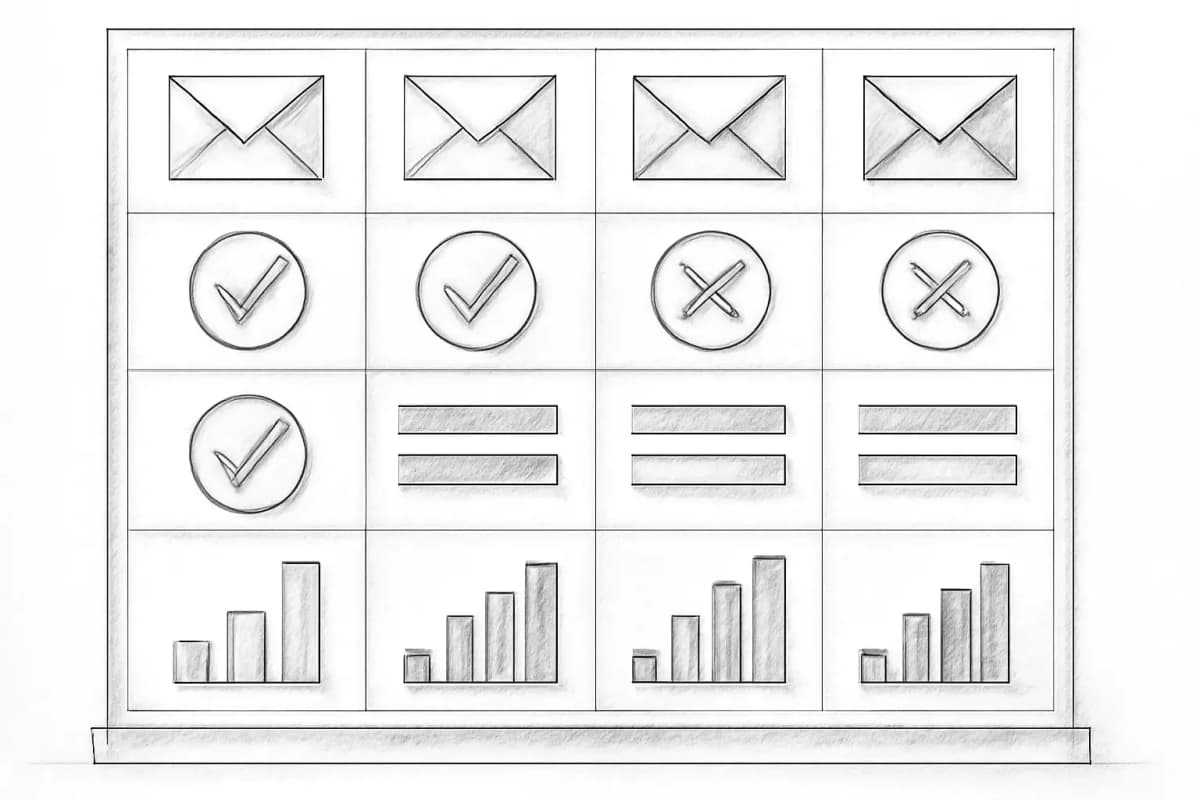

A comparison chart of email marketing platforms showing features, pricing tiers, and deliverability


Frequently Asked Questions

What is "monkey email marketing"?

"Monkey email marketing" is a colloquial term for Mailchimp, the email marketing platform that uses a chimpanzee mascot named Freddie. The name began as a playful metaphor: a chimp who delivers your mail. The term is widely used in search to find information about Mailchimp or alternatives to it.

Is Mailchimp still worth using in 2026?

Mailchimp remains a solid starting point for beginners, but its value declines as you scale. The free plan is now only viable for small email lists of 500 subscribers. Despite the tool's features, pricing changes have made Mailchimp a rather expensive platform that may not be ideal for businesses on a budget. If your list exceeds 1,000 contacts or you need reliable automation, you will likely get better ROI from MailerLite or Brevo.

Why are my Mailchimp emails going to spam?

The most common reason is shared IP contamination. If another sender on your IP buys a list or blasts spam, their behavior tanks the IP's reputation and your emails go down with it. Mailchimp's own dedicated IP page acknowledges this directly: shared IPs can be harmed by other senders' "spammy practices," and the IP can get blacklisted. Fixing SPF, DKIM, and DMARC authentication, and cleaning your list regularly, will help. For persistent problems, migrating to a platform with better deliverability tooling is the more reliable fix.

What is the best free Mailchimp alternative?


How to Migrate Away from Mailchimp

Moving platforms is simpler than most people expect. Here is the process:

  1. Export your contacts from Mailchimp as a CSV, segmented by tag or group where possible.
  2. Clean your list before importing. Remove inactive and unsubscribed contacts to avoid paying for dead weight on your new platform.
  3. Recreate your key automations first: welcome sequences, abandoned cart flows, and re-engagement campaigns.
  4. Warm up your new domain by starting with your most engaged subscribers, then expanding gradually over two to three weeks.
  5. Monitor your open and click rates for the first four to six weeks to catch any deliverability dips early.

Switching from Mailchimp to another email marketing platform requires a few key steps to ensure a smooth migration. Instead of manually creating new lists and segments, you can export your existing contacts and upload them to your new email software. This saves time and avoids typing mistakes.


A comparison chart of email marketing platforms showing features, pricing tiers, and deliverability


Frequently Asked Questions

What is "monkey email marketing"?

"Monkey email marketing" is a colloquial term for Mailchimp, the email marketing platform that uses a chimpanzee mascot named Freddie. The name began as a playful metaphor: a chimp who delivers your mail. The term is widely used in search to find information about Mailchimp or alternatives to it.

Is Mailchimp still worth using in 2026?

Mailchimp remains a solid starting point for beginners, but its value declines as you scale. The free plan is now only viable for small email lists of 500 subscribers. Despite the tool's features, pricing changes have made Mailchimp a rather expensive platform that may not be ideal for businesses on a budget. If your list exceeds 1,000 contacts or you need reliable automation, you will likely get better ROI from MailerLite or Brevo.

Why are my Mailchimp emails going to spam?

The most common reason is shared IP contamination. If another sender on your IP buys a list or blasts spam, their behavior tanks the IP's reputation and your emails go down with it. Mailchimp's own dedicated IP page acknowledges this directly: shared IPs can be harmed by other senders' "spammy practices," and the IP can get blacklisted. Fixing SPF, DKIM, and DMARC authentication, and cleaning your list regularly, will help. For persistent problems, migrating to a platform with better deliverability tooling is the more reliable fix.

What is the best free Mailchimp alternative?

Brevo is the strongest free alternative for most businesses. Brevo's generous free plan offers 100,000 contacts for free and includes segmentation, transactional email, and multi-channel capabilities. MailerLite also has a competitive free plan that includes automation features Mailchimp no longer offers at the free tier.

Does email marketing still deliver strong ROI in 2026?

Yes. For every $1 spent on email marketing, the average return is $36, delivering a 3,600% ROI. Automated emails generate 320% more revenue than non-automated emails. The channel consistently outperforms social media and paid search for direct revenue generation. The platform you use to email marketing send campaigns affects how much of that potential you actually capture.


No comments yet. Be the first!

Leave a comment

Comments are reviewed before publishing.

Brevo is the strongest free alternative for most businesses. Brevo's generous free plan offers 100,000 contacts for free and includes segmentation, transactional email, and multi-channel capabilities. MailerLite also has a competitive free plan that includes automation features Mailchimp no longer offers at the free tier.

Does email marketing still deliver strong ROI in 2026?

Yes. For every $1 spent on email marketing, the average return is $36, delivering a 3,600% ROI. Automated emails generate 320% more revenue than non-automated emails. The channel consistently outperforms social media and paid search for direct revenue generation. The platform you use to email marketing send campaigns affects how much of that potential you actually capture.

No comments yet. Be the first!

Leave a comment

Comments are reviewed before publishing.

More from

Related posts

Illustration for squarespace email marketing vs mailchimp
Email Marketing Tools & PlatformsMay 17, 2026 10 min

Squarespace Email Marketing vs Mailchimp

Compare Squarespace and Mailchimp for email marketing. See pricing, features, ease of use, and which platform fits your business needs.

More from

Related posts

Illustration for squarespace email marketing vs mailchimp
Email Marketing Tools & PlatformsMay 17, 2026 10 min

Squarespace Email Marketing vs Mailchimp

Compare Squarespace and Mailchimp for email marketing. See pricing, features, ease of use, and which platform fits your business needs.

P
Priya Kapoor
P
Priya Kapoor
Illustration for shopify email marketing vs klaviyo
Email Marketing Tools & PlatformsMay 17, 2026 10 min

Shopify Email Marketing vs Klaviyo: Which Fits Your Store

Compare Shopify Email Marketing and Klaviyo side-by-side. See pricing, features, automation, and which platform works best for your business.

MMarcus Webb
Illustration for shopify email marketing vs klaviyo
Email Marketing Tools & PlatformsMay 17, 2026 10 min

Shopify Email Marketing vs Klaviyo: Which Fits Your Store

Compare Shopify Email Marketing and Klaviyo side-by-side. See pricing, features, automation, and which platform works best for your business.

MMarcus Webb
Illustration for shopify email marketing vs mailchimp
Email Marketing Tools & PlatformsMay 17, 2026 10 min

Shopify Email Marketing vs Mailchimp: Which Fits Your Store

Compare Shopify Email and Mailchimp head-to-head. See pricing, features, integrations, and which platform works best for your ecommerce business.

RRachel Torres
Illustration for shopify email marketing vs mailchimp
Email Marketing Tools & PlatformsMay 17, 2026 10 min

Shopify Email Marketing vs Mailchimp: Which Fits Your Store

Compare Shopify Email and Mailchimp head-to-head. See pricing, features, integrations, and which platform works best for your ecommerce business.

RRachel Torres