
HomeBlogEmail Marketing StrategyTop AI Features in Email Marketing Platforms 2025
Email Marketing Strategy

Top AI Features in Email Marketing Platforms 2025

Discover the best AI features transforming email marketing in 2025. Learn how automation, personalization, and predictive analytics boost ROI and engagement.

M

Marcus Webb

July 17, 2026

HomeBlogEmail Marketing StrategyTop AI Features in Email Marketing Platforms 2025
Email Marketing Strategy

Top AI Features in Email Marketing Platforms 2025

Discover the best AI features transforming email marketing in 2025. Learn how automation, personalization, and predictive analytics boost ROI and engagement.

M

Marcus Webb

July 17, 2026

11 min read
11 min read
Share:
Share:
#AI in Email Marketing#Email Automation#Marketing Technology#Personalization
Illustration for top ai features in email marketing platforms 2025

Stay in the loop

Get the latest posts delivered straight to your inbox. No spam, unsubscribe anytime.

AI email marketing is no longer experimental. In 2025, 63% of marketers use AI for campaigns, generating 13% higher click-through rates and 41% more revenue. If you are evaluating which platform to commit to, or trying to squeeze more ROI from the one you already use, understanding the specific AI capabilities that drive those results is essential.

This post breaks down the top AI features in email marketing platforms 2025 so you can prioritize what to build, buy, or enable first.


Key Takeaways

  • Automated emails generate 320% more revenue than manual campaigns, despite representing just 2% of send volume.
  • AI subject line optimization can boost open rates by up to 10%, and AI-powered multivariate testing extends that lift further.
  • Sending to each subscriber at their personal optimal time, rather than a fixed batch time, consistently produces 20 to 30 percent open rate improvements across industries.
  • Marketers implementing AI report saving up to 30% of their total working time, with some companies reducing newsletter production time by 90%.
  • Segmented campaigns deliver up to 760% more revenue than undifferentiated mass sends.

Why AI Has Become Central to Email Marketing

The email marketing technology and services market grows at a 13.3% CAGR, expanding from $12.33 billion in 2024 toward $17.9 billion by 2027, driven by increasing sophistication of email platforms incorporating AI, advanced automation, predictive analytics, and cross-channel orchestration.

The investment is concentrating where results are clearest. The average email marketing ROI is $36 for every $1 spent, a 3,500% return, but that average masks the gap between teams using AI-powered features and those still relying on manual processes.

Businesses using AI-powered automation sequences are seeing open rates above 40%, click-through rates of 6 to 8%, and revenue-per-email figures three to five times higher than manual campaigns. The features below are what separate those results from the pack.


1. Predictive Send-Time Optimization

Predictive send-time optimization uses AI to determine the best time to send an email to each recipient based on past engagement behavior. Instead of a fixed send time, emails are delivered when individuals are most likely to open or click.

Stay in the loop

Get the latest posts delivered straight to your inbox. No spam, unsubscribe anytime.

AI email marketing is no longer experimental. In 2025, 63% of marketers use AI for campaigns, generating 13% higher click-through rates and 41% more revenue. If you are evaluating which platform to commit to, or trying to squeeze more ROI from the one you already use, understanding the specific AI capabilities that drive those results is essential.

This post breaks down the top AI features in email marketing platforms 2025 so you can prioritize what to build, buy, or enable first.


Key Takeaways

  • Automated emails generate 320% more revenue than manual campaigns, despite representing just 2% of send volume.
  • AI subject line optimization can boost open rates by up to 10%, and AI-powered multivariate testing extends that lift further.
  • Sending to each subscriber at their personal optimal time, rather than a fixed batch time, consistently produces 20 to 30 percent open rate improvements across industries.
  • Marketers implementing AI report saving up to 30% of their total working time, with some companies reducing newsletter production time by 90%.
  • Segmented campaigns deliver up to 760% more revenue than undifferentiated mass sends.

Why AI Has Become Central to Email Marketing

The email marketing technology and services market grows at a 13.3% CAGR, expanding from $12.33 billion in 2024 toward $17.9 billion by 2027, driven by increasing sophistication of email platforms incorporating AI, advanced automation, predictive analytics, and cross-channel orchestration.

The investment is concentrating where results are clearest. The average email marketing ROI is $36 for every $1 spent, a 3,500% return, but that average masks the gap between teams using AI-powered features and those still relying on manual processes.

Businesses using AI-powered automation sequences are seeing open rates above 40%, click-through rates of 6 to 8%, and revenue-per-email figures three to five times higher than manual campaigns. The features below are what separate those results from the pack.


1. Predictive Send-Time Optimization

Predictive send-time optimization uses AI to determine the best time to send an email to each recipient based on past engagement behavior. Instead of a fixed send time, emails are delivered when individuals are most likely to open or click.

This is one of the highest-leverage features available because the lift is measurable and implementation risk is low. AI predictive send time analyzes each subscriber's historical engagement patterns to predict when they're most likely to open and click. Real-world results show 8 to 15% improvement in open rates for most users.

This feature works best for large lists with at least 50,000 subscribers and significant engagement history. Most ESPs include basic versions for free, including Klaviyo Smart Send Time and Mailchimp Send Time Optimization.

If you are building toward this, start here. Send-time optimization has the lowest implementation complexity, fastest time-to-value, and clearest measurement methodology of any AI email feature.


2. AI-Powered Subject Line Generation and Testing

The subject line is the single point of highest leverage in an email campaign. Research shows that 47% of email recipients decide to open an email based solely on the subject line, while 69% report email as spam based on the subject line alone.

AI subject line tools typically produce 10 to 20% improvement in open rates by testing linguistic patterns at scale. The real advantage is speed of iteration. Human copywriters cannot test at scale. Writing 50 subject line variants for every campaign is not feasible. AI can generate dozens of variants in minutes.

AI-powered multivariate testing outperforms simple A/B testing by 22%, evaluating 5 to 10 variants simultaneously and analyzing emotional tone, word choice, length, personalization tokens, and emoji usage.

For best results, use a hybrid approach. The teams that get the most from AI subject lines treat it as a testing accelerator, not a replacement for thinking. AI generates the variants; humans make strategic decisions about what to test and why.

For a deeper dive into what makes subject lines perform, see our guide on email subject line best practices that boost open rates.


3. AI-Driven Segmentation and Behavioral Targeting

Basic list segmentation already delivers strong results. Email campaigns targeted to specific audience segments deliver dramatically higher revenue than undifferentiated mass sends, with properly segmented lists generating up to 760% more revenue, because recipients receive offers, content, and messaging aligned with their specific interests, purchase history, and engagement level.

AI takes segmentation well beyond manually defined rules. The AI generates segments from natural-language prompts. Describe the audience you want and it builds the segment, drawing on engagement history, lifecycle stage, and account-level signals.

ActiveCampaign's AI-Suggested Actions feature recommends complete multi-step marketing sequences based on billions of anonymized data points, so instead of building a nurture workflow from scratch, you get a structured campaign with messaging, timing, and branching paths already mapped out.

AI can analyze data and identify micro-patterns such as changes in browsing behavior, purchase cycles, and engagement levels, which help marketers segment more intentionally, ensuring campaigns stay relevant and less repetitive.

To build a practical framework around this, our guide on email list segmentation strategies that boost ROI covers the mechanics in detail.


This is one of the highest-leverage features available because the lift is measurable and implementation risk is low. AI predictive send time analyzes each subscriber's historical engagement patterns to predict when they're most likely to open and click. Real-world results show 8 to 15% improvement in open rates for most users.

This feature works best for large lists with at least 50,000 subscribers and significant engagement history. Most ESPs include basic versions for free, including Klaviyo Smart Send Time and Mailchimp Send Time Optimization.

If you are building toward this, start here. Send-time optimization has the lowest implementation complexity, fastest time-to-value, and clearest measurement methodology of any AI email feature.


2. AI-Powered Subject Line Generation and Testing

The subject line is the single point of highest leverage in an email campaign. Research shows that 47% of email recipients decide to open an email based solely on the subject line, while 69% report email as spam based on the subject line alone.

AI subject line tools typically produce 10 to 20% improvement in open rates by testing linguistic patterns at scale. The real advantage is speed of iteration. Human copywriters cannot test at scale. Writing 50 subject line variants for every campaign is not feasible. AI can generate dozens of variants in minutes.

AI-powered multivariate testing outperforms simple A/B testing by 22%, evaluating 5 to 10 variants simultaneously and analyzing emotional tone, word choice, length, personalization tokens, and emoji usage.

For best results, use a hybrid approach. The teams that get the most from AI subject lines treat it as a testing accelerator, not a replacement for thinking. AI generates the variants; humans make strategic decisions about what to test and why.

For a deeper dive into what makes subject lines perform, see our guide on email subject line best practices that boost open rates.


3. AI-Driven Segmentation and Behavioral Targeting

Basic list segmentation already delivers strong results. Email campaigns targeted to specific audience segments deliver dramatically higher revenue than undifferentiated mass sends, with properly segmented lists generating up to 760% more revenue, because recipients receive offers, content, and messaging aligned with their specific interests, purchase history, and engagement level.

AI takes segmentation well beyond manually defined rules. The AI generates segments from natural-language prompts. Describe the audience you want and it builds the segment, drawing on engagement history, lifecycle stage, and account-level signals.

ActiveCampaign's AI-Suggested Actions feature recommends complete multi-step marketing sequences based on billions of anonymized data points, so instead of building a nurture workflow from scratch, you get a structured campaign with messaging, timing, and branching paths already mapped out.

AI can analyze data and identify micro-patterns such as changes in browsing behavior, purchase cycles, and engagement levels, which help marketers segment more intentionally, ensuring campaigns stay relevant and less repetitive.

To build a practical framework around this, our guide on email list segmentation strategies that boost ROI covers the mechanics in detail.


4. Generative AI for Email Content and Personalization

Artificial intelligence compresses the entire email production cycle by automatically generating subject lines, body copy, design variations, and optimal send times.

Marketers implementing AI-powered personalization report revenue increasing by 41% and click-through rates rising 13.44% compared to non-personalized campaigns. These gains stem from AI's ability to analyze individual user behavior patterns and dynamically adjust content, timing, and offers to match each recipient's preferences and likelihood to engage.

Platforms differ significantly in how deeply generative AI is embedded. Klaviyo's K:AI agent system goes well beyond standard automation. The Marketing Agent ingests your website data and generates fully designed, on-brand email campaigns in just a few clicks, with no prompts required.

Klaviyo's AI spans over 40 features, from Segments AI that builds audience targeting from your full customer data set to personalized send time optimization that delivers messages when each individual subscriber is most likely to engage.

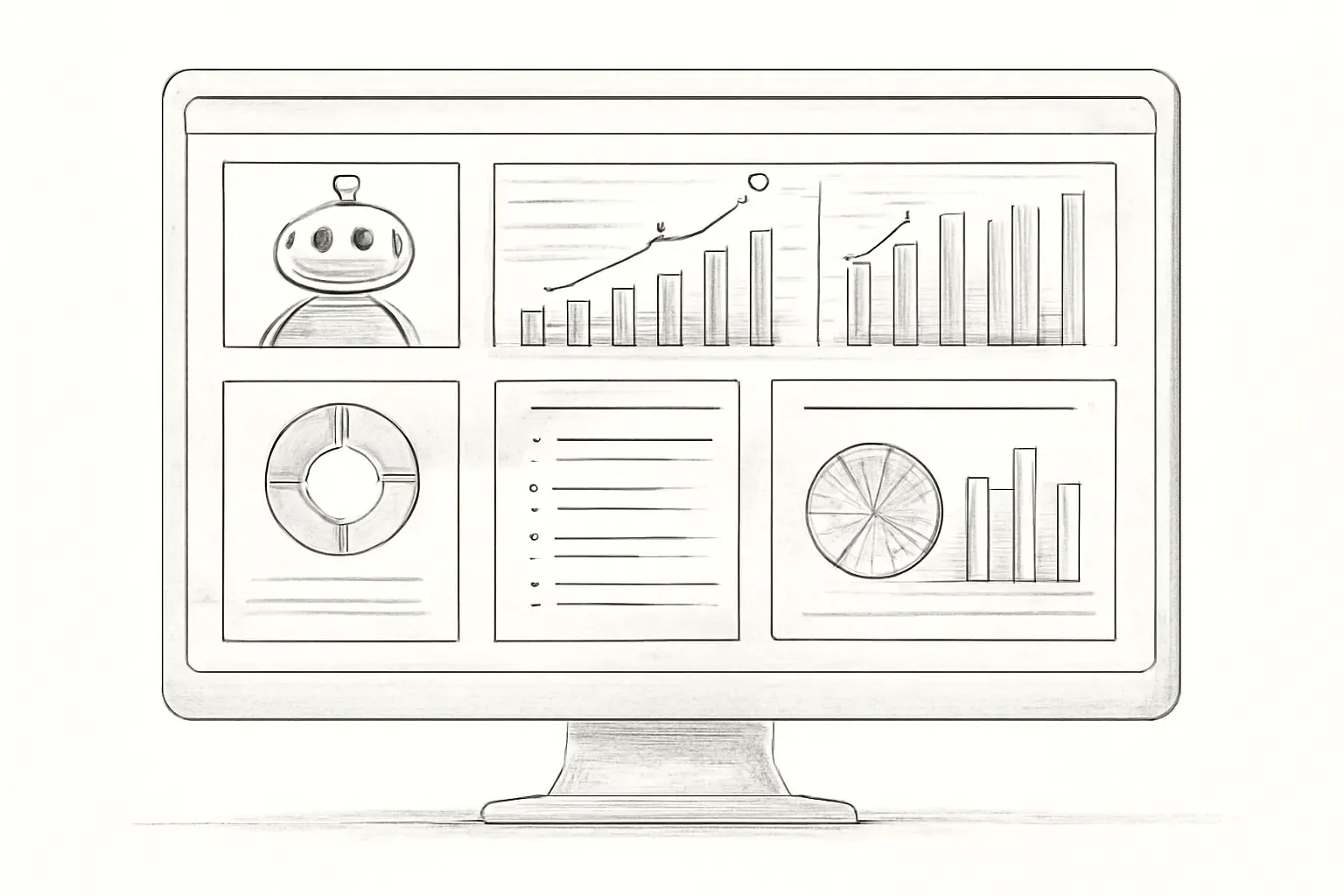
For practical examples of this in action, see our collection of AI-driven email marketing examples. Email marketing AI dashboard showing open rate analytics and segmentation

5. Intelligent Marketing Automation and Workflow Orchestration

Automated emails drove 37% of all email-generated sales in 2024, despite accounting for just 2% of email volume. That ratio explains why automation is the highest-priority AI investment for most growth teams.

AI email automation combines machine learning with workflow triggers to deliver the right message to the right person at the exact moment they are most likely to engage. It goes beyond simple drip sequences by predicting subscriber behavior, generating personalized content, and continuously optimizing performance without manual intervention.

AI capabilities in email platforms have matured significantly in 2025 and 2026. Features like send-time optimization, predictive content selection, and behavioral scoring that were once enterprise-only are now available on mid-market platforms starting at $29 per month.

The top 10% of email workflows generate $16.96 in revenue per recipient, while average email flows generate $1.94. The gap is not about platform spend; it is about configuration, testing, and ongoing optimization.

Automated workflows eliminate repetitive manual work in social media posting, email scheduling, list management, and campaign deployment, freeing up more than 6 hours weekly for strategic activities.


6. AI-Powered Deliverability and Inbox Placement Tools

4. Generative AI for Email Content and Personalization

Artificial intelligence compresses the entire email production cycle by automatically generating subject lines, body copy, design variations, and optimal send times.

Marketers implementing AI-powered personalization report revenue increasing by 41% and click-through rates rising 13.44% compared to non-personalized campaigns. These gains stem from AI's ability to analyze individual user behavior patterns and dynamically adjust content, timing, and offers to match each recipient's preferences and likelihood to engage.

Platforms differ significantly in how deeply generative AI is embedded. Klaviyo's K:AI agent system goes well beyond standard automation. The Marketing Agent ingests your website data and generates fully designed, on-brand email campaigns in just a few clicks, with no prompts required.

Klaviyo's AI spans over 40 features, from Segments AI that builds audience targeting from your full customer data set to personalized send time optimization that delivers messages when each individual subscriber is most likely to engage.

For practical examples of this in action, see our collection of AI-driven email marketing examples. Email marketing AI dashboard showing open rate analytics and segmentation


5. Intelligent Marketing Automation and Workflow Orchestration

Automated emails drove 37% of all email-generated sales in 2024, despite accounting for just 2% of email volume. That ratio explains why automation is the highest-priority AI investment for most growth teams.

AI email automation combines machine learning with workflow triggers to deliver the right message to the right person at the exact moment they are most likely to engage. It goes beyond simple drip sequences by predicting subscriber behavior, generating personalized content, and continuously optimizing performance without manual intervention.

AI capabilities in email platforms have matured significantly in 2025 and 2026. Features like send-time optimization, predictive content selection, and behavioral scoring that were once enterprise-only are now available on mid-market platforms starting at $29 per month.

The top 10% of email workflows generate $16.96 in revenue per recipient, while average email flows generate $1.94. The gap is not about platform spend; it is about configuration, testing, and ongoing optimization.

Automated workflows eliminate repetitive manual work in social media posting, email scheduling, list management, and campaign deployment, freeing up more than 6 hours weekly for strategic activities.


6. AI-Powered Deliverability and Inbox Placement Tools

Even a well-written, perfectly timed email is worthless if it lands in spam. Email deliverability is a critical challenge in 2025, with 17% of emails failing to reach inboxes out of the 376.4 billion daily emails sent.

Mailbox providers use AI systems to filter, prioritize, and rank incoming messages. Marketers use it to optimize send times, clean lists, warm domains, and flag content issues before sending.

AI tools can look at subscribers' behavior and send emails when they are most likely to engage. Those early opens send strong positive signals to mail providers, boosting inbox placement.

On the tool side, platforms like Unspam.email offer an all-in-one spam testing and inbox placement tool with AI-assisted fixes, visual heatmaps, and authentication checks in a single dashboard. At the platform level, ActiveCampaign achieves 94.2% inbox placement in independent testing versus an approximately 83% industry average.

The most important shift is moving from reactive to proactive. AI tools rely on advanced algorithms to keep an eye on sender reputation, identify potential problems, and automatically adjust strategies to maintain steady performance. They adapt to constantly changing spam filter algorithms, and handle tasks like warm-ups, deliverability checks, and placement tests automatically.


7. Predictive Analytics and AI-Driven Reporting

The shift AI enables moves email marketing from intuition-based decisions to data-backed strategy. AI processes millions of data points to spot patterns and opportunities human analysis would miss.

AI in email marketing refers to technologies such as machine learning, natural language processing, and predictive analytics that analyze customer data to tailor subject lines, content, timing, and segmentation for each subscriber. These systems reduce guesswork by using historical interactions and behavior patterns to anticipate what messaging will drive engagement and conversions.

For B2B teams in particular, intent data combined with AI scoring changes the economics of outreach. ZoomInfo's GTM Context Graph processes 1.5 billion data points daily, fusing B2B contact data with CRM records, conversation intelligence, and behavioral signals to reason about why accounts are in-market, not just that they are. This means email campaigns reach prospects who are already in a buying motion, rather than cold contacts with no demonstrated interest.

AI-driven automation can cut churn by 25% while also reducing unsubscribes by 18% and improving conversion rates by 19%.


How to Prioritize AI Features for Your Team

Not every feature deserves immediate investment. Here is a practical implementation sequence based on time-to-value and risk:

Even a well-written, perfectly timed email is worthless if it lands in spam. Email deliverability is a critical challenge in 2025, with 17% of emails failing to reach inboxes out of the 376.4 billion daily emails sent.

Mailbox providers use AI systems to filter, prioritize, and rank incoming messages. Marketers use it to optimize send times, clean lists, warm domains, and flag content issues before sending.

AI tools can look at subscribers' behavior and send emails when they are most likely to engage. Those early opens send strong positive signals to mail providers, boosting inbox placement.

On the tool side, platforms like Unspam.email offer an all-in-one spam testing and inbox placement tool with AI-assisted fixes, visual heatmaps, and authentication checks in a single dashboard. At the platform level, ActiveCampaign achieves 94.2% inbox placement in independent testing versus an approximately 83% industry average.

The most important shift is moving from reactive to proactive. AI tools rely on advanced algorithms to keep an eye on sender reputation, identify potential problems, and automatically adjust strategies to maintain steady performance. They adapt to constantly changing spam filter algorithms, and handle tasks like warm-ups, deliverability checks, and placement tests automatically.


7. Predictive Analytics and AI-Driven Reporting

The shift AI enables moves email marketing from intuition-based decisions to data-backed strategy. AI processes millions of data points to spot patterns and opportunities human analysis would miss.

AI in email marketing refers to technologies such as machine learning, natural language processing, and predictive analytics that analyze customer data to tailor subject lines, content, timing, and segmentation for each subscriber. These systems reduce guesswork by using historical interactions and behavior patterns to anticipate what messaging will drive engagement and conversions.

For B2B teams in particular, intent data combined with AI scoring changes the economics of outreach. ZoomInfo's GTM Context Graph processes 1.5 billion data points daily, fusing B2B contact data with CRM records, conversation intelligence, and behavioral signals to reason about why accounts are in-market, not just that they are. This means email campaigns reach prospects who are already in a buying motion, rather than cold contacts with no demonstrated interest.

AI-driven automation can cut churn by 25% while also reducing unsubscribes by 18% and improving conversion rates by 19%.


How to Prioritize AI Features for Your Team

Not every feature deserves immediate investment. Here is a practical implementation sequence based on time-to-value and risk:

  1. Enable send-time optimization first. Low implementation complexity, fast measurement, available on most platforms.
  2. Add AI subject line testing. Integrate into your existing A/B testing process. Use AI for volume of variants, humans for final brand review.
  3. Build AI-powered segmentation. Start with behavioral triggers before moving to predictive micro-segments.
  4. Activate generative content personalization. Dynamic content blocks at the individual level require clean data infrastructure.
  5. Invest in deliverability tooling. Proactive inbox placement monitoring protects every other investment.
  6. Layer predictive analytics last. This requires several months of clean data from the above steps to produce reliable signals.

AI send-time optimization requires at least 1,000 subscribers with 60 or more days of engagement history to produce statistically meaningful personalization. Data volume and quality are the real prerequisite for most advanced features.


Frequently Asked Questions

What are the most impactful AI features in email marketing platforms in 2025?

The most impactful features in 2025 include AI-powered predictive send-time optimization, AI subject line generation and testing, and hyper-personalization at scale. These features combined generate 13% higher click-through rates and 41% more revenue, with brands scaling 1:1 personalization across millions of inboxes.

Does AI really improve email open rates and ROI?

Yes, with specific caveats. Brands using AI-driven personalization report up to 42% higher revenue, with click-through rates exceeding 13%. Results depend on data quality, list size, and how consistently you test and refine. Businesses using AI in email campaigns report an average ROI increase of 21%.

Which email platforms have the strongest AI features in 2025?

Virtually every email marketing tool now offers some version of generative AI content and send-time optimization. For depth of automation, ActiveCampaign has the deepest automation builder in independent testing, and the only AI that meaningfully learns from your account. For ecommerce, Klaviyo leads with K:AI spanning 40-plus features. For B2B, HubSpot Breeze pulls signal across CRM, marketing, and sales data.

How much time can AI save in email marketing?

Marketers implementing AI report saving up to 30% of their total working time, with some companies reducing newsletter production time by 90% through AI-powered content generation and template population. Time savings compound across teams and allow more focus on strategy and creative direction.

Is AI in email marketing suitable for small businesses?

Features like send-time optimization, predictive content selection, and behavioral scoring that were once enterprise-only are now available on mid-market platforms starting at $29 per month. Small businesses can start with ESP-native AI tools already included in their plan, then expand as list size and data volume grow. For more guidance, see our post on email marketing tips for small business owners.


No comments yet. Be the first!

Leave a comment

Comments are reviewed before publishing.

  1. Enable send-time optimization first. Low implementation complexity, fast measurement, available on most platforms.
  2. Add AI subject line testing. Integrate into your existing A/B testing process. Use AI for volume of variants, humans for final brand review.
  3. Build AI-powered segmentation. Start with behavioral triggers before moving to predictive micro-segments.
  4. Activate generative content personalization. Dynamic content blocks at the individual level require clean data infrastructure.
  5. Invest in deliverability tooling. Proactive inbox placement monitoring protects every other investment.
  6. Layer predictive analytics last. This requires several months of clean data from the above steps to produce reliable signals.

AI send-time optimization requires at least 1,000 subscribers with 60 or more days of engagement history to produce statistically meaningful personalization. Data volume and quality are the real prerequisite for most advanced features.


Frequently Asked Questions

What are the most impactful AI features in email marketing platforms in 2025?

The most impactful features in 2025 include AI-powered predictive send-time optimization, AI subject line generation and testing, and hyper-personalization at scale. These features combined generate 13% higher click-through rates and 41% more revenue, with brands scaling 1:1 personalization across millions of inboxes.

Does AI really improve email open rates and ROI?

Yes, with specific caveats. Brands using AI-driven personalization report up to 42% higher revenue, with click-through rates exceeding 13%. Results depend on data quality, list size, and how consistently you test and refine. Businesses using AI in email campaigns report an average ROI increase of 21%.

Which email platforms have the strongest AI features in 2025?

Virtually every email marketing tool now offers some version of generative AI content and send-time optimization. For depth of automation, ActiveCampaign has the deepest automation builder in independent testing, and the only AI that meaningfully learns from your account. For ecommerce, Klaviyo leads with K:AI spanning 40-plus features. For B2B, HubSpot Breeze pulls signal across CRM, marketing, and sales data.

How much time can AI save in email marketing?

Marketers implementing AI report saving up to 30% of their total working time, with some companies reducing newsletter production time by 90% through AI-powered content generation and template population. Time savings compound across teams and allow more focus on strategy and creative direction.

Is AI in email marketing suitable for small businesses?

Features like send-time optimization, predictive content selection, and behavioral scoring that were once enterprise-only are now available on mid-market platforms starting at $29 per month. Small businesses can start with ESP-native AI tools already included in their plan, then expand as list size and data volume grow. For more guidance, see our post on email marketing tips for small business owners.

No comments yet. Be the first!

Leave a comment

Comments are reviewed before publishing.

More from

Related posts

Illustration for what is the roi of email marketing automation?
Email Marketing StrategyJul 17, 2026 13 min

What Is the ROI of Email Marketing Automation?

Email automation delivers 3-5x ROI for most businesses. Learn how to measure returns, benchmark performance, and calculate your actual payback.

More from

Related posts

Illustration for what is the roi of email marketing automation?
Email Marketing StrategyJul 17, 2026 13 min

What Is the ROI of Email Marketing Automation?

Email automation delivers 3-5x ROI for most businesses. Learn how to measure returns, benchmark performance, and calculate your actual payback.

J
James Chen
J
James Chen
Illustration for automated marketing email
Email Marketing StrategyJul 17, 2026 15 min

Automated Marketing Email: Setup, Best Practices, ROI

Learn how automated marketing emails drive conversions with less effort. Set up campaigns that nurture leads, retain customers, and boost revenue.

RRachel Torres
Illustration for automated marketing email
Email Marketing StrategyJul 17, 2026 15 min

Automated Marketing Email: Setup, Best Practices, ROI

Learn how automated marketing emails drive conversions with less effort. Set up campaigns that nurture leads, retain customers, and boost revenue.

RRachel Torres
Illustration for healthcare ai email marketing firm
Email Marketing StrategyJul 17, 2026 16 min

Healthcare AI Email Marketing Firm: What to Look For

Find the right healthcare AI email marketing firm. Learn what features matter, how to evaluate vendors, and what ROI to expect from automation.

SSarah Mitchell
Illustration for healthcare ai email marketing firm
Email Marketing StrategyJul 17, 2026 16 min

Healthcare AI Email Marketing Firm: What to Look For

Find the right healthcare AI email marketing firm. Learn what features matter, how to evaluate vendors, and what ROI to expect from automation.

SSarah Mitchell