In 2022, email marketing was not struggling. It was delivering some of the best ROI numbers on record, and the brands that understood why were pulling well ahead of those still sending undifferentiated batch-and-blast messages. In 2022, 333 billion emails were sent and received each day. The inbox had never been more competitive. Yet the email marketing examples 2022 produced show clearly that strategy, not volume, is what separates campaigns that convert from ones that clog up Promotions tabs.
This post breaks down the campaign types and real-world examples that drove measurable results in 2022, with the data to back each one up.
Key Takeaways
- Email marketing has an average ROI of 36:1, meaning $36 generated for every $1 spent.
- The click-through rate of segmented campaigns is 100.95% higher on average than non-segmented ones, and marketers who segment their campaigns increase revenue by as much as 760%.
- The average welcome email generates a 68.6% open rate, making it the highest-performing email type by a significant margin.
- The typical conversion rate of abandoned cart emails is 10% to 15%, placing them among the most effective email marketing tools.
- Automated emails generate 320% more revenue than non-automated emails.
The 2022 Email Marketing Landscape
Before looking at specific email marketing examples 2022 produced, it helps to understand the environment campaigns were operating in.
The average email open rate in 2022 was 21.5%, according to Campaign Monitor. This value was 3.5% higher than in 2021, which can be attributed to the 2021 iOS update from Apple. That Apple Mail Privacy Protection (MPP) shift created significant measurement challenges. Open rate data became less reliable as a standalone metric, pushing smarter teams toward click-through rates, conversions, and revenue per recipient as their core performance indicators.
50.8% of marketers said they doubled their return on investment from email marketing in 2022. The channel was not slowing down. It was maturing, and the brands that leaned into automation, segmentation, and genuine personalization were the ones seeing those doubled returns.
Mailmodo surveyed marketers about the types of campaigns they sent in 2022. 83.33% sent newsletters, the most of any campaign type. 72.73% sent promotional emails while 71.21% sent welcome emails.
Campaign Type 1: Welcome Email Sequences That Built Immediate Loyalty
Welcome emails were the highest-performing campaign type across the board in 2022, and the data is not close.
Welcome emails generate 4x more opens and 5x more clicks than regular email marketing campaigns. The average open rate for welcome emails is around 50%, making them 86% more effective than standard newsletters.
The mechanics behind this performance are straightforward: a subscriber has just taken an action that signals high intent, and a timely, relevant message reaches them at peak engagement. 74% of people expect to receive a welcome email immediately after they subscribe, yet only 57.7% of brands send them. That gap is an opportunity most brands in 2022 were still leaving on the table.
Sending multiple welcome messages rather than a single email can increase revenue by up to 51%. This revenue lift comes from multiple conversion opportunities and reinforced brand messaging.
The brands that built multi-email welcome sequences in 2022, introducing the brand story in email one, showcasing top products in email two, and delivering a conversion-focused offer in email three, consistently outperformed those sending a single automated message.
For a deeper look at structuring these sequences, see Welcome Email Sequence Best Practices: 7 Proven Strategies.
Campaign Type 2: Spotify Wrapped and the Power of Personalized Data Emails
No list of email marketing examples 2022 is complete without examining Spotify Wrapped. It launched in December and immediately became the defining example of what personalization at scale can achieve.
Spotify Wrapped was one of the most successful campaigns of 2022, incorporating big data, personalized user experience, top trends, and social media.
In 2022, Spotify Wrapped featured two new features: 'Listening Personality' and 'Audio Day.' The Listening Personality feature assigned users one of 16 personality types based on their listening behavior throughout the year. This gave subscribers a deeply personal data story to share, not just a stats recap.
The campaign generated 425 million tweets in the first three days of launch in 2022, representing a 17% increase in total engagements from 2021.
According to Musically, Spotify added 33 million new users during Q4 of 2022, a significant increase from the previous year.
The email component of Wrapped drove subscribers back into the app with personalized highlights and a clear CTA to explore the full experience. Spotify's Wrapped campaign took personalization to the highest level, giving customers compelling insights that drive conversation and connection.
The lesson for marketers: you do not need Spotify's data infrastructure to replicate the approach. Spotify mines the customer data they already have, and you can do it too. Purchase history, browse behavior, and engagement patterns are data points most email platforms already capture and can use to deliver personalized recap campaigns.
Campaign Type 3: Abandoned Cart Emails That Recovered Lost Revenue
Abandoned cart emails were among the most lucrative email marketing examples 2022 produced, and the performance data explains why.
Cart abandonment emails have an average open rate of 50.5% and a click-through rate of 6.25%. The average open rate for ecommerce email marketing is 34.2% and the average click-through rate is 1.91%, so abandoned cart emails perform much higher than the standard.
The typical conversion rate of abandoned cart emails is 10% to 15%, and recovering customers through abandoned cart messages can increase total online sales volume by 20% to 30%.
Timing is the critical variable. Emails sent within one hour of cart abandonment can increase conversion rates by up to 20%.
A real example from 2022 that illustrates this well: Cult Beauty found through A/B testing that the subject line "You left something in your basket, can we help?" achieved a 54.34% open rate and a 15.95% conversion rate.
Another insight from a published case study: a Day 1 message triggered a few hours after the cart was abandoned outperformed a Day 4 message featuring a discount on both revenue and conversion. Urgency and timing are often more persuasive than discounting.
Research shows that three cart abandonment emails brought in 69% more revenue than a single email. Building a sequence of two to three emails, with the first sent within an hour and subsequent messages arriving within 24 to 72 hours, consistently outperformed single-message approaches in 2022.
For ecommerce teams, pairing cart abandonment sequences with a solid segmentation strategy drives the biggest gains. See Ecommerce Email Marketing Tips: 8 Strategies for Higher ROI for a fuller breakdown. 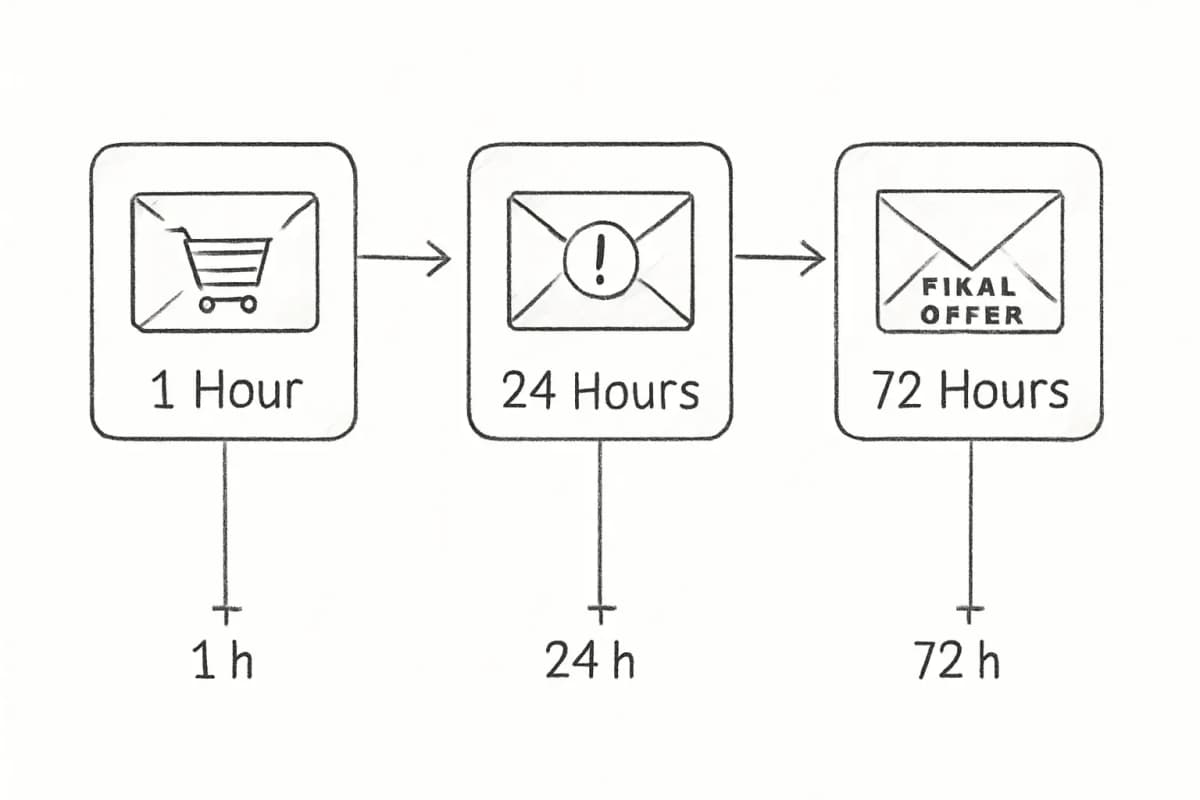
Campaign Type 4: Segmented Promotional Campaigns
Generic promotional emails rarely moved the needle in 2022. Segmented ones did.
Segmented email campaigns achieve 14.31% higher open rates and 100.95% higher click-through rates compared to non-segmented campaigns. Additionally, segmented and targeted emails generate 58% of all revenue for marketers who implement this strategy.
Email marketers who segmented their audience before campaigning stated that the revenue generated increased by up to 760%.
The Grammy Awards example from Netcore's 2022 case studies illustrates what this looks like in practice. The campaign channeled the excitement of the 2022 Grammy Awards, incentivized data collection, and offered shoppable recommendations based on the hottest trends. A clear "Shop Now" call to action led to a 140% uplift in conversions.
The brands running the best segmented campaigns in 2022 were using behavioral data, not just demographic data, to define their segments. Purchase frequency, browse history, and recency of last engagement all created segments that received dramatically different messages, with dramatically different results.
According to Klaviyo's industry benchmarks, the top 10% of emails convert 5x more subscribers and drive 9x more revenue per recipient. This likely comes down to the difference between batch-and-blast tactics versus highly segmented campaigns designed to be ultra-relevant for a specific audience.
To apply segmentation effectively across your list, Email List Segmentation Strategies That Boost ROI by 760% covers the practical implementation.
Campaign Type 5: Automated Re-engagement Campaigns
Re-engagement emails addressed a growing challenge in 2022: list bloat. As lists grew, inactive segments dragged down deliverability and skewed performance metrics. The solution was targeted re-engagement sequences.
Automated emails triggered by specific user actions, such as sign-up or cart abandonment, can generate 320% more revenue than standard campaigns. Automated birthday emails achieve a 43.3% open rate and a 14.3% click-to-conversion rate.
The strongest re-engagement campaigns of 2022 shared a few common elements:
- A direct acknowledgment that the subscriber had been inactive
- A clear value proposition for staying subscribed
- A single, low-friction CTA
- A sunset policy: subscribers who did not engage after 90 to 120 days were suppressed or removed
For brands sending weekly emails, 30 days of inactivity signals disengagement. After 90 to 120 days of zero engagement following several re-engagement emails, contacts should be removed or suppressed to ensure a healthy email list and accurate open rates.
Brands that use personalization increase email ROI by nearly 260% compared to those who never or rarely do. Marketers who A/B test their emails often see email ROI increase by 86% compared to those who never test.
What the Best 2022 Email Campaigns Had in Common
Across every email marketing example 2022 produced, a consistent set of practices separated the high performers from the noise.
Behavioral triggers over scheduled sends. The top campaigns sent emails in response to what subscribers did, not according to a fixed calendar. Successful campaigns used data to create relevant experiences, not just inserting a first name, but tailoring content based on purchase history and browsing behavior. They leveraged automation to respond instantly to customer actions.
Subject lines that earned the open. Emails with personalized subject lines are 27% more likely to be opened. The best subject lines from 2022 were specific, relevant to the recipient's recent behavior, and rarely relied on generic urgency tactics.
Mobile-first design. In Mailmodo's survey, 55.9% of marketers said the number of emails opened on mobile devices increased in 2022. Campaigns that did not optimize for mobile left engagement on the table.
Testing as a standard practice. Brands that A/B test every email see email marketing ROIs that are 37% higher than those of brands that never include A/B tests.
For a complete framework to apply these practices, the Email Marketing Strategy Template for 2025 is a practical starting point.
Frequently Asked Questions
What were the most effective email marketing campaigns in 2022?
The most effective email marketing examples 2022 produced were automated and behaviorally triggered: welcome sequences, abandoned cart flows, and personalized year-in-review campaigns like Spotify Wrapped. Automated welcome emails drive the highest percentage of sales, with an order rate of 3.02%. Cart recovery emails came second at 2.35%, and customer reactivation emails third at 2.13%.
What was the average email open rate in 2022?
The average email open rate in 2022 was 21.5%, according to Campaign Monitor. This was 3.5% higher than in 2021, largely attributed to Apple's Mail Privacy Protection update, which inflated some reported open rates. Click-through rate and revenue per recipient became the more reliable performance signals that year.
How did segmentation improve email performance in 2022?
The click-through rate of segmented campaigns is 100.95% higher on average than non-segmented ones. Marketers who segment their campaigns report revenue increases of up to 760%. Behavioral segmentation, grouping subscribers by purchase history, browse behavior, and engagement recency, produced the strongest results.
What email ROI benchmarks should marketers use from 2022?
Email marketing has an average ROI of 36:1, meaning $36 generated for every $1 spent. Email marketing ROI varies between $45:$1 and $32:$1 depending on the industry, with the average sitting at $36:$1. Teams with dedicated email resources and strong personalization practices consistently outperformed that average, with some platforms reporting ratios exceeding 42:1 for brands using dynamic content and regular A/B testing.